Artwork
St. Luke
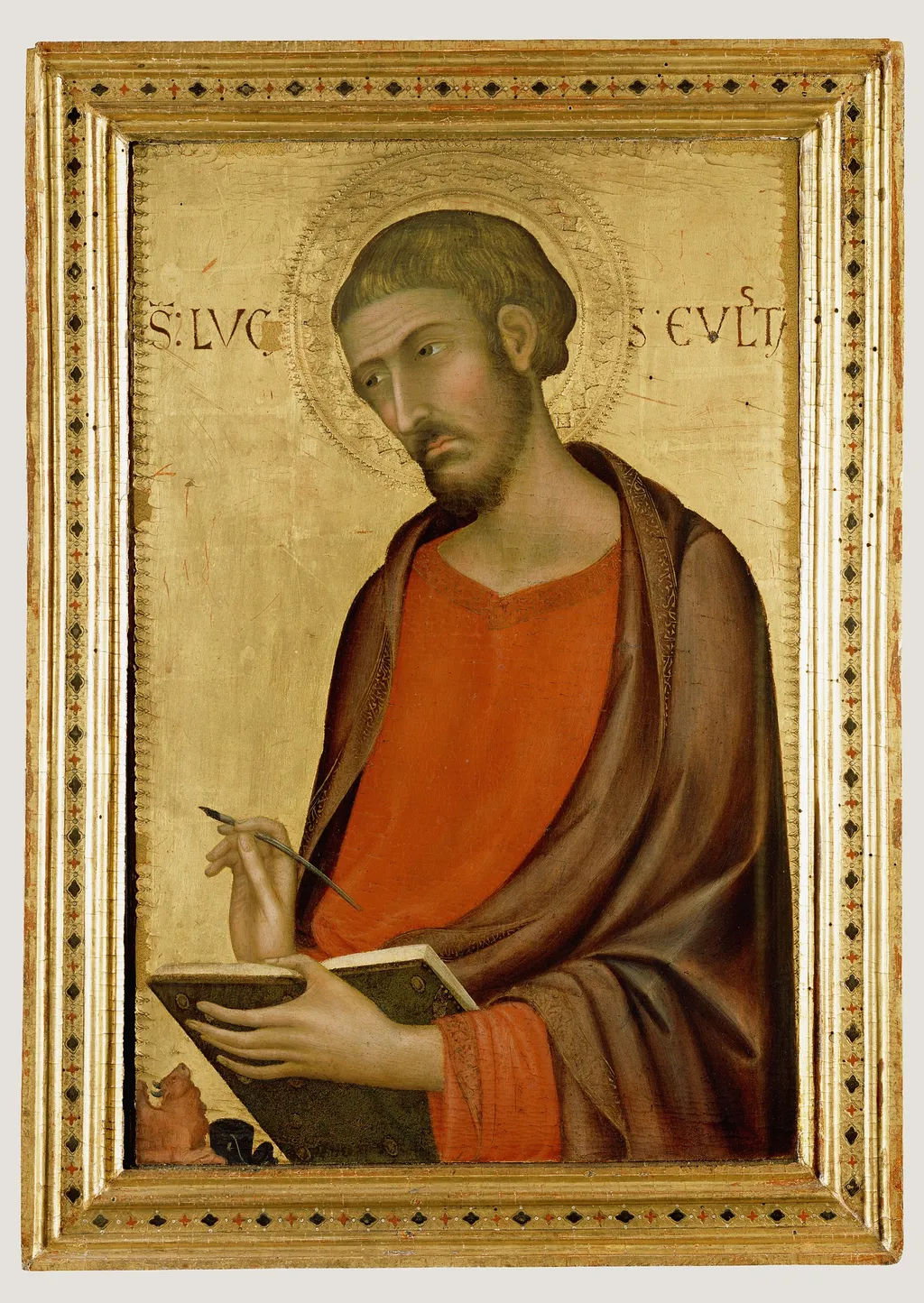
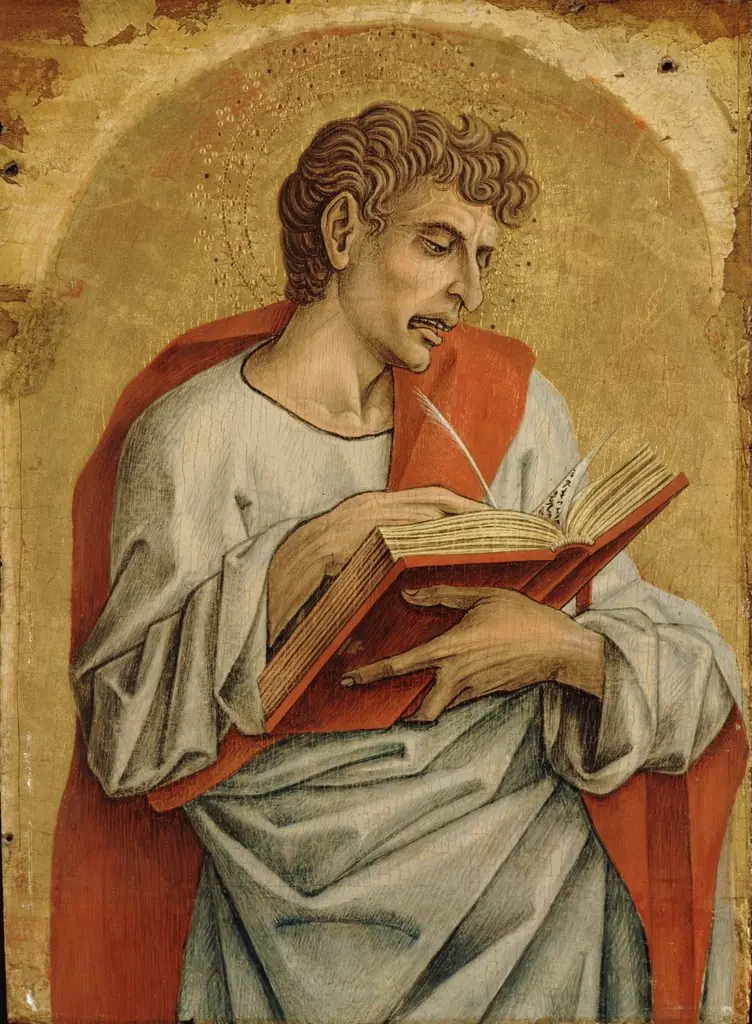
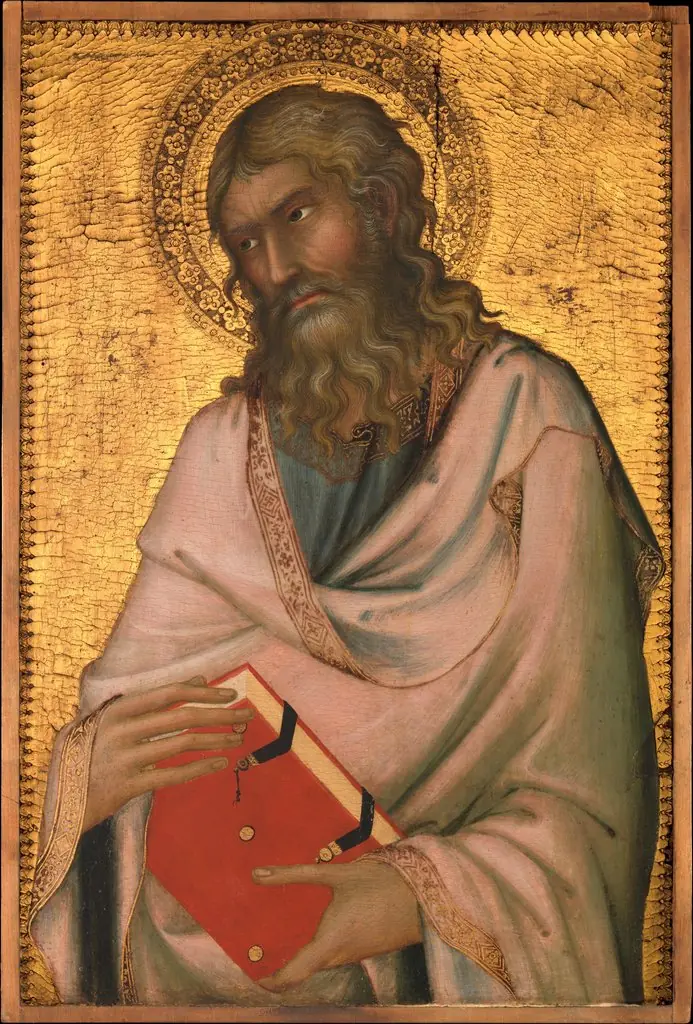
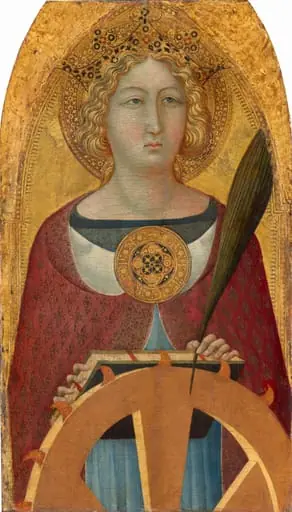
St. Luke is an unspecified painting by the Sienese School artist Simone Martini. It dates from 1330 and is held in the collection of the J. Paul Getty Museum.
About this work
Overview
Painted around 1330 by Simone Martini, this panel depicts Saint Luke the Evangelist in a devotional format. The work is part of a tradition of saintly portraiture from the Sienese school, emphasizing spiritual presence over narrative action. It resides today in the J. Paul Getty Museum, where it is valued for its refined execution and early use of psychological depth in religious imagery.
Subject & Meaning
The downward gaze and solemn expression suggest deep concentration, aligning the viewer with the saint’s inner devotion.
Saint Luke, one of the four Gospel writers, is shown as a scholar engaged in sacred composition. His halo signifies sanctity, while the book and quill denote his role as an author of divine text. The downward gaze and solemn expression suggest deep concentration, aligning the viewer with the saint’s inner devotion. The image functions not as a story but as a meditative icon, inviting quiet reverence.
Technique & Style
Martini employs delicate brushwork and layered pigments to model the figure with subtle volume. The red tunic and brown cloak contrast against the luminous gold background, enhancing the figure’s presence. The circular aureole behind the head, rendered in fine tooling, adds texture without breaking the flat plane.
Lines are precise, and folds in the drapery follow a rhythmic, almost musical pattern, characteristic of Martini’s elegant Sienese style.
History & Provenance
The painting likely originated as part of a larger altarpiece or devotional ensemble in early 14th-century Siena. Its survival in near-original condition is uncommon. It entered the Getty collection in the late 20th century after passing through private European holdings. Documentation traces its ownership to Italian ecclesiastical sources before its modern acquisition.
Context
Created during the height of Sienese Gothic painting, this work reflects the city’s emphasis on lyrical beauty and spiritual refinement. While Florence moved toward naturalism, Siena retained symbolic formality, blending it with increasing emotional nuance. Martini’s depiction of Luke aligns with contemporary liturgical practices that honored evangelists as divine scribes, reinforcing their authority in Christian doctrine.
Legacy
Martini’s portrayal of Saint Luke influenced later depictions of evangelists in Italian art, particularly in the integration of introspective expression within traditional iconography. Though not widely reproduced, its compositional clarity and restrained elegance contributed to the evolution of devotional portraiture, bridging medieval symbolism and early Renaissance humanism.
Own this work as a print
Artist & collection


![Saint James Major [right panel], by Grifo di Tancredi](https://artifactworldgallery.com/img/grifo-di-tancredi--saint-james-major-right-panel--dc190378c0cddc8f-w320.webp)