Artwork
Saint Judas Thaddeus
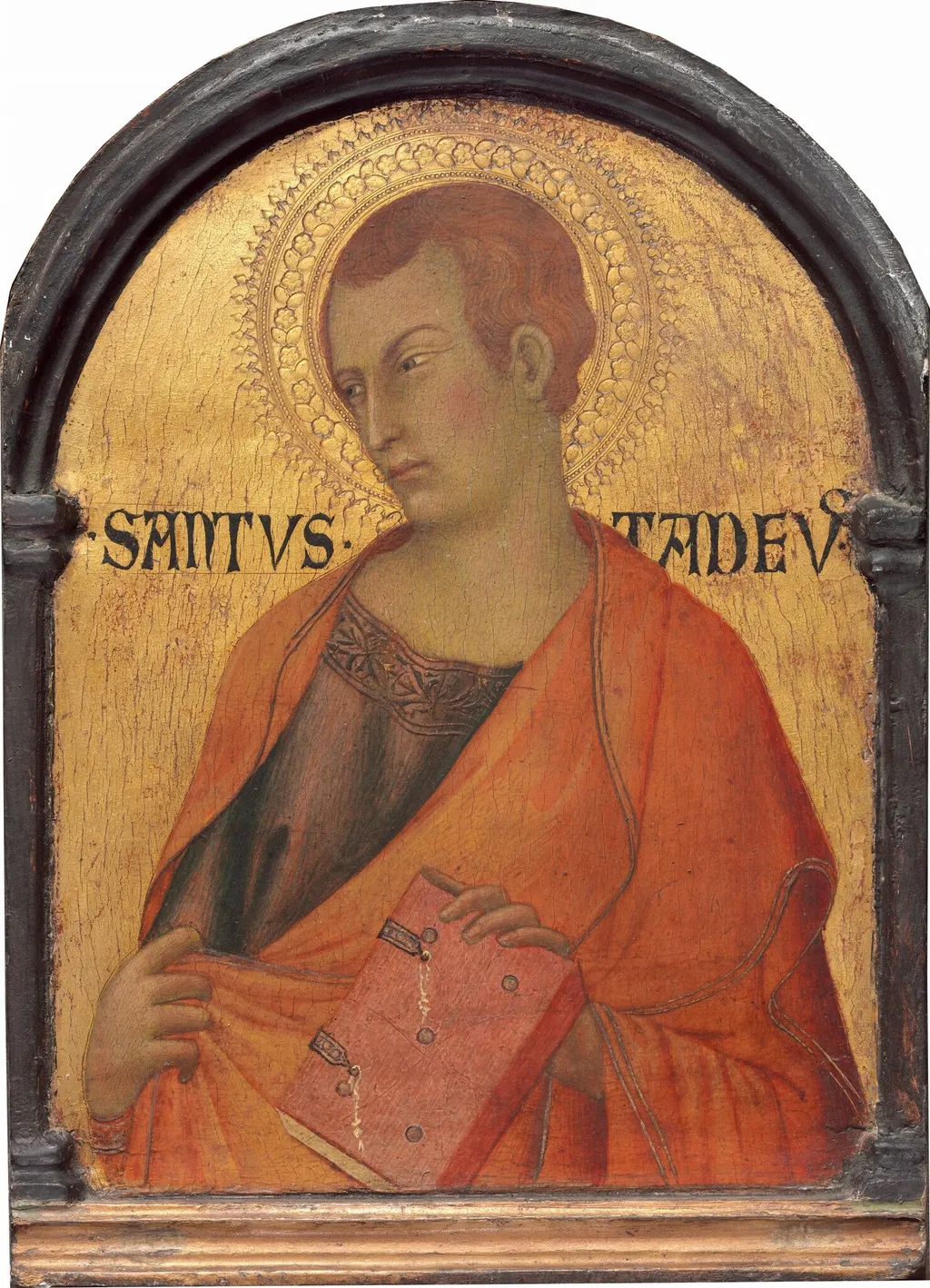
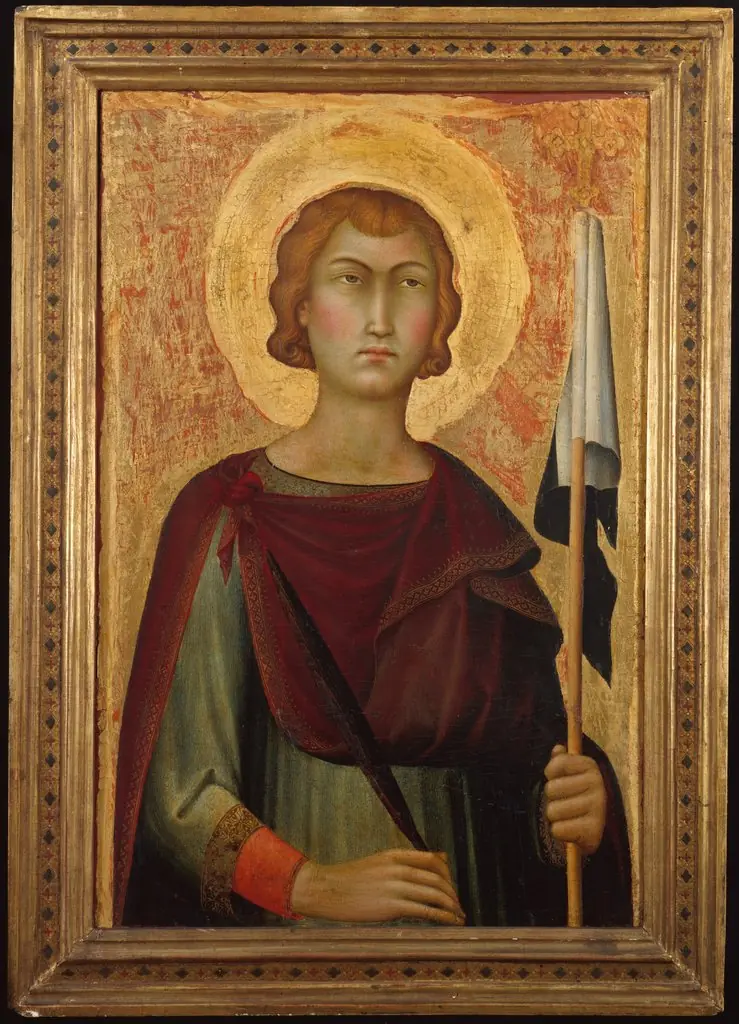
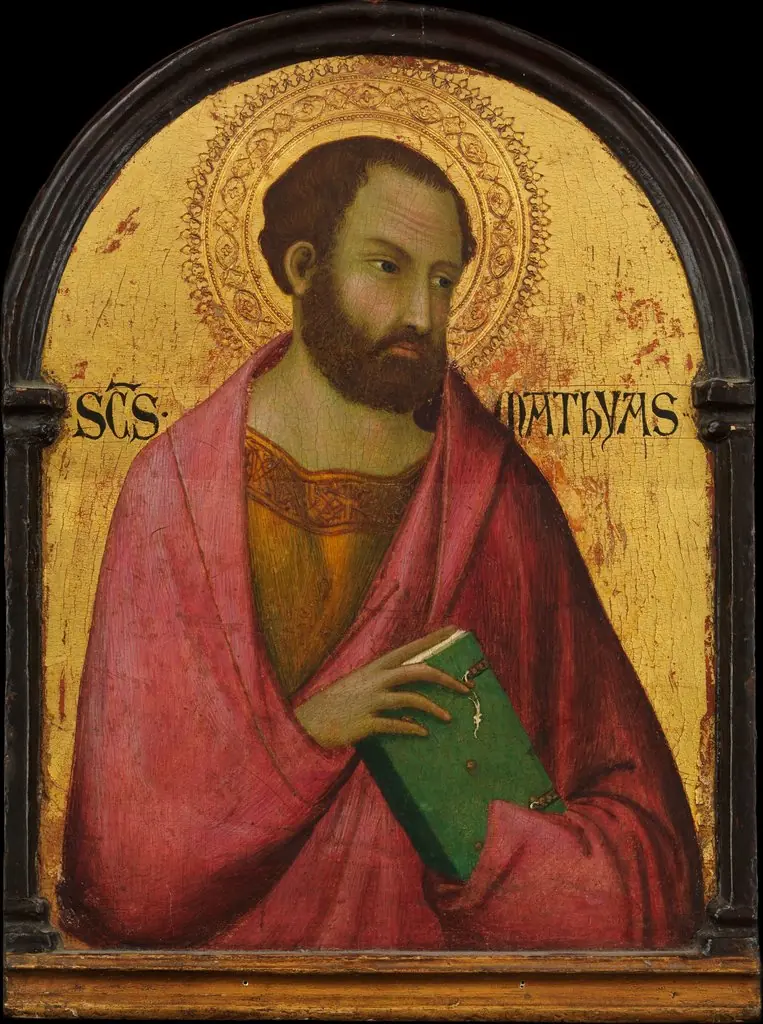
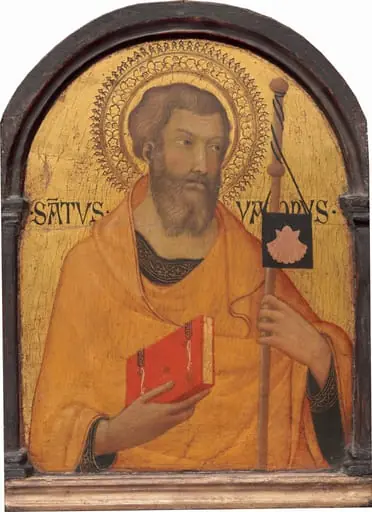
Saint Judas Thaddeus is a tempera painting by the Sienese School artist Simone Martini. It dates from 1318 and is held in the collection of the National Gallery of Art.
- Inscription
- Inscribed:on the left of the Saint: .SAN[C]TVS.; on the right of the Saint: TAD[D]EVs.
About this work
Technique & Style
Saint Judas Thaddeus is painted in tempera on a wooden panel, a technique typical of early 14th-century Italian art.
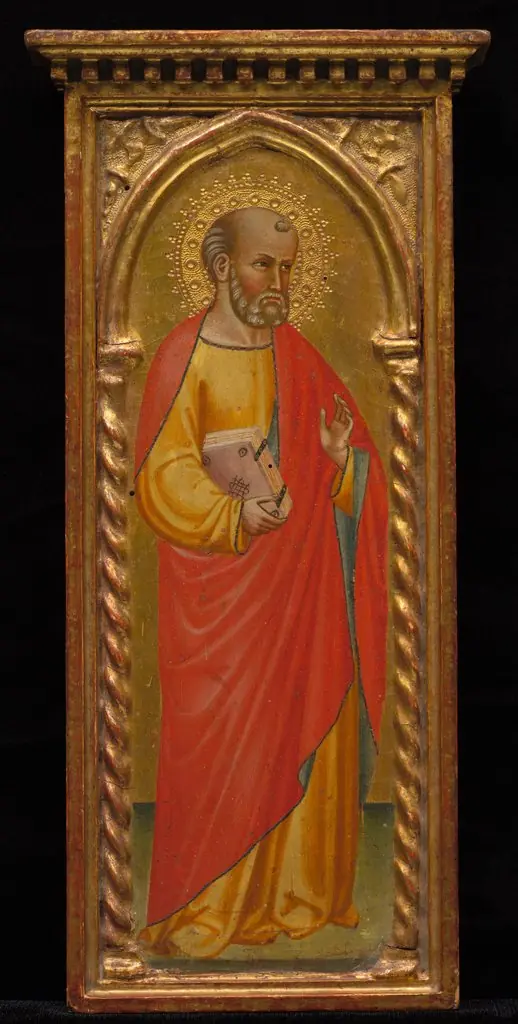
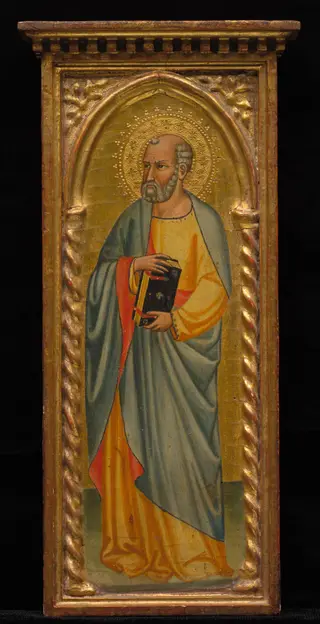
Saint Judas Thaddeus is painted in tempera on a wooden panel, a technique typical of early 14th-century Italian art. The surface retains the fine, flat brushwork and muted coloration associated with Simone Martini's Sienese style. The work was originally part of a multi-panel altarpiece series documented in the collection of Johann Anton Ramboux, later passing through the Wallraf-Richartz-Museum before being acquired by Philip Lehman in 1928.
After a 1943 sale to the Samuel H. Kress Foundation, the four panels were gifted to the National Gallery of Art in 1952.
History & Provenance
Saint Judas Thaddeus, dated 1318, was acquired between 1832 and 1842 by Johann Anton Ramboux in Cologne, together with other panels of the same series, presumably in Siena. Following Ramboux's death, the series appeared at his estate sale in Cologne on 23 May 1867 (lot 75), catalogued as by Lippo Memmi. The Wallraf-Richartz-Museum in Cologne subsequently purchased the series, but deaccessioned it in 1922–1923.
By 1928, four panels of the series, including Saint Judas Thaddeus, were in the collection of Philip Lehman in New York, alongside a fifth panel representing Saint Philip. In June 1943, the four National Gallery of Art panels were sold to the Samuel H. Kress Foundation in New York, which donated them to the NGA in 1952.
The work belongs to the Samuel H. Kress Collection at the National Gallery of Art in Washington, D.C., where the four panels are listed under accession numbers 1952.5.23–.26. No exhibition history is recorded in the available documentation.
Overview
Simone Martini's "Saint Judas Thaddeus," created around 1318, is a tempera on panel painting depicting the apostle. This work exemplifies early 14th-century Italian religious art, where sacred figures were rendered with specific iconographic details to aid devotion and identification. The painting provides insight into the period's visual culture and its approach to portraying holy individuals.
Subject & Meaning
The artwork portrays Saint Judas Thaddeus, clearly identified by the inscriptions "SAINTVS" and "THDEV" positioned beside his head. He is depicted with short brown hair, dressed in a red robe over a dark shirt. The saint holds a red book in his left hand while his right hand gestures towards it, symbolizing his role as an evangelist or a keeper of sacred knowledge. His gaze is directed towards the right.
Own this work as a print
Artist & collection