Artwork
Mountains
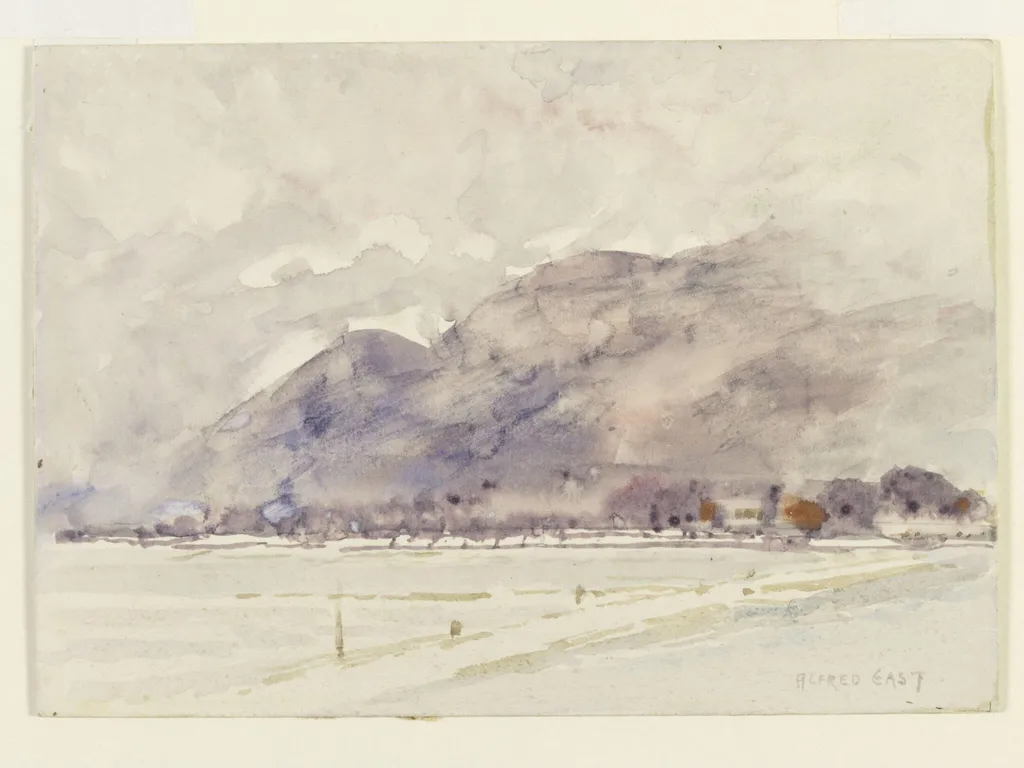
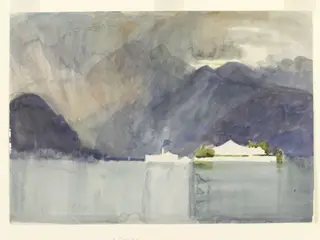
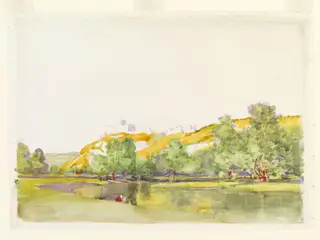
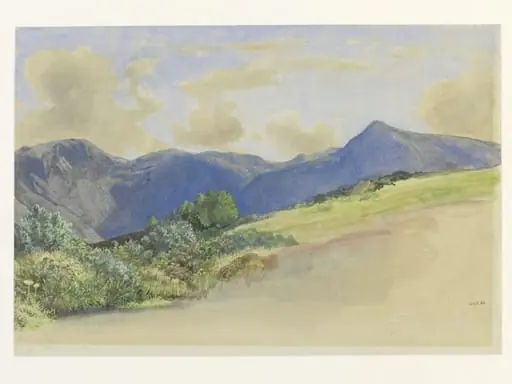
Mountains is a watercolor work on paper by the Aestheticist artist Sir Alfred East. It dates from 1850 and is held in the collection of the Victoria and Albert Museum.
About this work
Overview
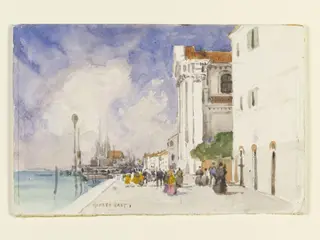
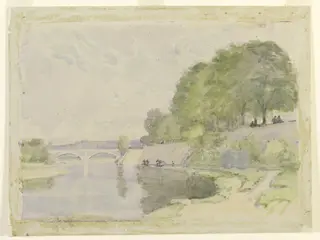
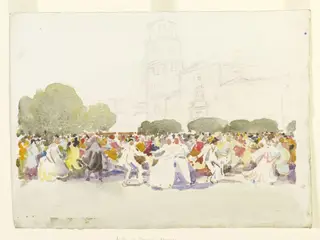
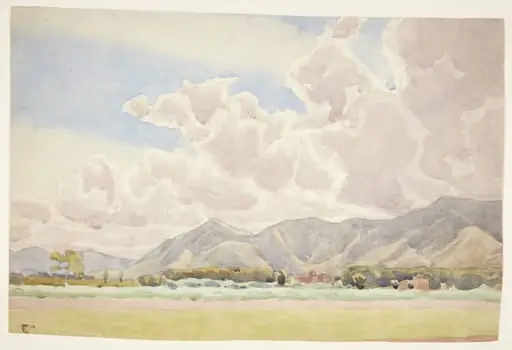
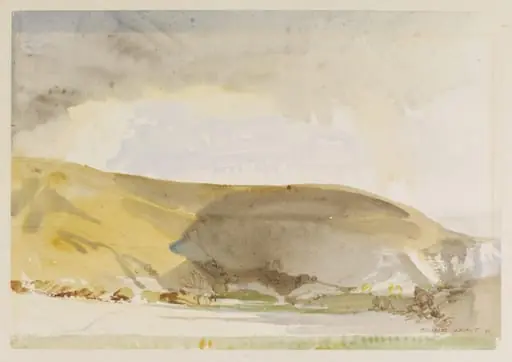
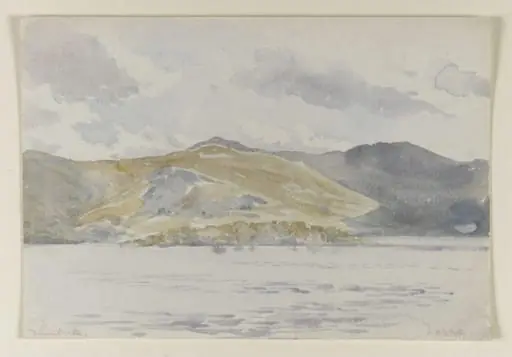
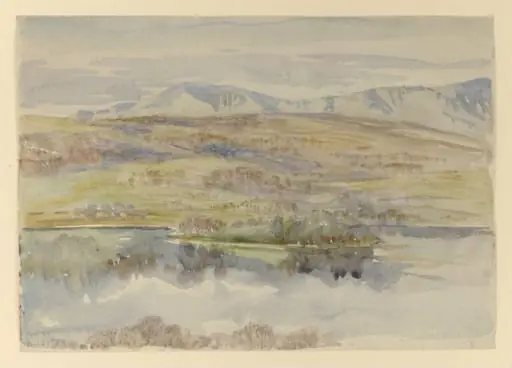
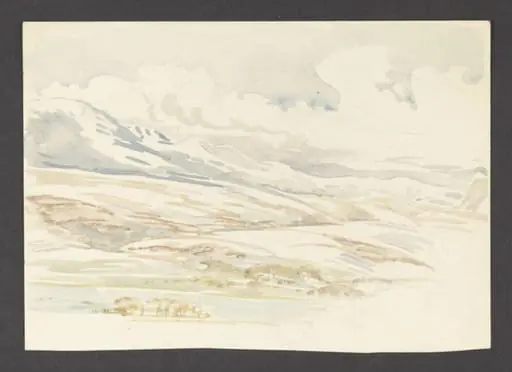
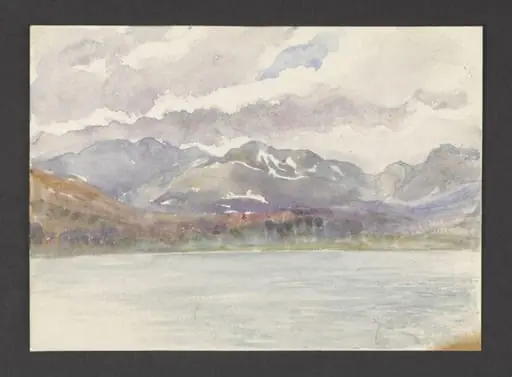
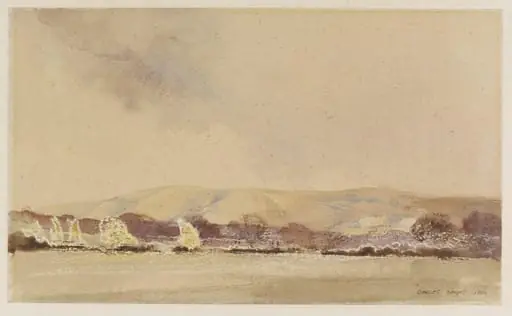
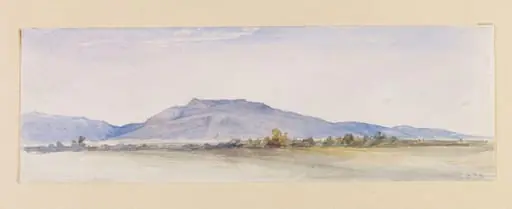
This watercolour landscape by Sir Alfred East presents a tranquil mountainous scene rendered in delicate, translucent washes. The composition emphasizes stillness and subtle tonal variation, with no dramatic contrasts or bold lines. The work exemplifies East’s preference for quiet, unembellished natural forms, capturing a moment of serene atmospheric calm rather than a specific location.
Subject & Meaning
The absence of strong narrative or movement invites contemplation.
The painting depicts a distant range of softly contoured hills, with minimal human presence, small structures and sparse trees near the base suggest quiet rural habitation. The absence of strong narrative or movement invites contemplation. The scene conveys a sense of enduring peace, where nature exists without disruption, reflecting a meditative approach to landscape rather than one of grandeur or conquest.
Technique & Style
East employed loose, fluid watercolour techniques, allowing pigments to bleed and blend naturally on the paper. Pale blues, muted grays, and faint browns dominate, creating a hazy, ethereal atmosphere. The foreground’s flat expanse is suggested with minimal linear detail, reinforcing the impression of distance and stillness. The medium’s transparency enhances the sense of air and light permeating the scene.
History & Provenance
Created during East’s mature period, this work aligns with his extensive travels and study of natural forms, particularly in the British countryside and abroad. While the exact date and early ownership are not widely documented, it fits within a body of work produced after his return from Japan, where his palette and compositional restraint became more subdued and atmospheric.
Context
In late 19th- and early 20th-century Britain, watercolour was increasingly valued for its intimacy and immediacy. East’s work stood apart from the more dramatic Romantic landscapes, instead aligning with a quieter, observational tradition influenced by Japanese prints and the Aesthetic Movement. His focus on mood over detail resonated with contemporary tastes for restrained beauty.
Legacy
East’s landscapes, including this piece, contributed to the enduring appreciation of watercolour as a serious medium for contemplative art. His restrained style influenced later British painters who favored subtlety and atmospheric effect over theatricality. Though less celebrated today than some contemporaries, his work remains a quiet benchmark in the history of British landscape watercolour.
Own this work as a print
Artist & collection

Artist
Alfred East kept a pocket-sized sketchbook wherever he went, scribbling quick watercolours so he could capture the light before it shifted.