Artwork
James Monroe
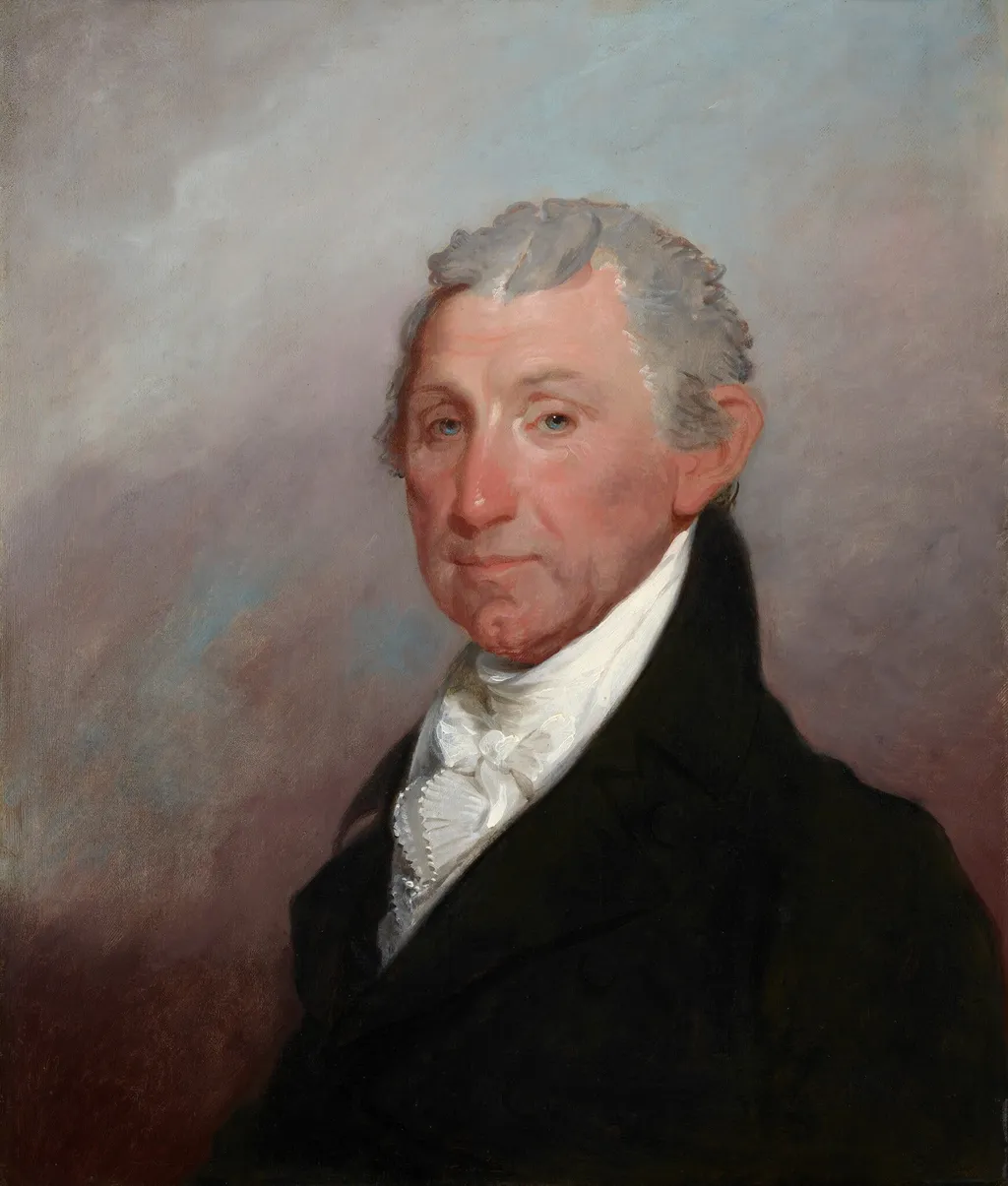
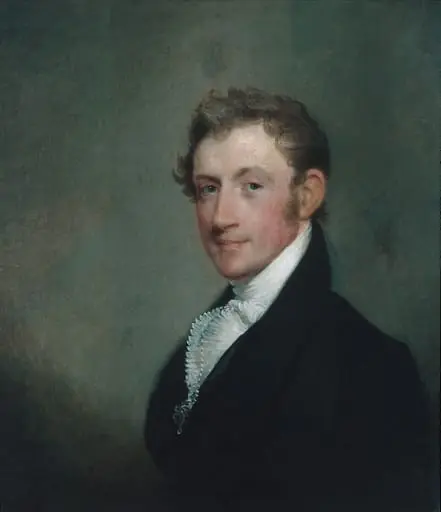
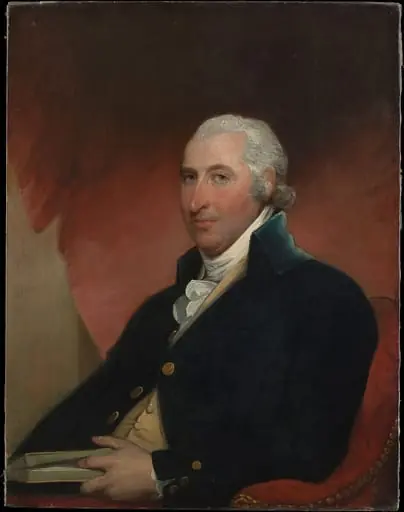
James Monroe is an oil painting by the American Impressionist artist Gilbert Stuart. It dates from 1817 and is held in the collection of the National Gallery of Art.
About this work
Gilbert Stuart shows James Monroe, the fifth U.S. president, in a formal pose and old-fashioned dress. Close attention to the face and clothing and a quiet palette give a clear record of the man. Oil on wood, 1817.
Subject & Meaning
Consequently, the work represents a direct visual record of Monroe during his presidency, serving historically as an official image of the executive leader.
Executed in 1817, this oil painting on wood panel functions as a formal portrait depicting James Monroe, the fifth President of the United States. As a work of the portrait genre, its primary iconography is the realistic representation of Monroe's likeness, intended to document his physical presence and status. The composition focuses exclusively on the sitter without additional allegorical figures or complex symbolic attributes described in the available records.
Consequently, the work represents a direct visual record of Monroe during his presidency, serving historically as an official image of the executive leader. The painting's significance lies in its creation by Gilbert Stuart, a preeminent American portraitist, thereby associating Monroe with the artistic tradition used to define the early republic's founding figures.
Technique & Style
The portrait of James Monroe is an oil painting on a wooden panel, created in 1817 by Gilbert Stuart. The work is executed in oil paint, with the support consisting of a single wood panel, typical of early American portraiture. The painting measures approximately 64.8 cm in height and 55 cm in width, as recorded in the National Gallery of Art's catalogue.
History & Provenance
Gilbert Stuart created this oil-on-panel portrait of James Monroe in 1817. The work was originally commissioned by Colonel George Gibbs of Sunswick Farm in Astoria, New York, who retained ownership until his death in 1833. It subsequently passed to Gibbs's widow, Laura Wolcott Gibbs.
In 1872, the painting was sold through the New York agent Jacob Hart Lazarus to Thomas Jefferson Coolidge of Boston. The Coolidge family retained the portrait for over a century, with ownership descending from Coolidge to his grandson, Thomas Jefferson Coolidge III, and then to his son, Thomas Jefferson Coolidge IV. The final transaction in this chain occurred in 1979, when the work was sold to the National Gallery of Art in Washington, D.C., where it is accessioned as 1979.4.3.
Overview
This oil painting on wood, created by Gilbert Stuart around 1817, presents a formal likeness of James Monroe. It captures the fifth President of the United States, offering a visual record of a prominent figure from early American history. The work exemplifies Stuart's approach to portraiture during this period.
Own this work as a print
Artist & collection

Artist
Gilbert Stuart (né Stewart; December 3, 1755 – July 9, 1828) was an American painter born in the Rhode Island Colony who is widely considered one of America's foremost portraitists.