Artwork
Caspar Sibelius
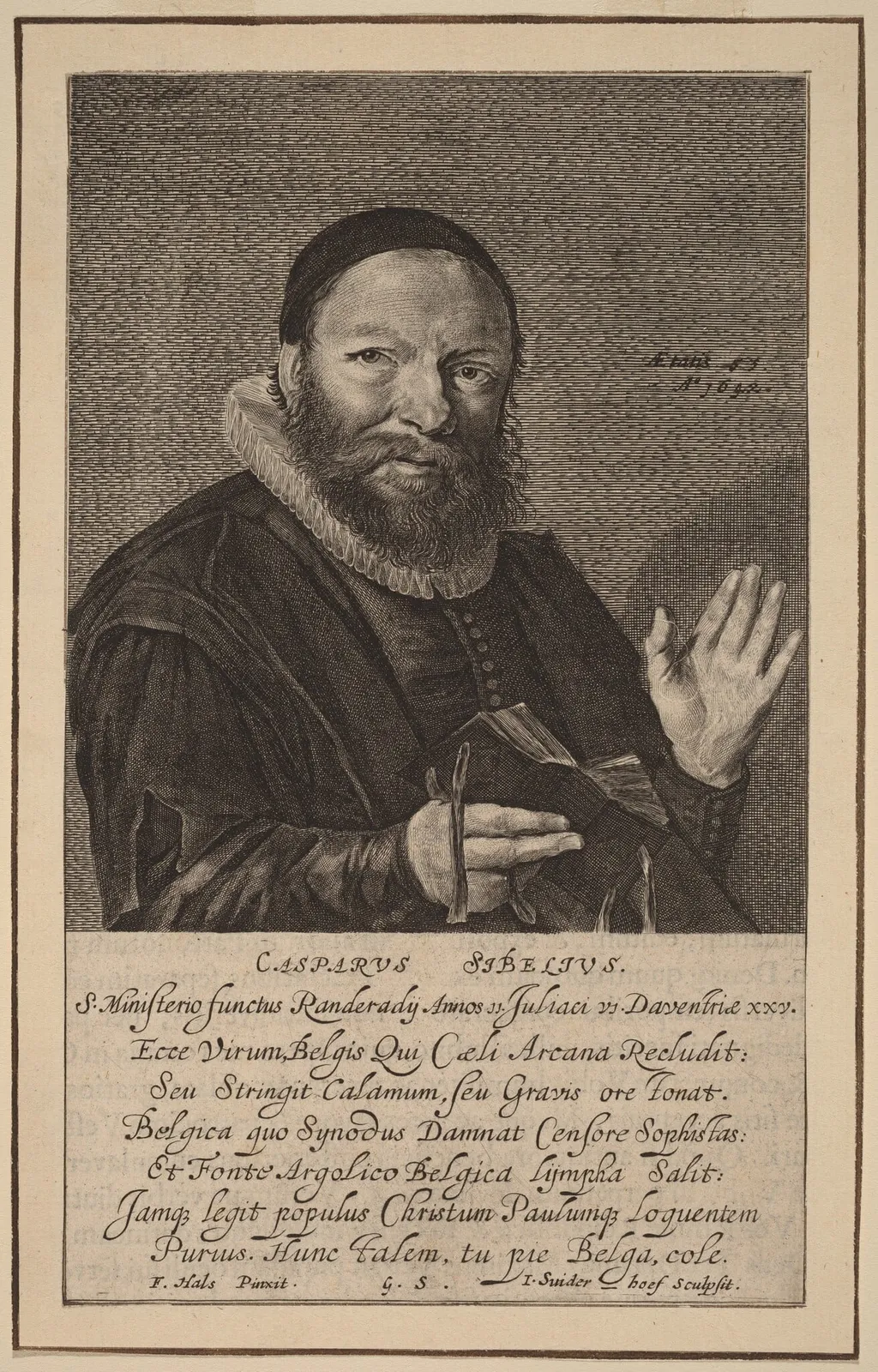
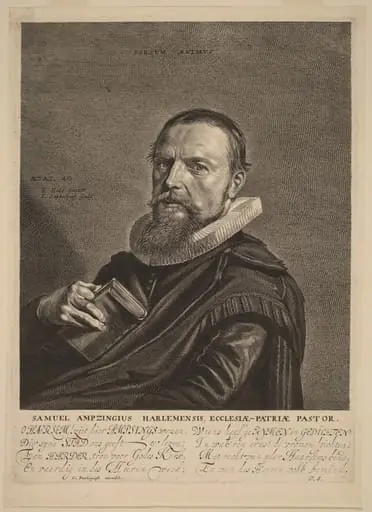
Caspar Sibelius is an ink print by the Baroque artist Jonas Suyderhoff. It dates from 1642 and is held in the collection of the National Gallery of Art.
About this work
Overview
Jonas Suyderhoff’s 1642 engraving titled “Caspar Sibelius” presents a solitary figure rendered in fine line work. The print, executed on a copper plate, measures the typical dimensions of mid‑seventeenth‑century portrait engravings and is signed by the artist. It exemplifies the period’s interest in documenting learned individuals through portable, reproducible media.
Subject & Meaning
The portrait shows a bearded man in a dark, buttoned jacket with a ruffled collar, holding a book in his left hand while his right hand gestures as if addressing the viewer. His direct gaze and solemn expression suggest an intellectual or scholarly identity, emphasizing the importance of learning and personal authority in the era.
Technique & Style
Suyderhoff employs a dense network of cross‑hatching and stippling to model the face, clothing folds, and the book’s volume, creating a sense of three‑dimensionality on a flat surface. The engraving’s background is a uniform gray, allowing the intricate line work to stand out. Such meticulous rendering reflects the high level of skill required for copper‑plate engraving in the Dutch Golden Age.
History & Provenance
Created in 1642, the print likely circulated among collectors of portrait engravings and scholars who valued visual records of contemporaries. While the original plate’s whereabouts are unknown, surviving impressions have appeared in European print collections and auction catalogues, documenting the work’s continued presence in the market for over three centuries.
Own this work as a print
Artist & collection


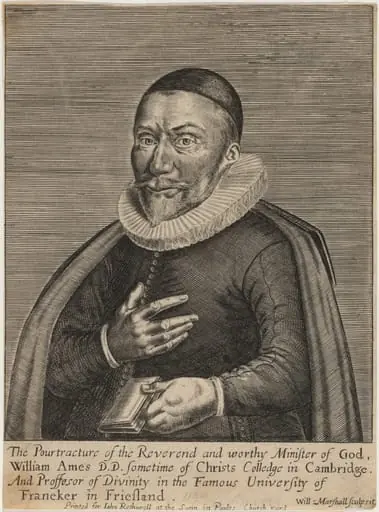
- William Ames
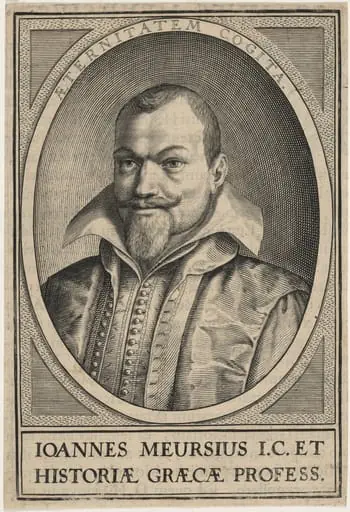 Joannes van Meurs, Dutch Classical Scholar
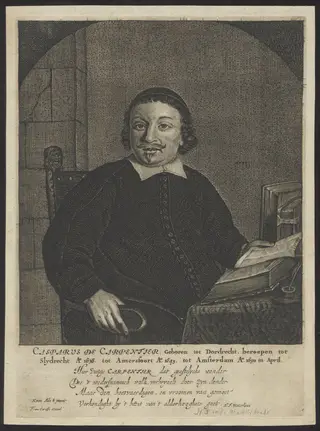 Portrait of Casparus de Carpentier, Walloon Minister at Sliedrecht, Amersfoort and Amsterdam
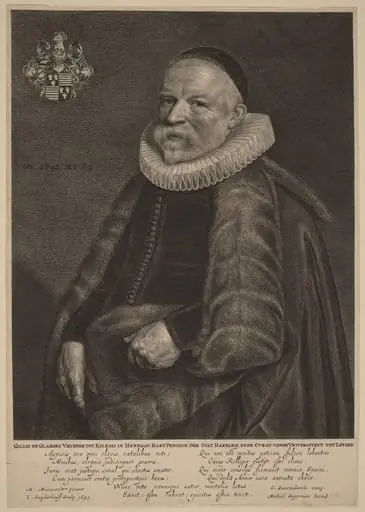 Gillis de Glarges
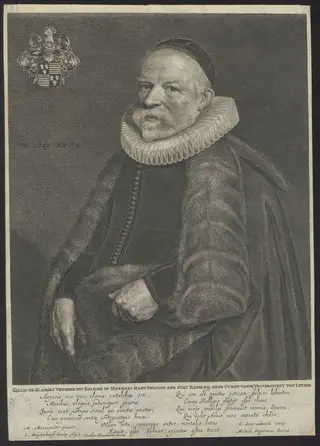 Portrait of Gillis de Clarges
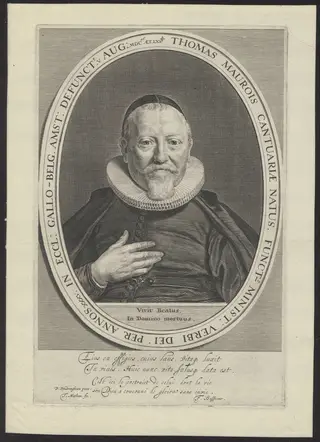 Portrait of Thomas Maurois, Walloon minister in Amsterdam
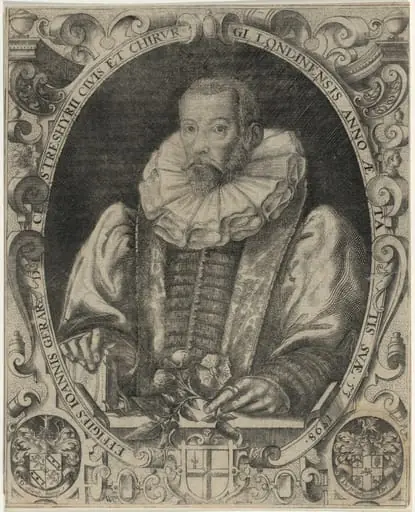 John Gerard, Herbalist
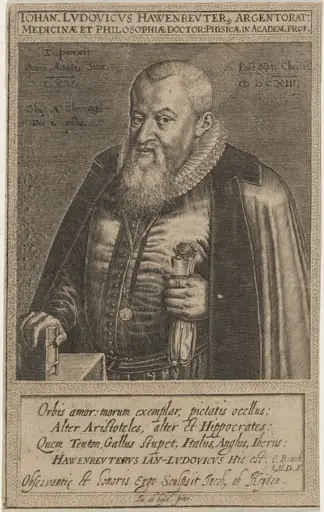 Johan Ludovicus Hawenrenter
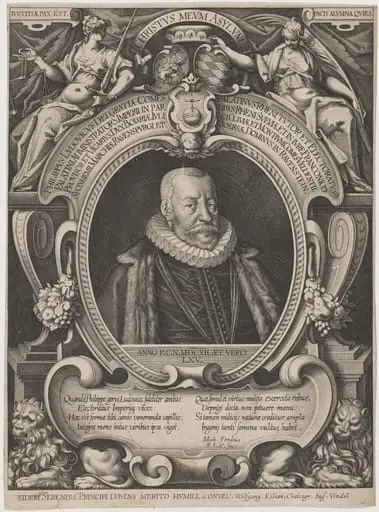 Philip Louis, Count Palatine
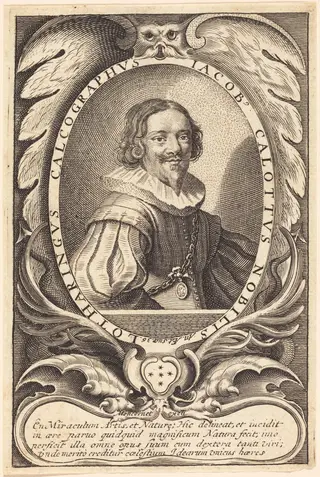 Jacques Callot
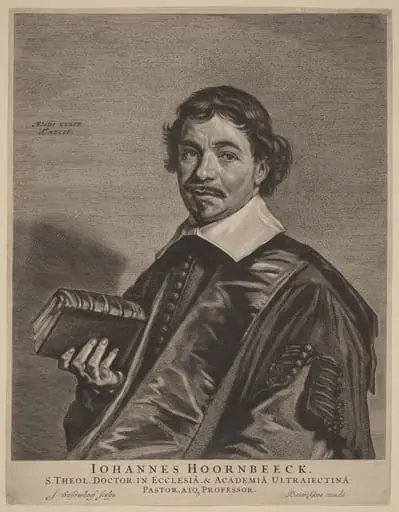
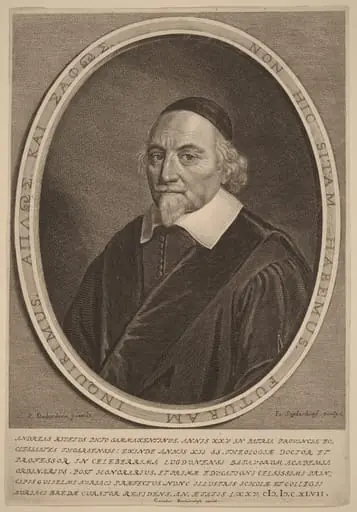
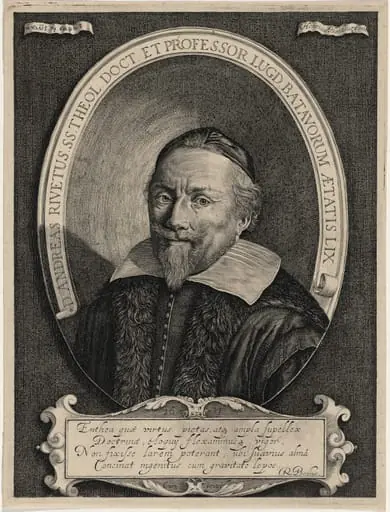 Andreas Rivetus, Doctor of Divinity and Professor
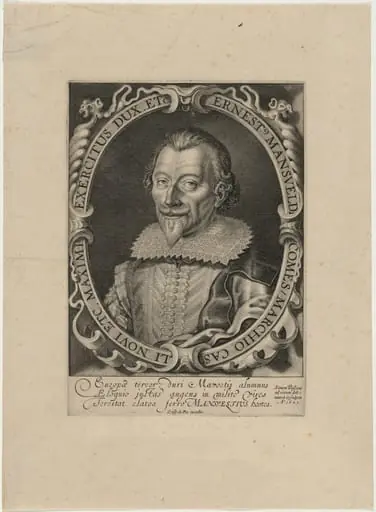 Ernest, Count of Mansfeld