Artwork
Triumph of Ceres
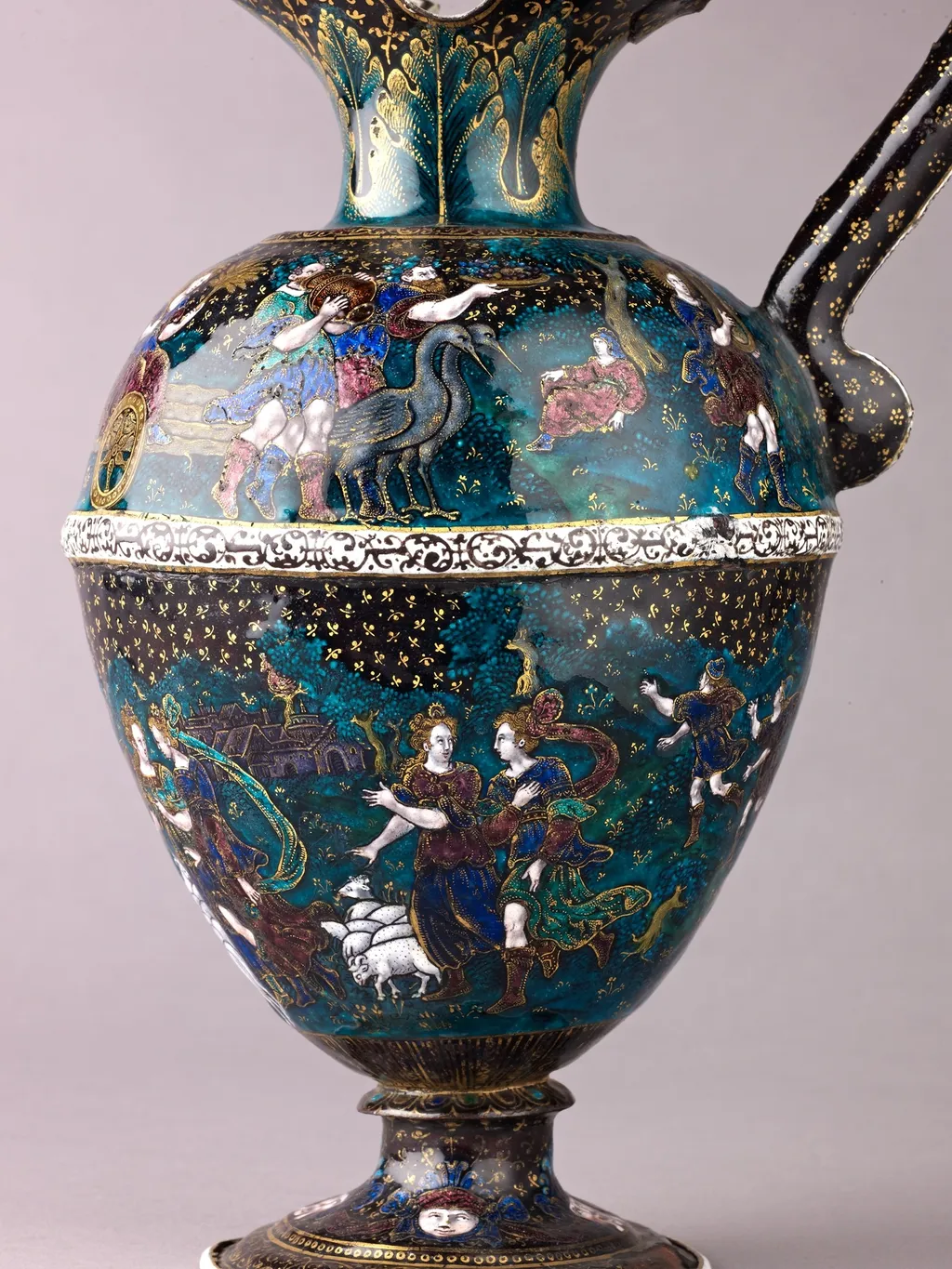
Triumph of Ceres is an unspecified painting by the Mannerist artist Suzanne de Court. It dates from 1605 and is held in the collection of the Metropolitan Museum of Art.
About this work
History & Provenance
No specific accession or inventory number, nor any exhibition history for the piece, is documented in the available sources.
The Triumph of Ceres, created by Suzanne de Court in 1605, is a painted enamel on copper held in the collection of the Metropolitan Museum of Art as part of the Robert Lehman bequest. The work depicts mythological figures including Ceres, a man, and a woman, and measures 28.7 by 17.8 centimetres, a scale consistent with the intimate Limoges enamel plaques for which de Court's workshop was renowned. No specific accession or inventory number, nor any exhibition history for the piece, is documented in the available sources.
Legacy
The 1605 enamel by Suzanne de Court is documented in the Metropolitan Museum of Art's collection as part of the Robert Lehman holdings. Suzanne de Court is one of the few identified female enamellers active in Limoges at the turn of the seventeenth century, and her mythological grisaille and polychrome enamels are recognized as among the finest late examples of the Limoges tradition. The work contributes to scholarly understanding of late-Renaissance decorative arts and the transmission of mythological iconography into the luxury enamel medium.
Overview
Suzanne de Court, a notable enamel painter from Limoges, created Triumph of Ceres in 1605. This intricate work, featuring the Roman goddess Ceres, exemplifies the Mannerist aesthetic prevalent at the time. As one of the few identifiable women to sign Limoges enamel pieces, de Court likely oversaw a productive workshop, contributing significantly to the art form's legacy. The piece is now part of The Metropolitan Museum of Art's collection.
Subject & Meaning
The artwork centers on the Roman goddess Ceres, traditionally associated with agriculture and fertility, depicted alongside a man and a woman. The composition is rich with narrative elements, incorporating winged creatures, birds, and various animals like a ram and a dog. This blend of mythological figures and naturalistic details creates a vibrant, story-like scene, characteristic of the period's allegorical interests.
Technique & Style
Executed in enamel, the vase features a densely packed composition with bright, active scenes. Gold outlines and small stars intricately fill the background, enhancing the visual complexity. The palette employs deep blues, soft pinks, and striking gold accents, contributing to the work's opulent appearance. This detailed and somewhat crowded aesthetic aligns with the Mannerist style, emphasizing elaborate forms and dynamic arrangements.
Own this work as a print
Artist & collection

Artist
Suzanne de Court (fl. 1600) was a French enamel painter in the Limoges workshops, probably running a workshop of some size producing pieces of the highest quality. She was the only identifiable woman signing Limoges…

- ulcior
 buire
buire Small vase
 Vas bulbar
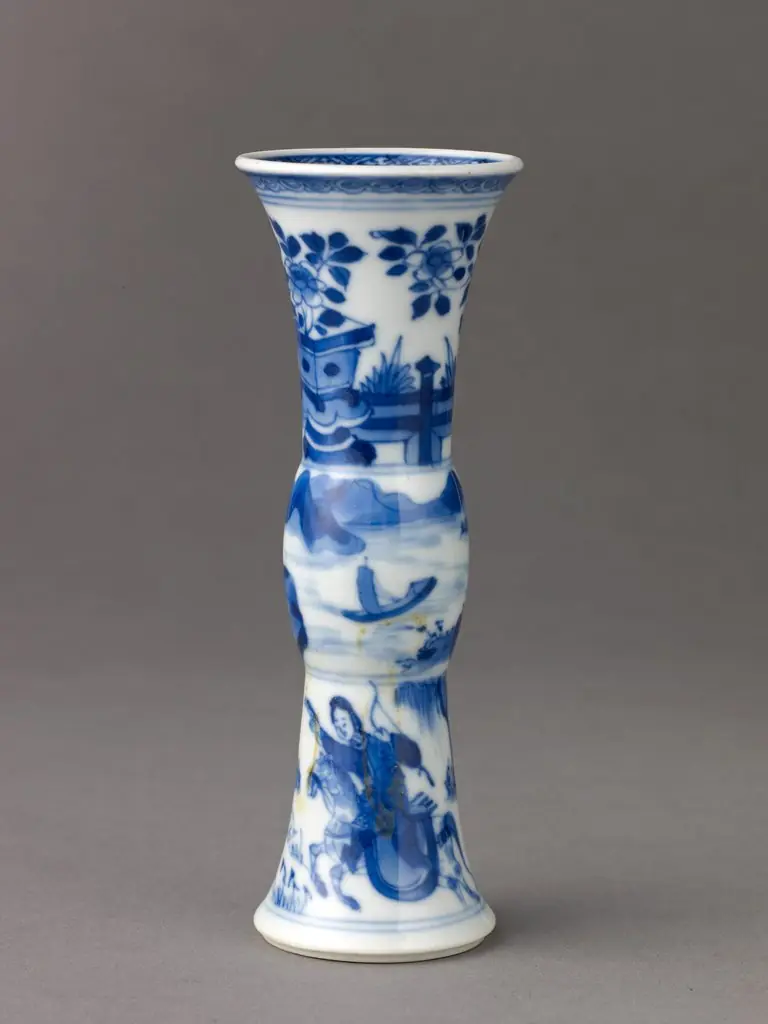 Small vase
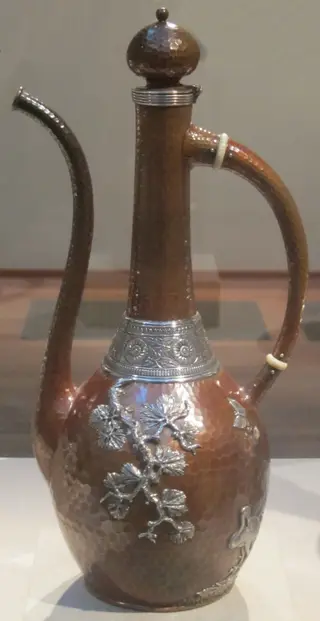 Ewer
Ewer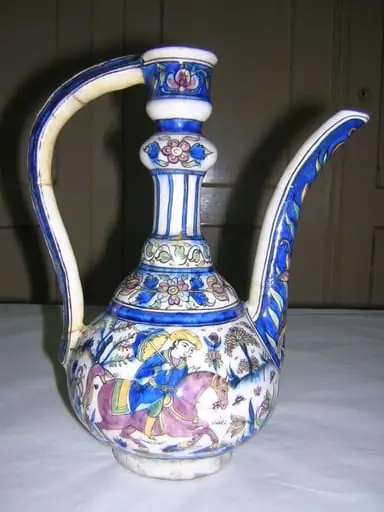 Ibric; Aftabe (persană)
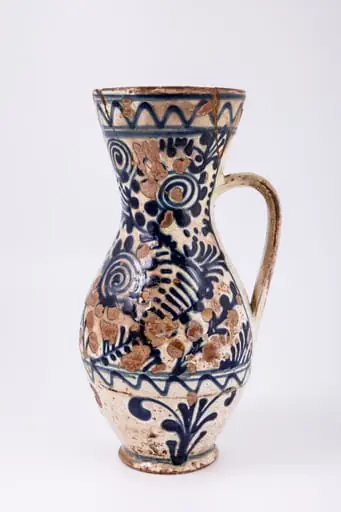 Cană cu corpul bombat, gât scurt, toarta dispusă de la gât la diametrul maxim al vasului. Suprafața decorativă a vasului este încadrată între linii subțiri și vălurite dispuse în partea superioară și inferioare. Decorul central reprezintă calea cu sori alcătuită din lujeri, linii paralel dispuse sub formă de raze, cercuri pline și floarea-soarelui stilizată. Cromatica: alb și albastru cobalt.
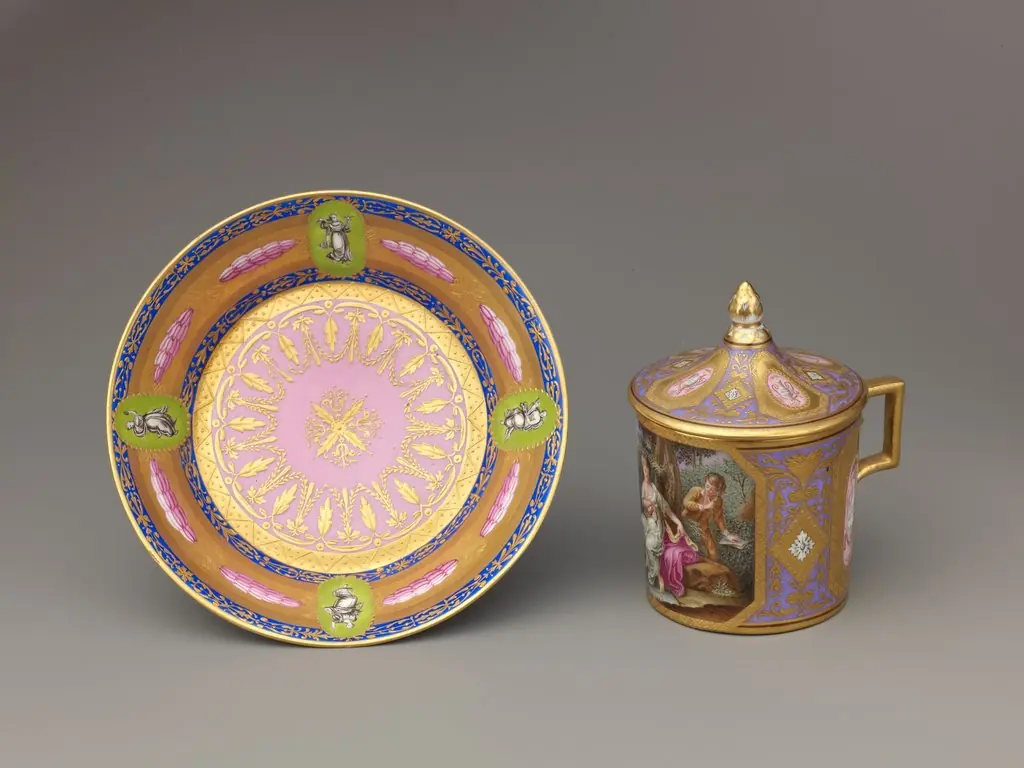 Covered Cup and Saucer
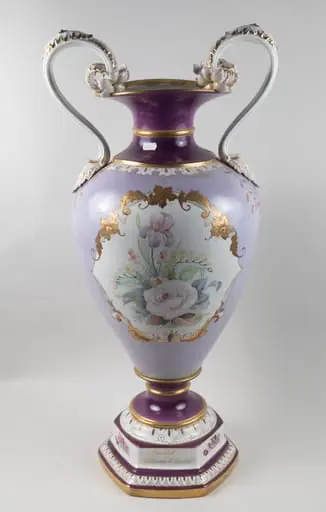 Vază din porțelan, tip amforă, cu două anse, decorată pe un fond mov cu două medalioane, unul reprezentând portretul Elenei Ceaușescu. cel de-al doilea medalion este decorat un buchet cu flori. Pe gâtul vazei o dedicație ”Omagiu, Ianuarie 1989”. Oferită de Consiliul Național al Femeilor. Vază oferită Elenei Ceaușescu de Consiliul Național al Femeilor cu ocazia aniversării zilei de naștere, ianuarie 1989.
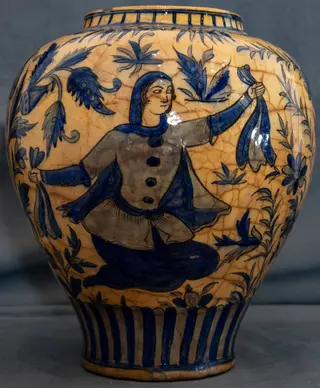 Vas persan din faianță (corect Vas); ulcior pentru seu
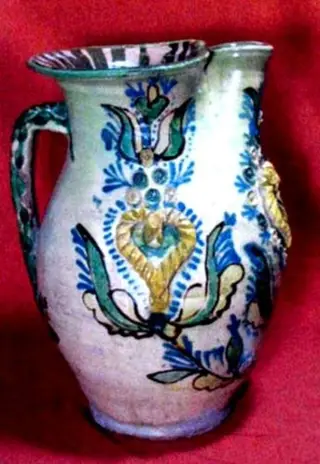 cană
cană