Artwork
Yuki|雪月花 雪|Snow
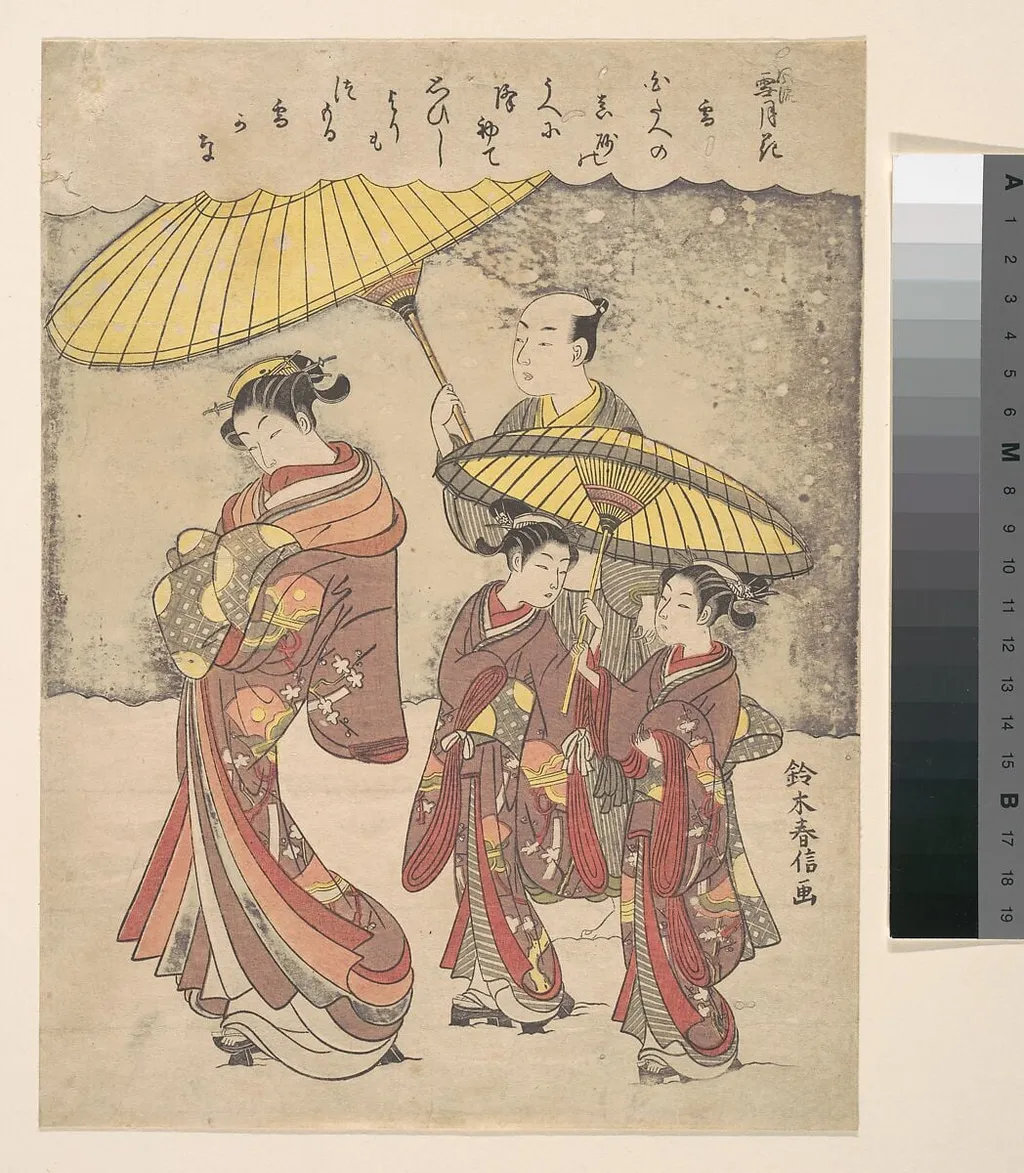
Yuki|雪月花 雪|Snow is an ink print by the Romanticist artist Suzuki Harunobu. It dates from 1769 and is held in the collection of the Metropolitan Museum of Art.
- Accession no.
- JP2774
- Credit line
- Henry L. Phillips Collection, Bequest of Henry L. Phillips, 1939
About this work
Overview
Harunobu employs delicate ink lines and a refined palette of muted tones to render the snow, contrasting it with the vibrant colors of the garments.
Yuki (Snow), created by Suzuki Harunobu in 1769, is a celebrated nishiki-e woodblock print depicting three figures navigating a snowy landscape. The composition captures a winter scene where the subjects walk closely together, utilizing umbrellas for protection against the falling snow. The figure on the left wears a red robe with gold trim and holds a small fan, while the central male figure carries a large yellow umbrella.
The third figure, positioned to the right, also clad in red, holds a smaller umbrella. Harunobu employs delicate ink lines and a refined palette of muted tones to render the snow, contrasting it with the vibrant colors of the garments. This work exemplifies the artist's mastery of the full-color printing technique he helped pioneer, moving beyond the earlier benizuri-e style.
Produced during the height of Harunobu's career, the print is part of his famous series illustrating the seasons, specifically representing winter. The piece demonstrates his ability to infuse everyday domestic scenes with poetic atmosphere and emotional resonance, establishing a new standard for narrative depth and aesthetic subtlety in ukiyo-e art.
Subject & Meaning
The scene presents three individuals, two dressed in red garments with gold trim and one man in a more subdued outfit, walking side by side under a sky of muted gray. Their umbrellas suggest protection from precipitation, while the gentle gestures and poised hairstyles convey a moment of shared travel or leisure.
Technique & Style
Harunobu employs the ukiyo-e woodblock method, using fine lines and subtle color washes to delineate the figures and their flowing robes. Soft hues and delicate shading, achieved through careful carving and printing, give the scene a sense of movement and atmospheric light without heavy contrast.
History & Provenance
The print dates to the late eighteenth century, a period when Harunobu was renowned for his elegant portrayals of everyday life. It entered the Metropolitan Museum of Art’s holdings through acquisition, where it remains a representative example of his work in the genre of Japanese woodblock prints.
Artist & collection

 Untitled
 Untitled
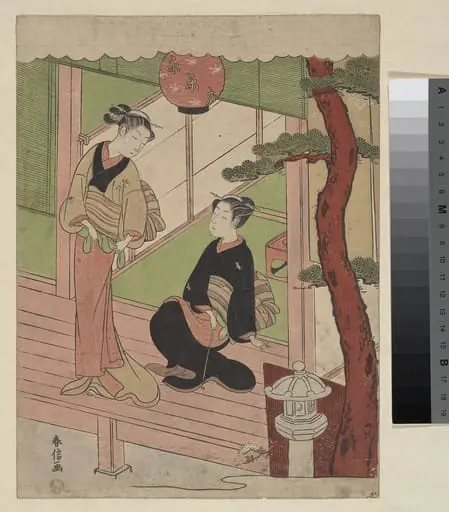 Untitled
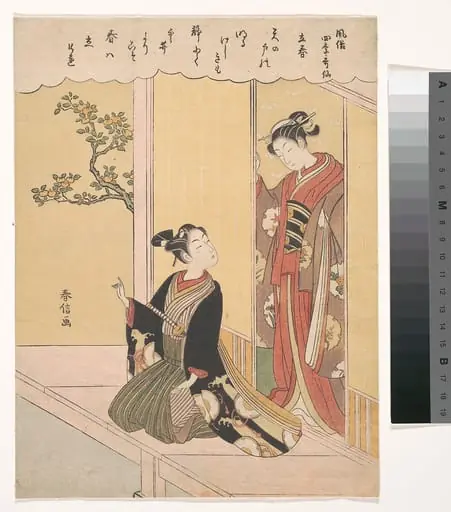 鈴木春信画「風俗四季歌仙 立春」|The First Day of Spring (Risshun), from the series Fashionable Poetic Immortals of the Four Seasons (Fūzoku shiki Kasen)
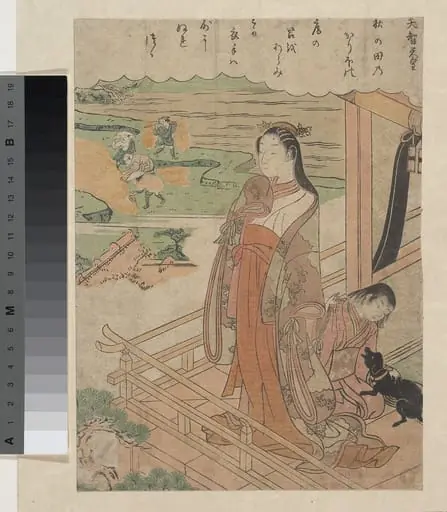 百人一首 天智天皇|Sympathy
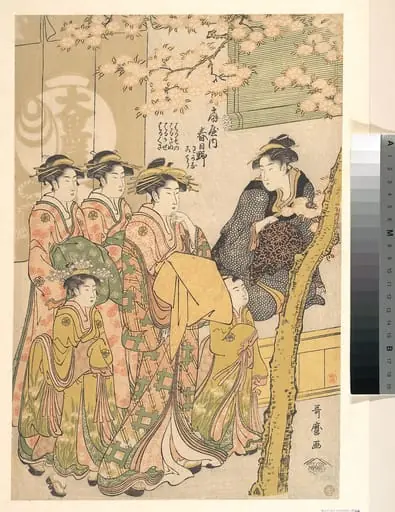 扇屋内春日野|The Oiran Kasugano of Ogiya on Parade under Blossoming Cherry Trees
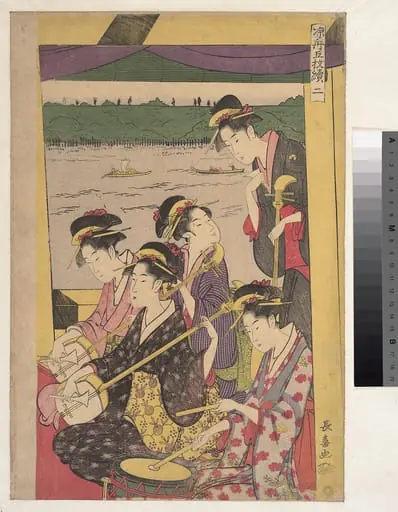 Suzumibune gomai-e; Ni|A Party of Geisha in a Suzumi-bune, i.e. "cooling-off boat." (Second Scene of a Boating Party)
 Untitled
 Untitled
- 雪の桟橋|Landing-stage in the Snow (Yuki no sanbashi)