Artwork
Sumidagawa no rakugan|風俗江戸八景 隅田川落雁|Wild Geese Flying Down the Sumida River
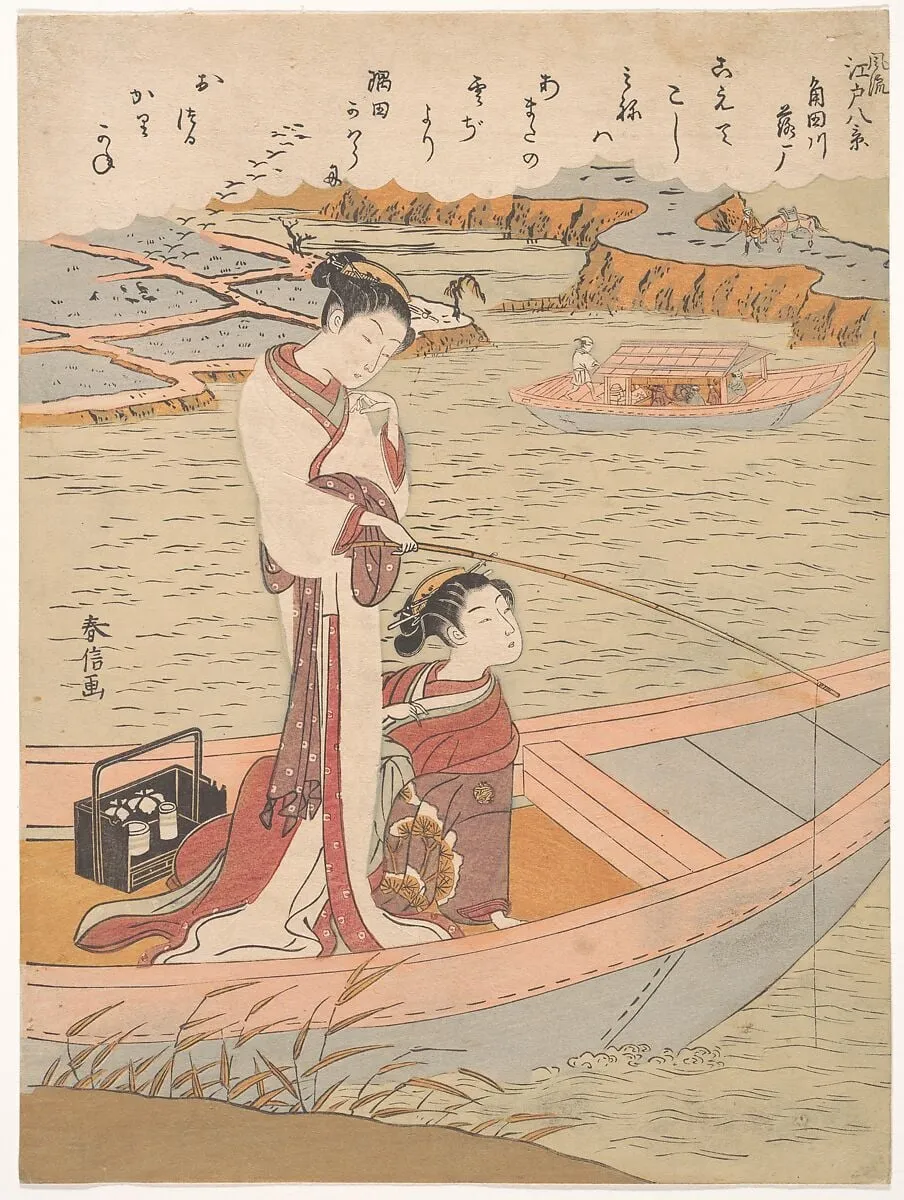
Sumidagawa no rakugan|風俗江戸八景 隅田川落雁|Wild Geese Flying Down the Sumida River is an ink print by the Romanticist artist Suzuki Harunobu. It dates from 1769 and is held in the collection of the Metropolitan Museum of Art.
About this work
Subject & Meaning
This 1769 woodblock print by Suzuki Harunobu illustrates the theme of wild geese descending over the Sumida River, a specific variation within the Eight Views tradition adapted for Edo landscapes. The composition integrates this natural motif with scenes of contemporary urban life, featuring a beautiful woman (bijin) alongside figures engaged in angling and a bark navigating the waterway.
By combining the poetic imagery of migrating birds with depictions of leisure activities on the river, the work functions as both a meisho-e (picture of a famous place) and a bijin-ga. The juxtaposition symbolizes the harmony between the seasonal cycles of nature and the fashionable pursuits of the city's inhabitants, capturing a serene moment of daily life along the historic waterway.
Technique & Style
This 1769 woodblock print by Suzuki Harunobu is executed in ink and color on paper, exemplifying the nishiki-e (brocade print) technique of multicolor woodblock printing that flourished during the Edo period. The work belongs to the ukiyo-e genre and combines multiple sub-genres: bijin-ga (pictures of beautiful women), meisho-e (pictures of famous places), and nishiki-e (full-color prints). Harunobu's refined handling demonstrates the delicate color gradations and elegant figural style for which he is renowned, particularly in his depiction of the female form within a landscape setting along the Sumida River.
History & Provenance
Wild Geese Flying Down the Sumida River was designed by Suzuki Harunobu and produced as a woodblock print in 1769, using ink and color on paper.
Wild Geese Flying Down the Sumida River was designed by Suzuki Harunobu and produced as a woodblock print in 1769, using ink and color on paper.
The work is held in the collection of the Metropolitan Museum of Art, indicating its modern institutional ownership. No information about an earlier ownership chain, commissioner, or intermediate provenance is documented in the available sources.
The work is held in the collection of the Metropolitan Museum of Art, where it is catalogued under its full title Sumidagawa no rakugan, also known as Windscapes of Edo: Eight Views of Edo, Wild Geese Flying Down the Sumida River. The print was created in 1769 by Suzuki Harunobu and entered the museum's collection as part of its ukiyo-e holdings. It has been featured in exhibitions at the Metropolitan Museum of Art focusing on Japanese woodblock prints, including a 2003 exhibition titled Japanese Woodblock Prints: The Art of Suzuki Harunobu.
Overview
Suzuki Harunobu’s woodblock print, dated around 1769, presents a tranquil evening on the Sumida River. A woman in a blue kimono leans on a railing, observing geese that glide low over the water as the sky takes on a soft pink hue. Below, small boats drift and a fisherman works his pole from a skiff on the far bank.
Context
During the mid‑eighteenth century, prints that combined poetry and landscape were widely circulated in Edo, reflecting a cultural fascination with seasonal motifs and the pleasures of river scenery. Harunobu’s work exemplifies this blend of literary and visual art.
Artist & collection

- Untitled
 Untitled
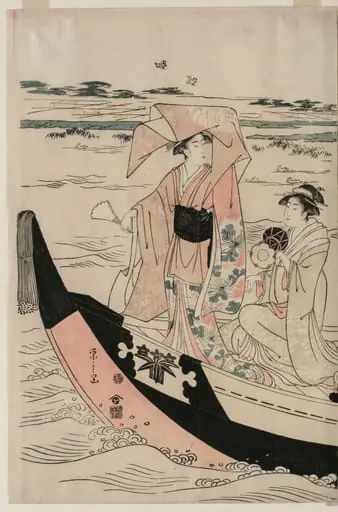 Women in a Pleasure Boat on the Sumida River
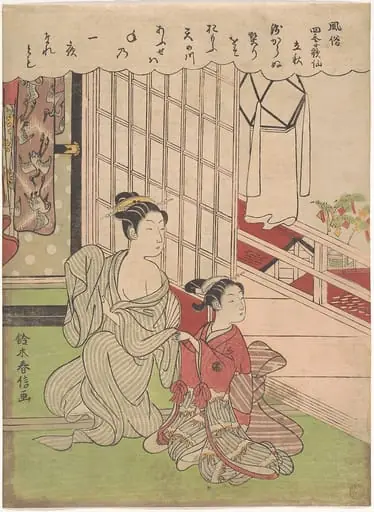 Aki|風俗四季歌仙 立秋|First Day of Autumn (Risshu)
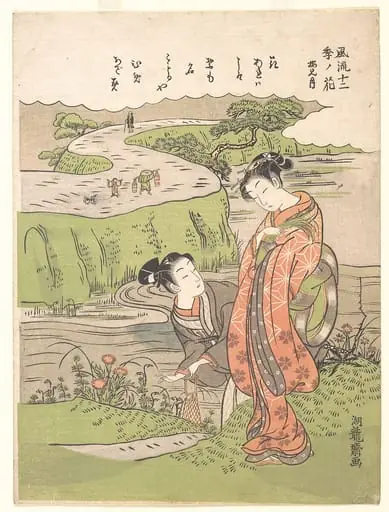 Umemi Tsuki|Plum-Seeing Month: Second Month
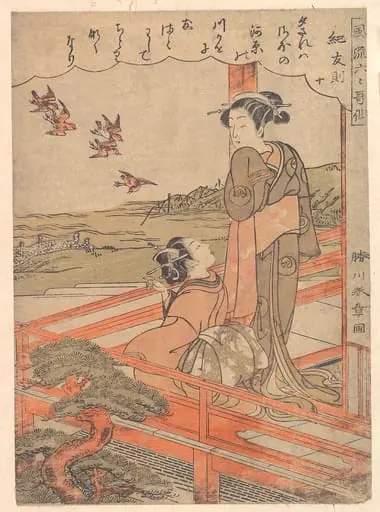 「風流六く歌仙紀友則 十」|“Two Young Women on a Verandah Watching Plovers,” from the series Stylish Six Poetic Immortals (Fūryū rokkasen: Ki no Tomonori, jū)
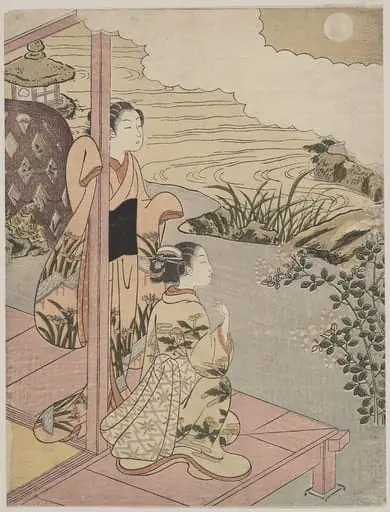 Untitled
 Third Print from A Low Tide Pentaptych
 鈴木春信画 見立三夕 「西行法師」|A Young Man and Woman with a Shamisen; Monk Saigyō, from a series alluding to the Three Evening Poems (Sanseki waka)
 鈴木春信画 若水を汲む男女|Drawing the First Water of the New Year
 Untitled