Artwork
Untitled
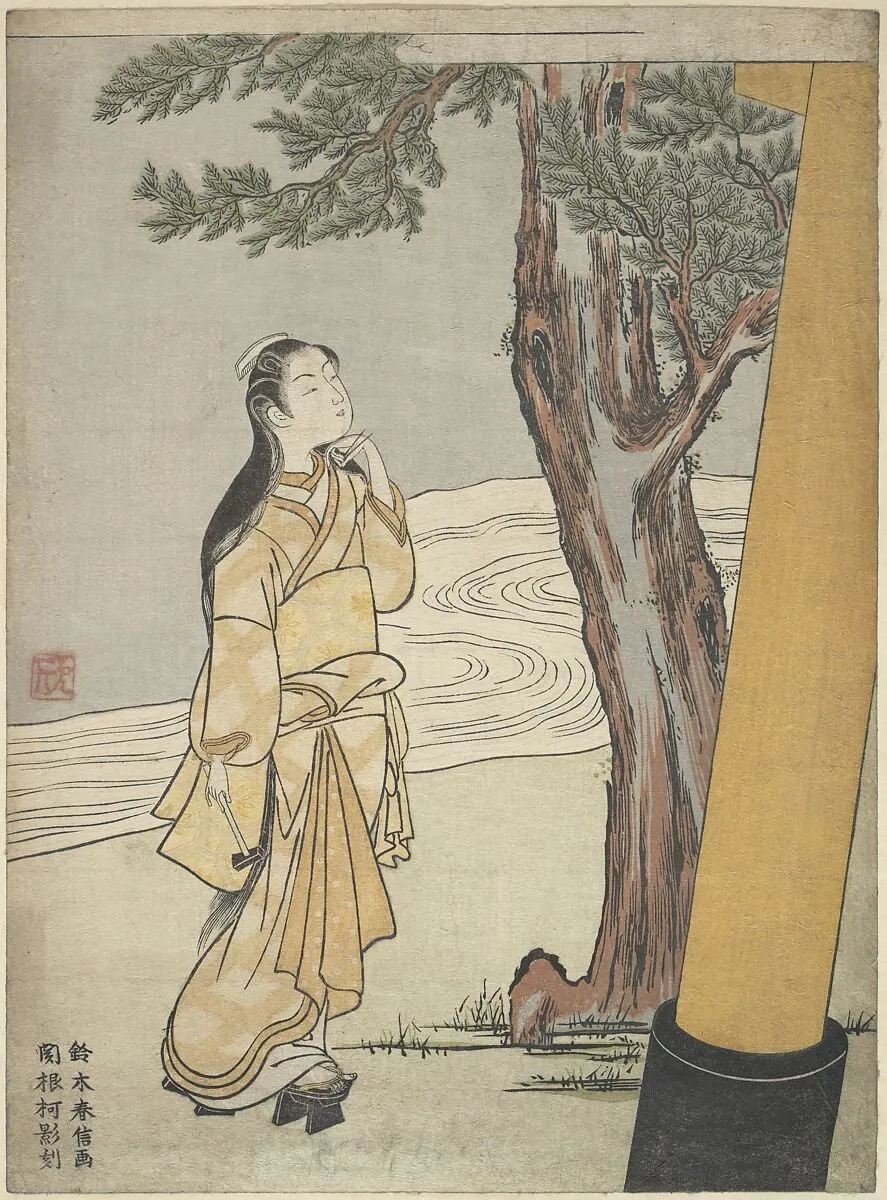
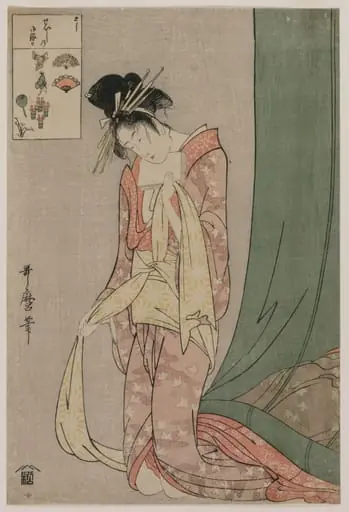
Untitled is an ink print by the Romanticist artist Suzuki Harunobu. It dates from 1765 and is held in the collection of the Metropolitan Museum of Art.
- Accession no.
- JP2438
About this work
Subject & Meaning
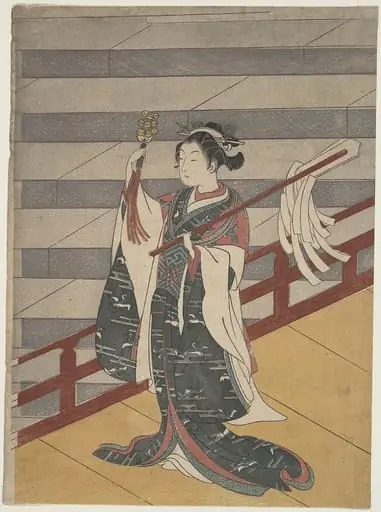
The print shows a young woman standing before a Shinto shrine, holding a hammer and a nail as she performs the ritual act of ushi no toki mairi.
The print shows a young woman standing before a Shinto shrine, holding a hammer and a nail as she performs the ritual act of ushi no toki mairi. The scene includes a torii gate, a flowing watercourse, and symbolic elements of marriage and fertility associated with the shrine. These iconographic details reflect traditional ukiyo-e depictions of auspicious rites and domestic blessing in Edo-period Japan.
Technique & Style
Untitled is a woodblock print on paper created by Suzuki Harunobu in 1765. The work portrays a Shinto shrine scene featuring a daughter, hammer, nail, torii gate, watercourse, and ushi no toki mairi motif, rendered in ink and color typical of ukiyo-e nishiki-e bijin-ga prints. It is part of the Metropolitan Museum of Art collection and exemplifies traditional Japanese printmaking techniques with its flat color fields and outlined forms.
History & Provenance
Suzuki Harunobu created this woodblock print in 1765, depicting a Shinto shrine, a daughter, a hammer, a nail, a torii gate, ushi no toki mairi, and a watercourse. The work is part of the ukiyo-e genre and specifically classified as a bijin-ga and egoyomi, reflecting its portrait orientation and calendar-related imagery. It is held in the collection of the Metropolitan Museum of Art, which documents its inception as 1765 and includes it within their ukiyo-e holdings.
The print was produced using ink and color on paper, consistent with traditional nishiki-e techniques of the period.
Overview
Created in 1765 by the Edo‑period artist Suzuki Harunobu, this untitled woodblock print presents a domestic scene rendered in ink and color on paper. A woman in a long robe stands beneath a tree, a hammer balanced on her shoulder, while two companions converse nearby and a modest Shinto shrine appears in the distance.
Context
The print belongs to the ukiyo‑e tradition, which flourished in the mid‑18th century, documenting the pleasures and ordinary moments of urban society. Harunobu’s innovations in color printing expanded the visual possibilities of the genre, influencing subsequent artists who adopted similar multiblock techniques.
Legacy
By demonstrating the potential of full‑color woodblock production, the work helped establish a new aesthetic standard within Japanese printmaking, paving the way for later masters who would further refine the vibrant, multi‑hued style that defines much of ukiyo‑e art.
Artist & collection

- Untitled
 Untitled
 Untitled
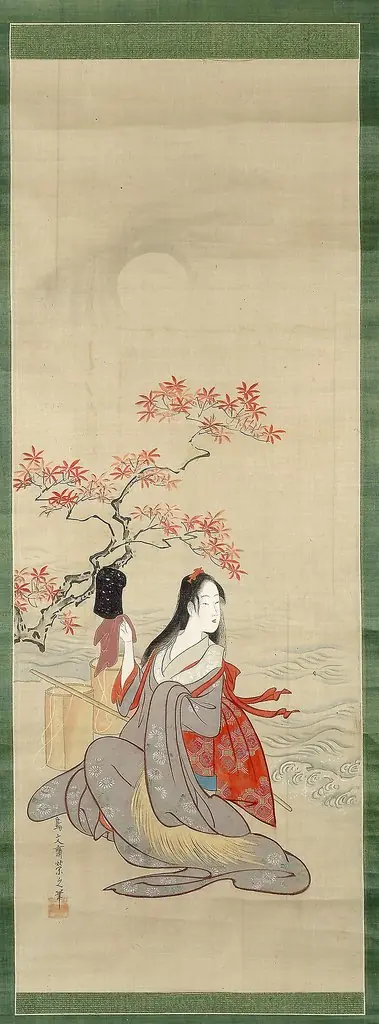 The Salt Maidens, Murasame with Yukihira's Hat
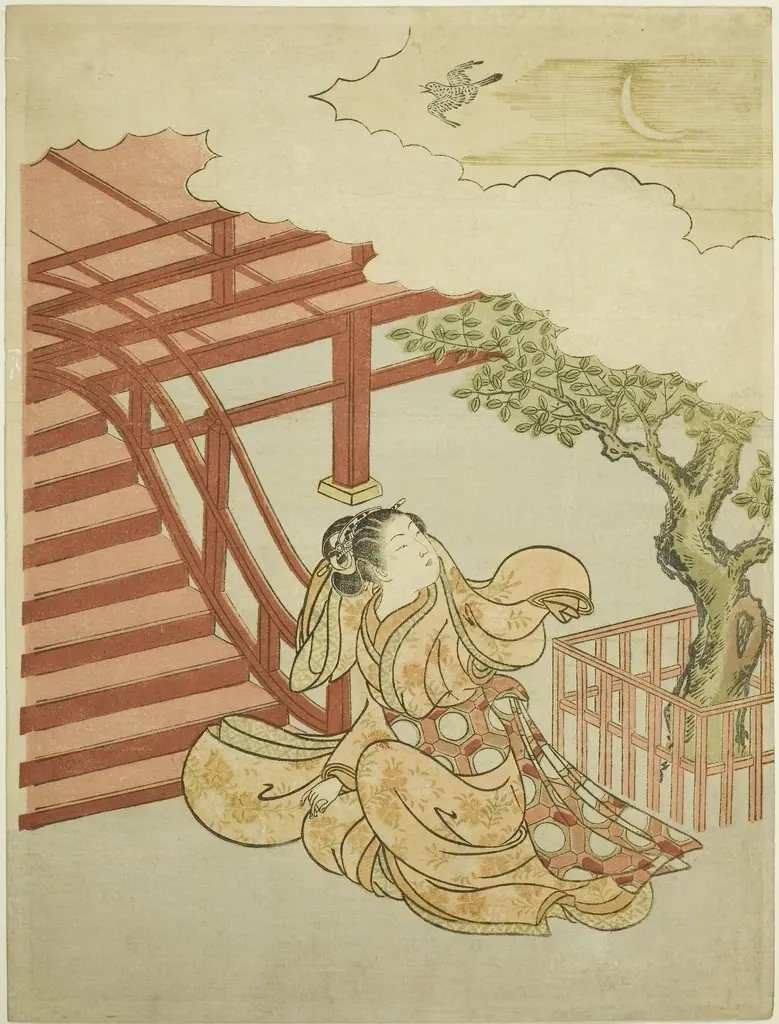 The Call of the Cuckoo from above the Clouds (parody of Minamoto no Yorimasa)
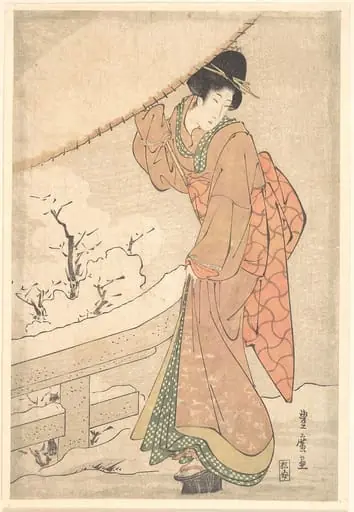 Untitled
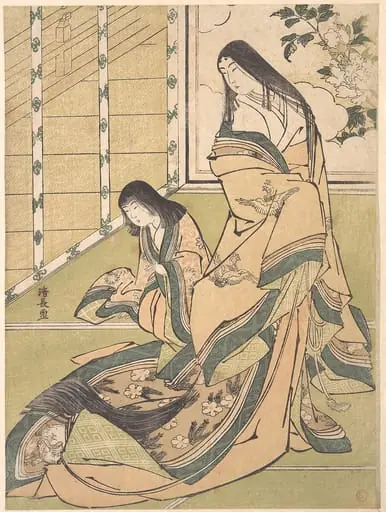 Untitled
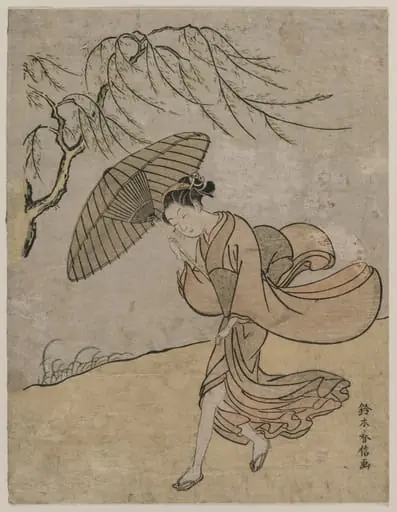 Woman Running Past a Willow Tree in a Breeze
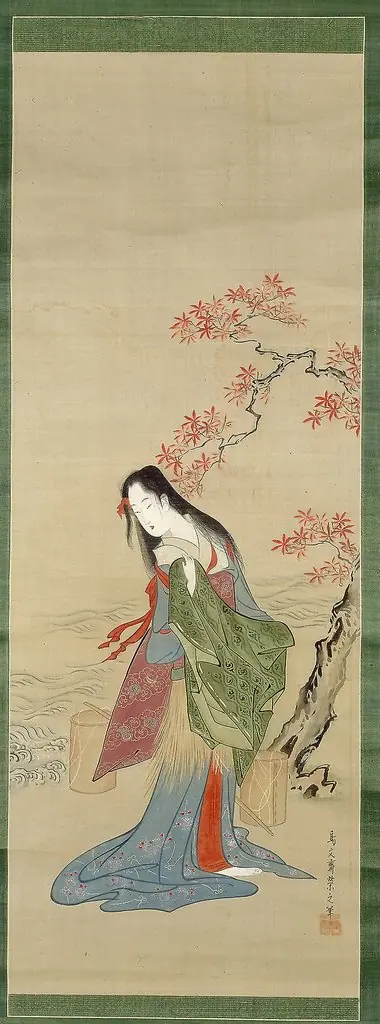 The Salt Maidens, Matsukaze with Yukihira's Coat
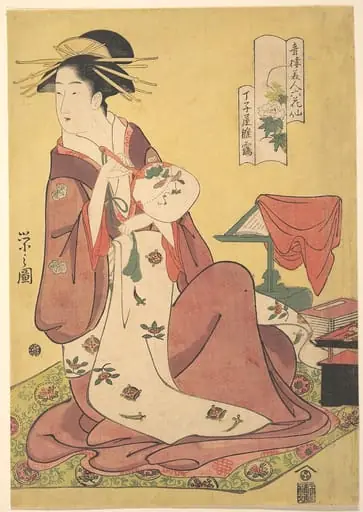 鳥文斎栄之画 「青楼美人六花仙 丁子屋雛鶴鸖」|The Courtesan Hinazuru of the Chōjiya Brothel (Chōjiya Hinazuru), from the series Beauties of the Pleasure Quarters as Six Floral Immortals (Seirō bijin rokkasen)
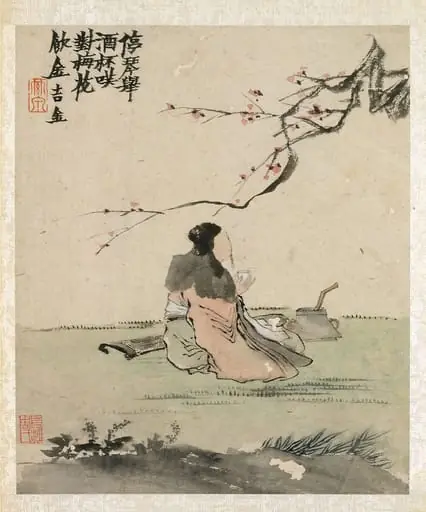 Untitled
 Hanaōgi of Ōgiya from the series Picture Puzzles