Artwork
Untitled
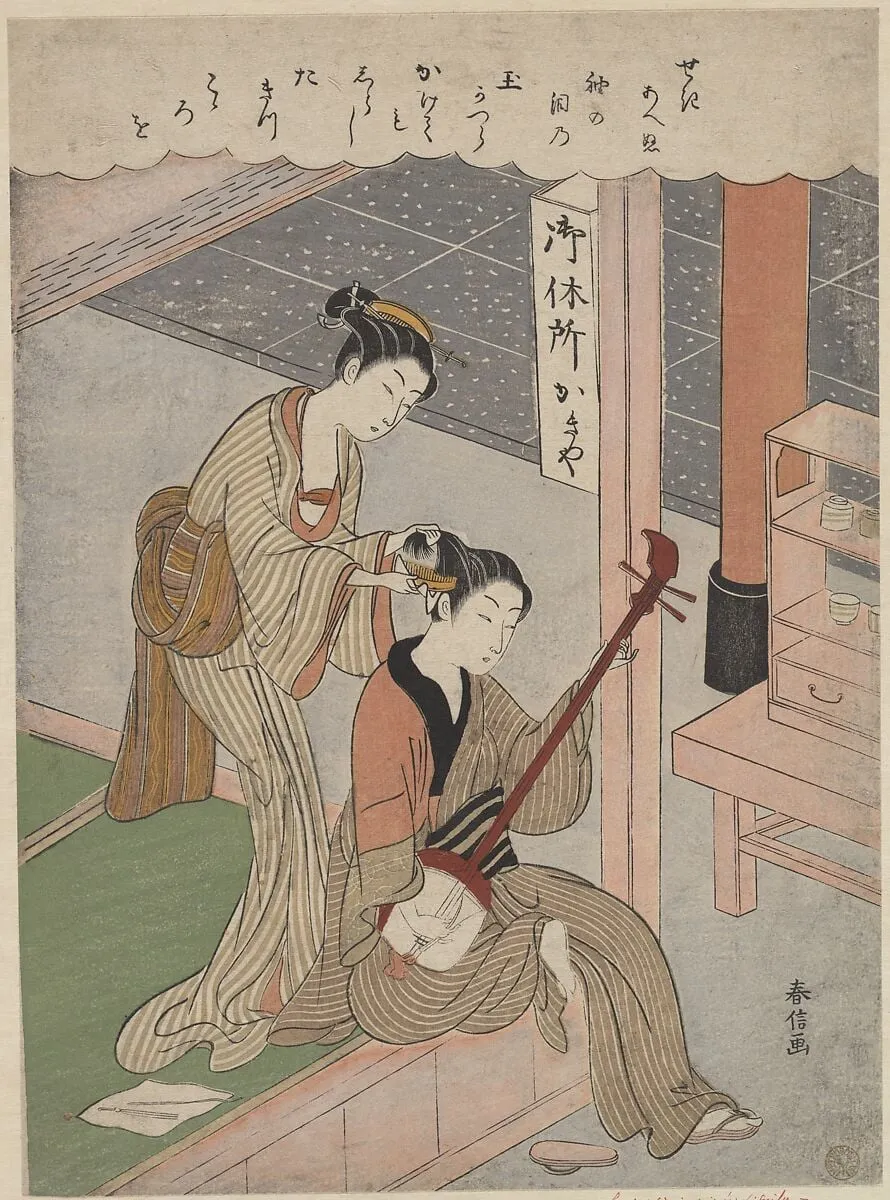
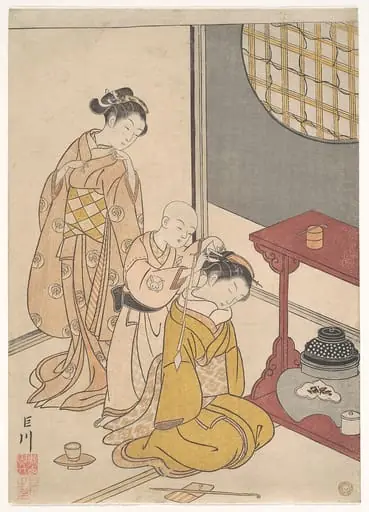
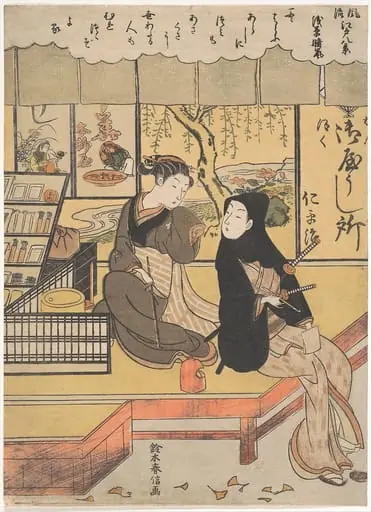
Untitled is an ink print by the Romanticist artist Suzuki Harunobu. It dates from 1770 and is held in the collection of the Metropolitan Museum of Art.
About this work
Subject & Meaning
The composition depicts Kasamori Osen alongside the Kasamori-inari shrine, featuring a young boy who is identified as a musician.
This 1770 woodblock print by Suzuki Harunobu functions as a portrait within the ukiyo-e and bijin-ga traditions. The composition depicts Kasamori Osen alongside the Kasamori-inari shrine, featuring a young boy who is identified as a musician. Central to the scene's iconography is the shamisen, an instrument held by the figures, which underscores the musical theme.
A comb also appears among the depicted objects, serving as a specific attribute within the visual narrative. As a nishiki-e (full-color print), the work represents a characteristic example of Edo-period genre scenes that blend portraiture with everyday cultural elements.
Technique & Style
The work is a hand-colored woodblock print on paper, employing traditional ukiyo-e techniques characteristic of the late Edo period. Suzuki Harunobu rendered the scene with precise line work and layered pigments to achieve subtle tonal gradations, while the composition balances figure and decorative motifs such as a comb and a shamisen. The support is paper, and the handling reflects standard print preservation practices of the era, maintaining stable condition despite age-related surface wear.
Legacy
The print has shaped how scholars view Harunobu’s role in shaping bijin-ga portraiture, and it remains a reference point for studies of early modern Japanese visual culture. Its presence in the Metropolitan Museum’s collection has helped cement the work as an exemplar of ukiyo-e composition and narrative detail.
Overview
Created in 1770, this woodblock print by Suzuki Harunobu presents a quiet interior scene rendered in delicate ink and color on paper. The composition centers on a woman in a vivid kimono, engaged with a musical instrument, while a male figure observes nearby. The work is unsigned, and its title remains unknown, leading scholars to refer to it simply as "Untitled."
History & Provenance
Printed for the burgeoning mass market, the image was produced in modest editions that could be purchased by merchants and artisans. Though specific ownership records are scarce, the print has surfaced in several 19th‑century collections of Japanese prints, confirming its circulation beyond its original audience.
Context
The image belongs to the broader ukiyo-e tradition of depicting scenes from the pleasure quarters and everyday life. Harunobu, active during the mid‑18th century, was instrumental in popularizing affordable colored prints, thereby expanding visual culture beyond elite patrons to the wider urban populace.
Artist & collection

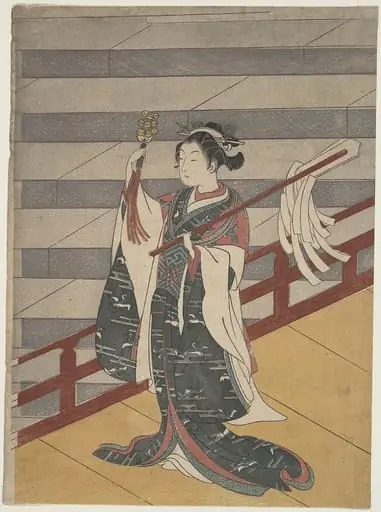
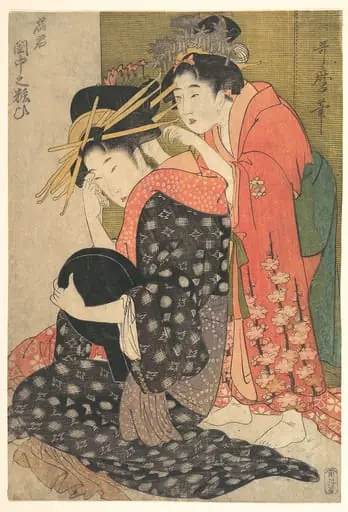
- 名君 閨中の粧ひ|The Oiran Yoso-oi Seated at Her Toilet
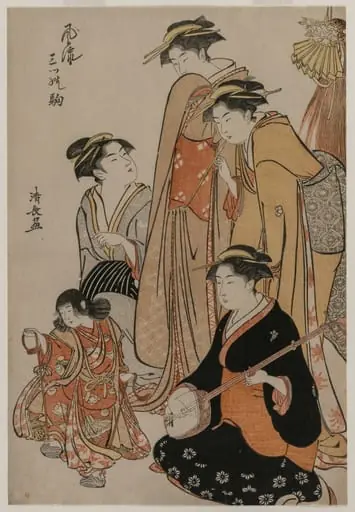 Women Watching a Girl Dance on Shells (From the series Fashionable Presentations of Three Horses)
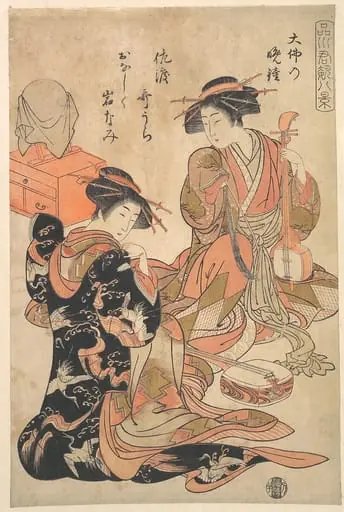 Daibutsu no bansho|Vesper Bell of the Temple of Great Buddha
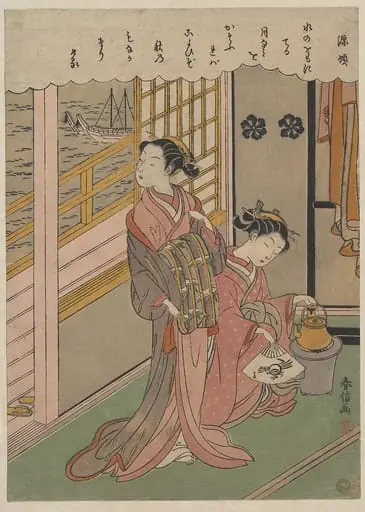 Untitled
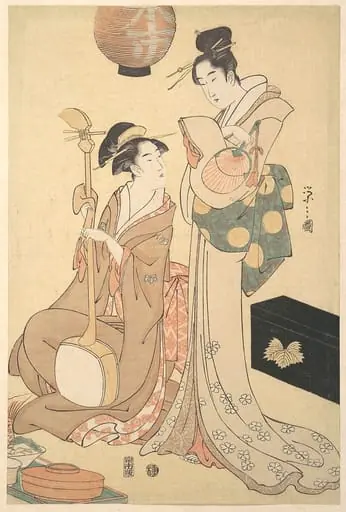 Untitled
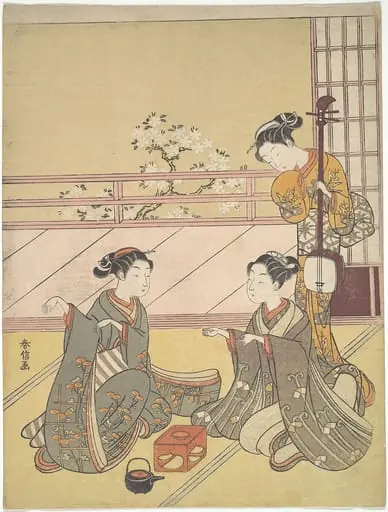 Untitled
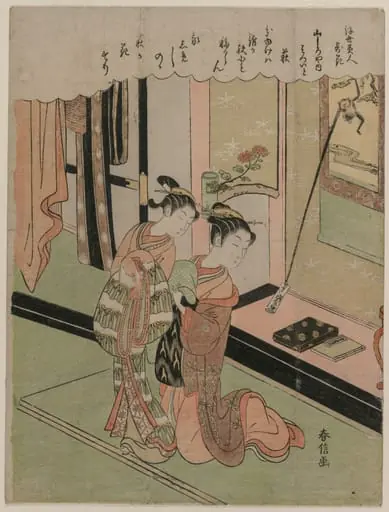 Hatsuito of the Yamashiroya Likened to Bush Clover, from Beauties of the Floating World Compared to Flowers
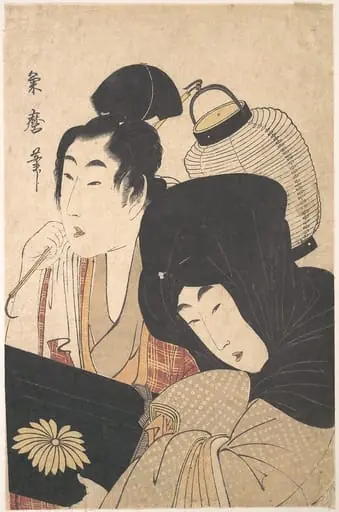 Untitled
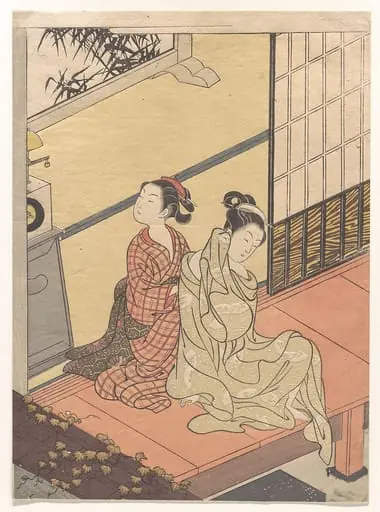 鈴木春信画 坐鋪八景 とけひの晩鐘|Evening Chime of the Clock (Tokei no banshō), from the series “Eight Parlor Views” (Zashiki hakkei)
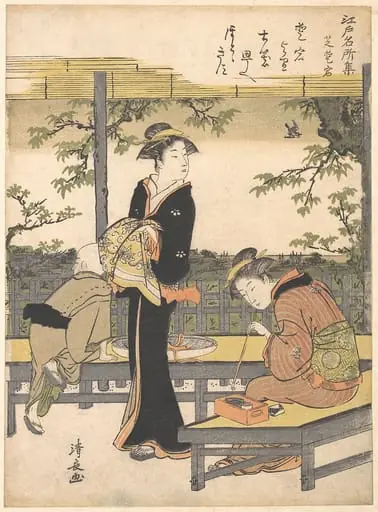 Shiba: Atago|Atago Hill at Shiba
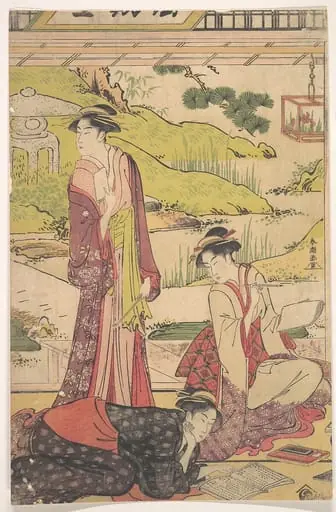 あやめ燈籠図|Three Women Enjoying Literary Pursuits
 風俗江戸八景 浅草晴嵐|Asakusa Seiran