Artwork
Untitled
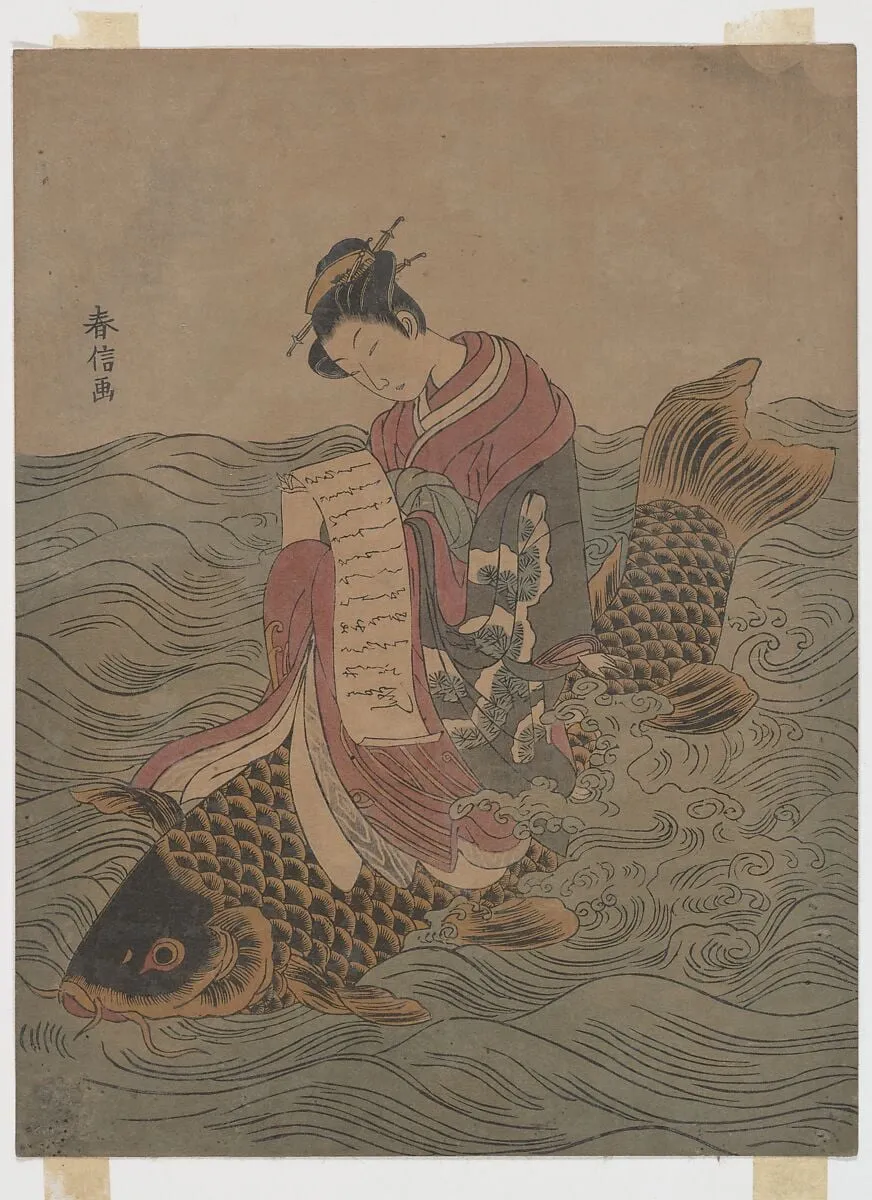
Untitled is an ink print by the Baroque artist Suzuki Harunobu. It dates from 1748 and is held in the collection of the Metropolitan Museum of Art.
About this work
Subject & Meaning
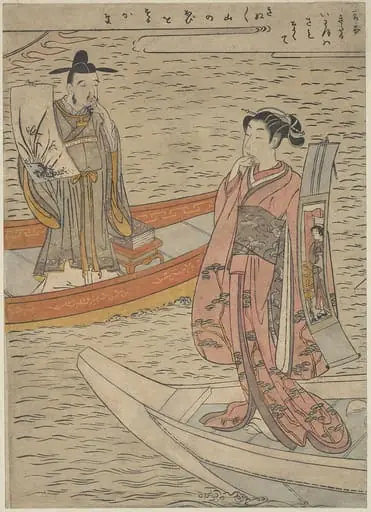
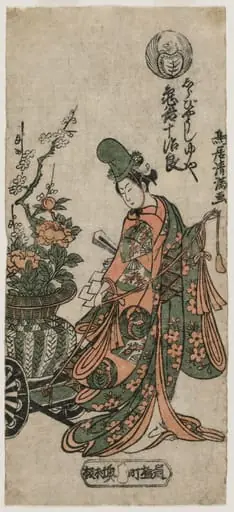
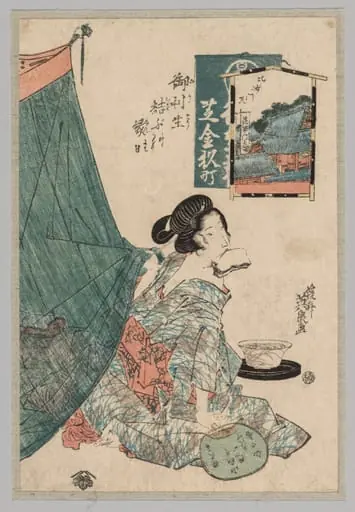
The print depicts a woman in a decorated kimono holding a love letter while a carp leaps beside her, referencing the Chinese story of the carp that transformed into a dragon after leaping the Dragon Gate. The scene is a mitate-e, a playful visual pun that merges classical Chinese lore with contemporary Edo-period life, situating the legendary carp and the figure of Qin Gao within an intimate, romantic moment. By combining these elements, the composition evokes themes of aspiration and romantic longing, using the carp’s leap as a metaphor for success and the letter as a symbol of affectionate communication.
Technique & Style
This nishiki-e print employs a woodblock technique with ink and color on paper, characteristic of Harunobu’s refined polychrome prints.
This nishiki-e print employs a woodblock technique with ink and color on paper, characteristic of Harunobu’s refined polychrome prints. The composition integrates soft gradations and delicate bokashi shading to render the fabric of a kimono and the translucent form of a carp, aligning with mitate-e conventions that juxtapose historical and contemporary motifs. Stylistic features include elongated figural proportions, attenuated hands, and a restrained palette that privileges muted tints, evoking the muted elegance associated with Harunobu’s mature work.
History & Provenance
The woodblock print titled Untitled by Suzuki Harunobu is held in the collection of the Metropolitan Museum of Art. While the specific inventory or accession number is not provided in the available records, the work is cataloged within the museum's holdings as a nishiki-e ukiyo-e print. The piece depicts figures including Qin Gao, a daughter, and a carp, alongside motifs such as a kimono and a love letter. No specific exhibition history or dates of display are documented in the provided sources.
Legacy
The work’s legacy is anchored in its role within Suzuki Harunobu’s pioneering use of nishiki-e techniques and its frequent inclusion in reevaluations of Edo-period print culture, as documented by the Metropolitan Museum of Art’s holdings and scholarly assessments of ukiyo-e’s development.
Its symbolic motifs, such as the carp and love letter, have been cited in studies of Japanese visual storytelling and gender representation, reinforcing its standing in art historical discourse.
The print’s presence in major collections and exhibitions has contributed to its reputation as a representative example of mitate-e, a genre that reinterprets classical themes through contemporary Edo sensibilities.
Overview
This 1748 woodblock print by Suzuki Harunobu presents a domestic scene in which a woman in a vivid kimono rests against a wooden post, reading a letter. A small carp hangs from the sleeve of her garment, adding a subtle detail to the composition. The work is executed in ink and color on paper, typical of the ukiyo‑e genre.
Artist & collection

- Carp and Waterweeds
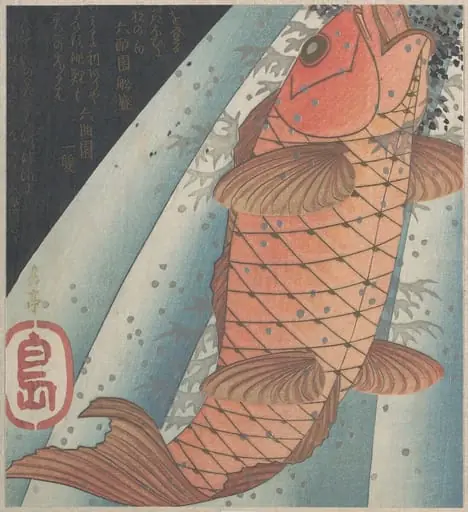 鯉の滝登り|Red Carp Ascending a Waterfall
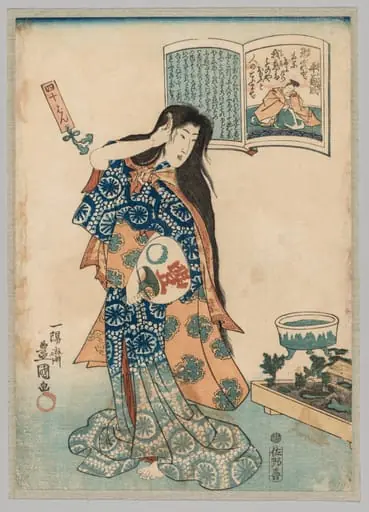 Woman with a Fan in her Left Hand Combing her Hair
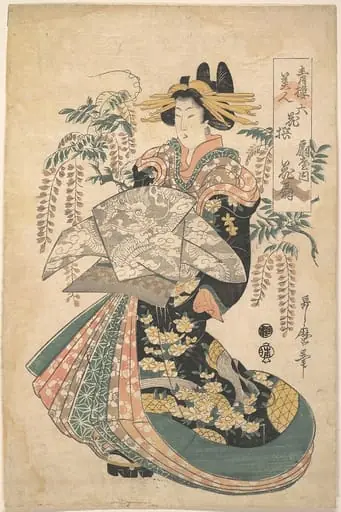 青楼美人 六花撰 扇屋内花扇|A Courtesan with Wisteria on the Background
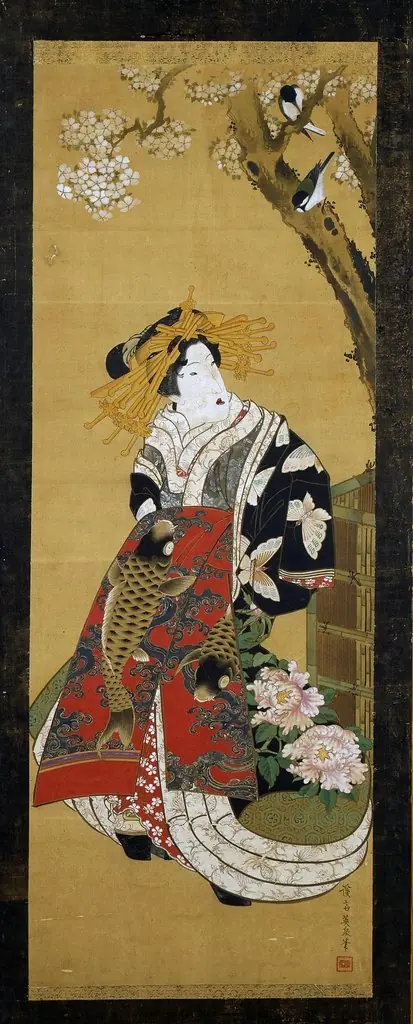 Woman with a Veil
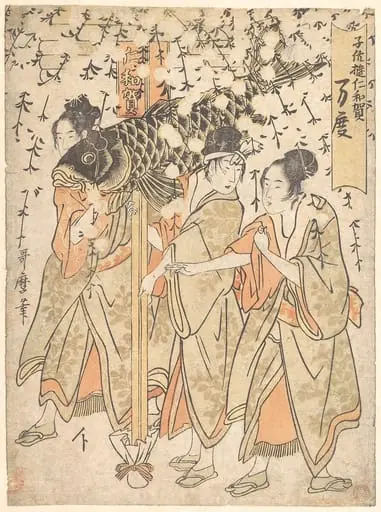 Mando|子供遊に和賀 万度|Lantern Float
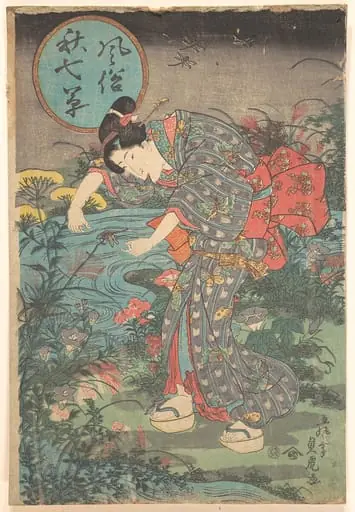 Untitled
 Kametani Jujiro as the Shirabyoshi Dancer Yuya
 Untitled
 Untitled
 Untitled
 Woman with Papers in Mouth and Fan in Hand