Artwork
Untitled
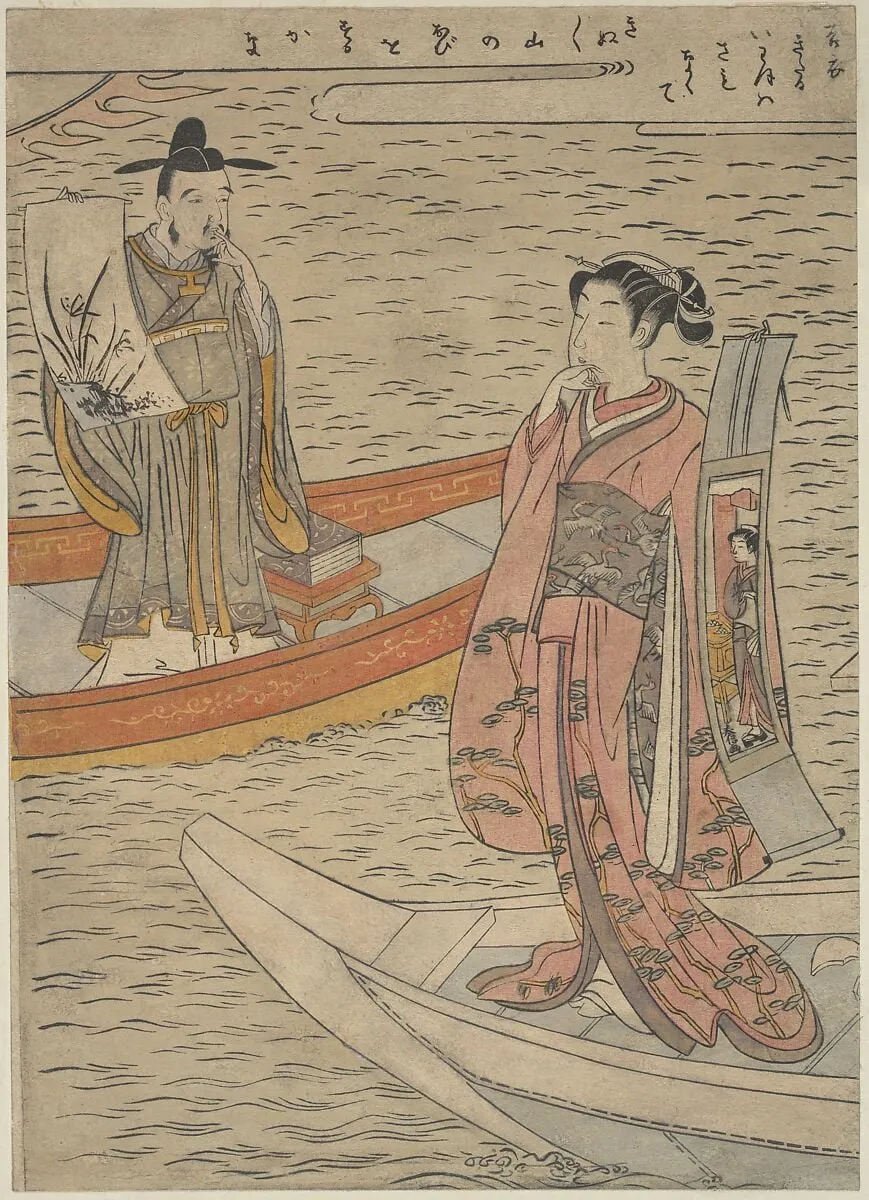
Untitled is an ink print by the Romanticist artist Suzuki Harunobu. It dates from 1766 and is held in the collection of the Metropolitan Museum of Art.
About this work
Subject & Meaning
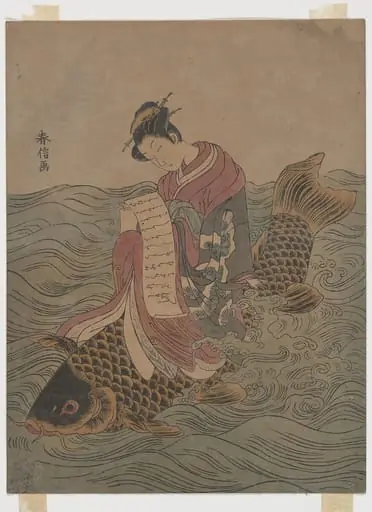
Suzuki Harunobu's 1766 woodblock print is classified as a mitate-e, a genre of ukiyo-e in which contemporary figures and scenes are reimagined through classical or literary references. The composition juxtaposes a man and a woman with a fisher and a boat, while a kakemono (hanging scroll) is also depicted, signaling the presence of an inscribed or painted text within the scene. The listed subjects include the Chinese poet Bai Juyi and the legendary beauty Kasamori Osen, suggesting that the print draws on a poetic or narrative pretext, likely a mitate substitution in which an actor or courtesan stands in for these literary figures.
The combination of everyday figures (fisher, boat) with named historical and legendary characters reflects the mitate-e tradition of layering allusion onto the floating world, inviting viewers to recognize the literary source behind the contemporary tableau.
The inclusion of Bai Juyi, famed for poems about rivers and travel, alongside a fisher and boat, hints at a poetic meditation on departure or longing, mediated through the hanging scroll that frames the scene. By pairing Kasamori Osen, a figure associated with romantic legend, with an actor, Harunobu blurs the boundaries between timeless story and the ephemeral pleasures of the pleasure quarters that ukiyo-e typically celebrated.
Technique & Style
The medium reflects Harunobu's mastery of full-color woodblock printing, a technique he helped pioneer and popularize during the Edo period.
This 1766 work by Suzuki Harunobu is a woodblock print executed in ink and color on paper. The print belongs to the ukiyo-e tradition, specifically functioning as a nishiki-e (brocade print) and mitate-e (allegorical picture). The medium reflects Harunobu's mastery of full-color woodblock printing, a technique he helped pioneer and popularize during the Edo period.
The composition depicts multiple figures including Bai Juyi, Kasamori Osen, a fisherman, a man, a woman, and an actor, alongside objects such as a boat and a hanging scroll (kakemono). This complex arrangement of literary, theatrical, and everyday elements is characteristic of Harunobu's sophisticated approach to mitate-e, which layered classical references onto contemporary scenes.
History & Provenance
Suzuki Harunobu created Untitled in 1766 as a woodblock print using ink and color on paper. The work was printed as a nishiki-e within the ukiyo-e genre and depicts figures including Bai Juyi, Kasamori Osen, an actor, a fisher, a man, a woman, and a boat. It was part of the Metropolitan Museum of Art collection, indicating a documented ownership history tied to the museum.
The print is cataloged with an inception date of 1766, confirming its creation year. No commission details or specific creation process are recorded in the sources.
The artwork is classified as a print and was produced as a mitate-e, a type of parody or imaginative reinterpretation common in ukiyo-e. It was created in the Edo period, reflecting the cultural and artistic context of the time. The depiction of multiple figures suggests a composite or symbolic composition rather than a narrative scene.
The work was never publicly commissioned, and there is no evidence of a patron or specific intent beyond artistic production. Its provenance is anchored in institutional collection, but no further ownership chain is detailed in the sources.
The dating of the piece is consistent across sources, with 1766 cited as the year of creation. The medium and technique align with traditional nishiki-e production methods of the period. The classification as a print and its inclusion in a major museum collection support its historical and artistic significance. No additional details about creation history or early ownership are available in the provided materials.
Context
Suzuki Harunobu's 1766 woodblock print Untitled portrays Bai Juyi, Kasamori Osen, an actor, a boat, a fisher, and related figures within the ukiyo-e tradition, reflecting mitate-e reinterpretations of literary subjects in Edo-period Japan.
The work is part of the Metropolitan Museum of Art's collection and has been discussed in scholarly contexts as an example of mitate-e's playful visual wit, situating Harunobu at the forefront of narrative innovation in nishiki-e prints.
Overview
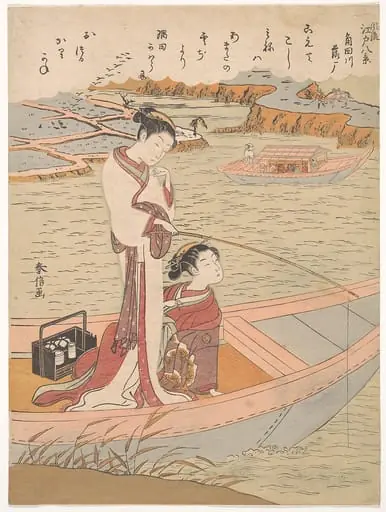
Created around 1766, this woodblock print by Suzuki Harunobu shows a nocturnal river scene. A small boat glides beneath a full moon, its occupants, one rowing, the other holding a fan, are rendered in delicate ink and color on paper. The composition captures a fleeting, everyday moment with quiet elegance.
Artist & collection

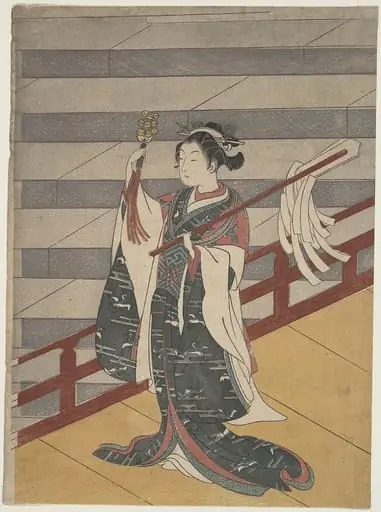
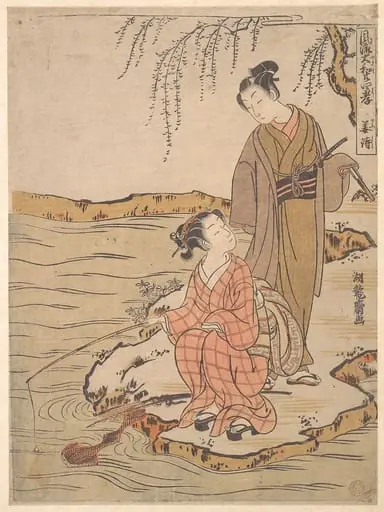 Untitled
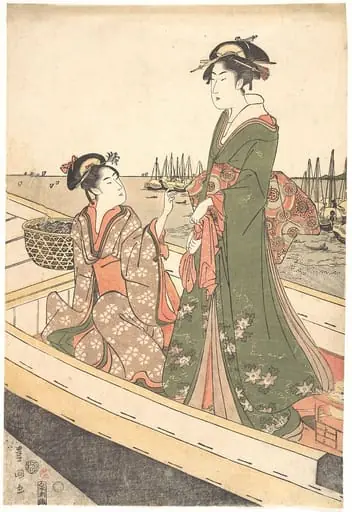 Untitled
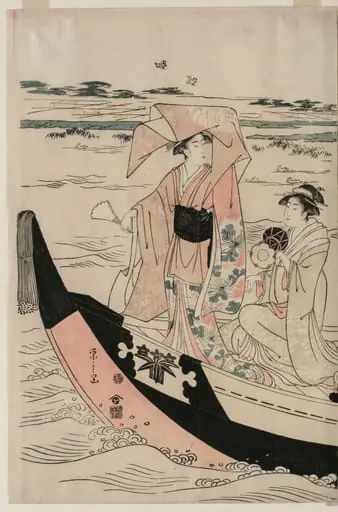 Women in a Pleasure Boat on the Sumida River
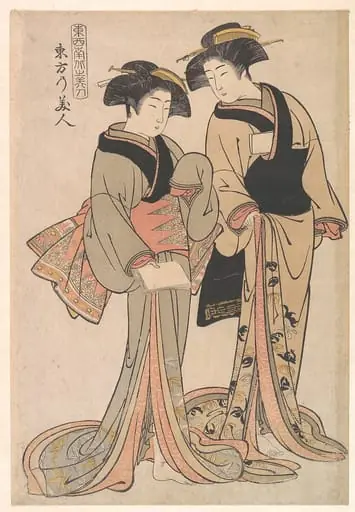 Untitled
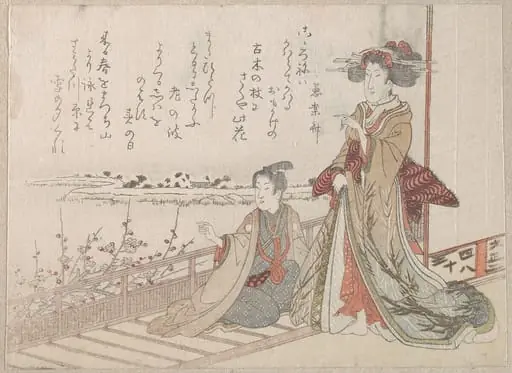 Untitled
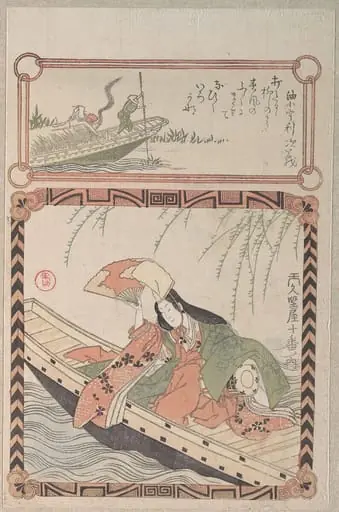 Asazuma-bune|Courtesan in Ancient Costume Seated in a Boat
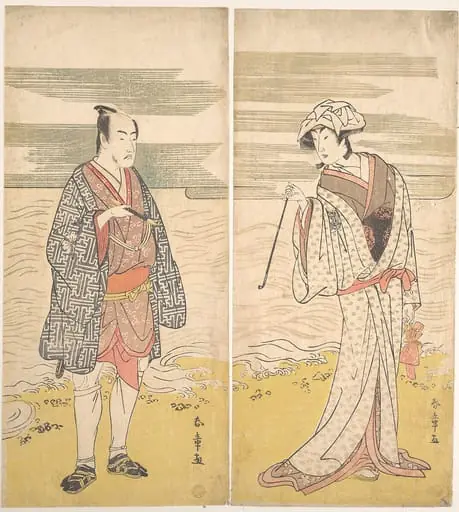 Untitled
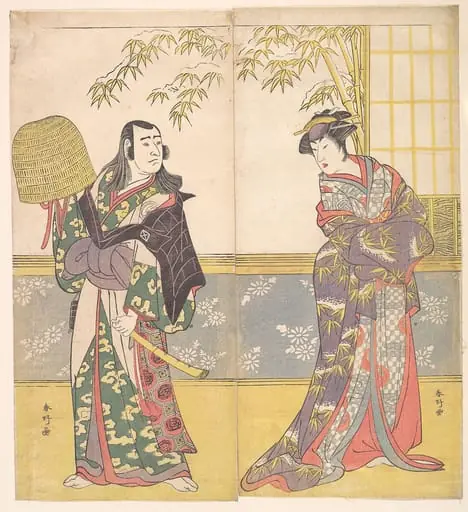 勝川春好画 三代目澤村宗十郎 三代目佐野川市松 |Kabuki Actors Sawamura Sōjūrō III and Sanogawa Ichimatsu III in "A Courtesan’s Mirror for the Eastern Provinces" (Keisei Azuma kagami)
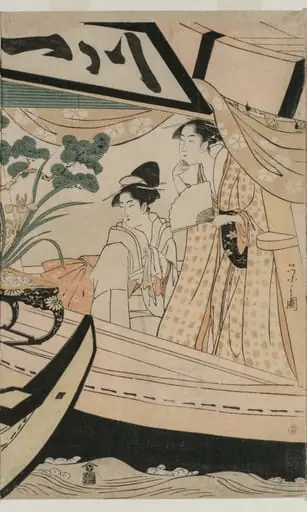 Party on the Pleasure Boat Kawaichimaru
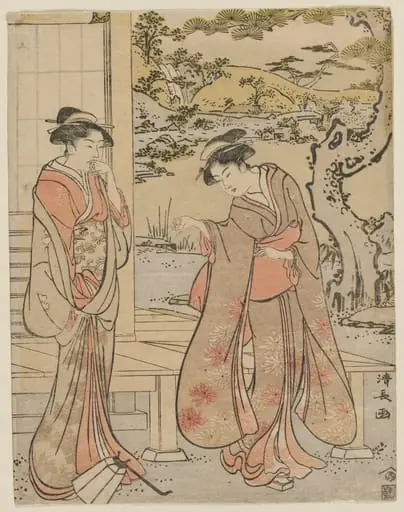 Woman Dropping a Lantern by a Porch
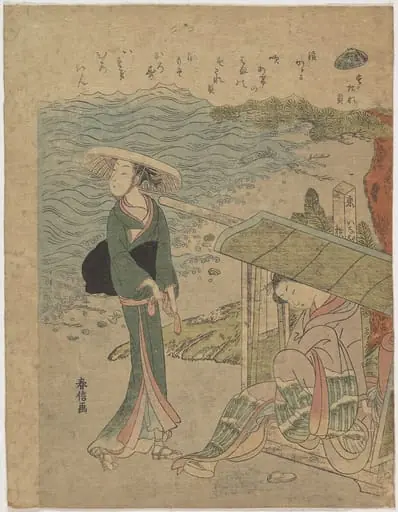 すだれ貝|The Curtain Clam