Artwork
Untitled
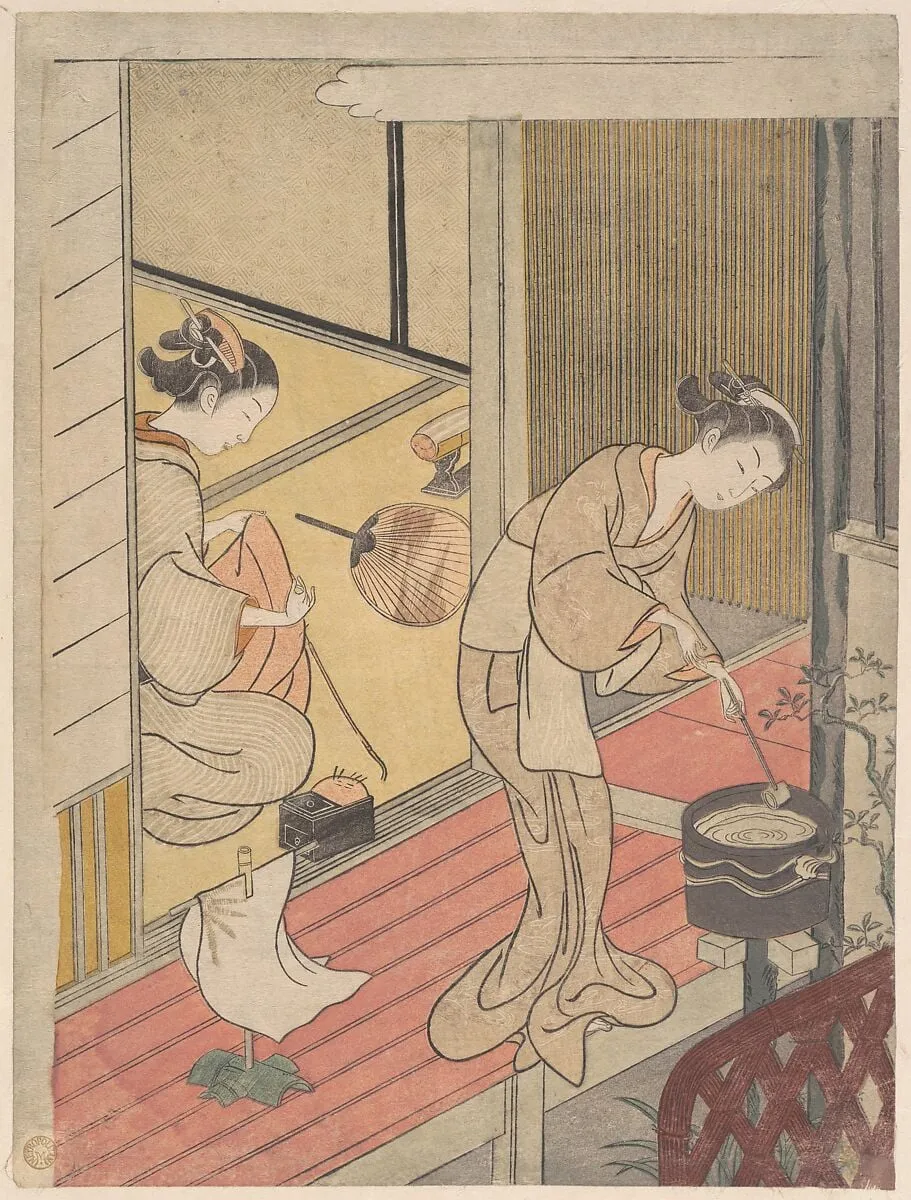
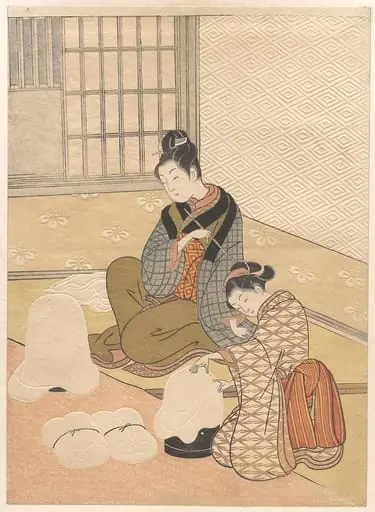
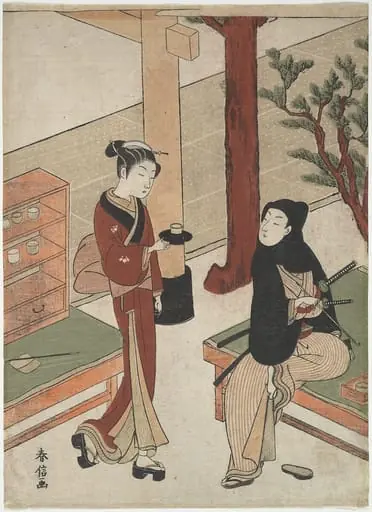
Untitled is an ink print by the Romanticist artist Suzuki Harunobu. It dates from 1766 and is held in the collection of the Metropolitan Museum of Art.
- Accession no.
- JP155
- Credit line
- Rogers Fund, 1914
About this work
Subject & Meaning
The combination of sewing tools and refined objects suggests an idealized moment of cultivated activity, aligning with the genre's emphasis on elegance.
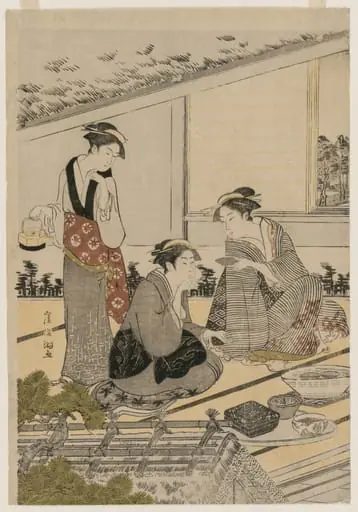
The print depicts a woman in an interior setting engaged in sewing, surrounded by associated objects: a tenugui (hand towel), sewing boxes, an uchiwa (rigid fan), a chozubachi (hand-washing basin), and a pillow. These everyday items frame the scene within a domestic environment, emphasizing themes of leisure and craftsmanship typical of Harunobu's bijin-ga (images of beautiful women). The combination of sewing tools and refined objects suggests an idealized moment of cultivated activity, aligning with the genre's emphasis on elegance.
Technique & Style
The print is a nishiki-e (brocade print), a full-colour woodblock technique that Harunobu helped pioneer in the mid-1760s. It combines a key block of outlines with multiple registered colour blocks, allowing soft contours and subtle tonal gradations characteristic of his work of this period. The handling emphasizes linear grace and a restrained, refined palette to convey an intimate domestic setting.
Further technical details, including the specific pigments and the condition of the impression, are not documented in the available sources.
History & Provenance
The woodblock print Untitled was created by the Japanese artist Suzuki Harunobu in 1766. Classified as a nishiki-e and bijin-ga within the ukiyo-e tradition, the work depicts a woman engaged in sewing alongside objects such as a pillow, sewing boxes, a tenugui, a chozubachi, and an uchiwa. It is currently held in the collection of the Metropolitan Museum of Art.
Overview
Created around 1766 by Suzuki Harunobu, this woodblock print presents a domestic interior in a modest scale. Rendered in ink and multiple pigments on paper, the work captures a quiet moment of daily life, focusing on a woman engaged in sewing while seated on the floor beside a low table.
Context
Domestic interiors and feminine labor were common themes in ukiyo‑e, reflecting contemporary interests in the private sphere. By depicting a simple sewing scene, the print aligns with broader cultural narratives that valued modesty, skill, and the aesthetic of ordinary moments.
Artist & collection

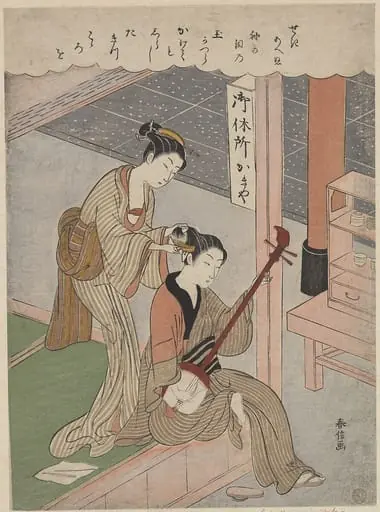
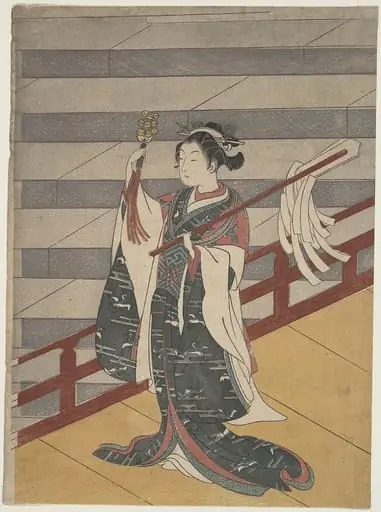
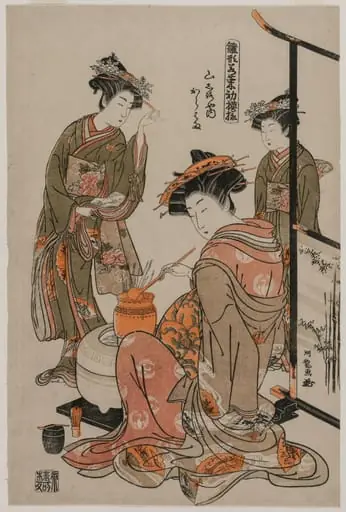
- The Courtesan Karahama of Yamashiroya Performing the Tea Ceremony (from the series Models for Fahions: New Designs as Fresh as Young Leaves)
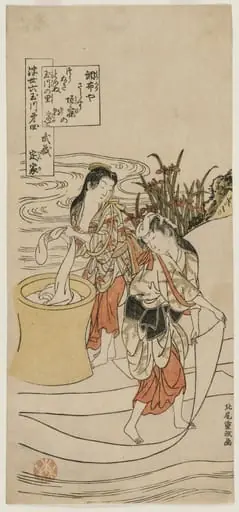 The Chofu Tama River in Musashi Province (from the series The Six Tama Rivers of the Floating World)
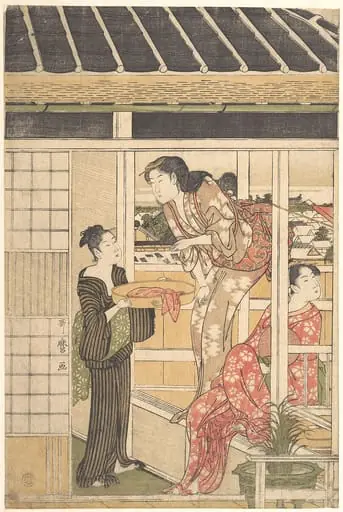 Untitled
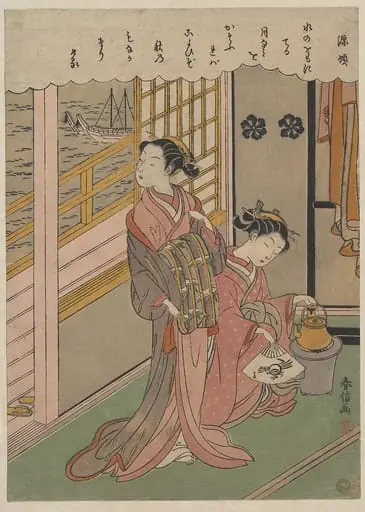 Untitled
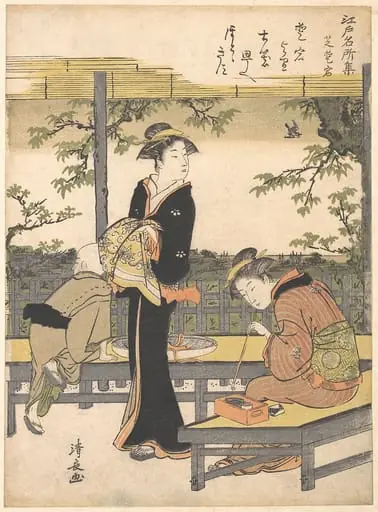 Shiba: Atago|Atago Hill at Shiba
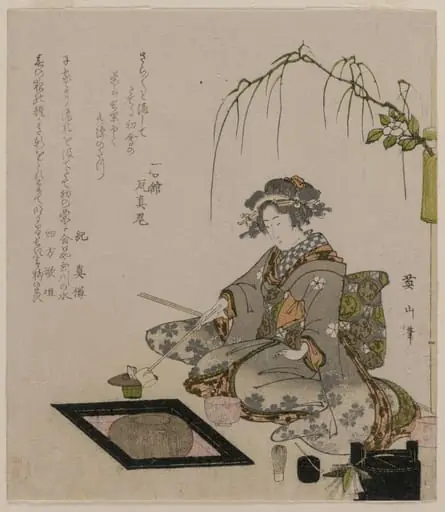 Woman Performing the Tea Ceremony
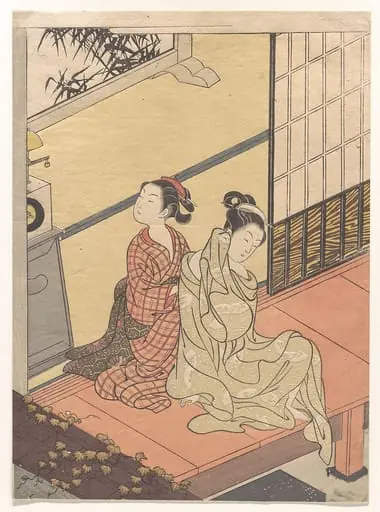 鈴木春信画 坐鋪八景 とけひの晩鐘|Evening Chime of the Clock (Tokei no banshō), from the series “Eight Parlor Views” (Zashiki hakkei)
 Untitled
 細田栄之画 正月準備|Preparing New Year Decorations
 Untitled
 Untitled
 Women in a Tea House