Artwork
Untitled
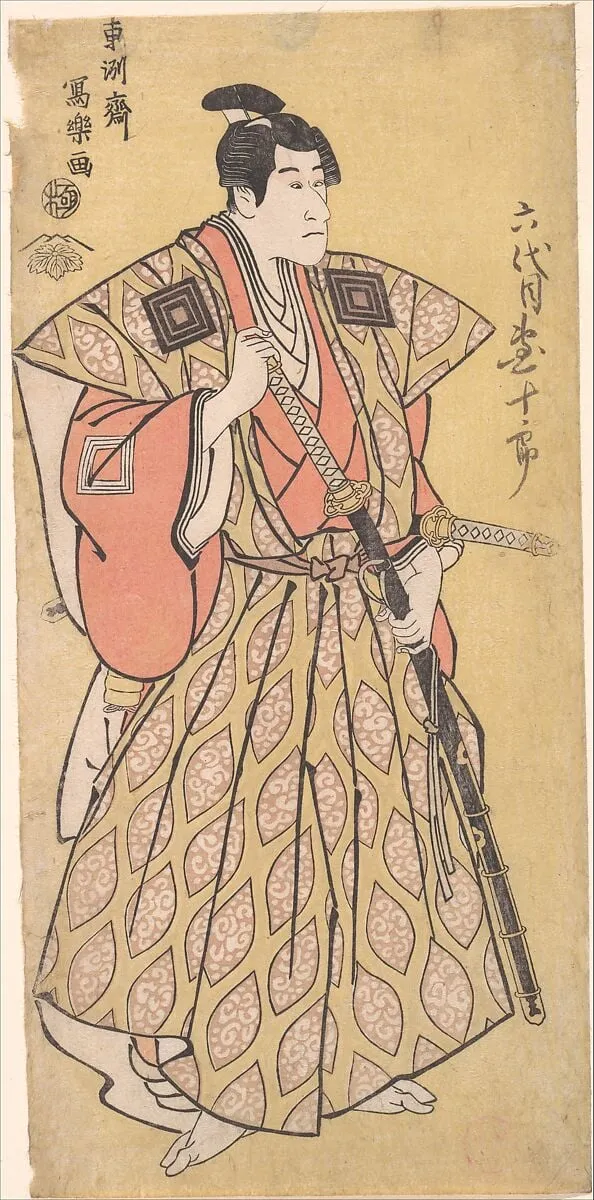
Untitled is an ink print by the Romanticist artist Tōshūsai Sharaku. It dates from 1794 and is held in the collection of the Metropolitan Museum of Art.
- Accession no.
- JP3120
- Credit line
- Harris Brisbane Dick Fund and Rogers Fund, 1949
About this work
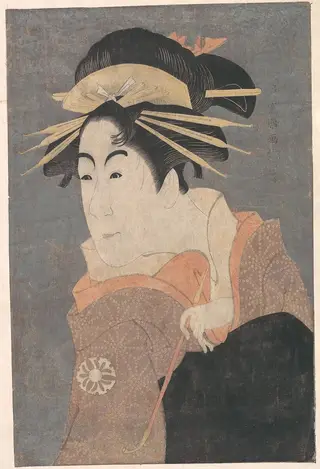
The faces he drew look almost exaggerated, big noses, sharp chins, like caricatures of famous actors.
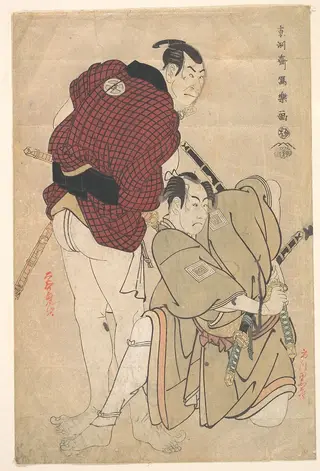
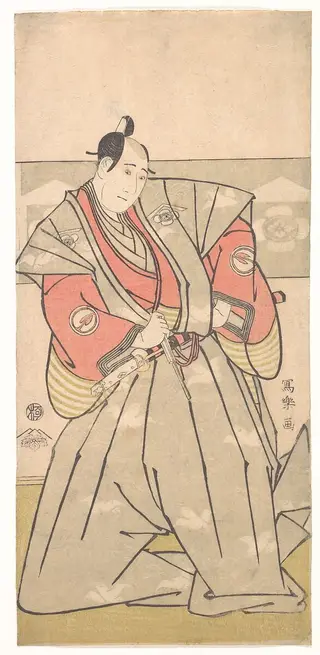
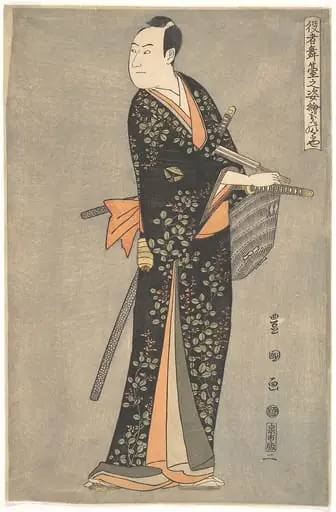
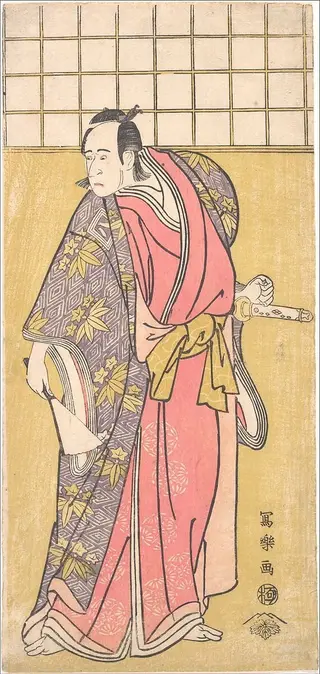
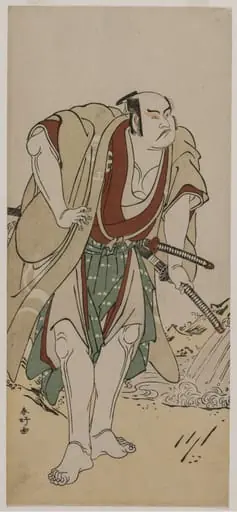
This print shows a man in a fierce pose, gripping a sword and glaring sideways. His face is white with bold black lines, and his robe swirls around him.
Sharaku made these prints for just ten months in 1794–95, then vanished. No one knows why he stopped or who he really was. The faces he drew look almost exaggerated, big noses, sharp chins, like caricatures of famous actors.
If you like this, look up the subject actors. They’re full of drama and style.
Subject & Meaning
Untitled is a yakusha-e (actor print) that portrays the celebrated kabuki actor Danjūrō Ichikawa VI. The figure is shown as a man holding a sword, a visual cue that identifies him with the samurai roles he frequently performed on stage. As a nishiki-e woodblock print from 1794, the work follows the ukiyo-e convention of capturing the likeness and dramatic presence of popular actors, using the sword not merely as a prop but as a symbol of martial virtue and the actor’s association with heroic, warrior characters.
The portrait thus conveys both the individual celebrity of Ichikawa VI and the broader cultural fascination with kabuki’s heroic narratives.
Technique & Style
Created in 1794, this work is a woodblock print executed with ink and color on paper. The piece belongs to the ukiyo-e tradition, specifically categorized as a nishiki-e (brocade picture) and yakusha-e (actor print). As a portrait within the genre of prints, it depicts the actor Danjūrō Ichikawa VI, who is shown holding a sword.
The composition focuses on the figure of the man, utilizing the standard materials and methods of Japanese printmaking from the late eighteenth century.
History & Provenance
The work is dated 1794, aligning with Sharaku’s active period producing actor prints for the Japanese print market. It portrays Danjūrō Ichikawa VI in a role, confirming its function as a yakusha-e (actor print). The Metropolitan Museum of Art holds the impression, which entered their collection as part of their holdings of Japanese woodblock prints.
The work is held by the Metropolitan Museum of Art, New York, where it is accessioned as 2017.104.
It was included in the exhibition “Inventing Japanese Printmaking: Sharaku’s Portraits of Kabuki Actors,” held at the Metropolitan Museum of Art from July 26, 2017 to October 8, 2017.
Overview
The woodblock print, created in 1794, portrays the celebrated kabuki performer Danjūrō Ichikawa VI in a dramatic stance, clutching a sword while his gaze is directed sideways. Rendered in stark black outlines against a white face, the figure is surrounded by a swirling robe that emphasizes movement and tension.
Context
Printed in Edo’s bustling publishing district, the portrait reflects the contemporary appetite for actor prints, which served both as promotional material for theatrical productions and as collectible souvenirs for fans of kabuki culture.
Artist & collection

 Untitled
 Untitled
 Untitled
 Untitled
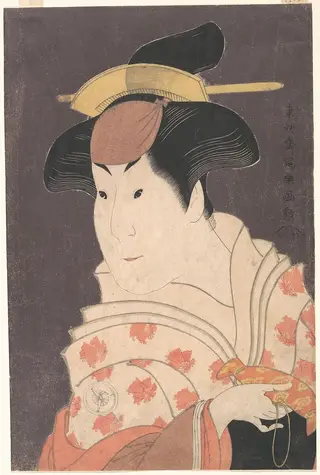 東洲斎写楽画 四代岩井半四郎の重の井 『恋女房染分手綱』|Iwai Hanshirō IV as Shigenoi in the Play "Koinyōbō Somewake Tazuna"
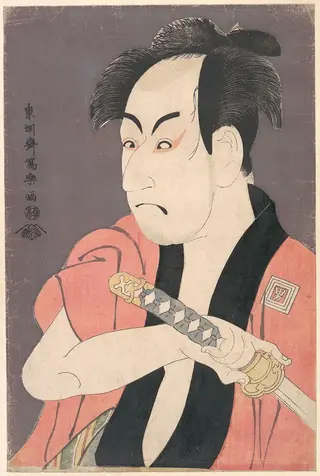 東洲斎写楽画 初代市川男女蔵の奴一平 『恋女房染分手綱』|Ichikawa Omezō I in the Role of Yakko Ippei from the Play "Koinyōbō somewake tazuna"
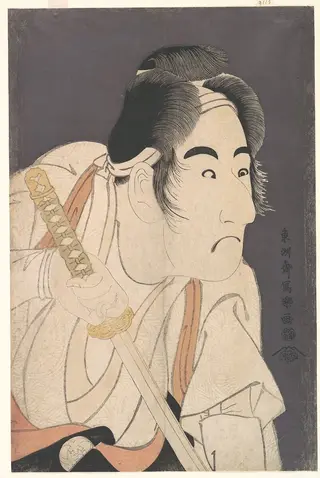 東洲斎写楽画 二世坂東三津五郎の石井源蔵 『花菖蒲文禄曽我』|Bandō Mitsugorō II as Ishii Genzō in the Play "Hana-ayame Bunroku Soga"
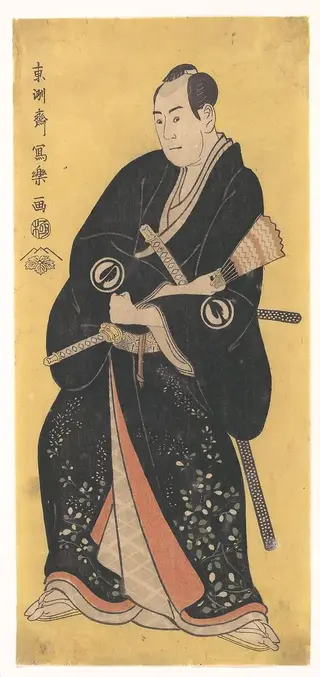 Untitled
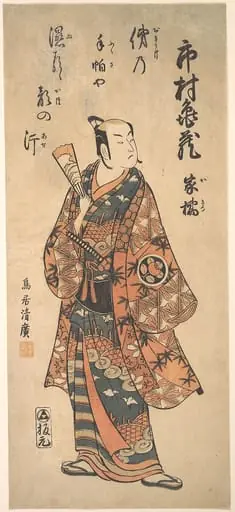
- 初代市川 男女蔵の桃井若狭之助|The Actor Ichikawa Omezō I as the Young Daimyo Momonoi Wakasanosuke
 Untitled
 Untitled
 Untitled
 Untitled
 Untitled
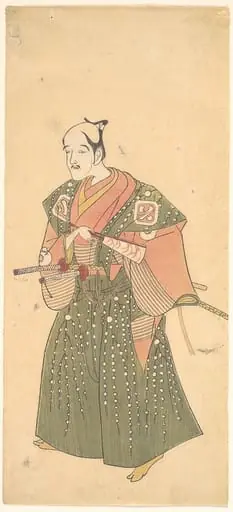 初代嵐音八 (複製?)|The Actor Arashi Otohachi I (facsimile?)
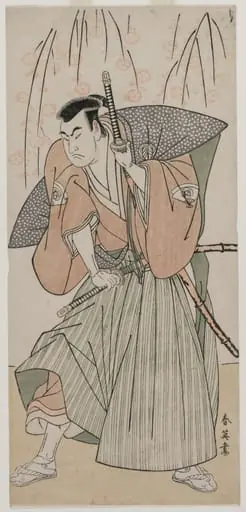 Onoe Matsusuke I as a Samurai Standing Beneath a Cherry Tree
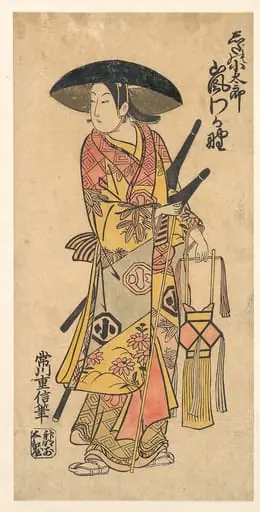 Untitled
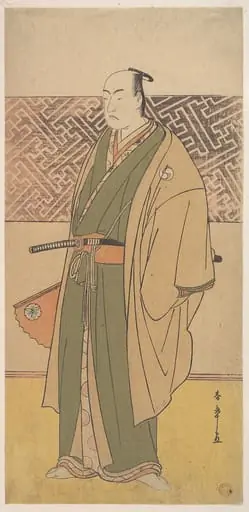 Untitled
 Otani Hiroji III as a Samurai Standing Beside a Stream