Artwork
Untitled
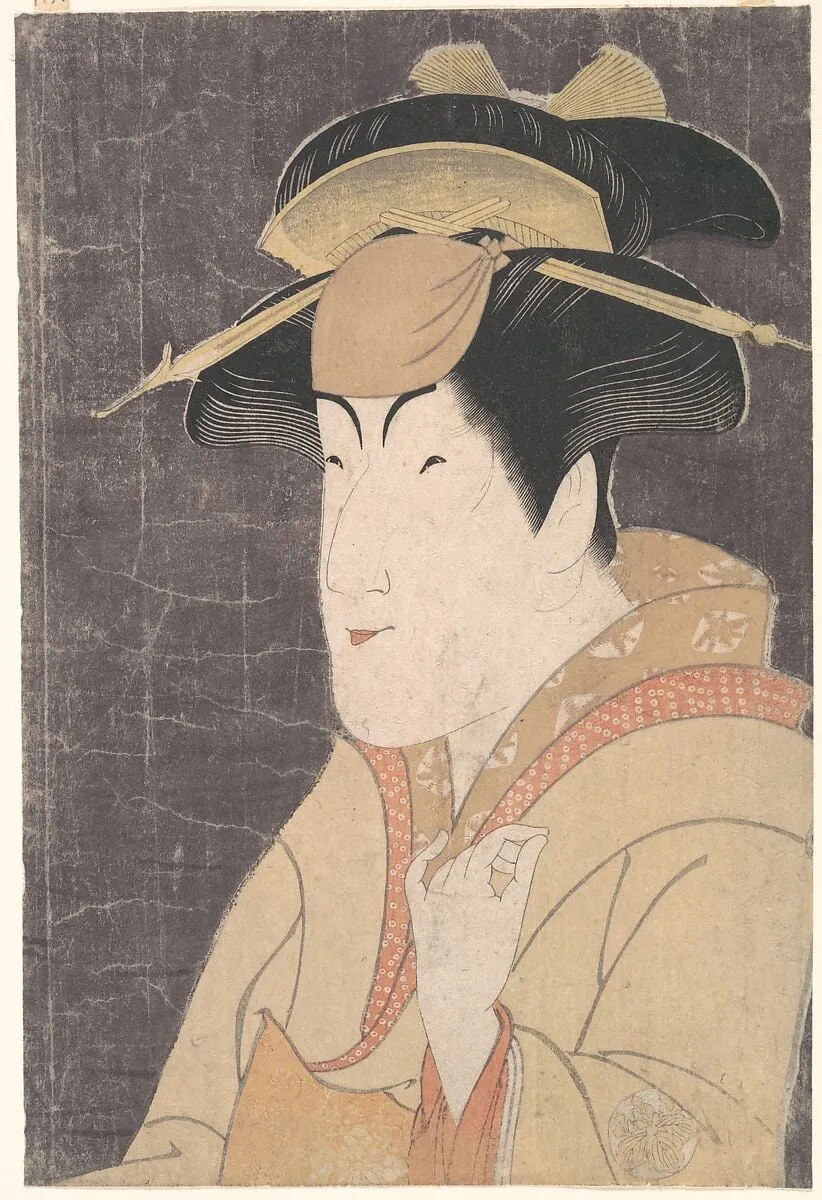
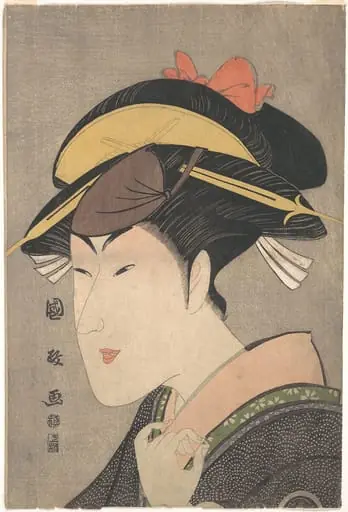
Untitled is an ink print by the Romanticist artist Tōshūsai Sharaku. It dates from 1794 and is held in the collection of the Museum of Fine Arts Boston.
About this work
Subject & Meaning
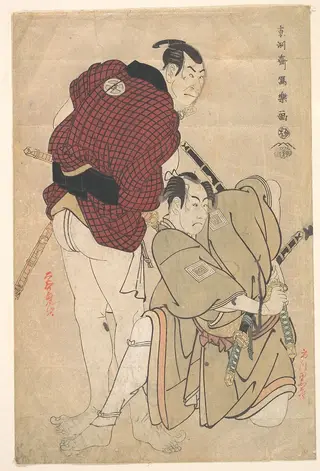
The print portrays the celebrated kabuki actor Nakayama Tomisaburō I in a striking, stylized pose that emphasizes his dramatic expression and elaborate costume, embodying the archetype of the heroic male figure in Edo-period theatre. Sharaku’s exaggerated facial features and bold line work highlight the performative intensity of the character, while the inclusion of a woman in the composition underscores the dynamic interplay of gender roles within the theatrical setting.
Technique & Style
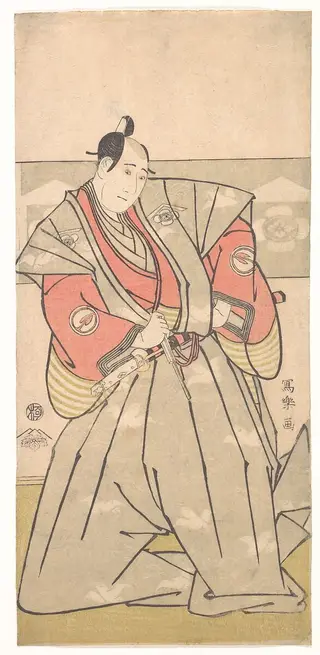
The work is a woodblock print created with ink, color, and white mica on paper, representing a ukiyo-e portrait of the actor Nakayama Tomisaburō I. Executed in 1794, the print exemplifies the bold line work and striking chiaroscuro characteristic of Sharaku's yakusha-e style, while the use of mica adds a subtle luminous quality to the composition.
History & Provenance
Untitled, a 1794 woodblock print by Tōshūsai Sharaku depicting actor Nakayama Tomisaburō I, entered the collection of the Museum of Fine Arts Boston and is also held by the Metropolitan Museum of Art in New York. The print was produced during the height of Sharaku’s brief but influential career, reflecting the ukiyo-e vogue for dramatic yakusha-e portraiture in the late Edo period. Its creation coincides with the artist’s documented output of single-character prints in 1794, and it remains part of the museum’s permanent holdings as recorded in institutional provenance data.
The work Untitled by Tōshūsai Sharaku, created in 1794 as a woodblock print with ink, color, and white mica on paper, is part of the collection of the Museum of Fine Arts Boston and is cataloged under the accession number 1998.643. It has been exhibited at the Museum of Fine Arts Boston and is documented within the institution's holdings related to ukiyo-e and yakusha-e genres, focusing on the actor Nakayama Tomisaburō I.
Context
Its presence in major collections such as the Museum of Fine Arts Boston underscores its recognized significance in the history of Japanese printmaking.
The work portrays the actor Nakayama Tomisaburō I in a dynamic pose characteristic of Sharaku's bold portrait style, reflecting the kabuki star cult of the Edo period and the commercial print market that celebrated celebrity performers. Contemporary accounts note the striking realism and psychological intensity of these images, which diverged from earlier idealized representations and sparked debate among critics about their moral and aesthetic value. Scholarship highlights how the piece situates itself within the ukiyo-e tradition of yakusha-e, or actor prints, while also exemplifying the ōkubi-e format that emphasized close-up, expressive faces.
Its presence in major collections such as the Museum of Fine Arts Boston underscores its recognized significance in the history of Japanese printmaking.
Legacy
The print is recognized as a pivotal contribution to yakusha-e portraiture, shaping later ukiyo-e depictions of kabuki actors. Its striking realism inspired subsequent artists to emphasize individual character over idealized forms, influencing both contemporary and modern interpretations of Japanese theatrical imagery. The work remains part of key museum collections, including the Museum of Fine Arts Boston, underscoring its enduring scholarly and curatorial significance.
Overview
Untitled is a woodblock print by Tōshūsai Sharaku, dated to 1794. Executed in ink, color, and white mica on paper, it is a portrait print featuring two figures, identified as Nakayama Tomisaburō I and another actor.
Artist & collection

 Untitled
 Untitled
- Untitled
 Untitled
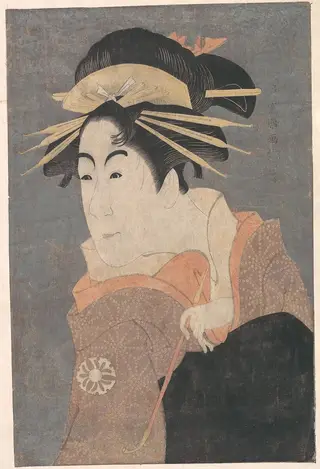
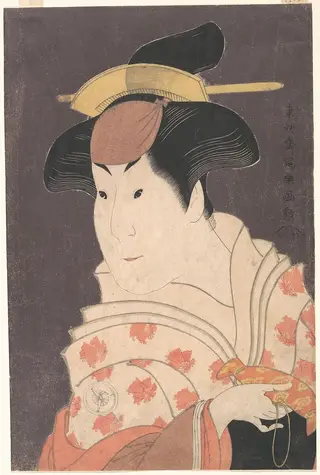 東洲斎写楽画 四代岩井半四郎の重の井 『恋女房染分手綱』|Iwai Hanshirō IV as Shigenoi in the Play "Koinyōbō Somewake Tazuna"
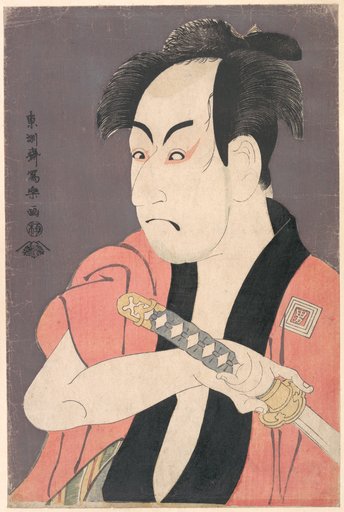
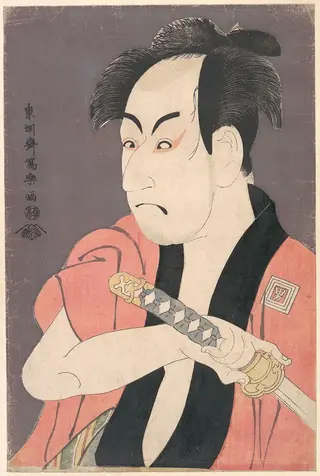 東洲斎写楽画 初代市川男女蔵の奴一平 『恋女房染分手綱』|Ichikawa Omezō I in the Role of Yakko Ippei from the Play "Koinyōbō somewake tazuna"
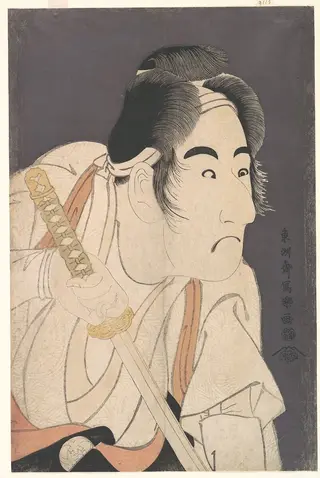 東洲斎写楽画 二世坂東三津五郎の石井源蔵 『花菖蒲文禄曽我』|Bandō Mitsugorō II as Ishii Genzō in the Play "Hana-ayame Bunroku Soga"
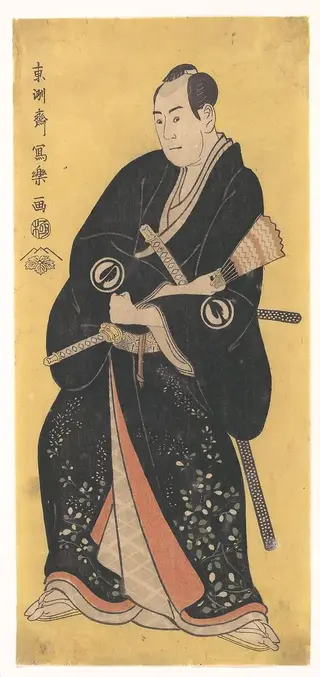 Untitled
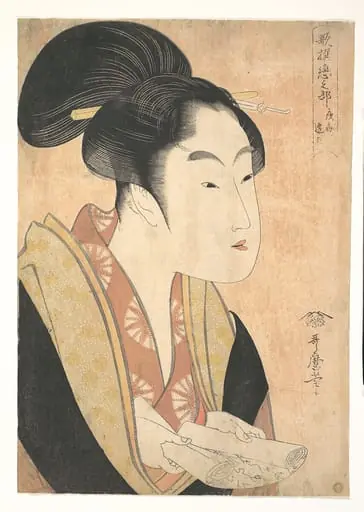 歌撰恋之部 夜毎に逢恋|A Young Woman Reading A Letter
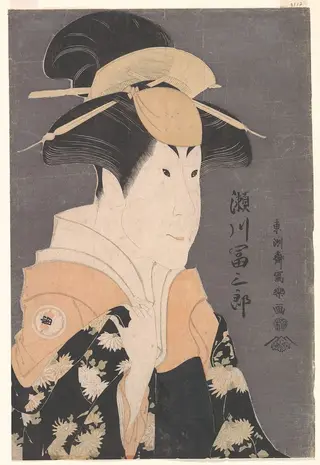 Untitled
 Untitled
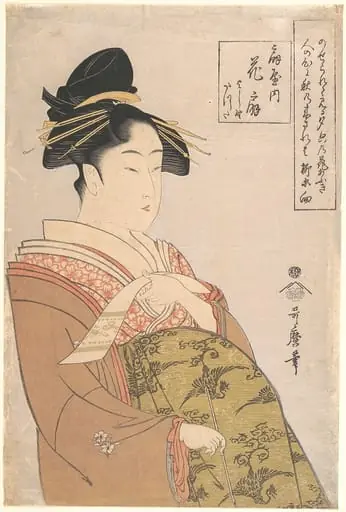 「扇屋内花扇図」|The Courtesan Hanaōgi of the Ōgiya Brothel in Yoshiwara (Ōgiya uchi Hanaōgi, Yoshino, Tatsuta)
 Untitled
 Untitled
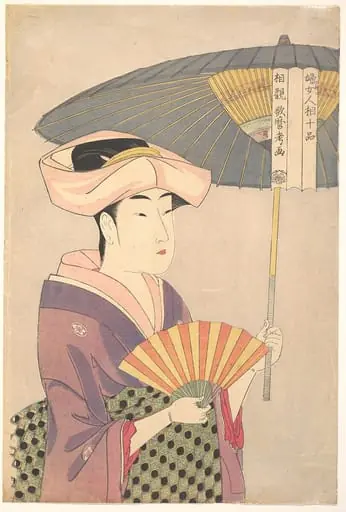 喜多川歌麿画 「婦女人相十品」 日傘を差す女|“Woman Holding Up a Parasol” from the series Ten Classes of Women’s Physiognomy (Fujo ninsō juppen: Higasa o sasu onna)
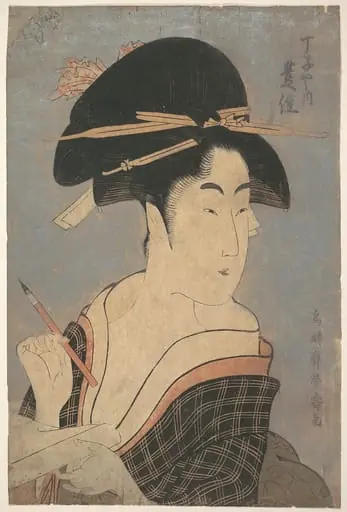 Untitled
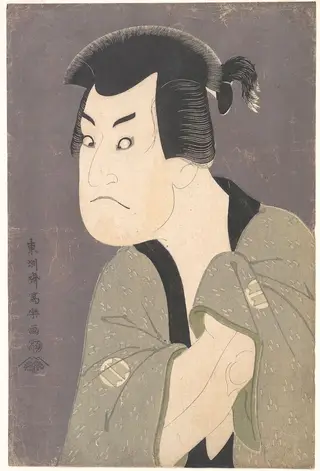 東洲斎写楽画 三世坂田半五郎の藤川水右衛門 『花菖蒲文禄曽我』|Sakata Hangorō III as Fujikawa Mizuemon in the Play "Hana Ayame Bunroku Soga"
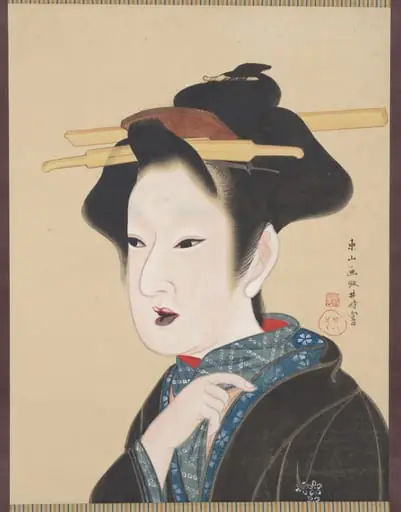 A Beauty