Artwork
Untitled
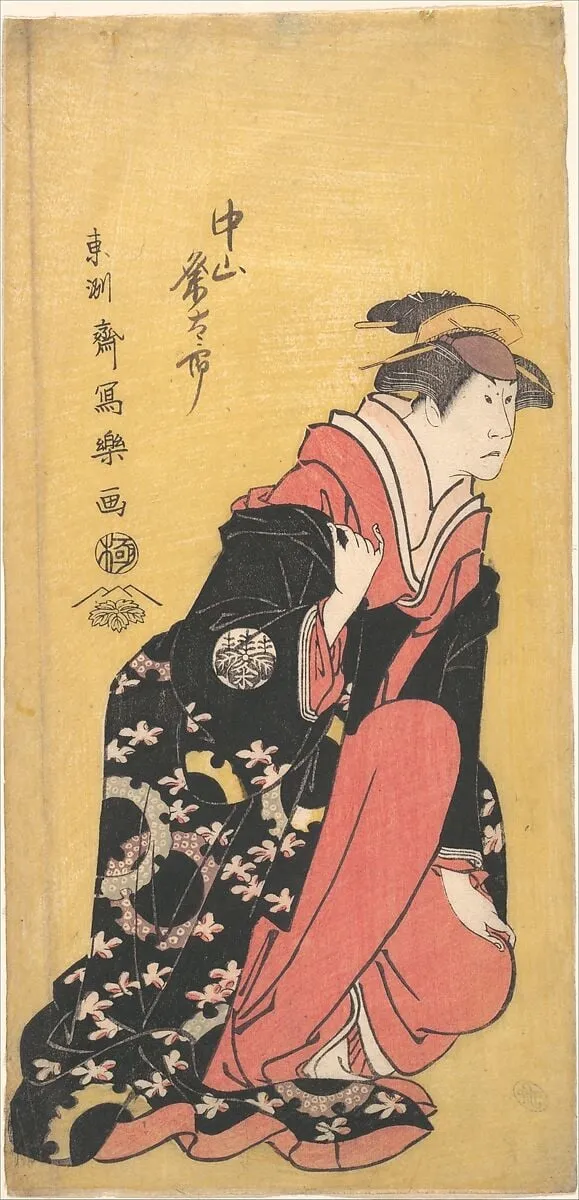
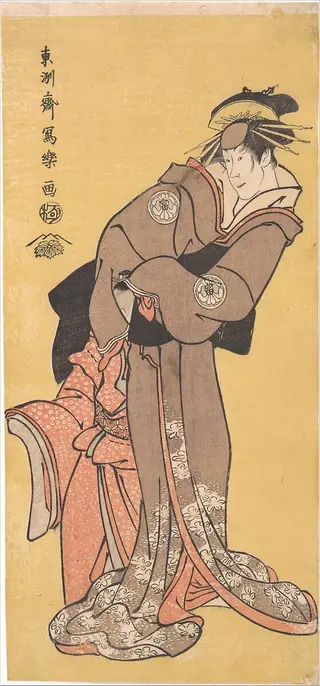
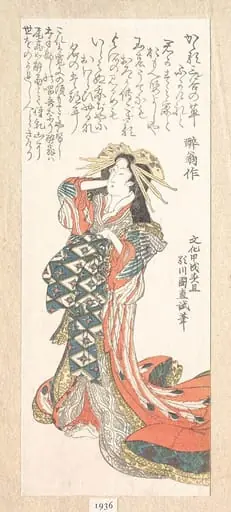
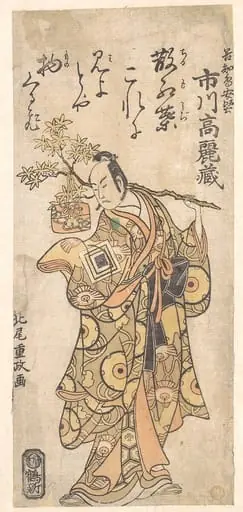
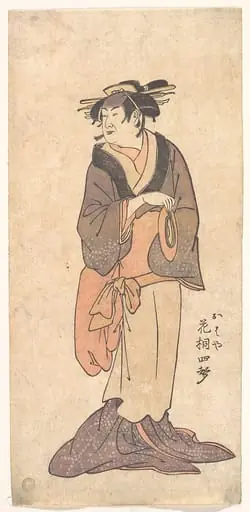
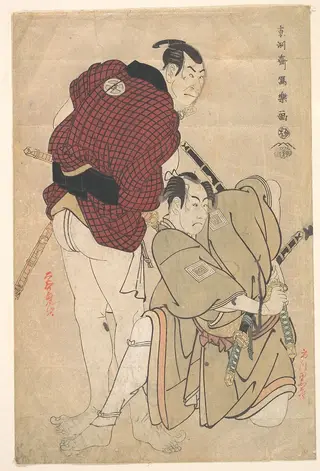
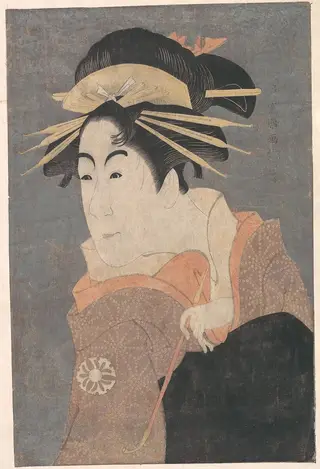
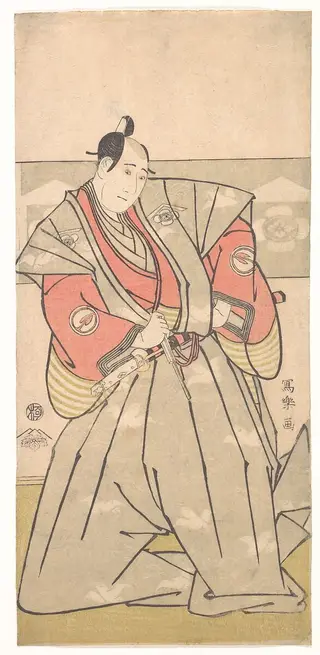
Untitled is an ink print by the Romanticist artist Tōshūsai Sharaku. It dates from 1794 and is held in the collection of the Museum of Fine Arts Boston.
About this work
Subject & Meaning
The work is a woodblock print from the ukiyo-e tradition, specifically categorized as yakusha-e, a genre dedicated to actor portraits.
The work is a woodblock print from the ukiyo-e tradition, specifically categorized as yakusha-e, a genre dedicated to actor portraits. Created in 1794 by Tōshūsai Sharaku, the image serves as the left-hand sheet of a triptych. The subject is the kabuki actor Nakamura Kumetaro II, depicted in a dual representation that includes both male and female personas.
As a portrait within this specific theatrical context, the piece captures the performer's role rather than a literal biographical scene, reflecting the stylized conventions of Edo-period theater imagery.
Technique & Style
Created in 1794, this work is a woodblock print executed with ink and color on paper. It functions as the left-hand sheet of a triptych, a format typical of the ukiyo-e genre. The piece is classified as a nishiki-e, or brocade picture, indicating the use of multiple color blocks to achieve its visual effect.
Stylistically, it operates as a yakusha-e, a portrait of kabuki actors, specifically depicting Nakamura Kumetaro II alongside male and female figures. The composition relies on the flat application of pigment characteristic of Japanese printmaking techniques of the late eighteenth century.
History & Provenance
Untitled, a 1794 woodblock print by Tōshūsai Sharaku depicting actor Nakamura Kumetaro II, was created as part of a triptych and originally issued as a left-hand sheet. The print entered the collection of the Museum of Fine Arts Boston, where it remains today.
The work was produced in the ukiyo-e tradition, specifically as a yakusha-e portrait, and was printed in ink with color on paper. Its provenance traces from Sharaku’s studio to the Metropolitan Museum of Art, and subsequently to the Museum of Fine Arts Boston, establishing a clear ownership chain from the artist to institutional custodians.
The woodblock print Untitled by Tōshūsai Sharaku, created in 1794, is held in the collection of the Museum of Fine Arts Boston. It is also listed among the holdings of the Metropolitan Museum of Art. The work serves as the left-hand sheet of a triptych and falls under the ukiyo-e genre, specifically depicting the actor Nakamura Kumetaro II. No specific inventory or accession numbers are provided in the available records for this piece.
Overview
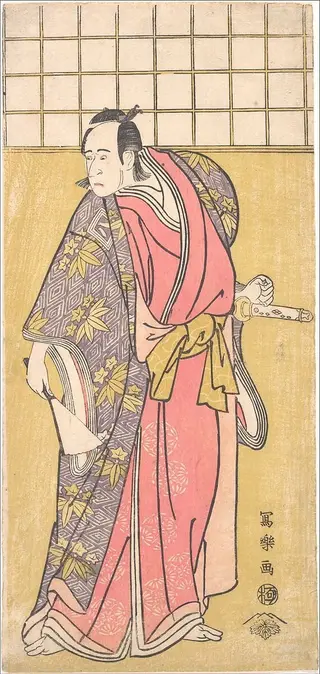
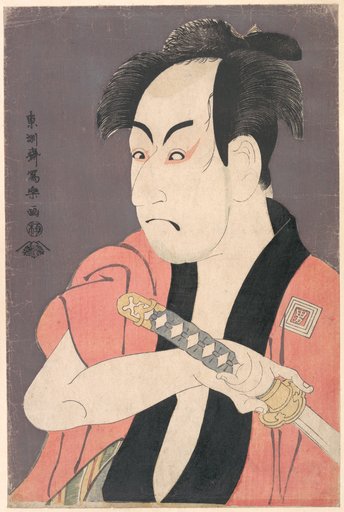
Created in 1794 during the artist's brief but prolific ten-month career, this woodblock print by Tōshūsai Sharaku serves as the left-hand sheet of a triptych depicting kabuki actors. The work exemplifies Sharaku's signature style of unflinching psychological realism, departing from the idealized conventions of ukiyo-e portraiture. The composition isolates a male figure, likely an actor in a specific role, against a flat, unadorned gray background that eliminates environmental distraction.
The subject is rendered with stark chiaroscuro; his face is half-lit, emphasizing sharp cheekbones and a shadowed jawline, while his expression is one of intense, almost aggressive scrutiny. His lips are pressed tightly, and his hand grips a fan with such force that the paper appears to wrinkle, conveying suppressed tension. This specific depiction reflects Sharaku's unique approach to capturing the inner character and dramatic intensity of his subjects rather than their external beauty.
Produced during the Edo period, the print utilizes ink and color on paper, showcasing the technical mastery of the woodblock medium. It stands as a critical example of the artist's contribution to the history of Japanese printmaking, noted for its bold characterization and departure from contemporary norms.
Context
Sharaku’s output coincided with a period of heightened public interest in kabuki theatre, yet his approach diverged from contemporaries who typically idealised actors. By presenting a more realistic, even unflattering, visage, he challenged prevailing aesthetic norms and contributed to a nuanced visual discourse on celebrity and performance in Edo society.
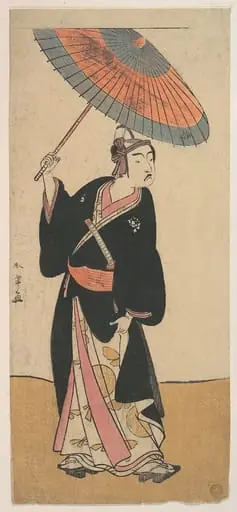
Artist & collection

 Untitled
 Untitled
 Untitled
 Untitled
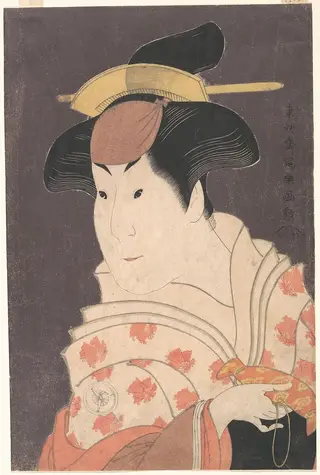 東洲斎写楽画 四代岩井半四郎の重の井 『恋女房染分手綱』|Iwai Hanshirō IV as Shigenoi in the Play "Koinyōbō Somewake Tazuna"
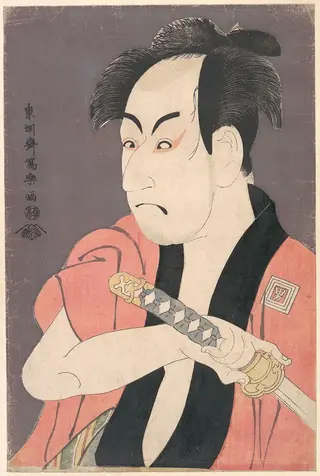 東洲斎写楽画 初代市川男女蔵の奴一平 『恋女房染分手綱』|Ichikawa Omezō I in the Role of Yakko Ippei from the Play "Koinyōbō somewake tazuna"
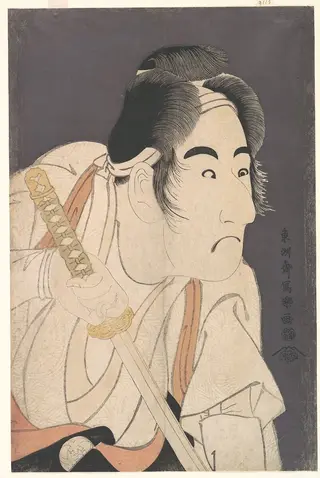 東洲斎写楽画 二世坂東三津五郎の石井源蔵 『花菖蒲文禄曽我』|Bandō Mitsugorō II as Ishii Genzō in the Play "Hana-ayame Bunroku Soga"
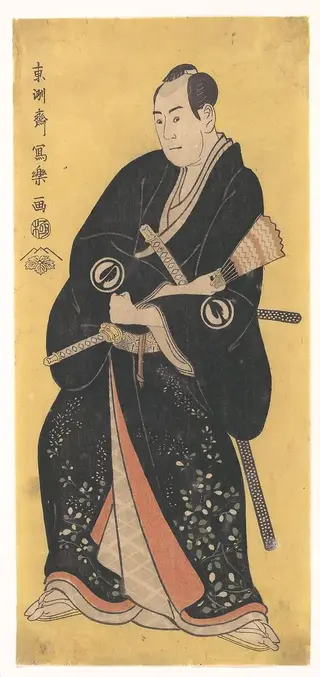 Untitled