Artwork
伝太虚元寿筆 岩に鶺鴒図|Wagtail on a Rock
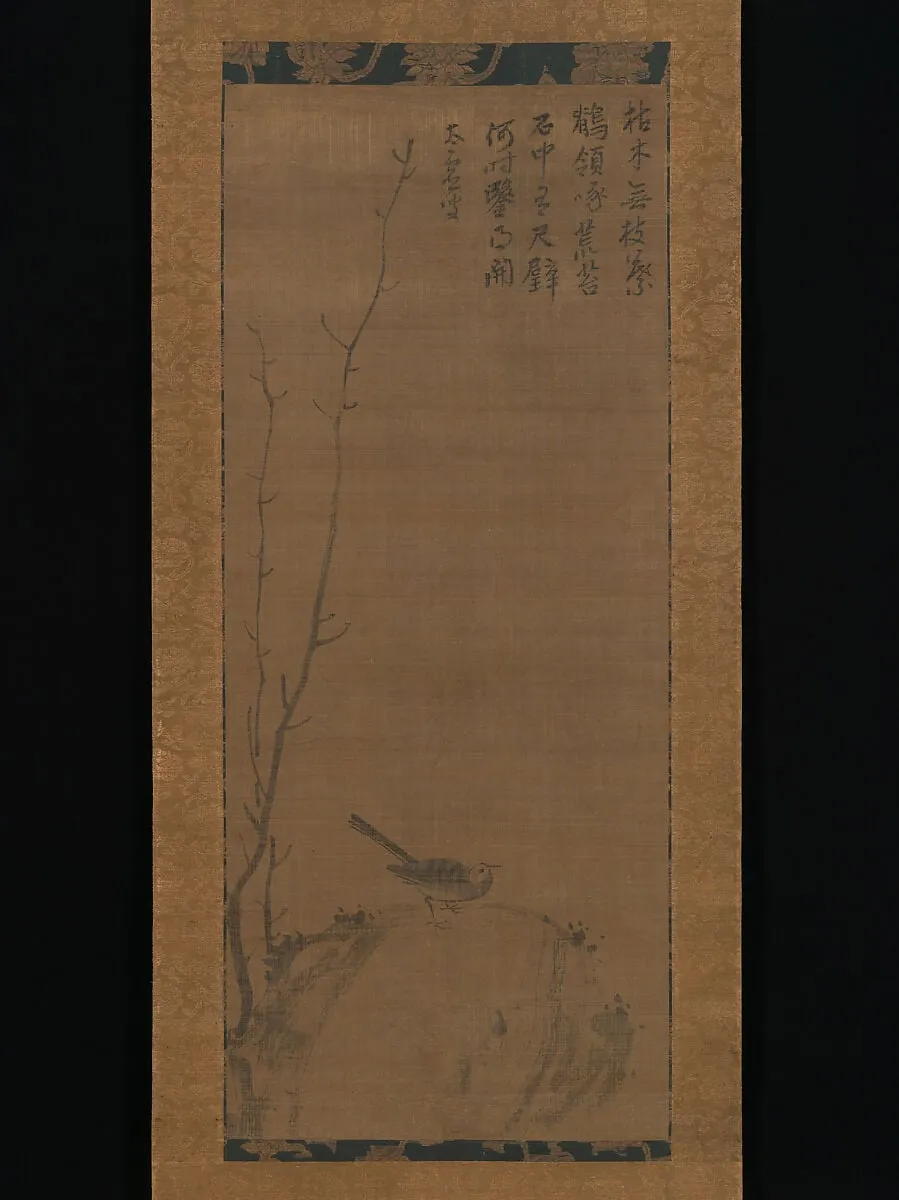
伝太虚元寿筆 岩に鶺鴒図|Wagtail on a Rock is an ink painting by the Ming dynasty painting artist Taikyo Genju. It dates from 1350 and is held in the collection of the Metropolitan Museum of Art.
About this work
Subject & Meaning
The work is part of the Metropolitan Museum of Art collection, underscoring its significance within the museum's holdings of East Asian paintings.
The hanging scroll portrays a wagtail perched on a rocky outcrop, rendering the bird in ink on silk within a Japanese landscape tradition.
The composition belongs to the landscape genre and was executed in 1350, reflecting the artistic practice of Taikyo Genju.
The bird motif appears as the central subject, emphasizing naturalistic detail characteristic of the period. The work is part of the Metropolitan Museum of Art collection, underscoring its significance within the museum's holdings of East Asian paintings.
Technique & Style
The work is executed as a hanging scroll using ink on silk. Created in 1350, the piece belongs to the landscape genre and depicts a bird perched on a rock. The artist, identified in the records as Taikyo Genju, utilized traditional monochrome techniques characteristic of Japanese painting from that period.
The medium of ink on silk supports the formal qualities of the composition, focusing on the naturalistic rendering of the wagtail and its rocky environment.
History & Provenance
The work titled 伝太虚元寿筆 岩に鶺鴒図 (Wagtail on a Rock) was created in 1350 in Japan by the artist Taikyo Genju as a hanging scroll painted in ink on silk. It portrays a bird and is classified as a landscape painting. According to the Metropolitan Museum of Art’s records, the piece has been part of its collection since at least 1350, currently displayed in New York.
The sources do not specify a patron or commissioning context. The artwork’s creation history is documented through its date, medium, and provenance within the museum’s holdings.
Overview
Created around 1350, this hanging scroll by the Japanese artist Taikyo Genju presents a solitary wagtail perched on a rugged stone. Executed in ink on silk, the composition is minimalist: the bird occupies the foreground while the background consists of an unadorned, pale silk field, emphasizing the quiet presence of the creature.
Context
During the Nanboku-chō period, Japanese painters increasingly turned to direct observation of the natural world. This piece reflects that broader cultural shift, aligning with contemporary developments in ink painting that favored simplicity, spontaneity, and the depiction of everyday fauna.
Artist & collection


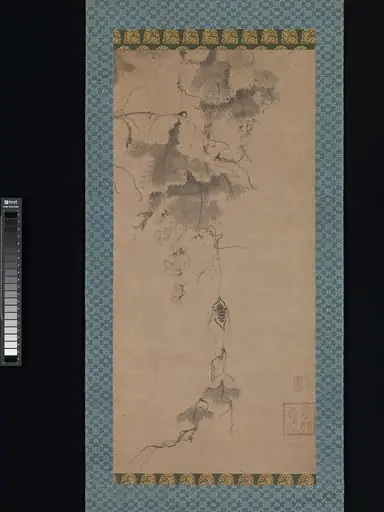
- 墨林愚庵筆 葡萄蝉図|Cicada on a Grapevine
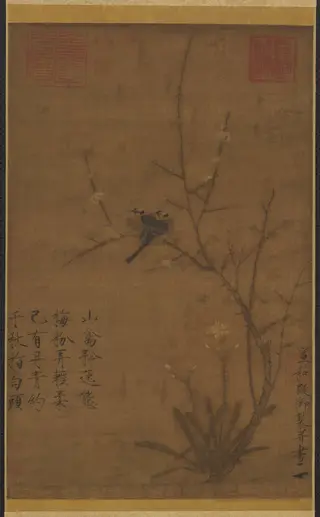 宋徽宗蠟梅山禽 軸
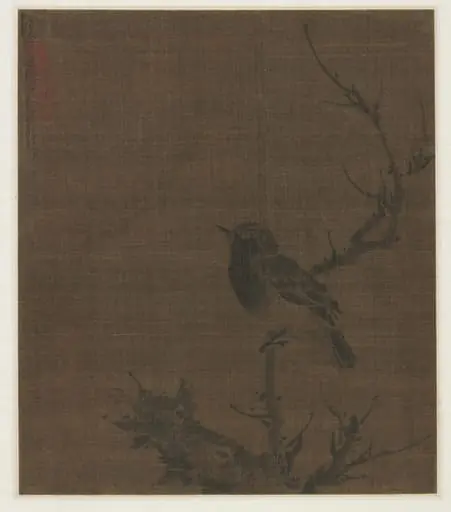 Sleeping Bird on a Prunus Branch
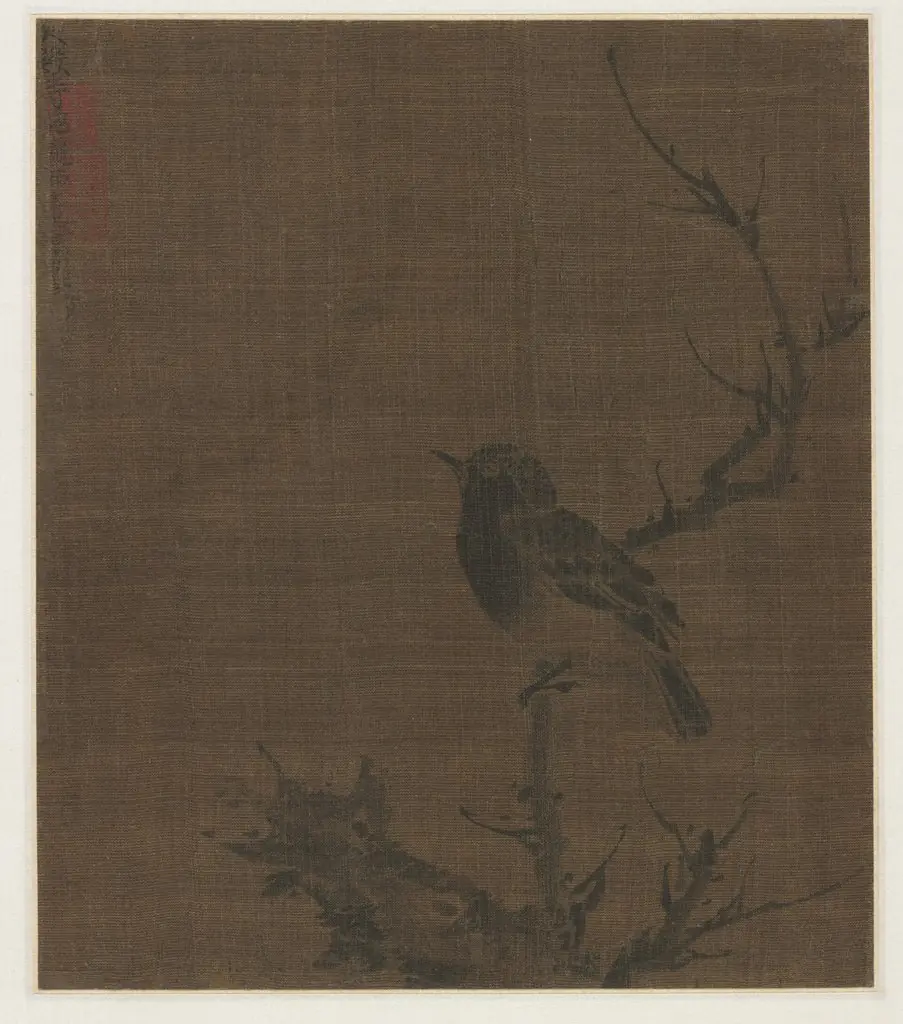 Sleeping Bird on a Prunus Branch
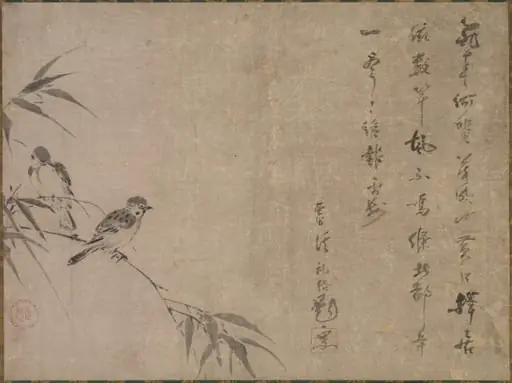 Sparrows and Bamboo
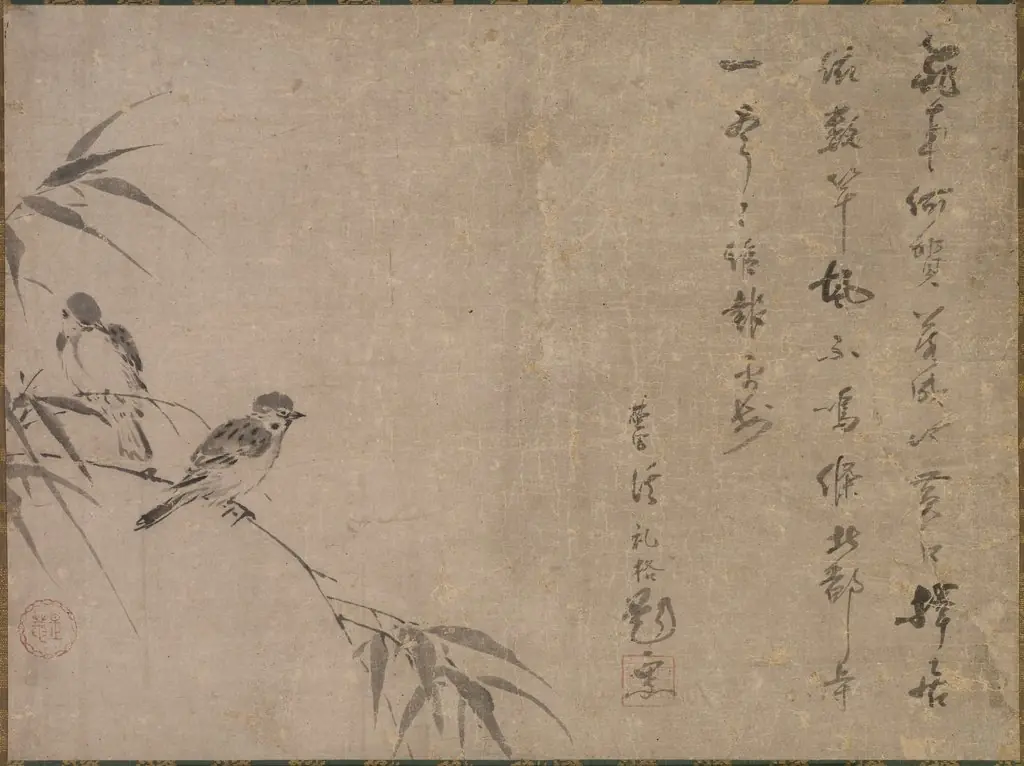 Sparrows and Bamboo
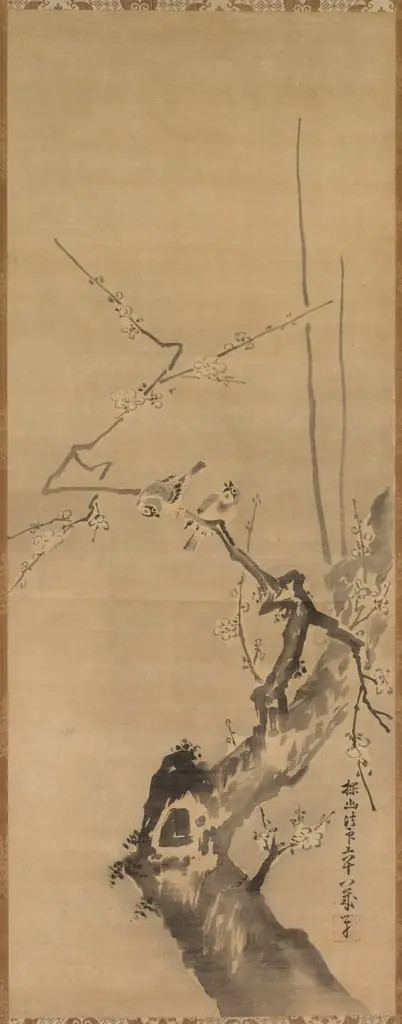 Sparrows on Blossoming Plum; A Sage with Tiger; Chinese Bird on Snow-Laden Branch
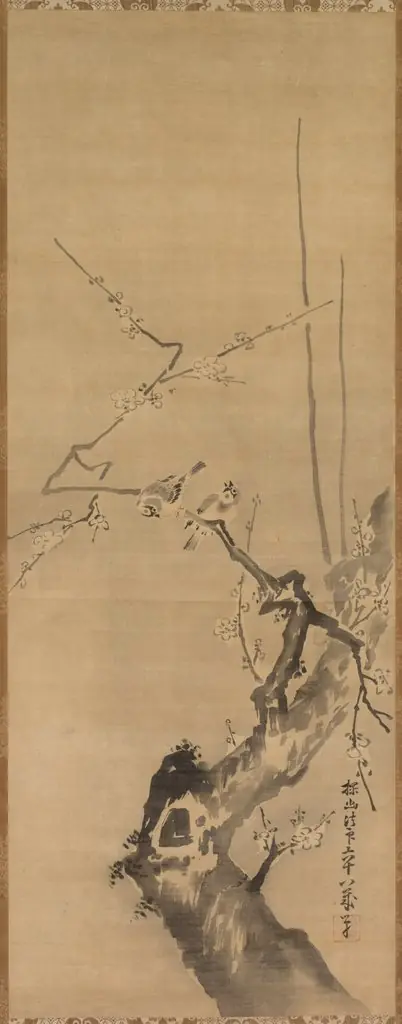 Sparrows on Blossoming Plum
 狩野松栄筆 梅鵯図|Brown-Eared Bulbul (Hiyodori) on a Branch of Plum
 清 郭汝龍 指畫寒禽圖 冊頁|Mynah on Reed
 宋林椿十全報喜 軸
 Sparrows on Blossoming Plum