Artwork
Elisha Bringing the Blinded Syrian Army to the King of Israel
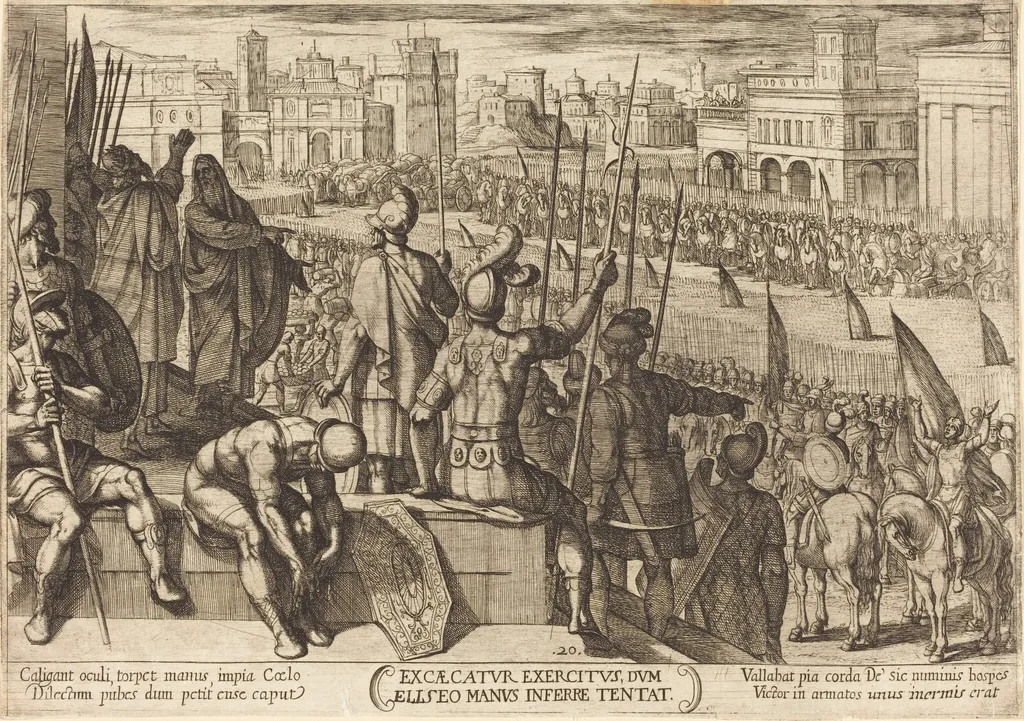
Elisha Bringing the Blinded Syrian Army to the King of Israel is an ink print by the Baroque artist Antonio Tempesta. It dates from 1613 and is held in the collection of the National Gallery of Art.
About this work
Overview
Blinded troops stumble both on foot and mounted, set against a backdrop of buildings and further combatants rendered in crisp, linear detail.
Antonio Tempesta’s 1613 etching, Elisha Bringing the Blinded Syrian Army to the King of Israel, presents a densely populated battlefield where soldiers, horses, and weapons intertwine. At the composition’s core a robed figure stands over a kneeling man clutching a globe, while a nearby soldier gestures upward. Blinded troops stumble both on foot and mounted, set against a backdrop of buildings and further combatants rendered in crisp, linear detail.
Subject & Meaning
The print illustrates a passage from the Second Book of Kings in which the prophet Elisha leads a Syrian force, rendered sightless by divine intervention, before the Israelite monarch. The scene emphasizes the paradox of blindness and triumph, suggesting that victory can arise from vulnerability and that divine power supersedes military might.
Technique & Style
Executed as an etching, Tempesta employs fine incised lines to delineate the crowded figures and architectural elements. Contrasting areas of deep shadow with illuminated forms generate a dramatic chiaroscuro, causing certain characters to appear almost luminous while others recede into darkness. The meticulous rendering of armor, horse tack, and weaponry reflects the artist’s interest in historical and martial detail.
History & Provenance
Born in Florence in 1555, Tempesta worked across painting and engraving, linking the Baroque currents of Rome with the print traditions of Antwerp. The 1613 plate aligns with his broader output, which frequently explored biblical and military narratives. Surviving impressions are held in several European print collections, attesting to the work’s circulation among early‑modern collectors of narrative prints.
Own this work as a print
Artist & collection
Artist
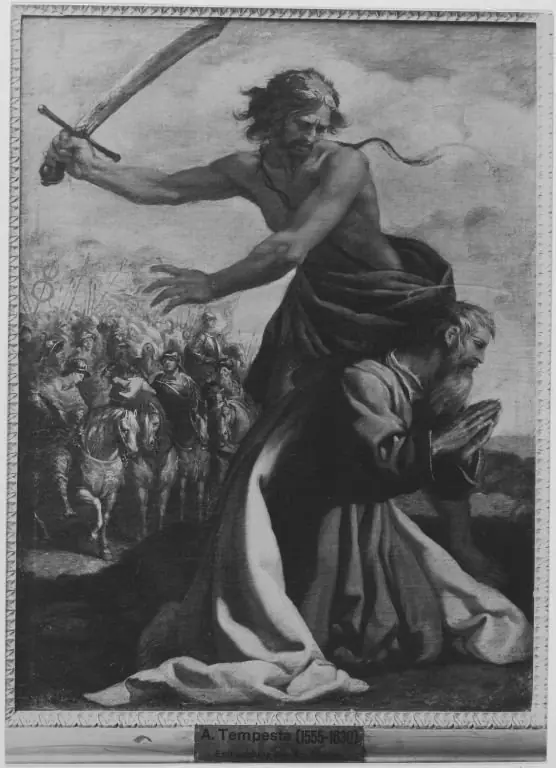
Antonio Tempesta, also called il Tempestino (1555 – 5 August 1630), was an Italian painter and engraver, whose art acted as a point of connection between Baroque Rome and the culture of Antwerp.

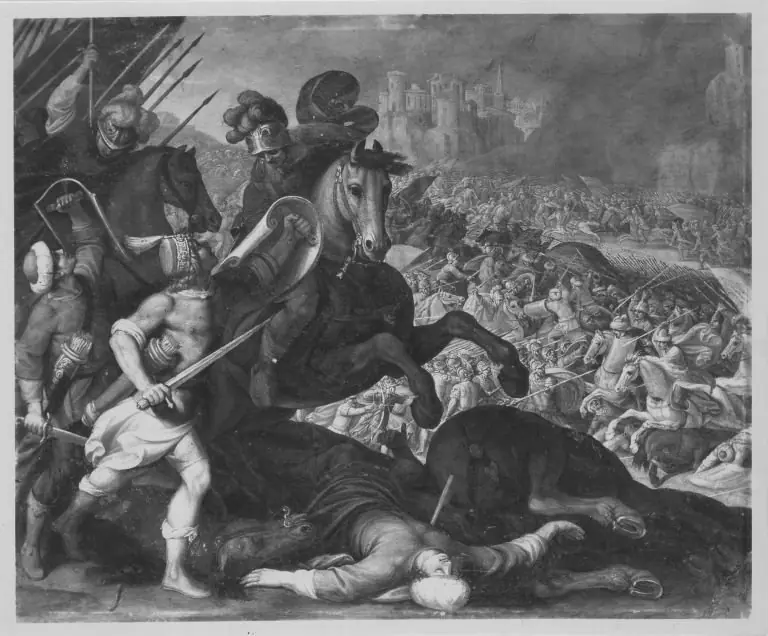
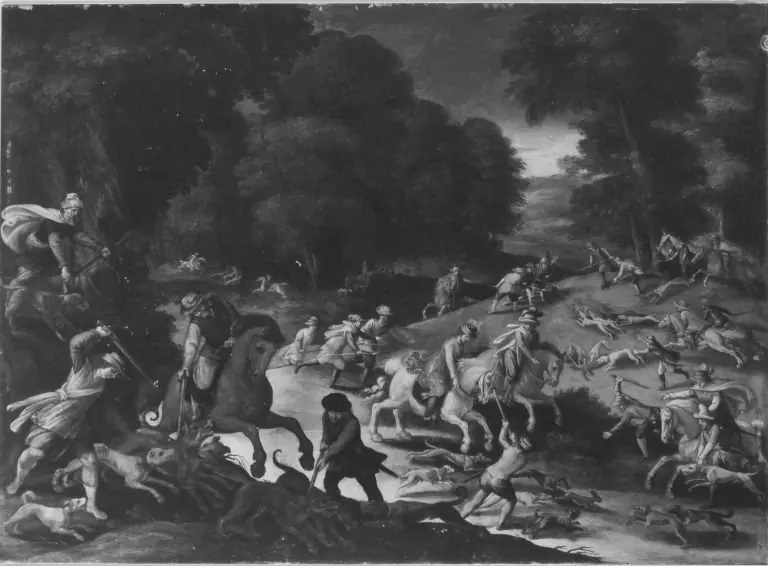
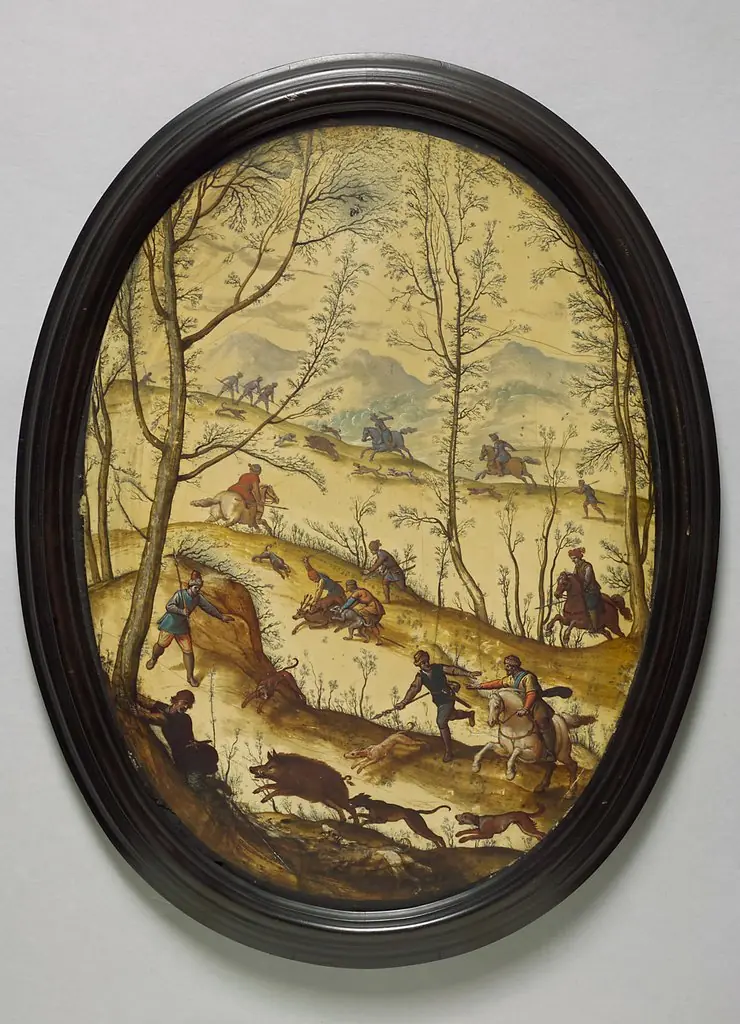
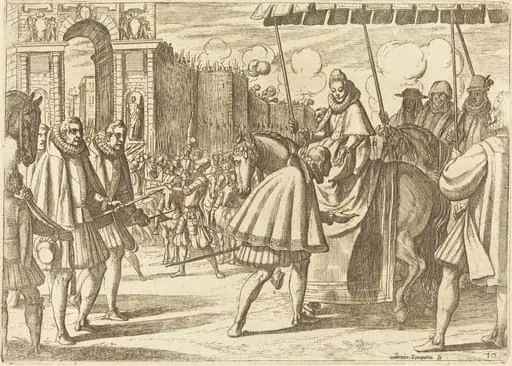
- Triumphal Entry of Margaret of Austria
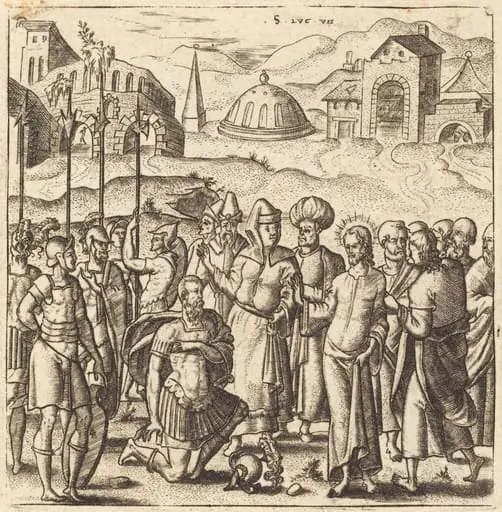 Christ and the Centurion
 Triumphal Entry of Margaret of Austria
 St. Peter
 Illustration to Jean Desmarets' "L'Ariane"
 David's Brother Relating to Him Goliath's Challenge
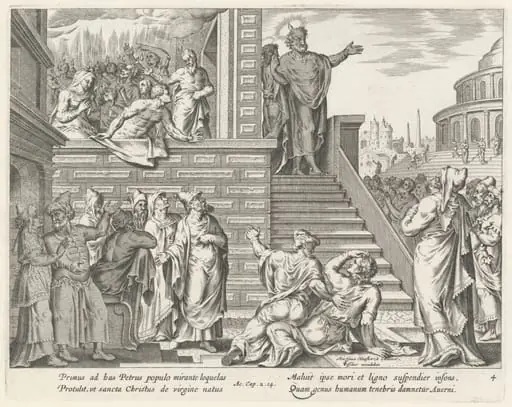 Saint Peter Speaks to the People about Christ
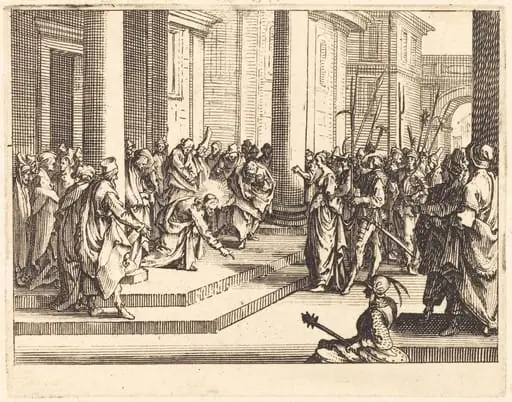 Christ and the Woman Taken in Adultery
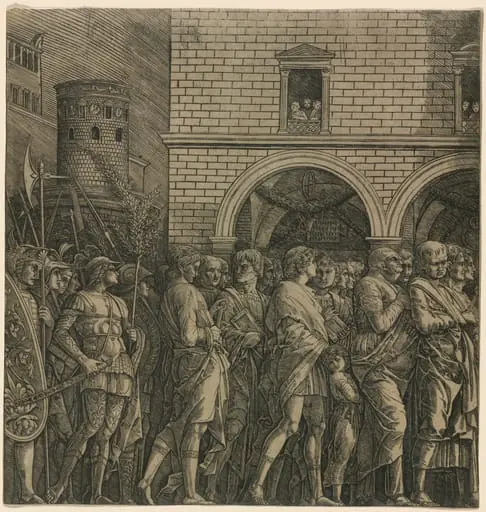 The Triumph of Caesar: The Senators
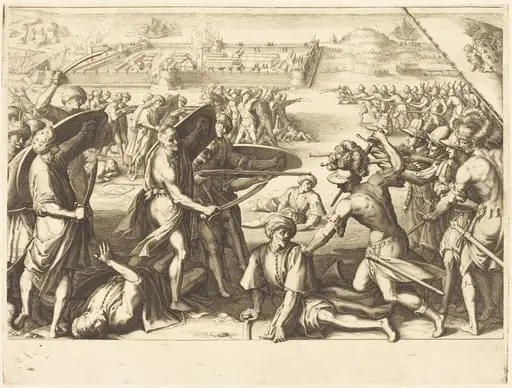 Assault on the Outer Forts of Bone
 Stoning of Jesus
 The Triumph of Fame