Artwork
Vista from a Grotto
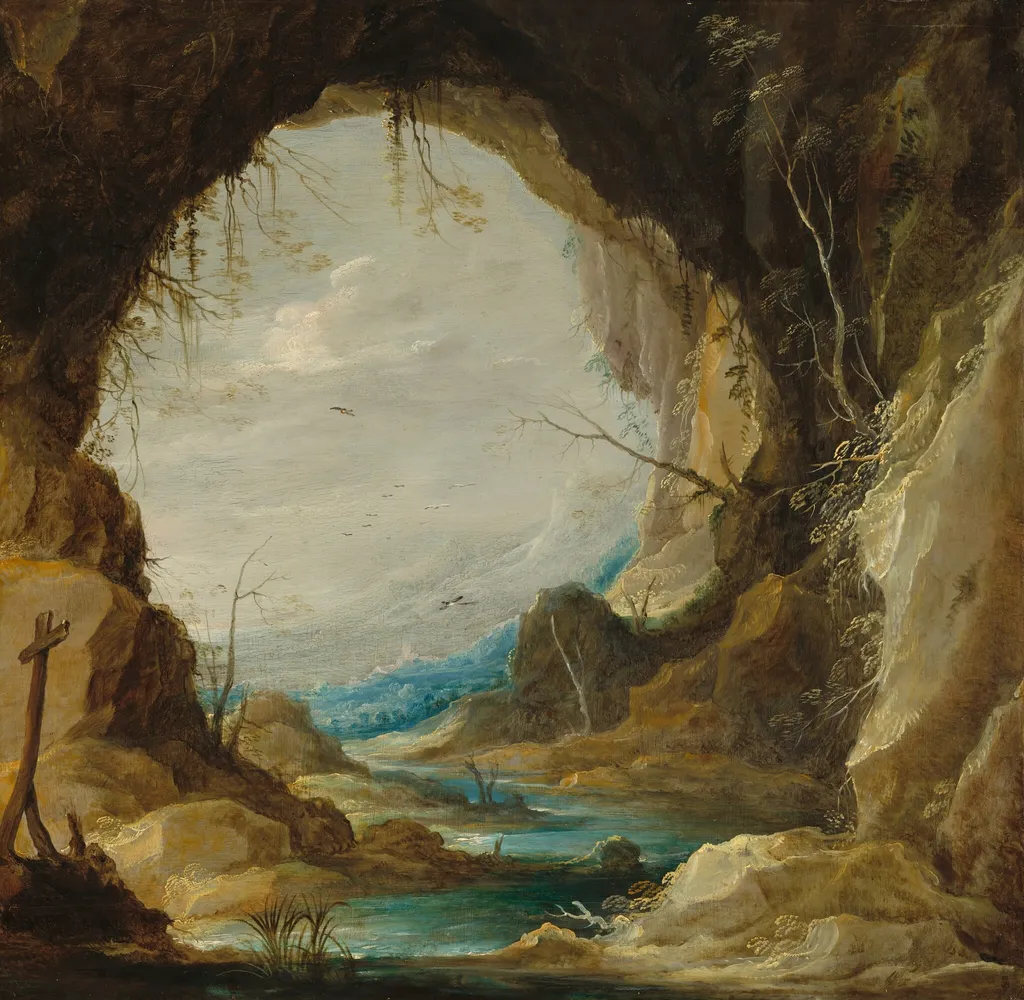
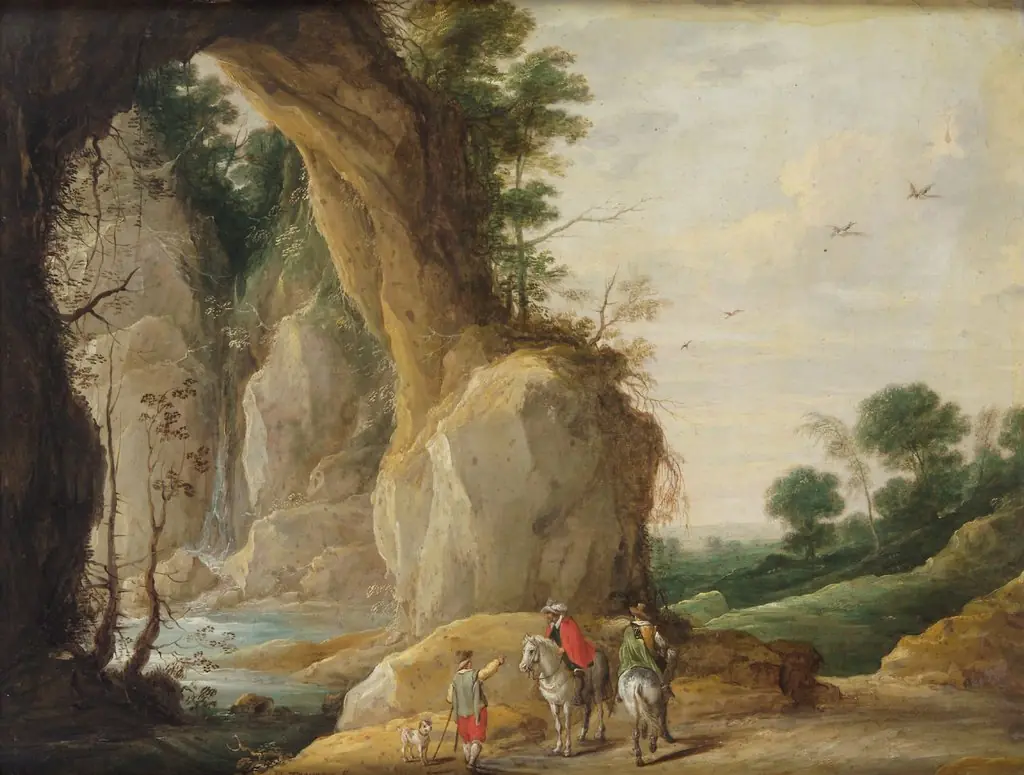
Vista from a Grotto is an oil painting by the Baroque artist David Teniers the Younger. It dates from 1634 and is held in the collection of the National Gallery of Art.
About this work
Technique & Style
David Teniers the Younger executed Vista from a Grotto in 1634 using oil paint applied to a wooden panel support. The work measures 51.1 cm in height and 51.4 cm in width. Classified as a landscape, the painting presents a view framed by a grotto. The nearly square format and oil-on-panel medium are consistent with Teniers's practice in his early career.
History & Provenance
Philips collection in The Hague, a fact noted in a 1931 publication and confirmed by a label on the back of the panel.
Vista from a Grotto is an oil on panel painting by David Teniers the Younger, measuring 51.1 cm by 51.4 cm. The work first appears in records from the Ed. Philips collection in The Hague, a fact noted in a 1931 publication and confirmed by a label on the back of the panel. It remained in that collection until it was sold to G. Cramer of The Hague, who transferred it to the National Gallery of Art on 11 October 1971.
Prior to this acquisition, the work belonged to Professor Dr. J.E. Heuting of Wezenbeek Oppen, Belgium. The painting has been part of the National Gallery of Art's holdings in Washington, D.C., since that acquisition, catalogued under inventory number 1971.56.1.
Context
Vista from a Grotto was first brought to scholarly attention in Just Havelaar's 1931 study De Nederlandsche Landschapskunst tot het einde der zeventiende eeuw, where it was cited as an example of Dutch landscape painting. The oil-on-panel work is attributed to David Teniers the Younger and forms part of the National Gallery of Art's collection in Washington, D.C. Its early appearance in Havelaar's survey situates the piece within the mid-twentieth-century reassessment of Teniers's landscape output.
Legacy
Vista from a Grotto entered the National Gallery of Art collection in 1971 after passing through the holdings of Ed. Philips and Belgian collector J.E. Heuting. The painting had been reproduced in 1931 in a study of Dutch landscape art, highlighting its early scholarly attention, and its provenance has been documented through correspondence between Cramer and Heuting.
As part of the National Gallery's holdings, the work is cited in catalogues that trace Teniers the Younger's landscape output.
Overview
Vista from a Grotto is a landscape painting executed in oil on panel by David Teniers the Younger around 1634. This work presents a natural scene, inviting the viewer into a detailed depiction of the outdoors. As a characteristic example of the artist's early career, it reflects the developing trends in 17th-century Flemish landscape art, focusing on naturalistic observation and atmospheric effects.
Subject & Meaning
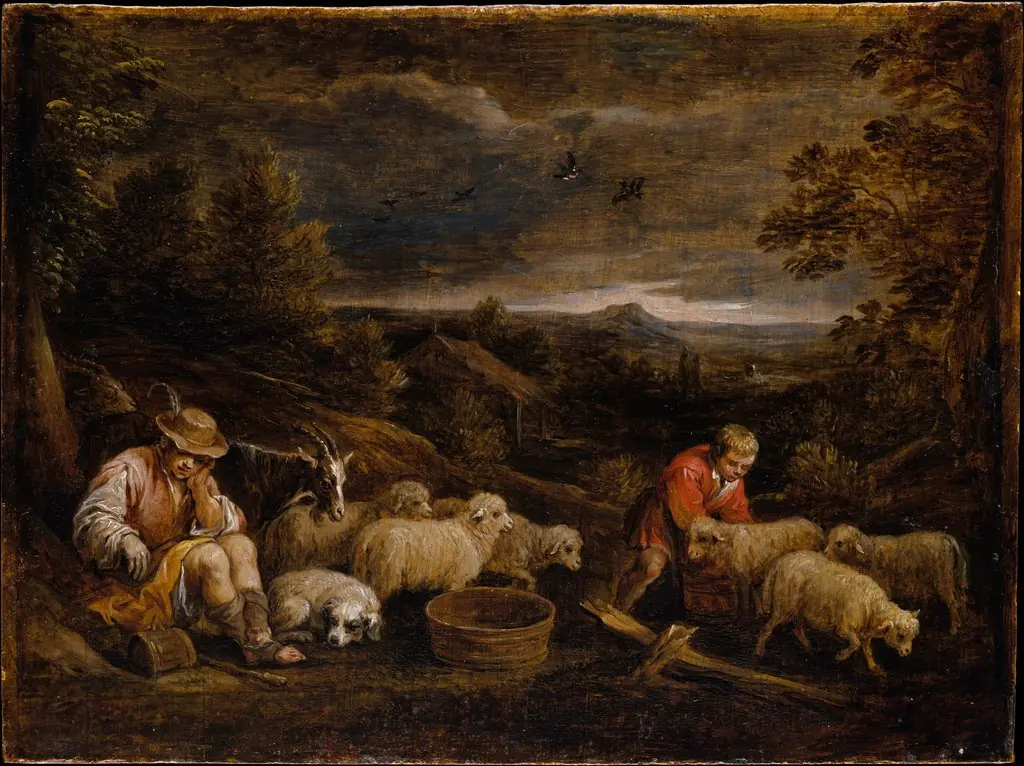
The painting depicts a natural vista observed from within a grotto, framing an expansive landscape beyond. A central stream flows through the composition, bordered by varied rock formations and lush vegetation. Above, birds are visible in flight, contributing to the sense of an active, living environment. The scene emphasizes the wild, untamed aspects of nature, a common theme in period landscape art.
Own this work as a print
Artist & collection
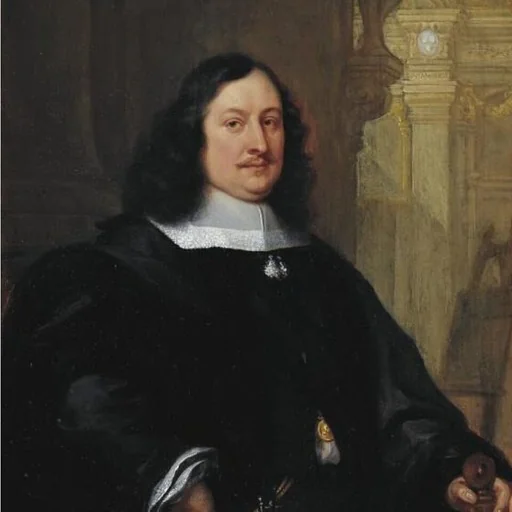
Artist
David Teniers the Younger or David Teniers II was a Flemish Baroque painter, printmaker, and artist.