Artwork
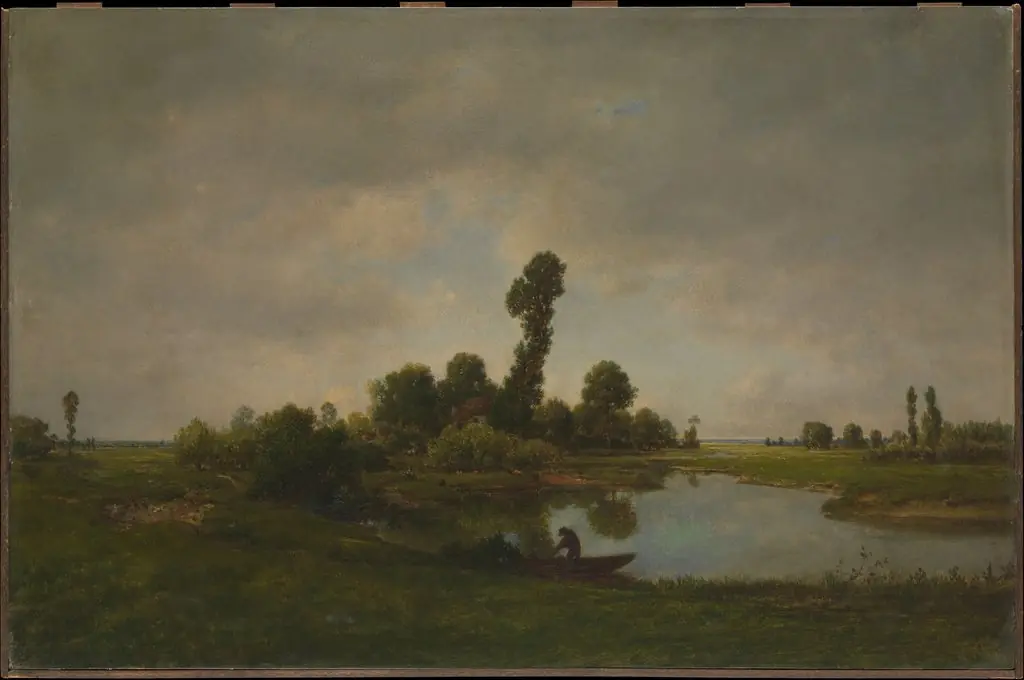
The Pool (Memory of the Forest of Chambord)
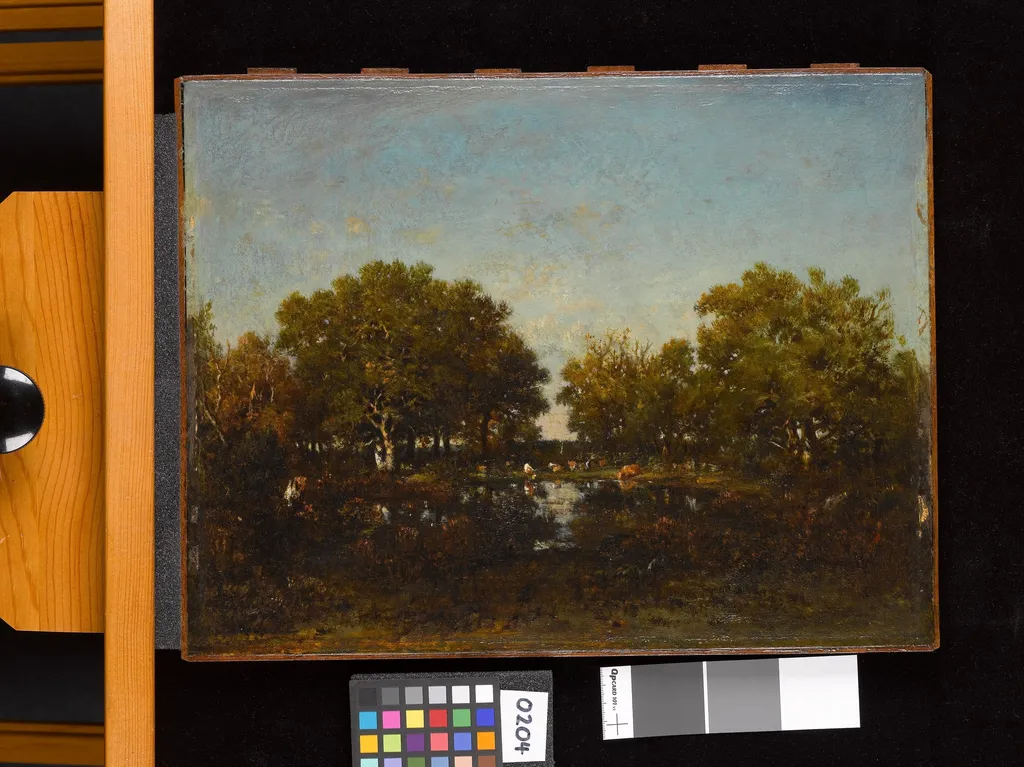
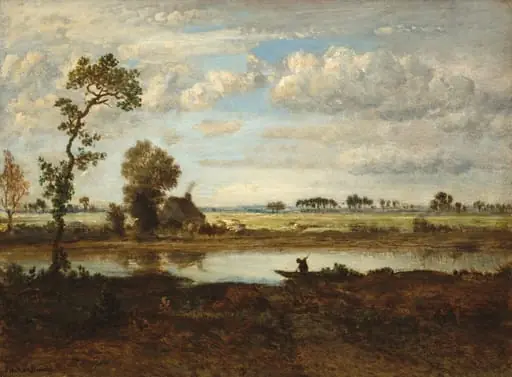
The Pool (Memory of the Forest of Chambord) is an oil painting by the Barbizon school artist Théodore Rousseau. It dates from 1839 and is held in the collection of the Metropolitan Museum of Art.
About this work
Subject & Meaning
The composition thus conveys a contemplative meditation on place and remembrance, using the forest as both a physical and emotional subject.
The painting titled The Pool (Memory of the Forest of Chambord) portrays a tranquil woodland scene, depicting a forested landscape that alludes to the historic forest of Chambord. According to the record, the work is an oil-on-panel landscape produced in 1839 by Théodore Rousseau, whose title explicitly links the imagery to a personal or idealized recollection of that specific forest. The forest itself functions as a symbolic referent, evoking themes of memory and nostalgia through its natural, undisturbed setting.
The composition thus conveys a contemplative meditation on place and remembrance, using the forest as both a physical and emotional subject.
Technique & Style
The Pool (Memory of the Forest of Chambord) is an oil-on-panel landscape painting executed by Théodore Rousseau in 1839. The work utilizes oil paint as its medium, applied to a rigid panel support rather than canvas. Measuring 32.4 cm in height and 40.6 cm in width, the piece depicts a forest scene consistent with the artist's focus on naturalistic landscape subjects.
As a product of the mid-19th century, the painting represents the Barbizon School's approach to outdoor observation, though the specific handling of brushwork or current conservation condition is not detailed in the available records. The composition captures the atmosphere of the Forest of Chambord, rendered through the artist's characteristic landscape style.
History & Provenance
The work titled "The Pool (Memory of the Forest of Chambord)" was created by Théodore Rousseau in 1839 as an oil painting on panel, depicting a forest landscape inspired by the Forest of Chambord. Its creation history is tied to Rousseau’s interest in the French woodland, and the painting is dated to that year. After its execution, it entered the collection of Robert Lehman, who later donated the piece to the Metropolitan Museum of Art, where it is presently housed.
The dating and medium are documented in contemporary records, and the ownership chain from artist to collector to museum is established by the cited sources.
The Pool (Memory of the Forest of Chambord) by Théodore Rousseau is held in the collection of the Metropolitan Museum of Art in New York, where it forms part of the Robert Lehman Collection. The painting is catalogued as an oil-on-panel landscape measuring 32.4 by 40.6 centimeters. No specific accession number, acquisition date, or exhibition history is documented in the available sources.
Overview
Théodore Rousseau, a prominent French painter, completed The Pool (Memory of the Forest of Chambord) in 1839 using oil on canvas. This work exemplifies the Barbizon school's dedication to rendering natural landscapes. It captures a tranquil forest scene, featuring a body of water and distant architectural elements, reflecting the movement's focus on direct observation and evocative portrayals of nature. The painting is held in the collection of The Metropolitan Museum of Art.
Context
As a leading figure of the Barbizon school, Théodore Rousseau was instrumental in shifting artistic focus towards unidealized depictions of the natural world. This movement, active in the mid-19th century, championed painting directly from nature, particularly emphasizing rural French forests and countryside. The Pool (Memory of the Forest of Chambord) reflects this commitment, moving away from academic conventions to embrace a more intimate and authentic representation of landscape.
Own this work as a print
Artist & collection
Artist
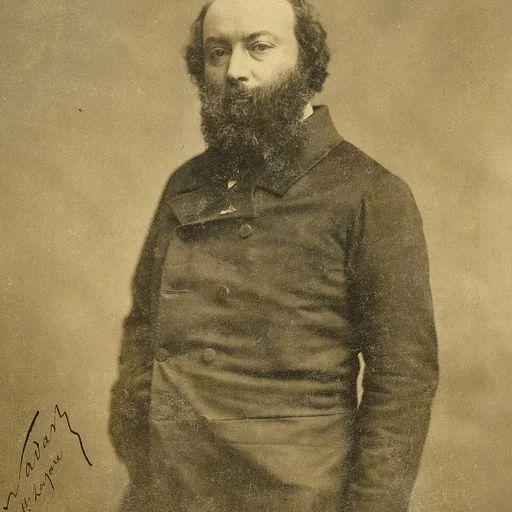
Étienne Pierre Théodore Rousseau (French pronunciation:; 15 April 1812 – 22 December 1867) was a French painter of the Barbizon school.

- Richmond Park
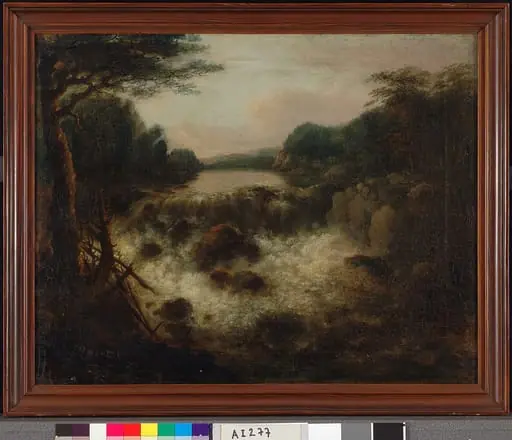 Vesiputous Värmlannissa
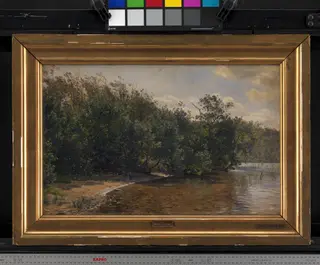 Ellebuske ved Almind Sø
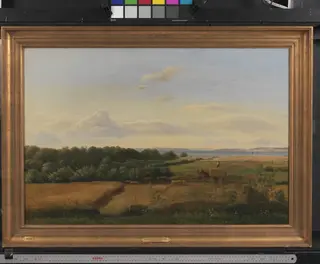 A Funen Landscape at Harvest Time with Wedellsborghoved in the Background
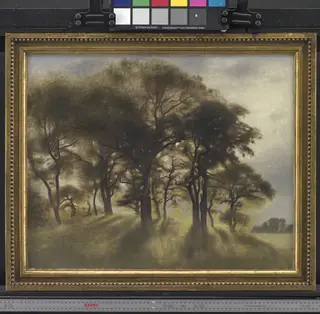 Near Fortunen, Jægersborg Deer Park, North of Copenhagen
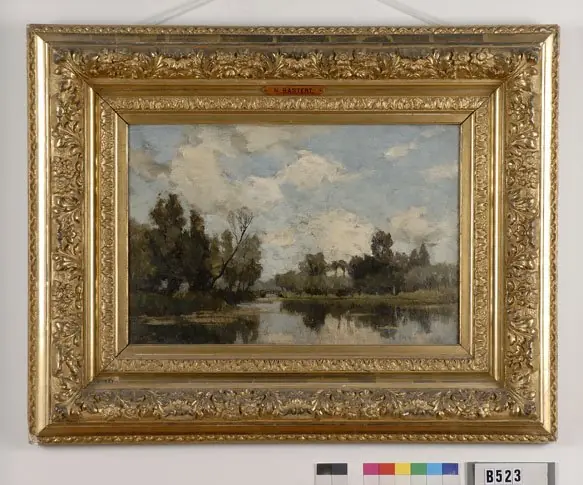 Summer Landscape on the Vecht
 Oak Wood
 The Deer Park North of Copenhagen
 The Gardens of the Villa d'Este, Tivoli
 Mountain Landscape with a Couple of Horsemen in the Foreground
 A View towards Castel Gandolfo, Italy
 Landscape with stream and bridge