Artwork
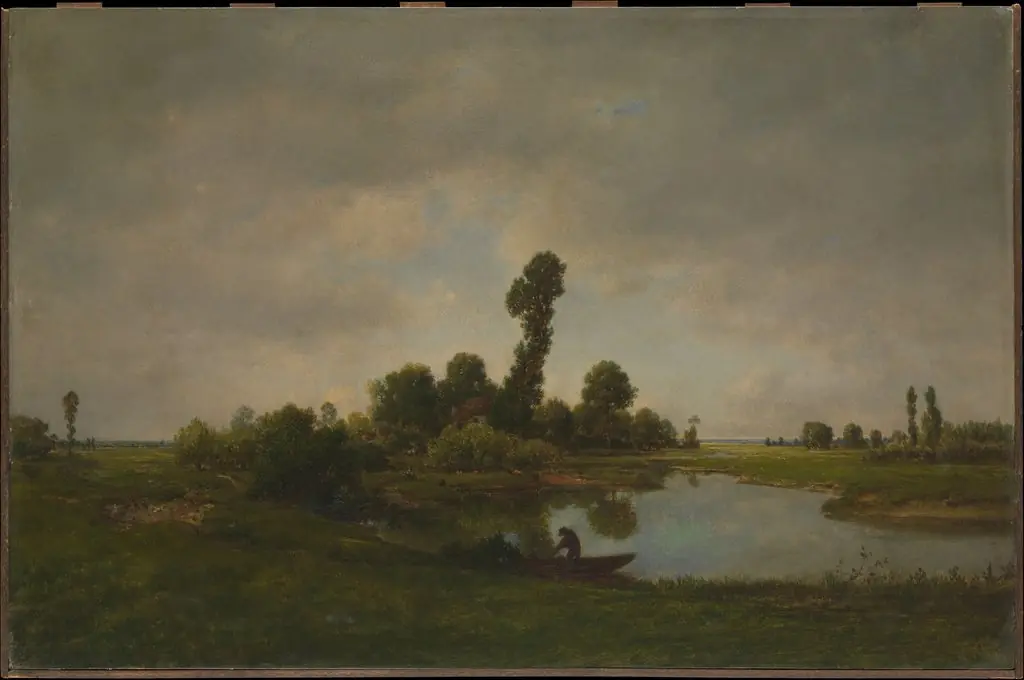
Landscape with Boatman
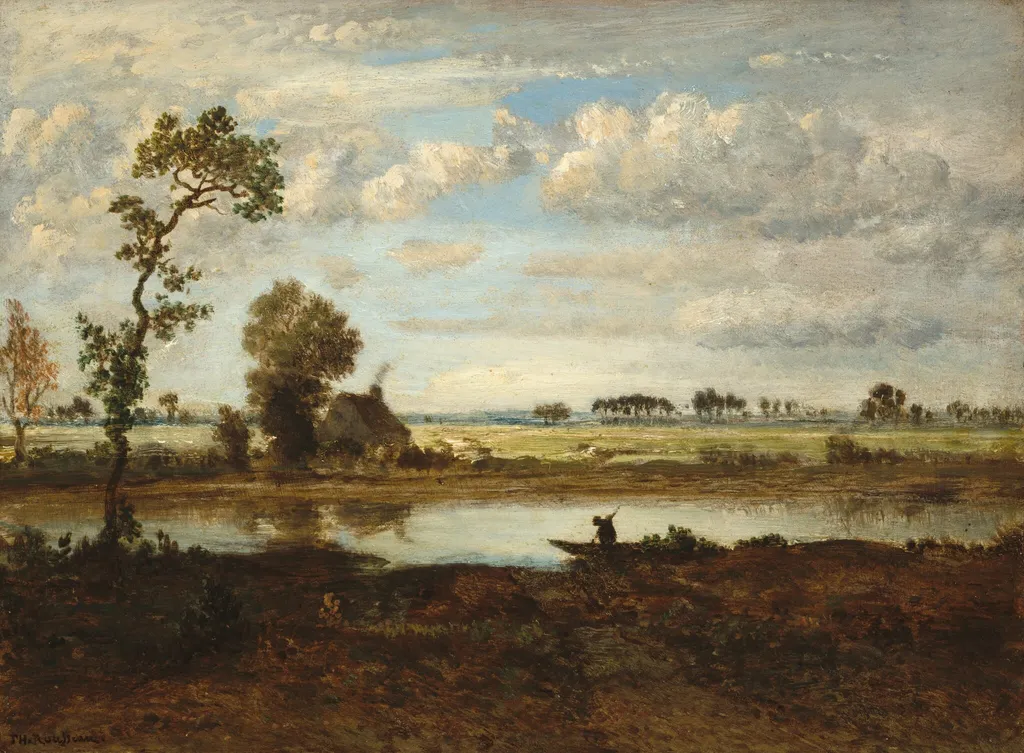
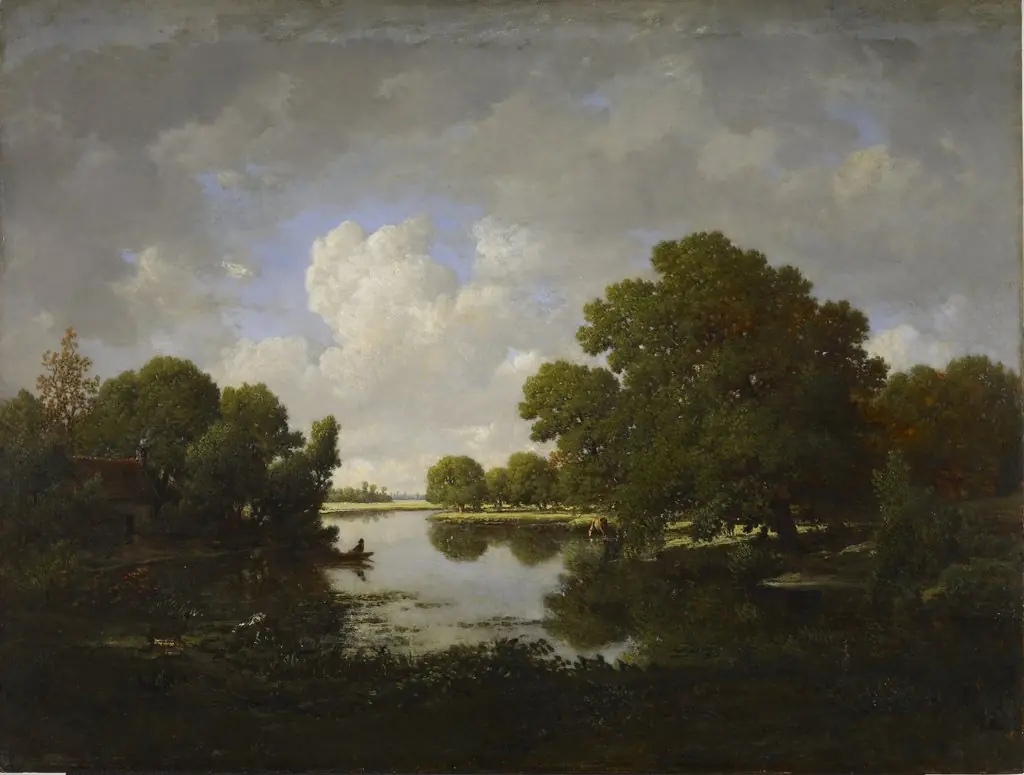
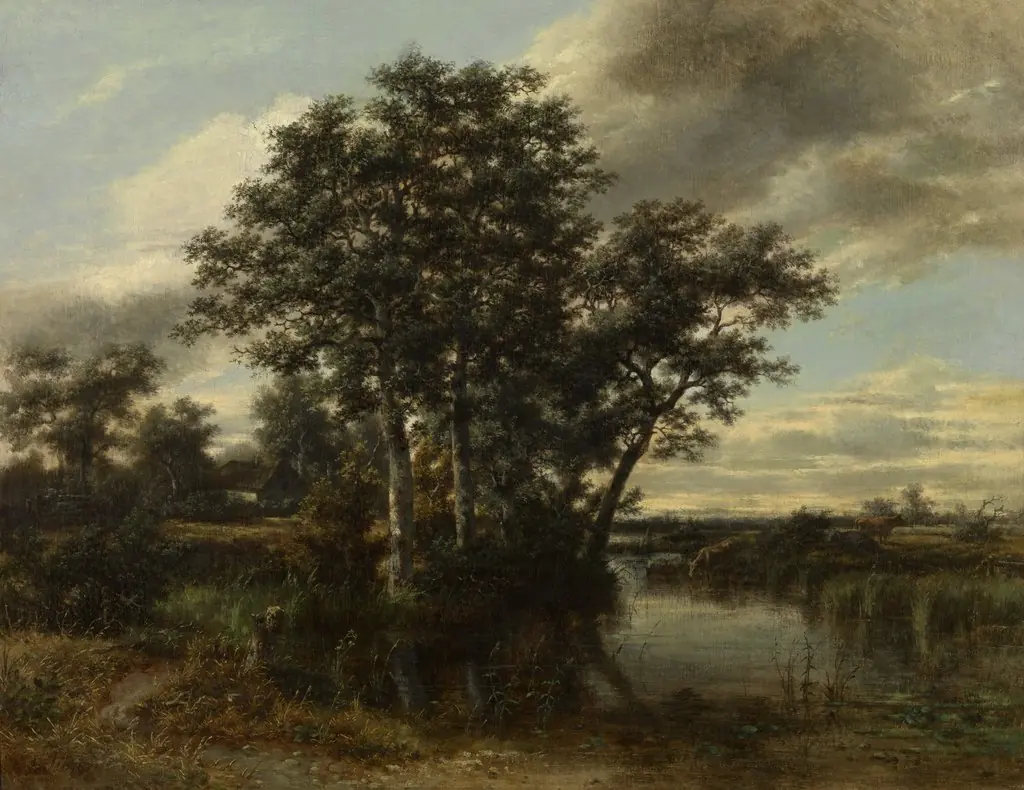
Landscape with Boatman is an oil painting by the Barbizon school artist Théodore Rousseau. It dates from 1860 and is held in the collection of the National Gallery of Art.
- Inscription
- Inscribed:lower left: TH.Rousseau.
About this work
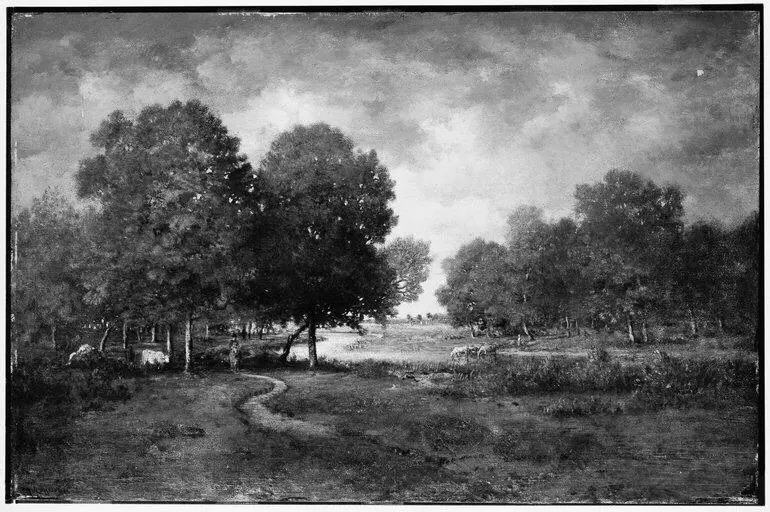
A boatman drifts on calm water beneath a great tree whose leaves glow green in the light. Painted on wood rather than canvas, an unusual choice, it sets the tiny figure against the towering tree so nature dwarfs the man. Theodore Rousseau, 1860.
Technique & Style
Its classification as a landscape painting and its depiction of a boat and tree situate the work within Rousseau's mature engagement with rural scenery.
Landscape with Boatman is executed in oil on wood, a support consistent with Théodore Rousseau's smaller cabinet-scale works of the period. The painting measures 19.4 by 26.3 centimeters, an intimate format suited to detailed landscape observation. Its classification as a landscape painting and its depiction of a boat and tree situate the work within Rousseau's mature engagement with rural scenery.
The use of a wooden panel rather than canvas allowed for a refined handling of surface texture, supporting the precise rendering of foliage and atmospheric effects characteristic of the artist's style. The work is held in the collection of the National Gallery of Art in Washington, D.C.
History & Provenance
Théodore Rousseau's Landscape with Boatman is dated to 1860. It first entered the art market in Paris, where it was sold from the collection of Solomon Goldschmidt at the Galerie Georges Petit on 17 May 1888 under the title La Rivière. By 1923 it had passed to Maurice Gentien, whose sale at the same Paris gallery (3–4 December 1923) transferred the work to a joint account of Arthur Tooth & Sons, London, and M. Knoedler & Co., New York.
It was acquired on 8 January 1924 by the American collector R. Horace Gallatin, who donated it to the National Gallery of Art, Washington, D.C., in 1949. The available sources detail this ownership history but do not record specific public exhibitions prior to its arrival at the museum.
Legacy
The painting Landscape with Boatman by Théodore Rousseau entered the National Gallery of Art collection in 1949 as a gift, having previously passed through the hands of Solomon Goldschmidt, Maurice Gentien, and Arthur Tooth & Sons before being acquired by R. Horace Gallatin in 1924. Its provenance, documented in sale catalogues and Knoedler stock records, illustrates the circulation of Rousseau's works in the late nineteenth-century art market. The work is consistently classified as a landscape in both period catalogues and the National Gallery's own records.
Overview
Théodore Rousseau's "Landscape with Boatman," an oil painting from approximately 1860, presents a tranquil natural scene. Executed on a wood panel, the work features a small boat navigating calm waters, overshadowed by a prominent tree. This piece exemplifies Rousseau's focus on natural environments, capturing a moment of quiet contemplation within the landscape tradition.
Subject & Meaning
The composition centers on a solitary boatman in a modest vessel, positioned on still water. Behind him rises a large tree, its foliage illuminated by a specific light source, creating a glowing green effect. The diminutive scale of the human figure relative to the towering tree emphasizes nature's grandeur and its capacity to diminish human presence, a recurring theme in Rousseau's oeuvre.
Own this work as a print
Artist & collection
Artist
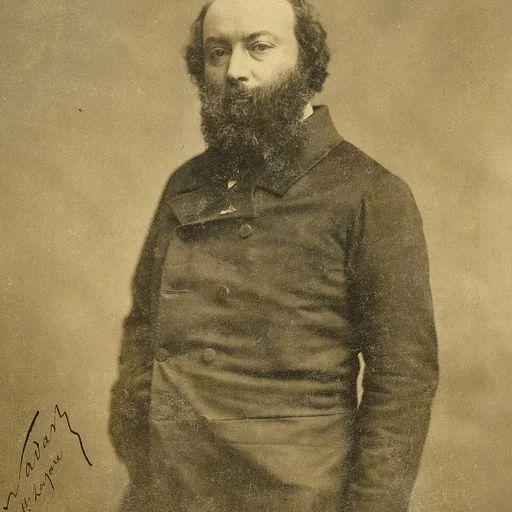
Étienne Pierre Théodore Rousseau (French pronunciation:; 15 April 1812 – 22 December 1867) was a French painter of the Barbizon school.