Artwork
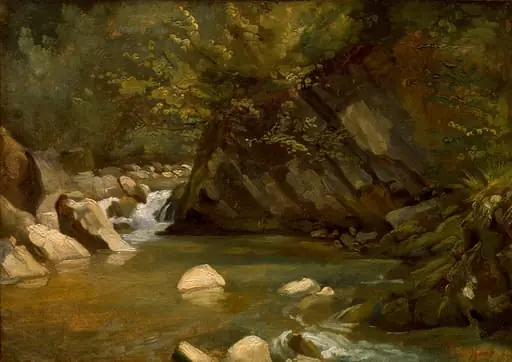
Mountain Stream in the Auvergne
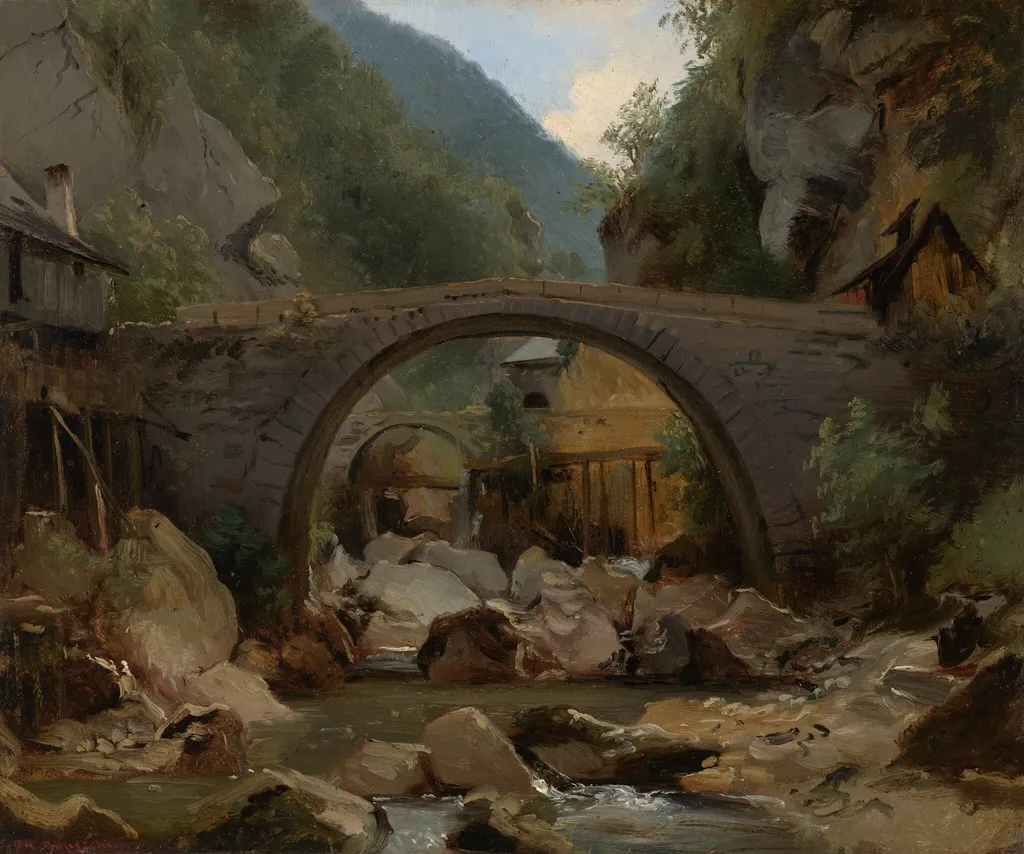
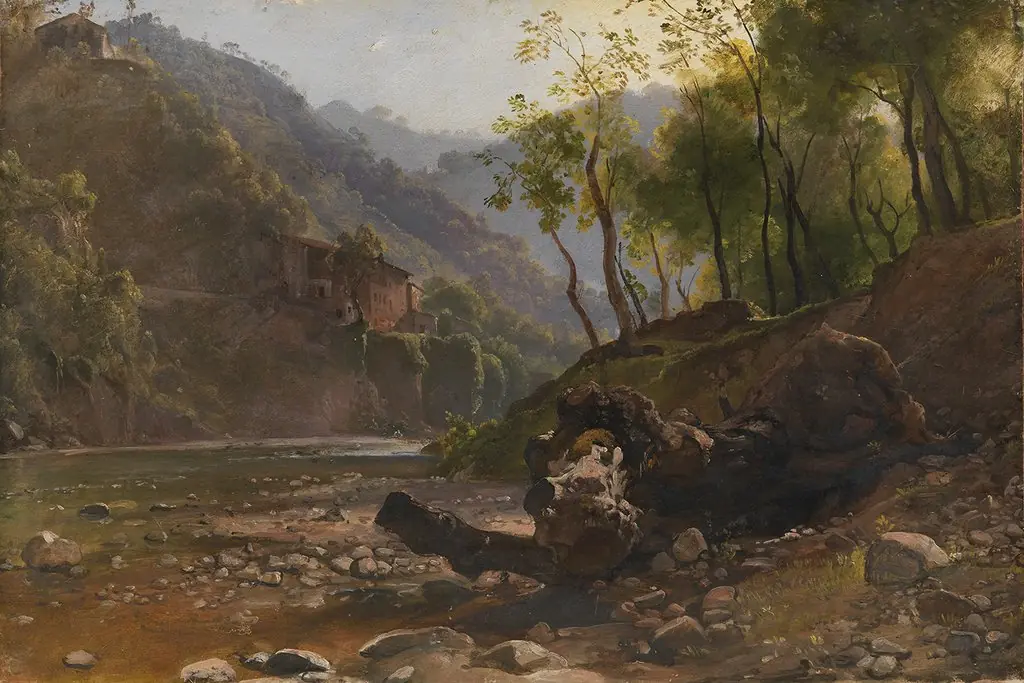
Mountain Stream in the Auvergne is an oil painting by the Barbizon school artist Théodore Rousseau. It dates from 1830 and is held in the collection of the National Gallery of Art.
- Inscription
- Inscribed:lower left: Th. Rousseau
About this work
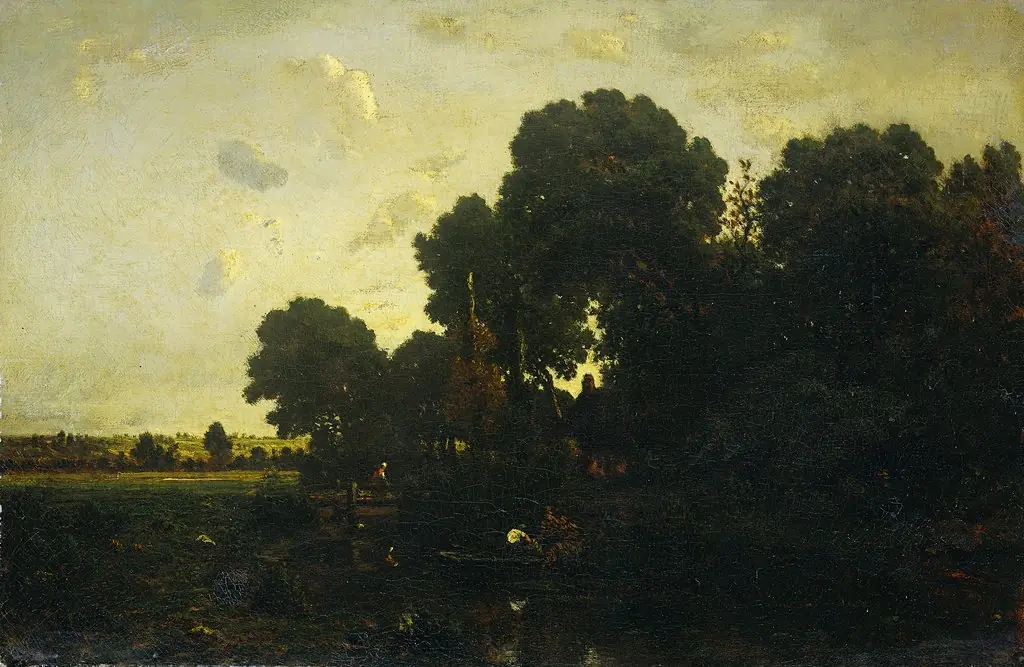
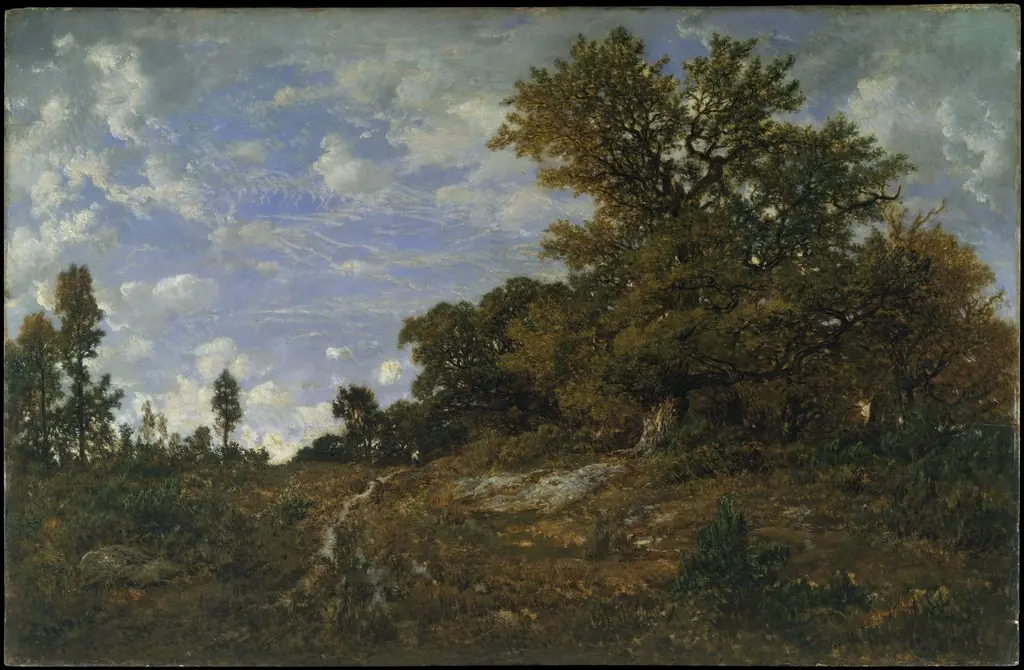
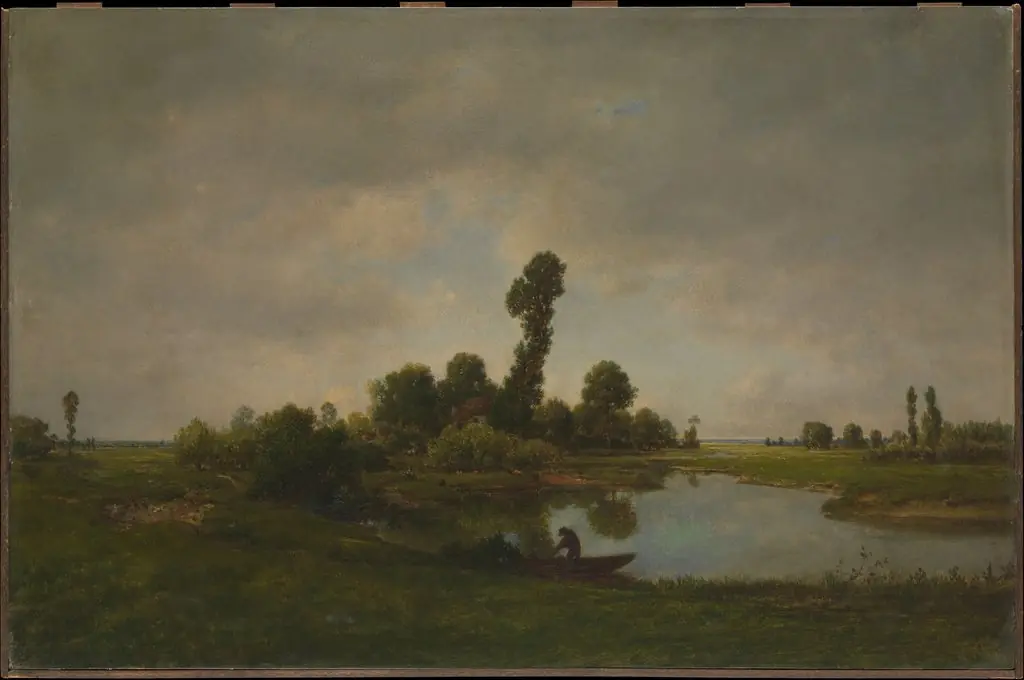
A quiet mountain stream runs through the trees, a calm, simple scene. Rousseau painted it in oil on paper laid on canvas, a slightly unusual support, in 1830, when landscape painters were finding new ways to capture nature directly.
Technique & Style
Executed in 1830, Mountain Stream in the Auvergne is an oil painting by Théodore Rousseau characterized by its unique support structure.
Executed in 1830, Mountain Stream in the Auvergne is an oil painting by Théodore Rousseau characterized by its unique support structure. The artist applied oil paint directly onto paper, which was subsequently mounted onto a canvas backing. This specific technique of oil on paper on canvas distinguishes the work's material composition.
Measuring 31 centimeters in height and 37 centimeters in width, the small-scale landscape depicts a tree within a natural setting. As a work classified within the landscape genre, the piece reflects Rousseau's early engagement with natural forms. The physical dimensions and the layered support of paper over canvas contribute to the object's formal identity as a portable yet durable study of the Auvergne region.
History & Provenance
Mountain Stream in the Auvergne was created by Théodore Rousseau in 1830, executed in oil on paper laid on canvas. The earliest recorded owner identified in the provenance is Mme Mendès-France, whose estate was dispersed at the Hôtel Drouot in Paris on 30–31 May 1932, lot 169. The work reappeared at Drouot Richelieu in Paris on 8 December 1995, lot 130, a transaction that was not included in the 2000 systematic catalogue by Lorenz Eitner but was added to the collection record in November 2001.
It then passed through the New York dealers Schiller & Bodo, from whom the National Gallery of Art purchased the painting on 10 February 1997.
The painting is held by the National Gallery of Art in Washington, D.C. It was purchased by the museum on 10 February 1997 from Schiller & Bodo, New York, following an earlier sale at Drouot Richelieu, Paris, on 8 December 1995 (lot 130). The work had previously belonged to Mme Mendès-France and was sold from her estate at Hôtel Drouot, Paris, on 30–31 May 1932 (lot 169); this 1932 sale was discovered and added to the collection database in November 2001.
Legacy
The painting entered the National Gallery of Art after its 1997 acquisition, a fact documented in the museum’s provenance records and later confirmed in the 2001 update of the collection database. Its status as a nineteenth‑century French landscape, catalogued in the systematic catalogue edited by Eitner, has positioned it as a reference work for studies of early Romantic topography. Scholars cite the work when examining Rousseau’s role in shaping the genre, and its frequent inclusion in exhibitions and publications reinforces a sustained scholarly reputation.
Overview
Théodore Rousseau's Mountain Stream in the Auvergne, painted in 1830, captures a tranquil natural setting. This oil landscape depicts a serene mountain stream winding through a dense arrangement of trees. The work exemplifies Rousseau's early engagement with naturalistic landscape painting, a genre he would significantly influence throughout his career.
Subject & Meaning
The painting presents a quiet, secluded corner of the Auvergne region, emphasizing the untouched beauty of the natural world. A gentle stream flows through a wooded area, its banks lined with various trees that create a sense of enclosure and depth. The overall impression is one of profound tranquility, inviting contemplation of nature's inherent calm and solitude.
Context
Created in 1830, Mountain Stream in the Auvergne emerged during a period of significant artistic transition, particularly in landscape painting. Artists of this era increasingly turned away from idealized or historical landscapes, seeking instead to render nature with greater realism and emotional resonance. Rousseau was a key figure in this movement, contributing to the development of a more direct and unembellished portrayal of the natural world.
Own this work as a print
Artist & collection
Artist
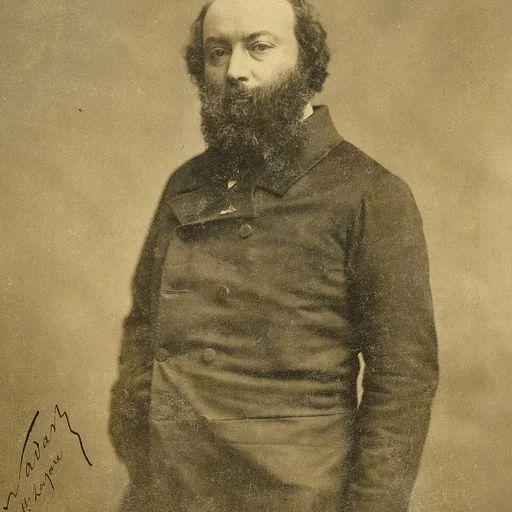
Étienne Pierre Théodore Rousseau (French pronunciation:; 15 April 1812 – 22 December 1867) was a French painter of the Barbizon school.