Artwork
Self-Portrait
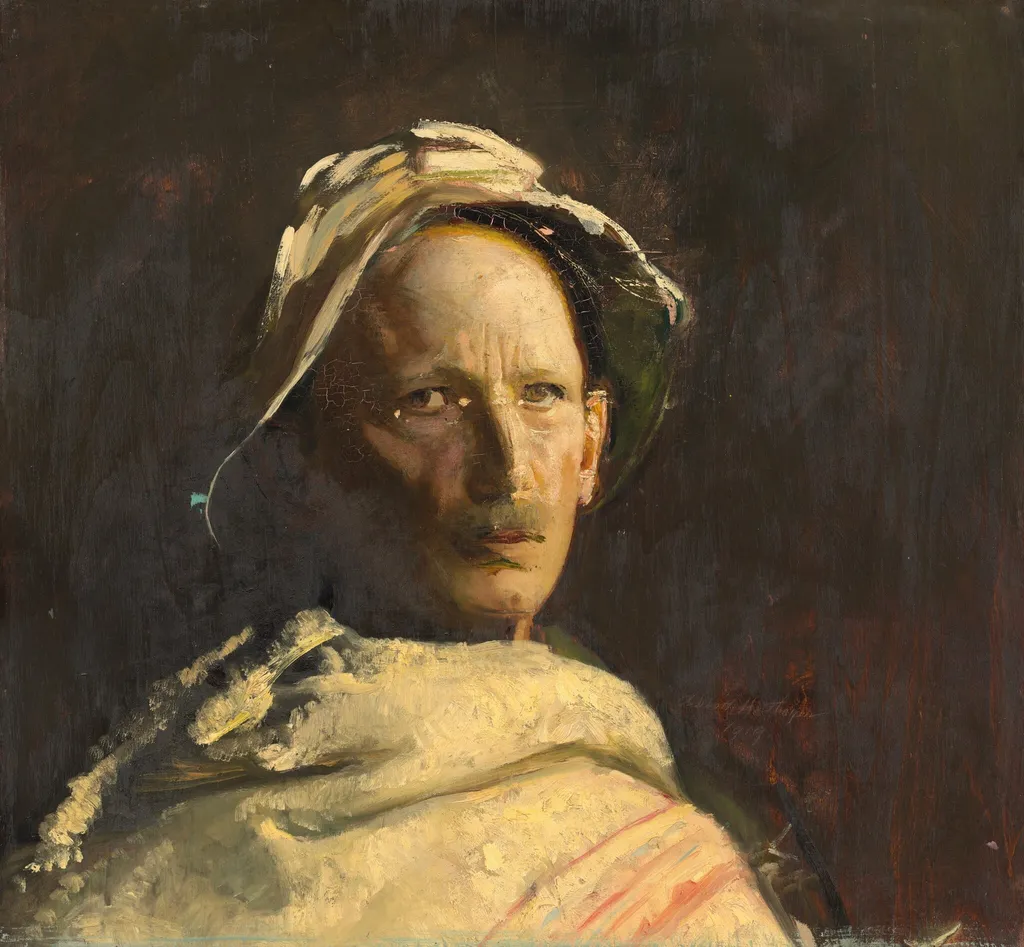
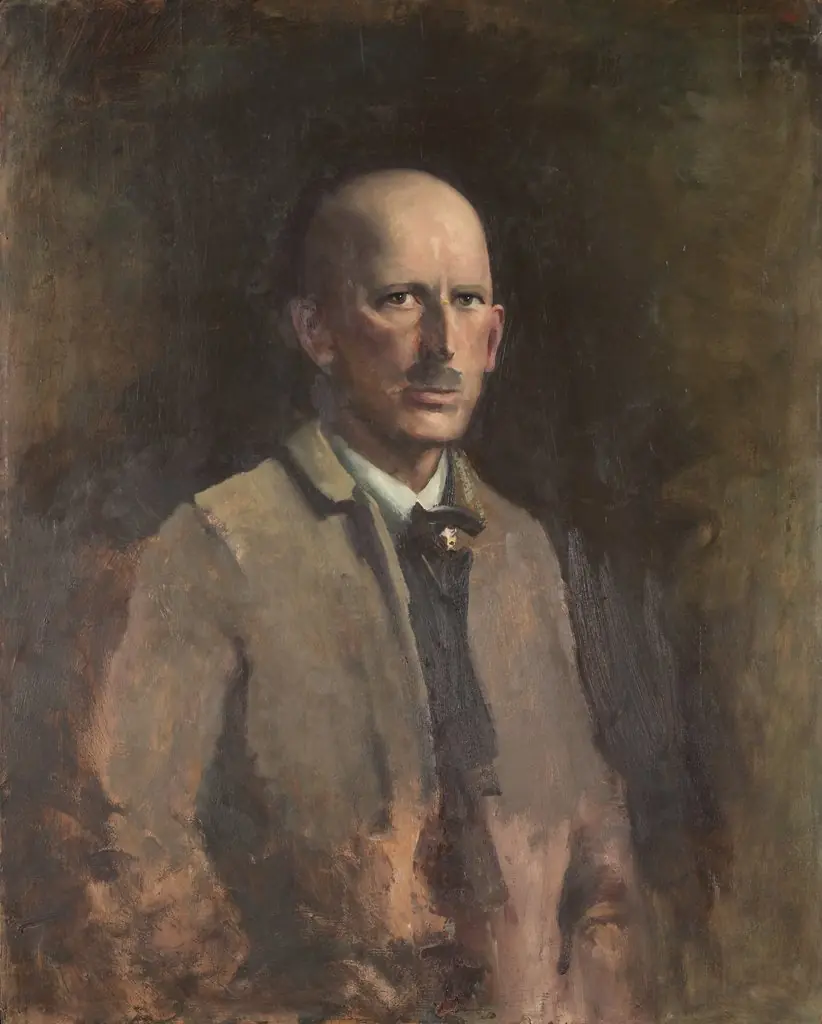
Self-Portrait is an oil painting by the American Impressionist artist Abbott Handerson Thayer. It dates from 1919 and is held in the collection of the National Gallery of Art.
About this work
Subject & Meaning
Executed in oil on wood in 1919, the work records his appearance and social standing, functioning as a formal record of his identity within the art world.
The painting is a self‑portrait that presents Abbott Handerson Thayer in a direct, frontal pose, thereby representing the artist himself. Executed in oil on wood in 1919, the work records his appearance and social standing, functioning as a formal record of his identity within the art world. The composition contains no additional allegorical or symbolic attributes; its meaning is derived from the conventional significance of self‑portraiture as a means of self‑documentation and introspection.
The painting entered the artist’s estate, was purchased by the Corcoran Gallery of Art in June 1922, and is now part of the National Gallery of Art’s collection.
Technique & Style
Self-Portrait (1919) is an oil painting executed on a wooden panel. The work measures roughly 56.5 × 61.0 (units as recorded in the catalog) and portrays the artist Abbott Handerson Thayer. Executed in oil on wood, the piece exemplifies early‑20th‑century American portraiture with a realistic rendering of facial features and muted tonal modeling.
Its formal qualities include a tightly composed head‑and‑shoulders format, restrained palette, and emphasis on the sitter’s gaze. The painting has remained in the artist’s estate before being acquired by the Corcoran Gallery of Art in June 1922, and subsequently transferred to the National Gallery of Art in 2014, where it is currently held.
History & Provenance
Abbott Handerson Thayer's Self-Portrait was created in 1919 as an oil on wood panel. Following the artist's death, the work entered his estate. In June 1922, the Corcoran Gallery of Art in Washington acquired the painting from that estate.
The Corcoran retained the self-portrait until 2014, when it was acquired by the National Gallery of Art, also in Washington, where it remains part of the collection.
The painting is held by the National Gallery of Art in Washington, D.C., which acquired it in 2014. It had previously entered the Corcoran Gallery of Art in Washington in June 1922, when that institution purchased it from the estate of the artist, Abbott Handerson Thayer. The work's documented ownership chain therefore runs from the Thayer estate to the Corcoran, and from the Corcoran to the National Gallery of Art. No specific exhibition history beyond this institutional provenance is recorded in the available sources.
Overview
Abbott Handerson Thayer, an American painter, created this Self-Portrait in 1919 using oil on wood. Known for his diverse subjects including portraits, figures, animals, and landscapes, Thayer here turns his focus inward. This painting offers a direct representation of the artist himself, reflecting his engagement with the genre of portraiture within his broader artistic practice.
Context
Beyond his self-portraits, Thayer's artistic output encompassed a range of subjects, notably works featuring his children, often referred to as 'angel' paintings. His interests also extended to scientific observation, evidenced by his collaboration with his son, Gerald, on a publication exploring animal camouflage. Thayer's works are held in significant American art collections, affirming his place in American art history.
Own this work as a print
Artist & collection

Artist
Abbott Handerson Thayer (August 12, 1849 – May 29, 1921) was an American painter, naturalist, and teacher.

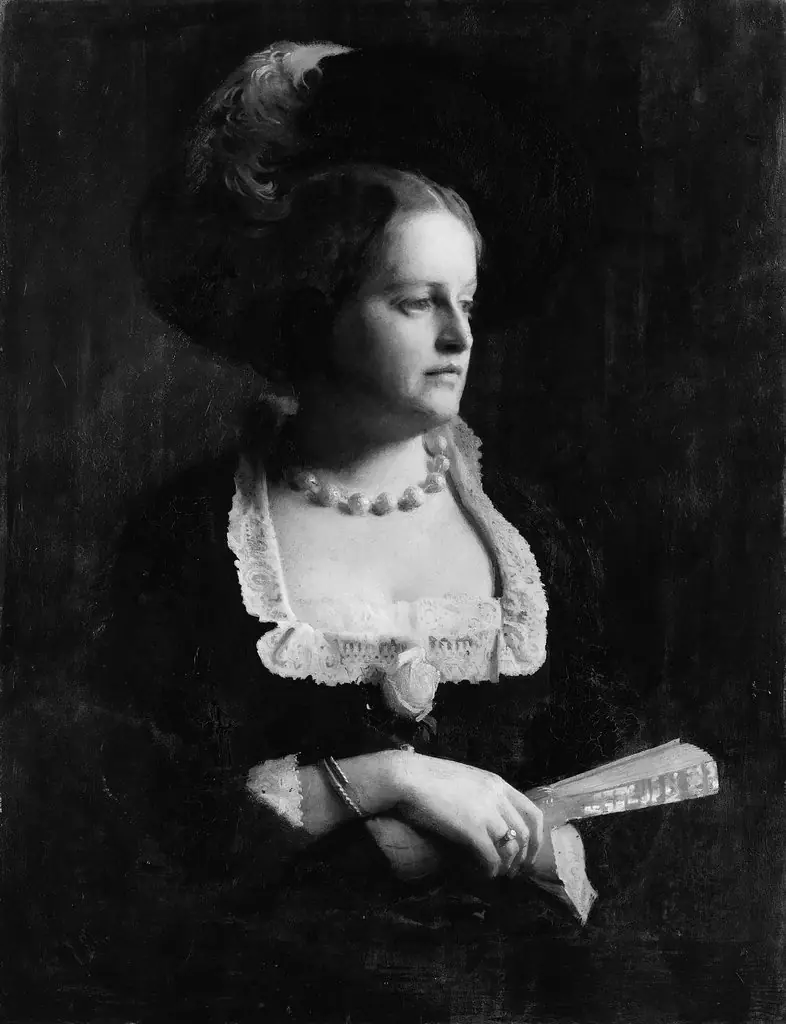

- A Neapolitan Fisherman
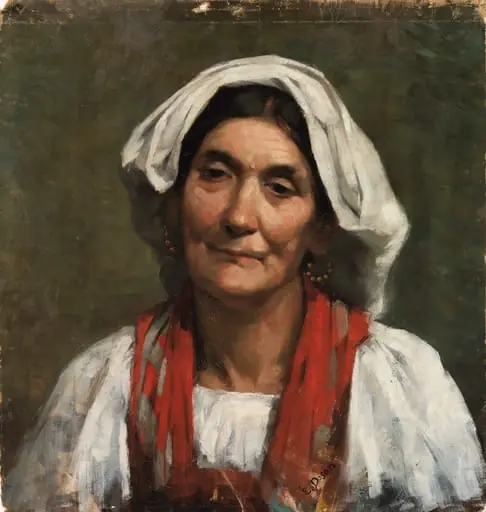 Vanha provencelaisnainen
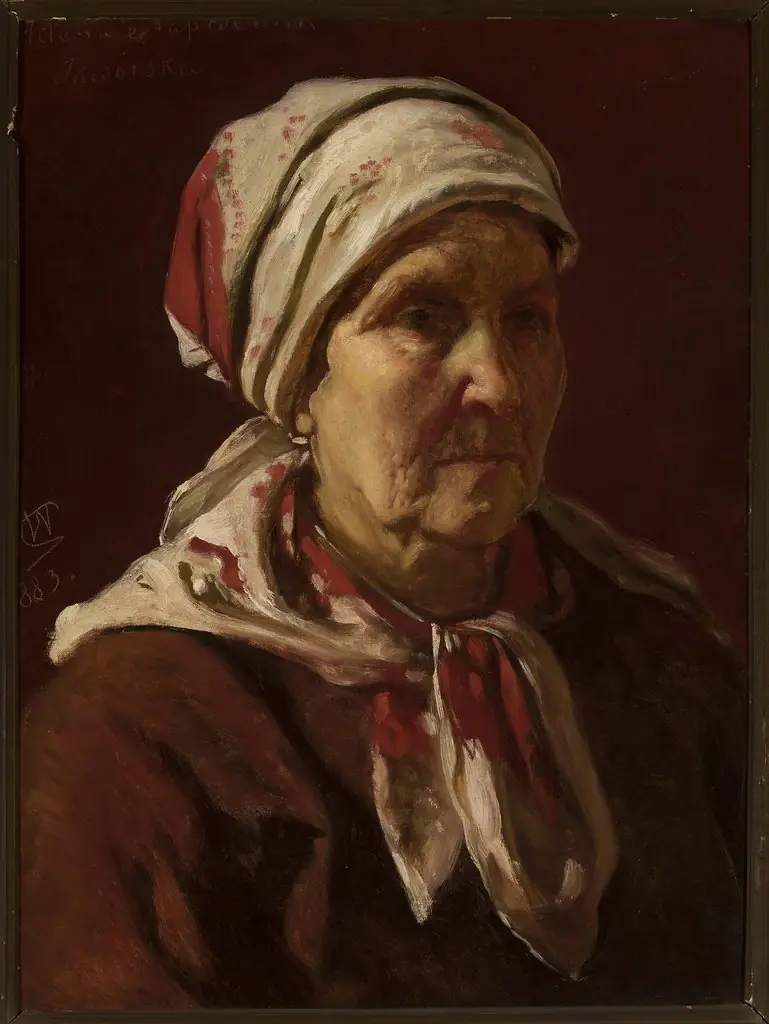 Portrait of Helena Jaworska née Rapacka
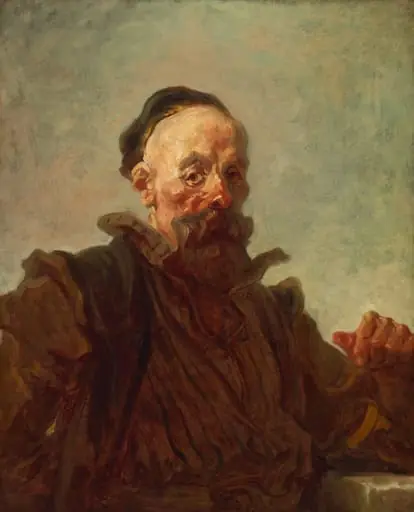 Portrait of a Man in Costume
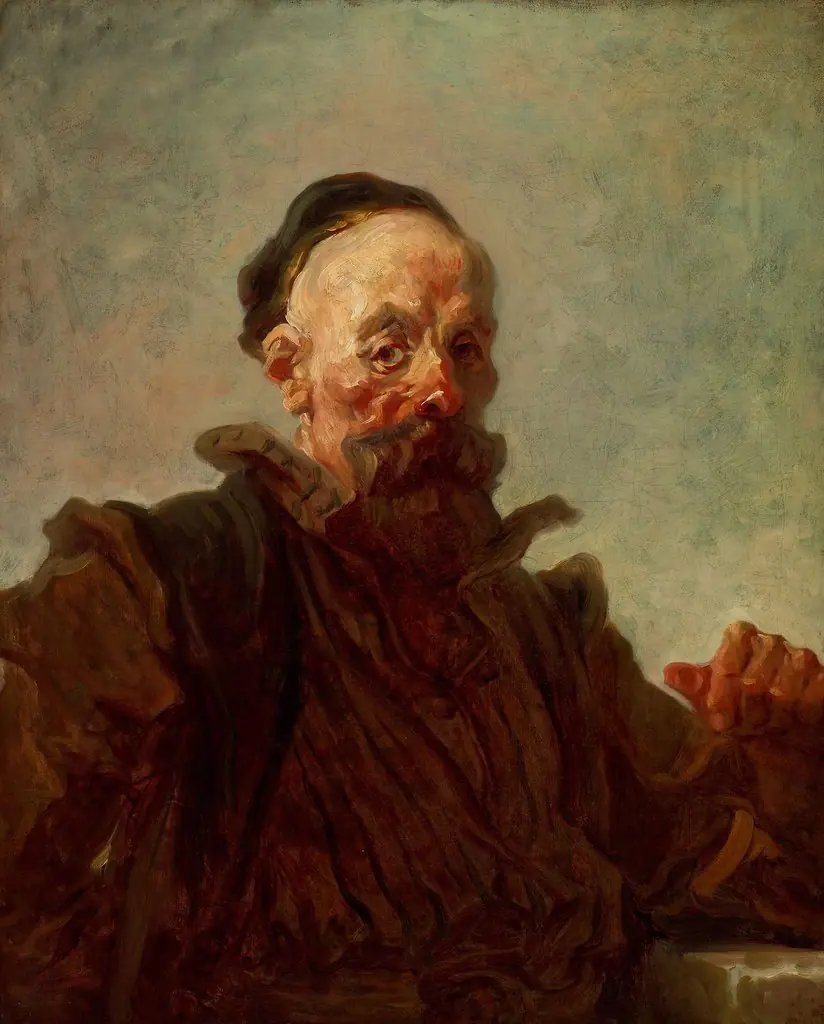 Portrait of a Man in Spanish Costume
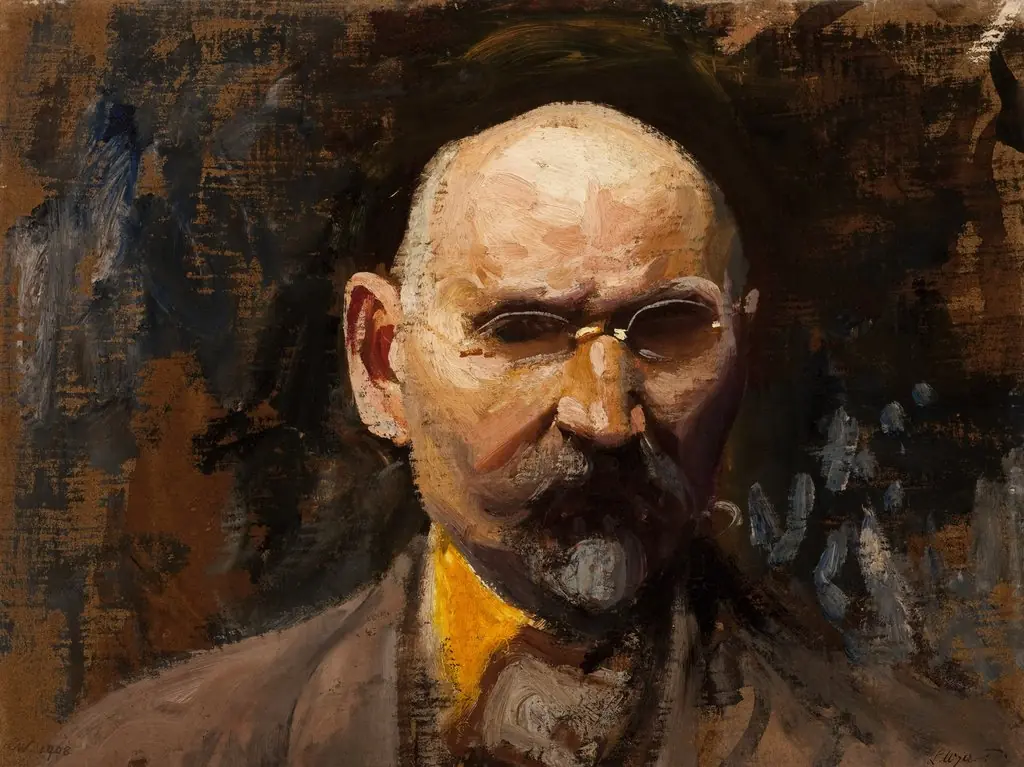 Self-Portrait
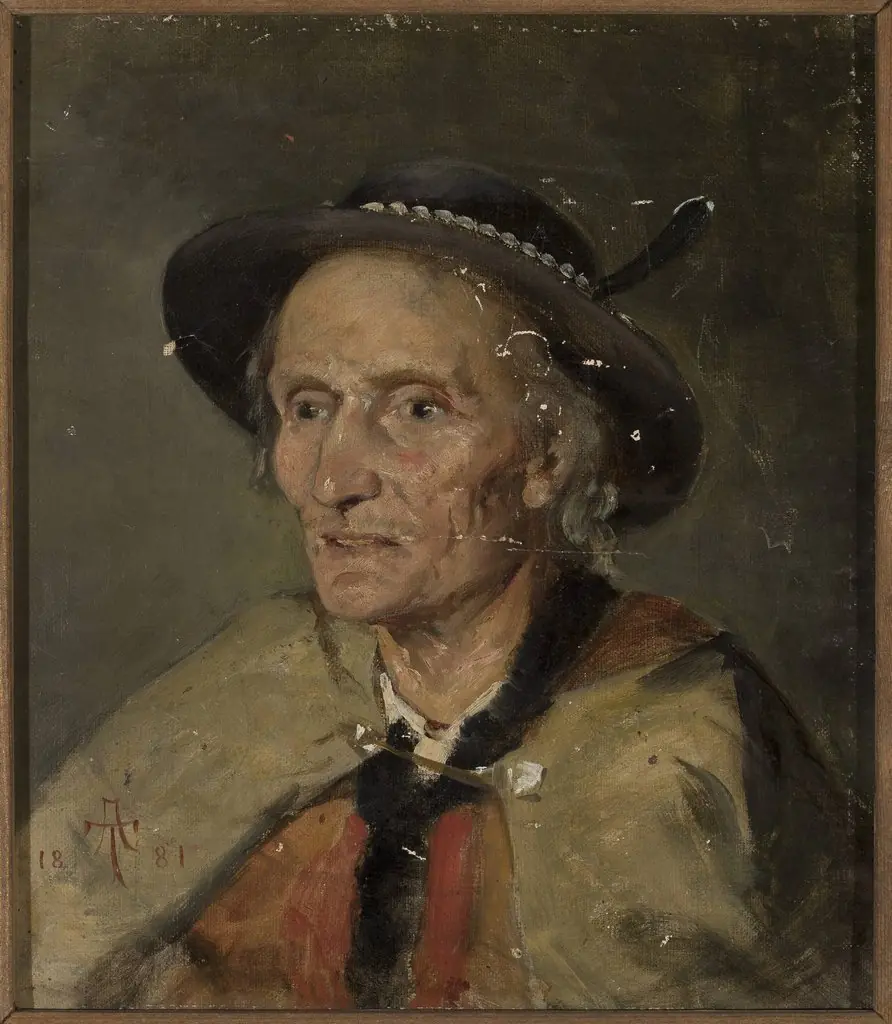 Portrait of a Highlander
 St. Bartholomew
 Omakuva 1600-luvun asussa
 Orientale, Bruststück
 Studiekop van een blinde man
 Omul care râde (interpretare după Rembrandt)