Artwork
Lust for Gold
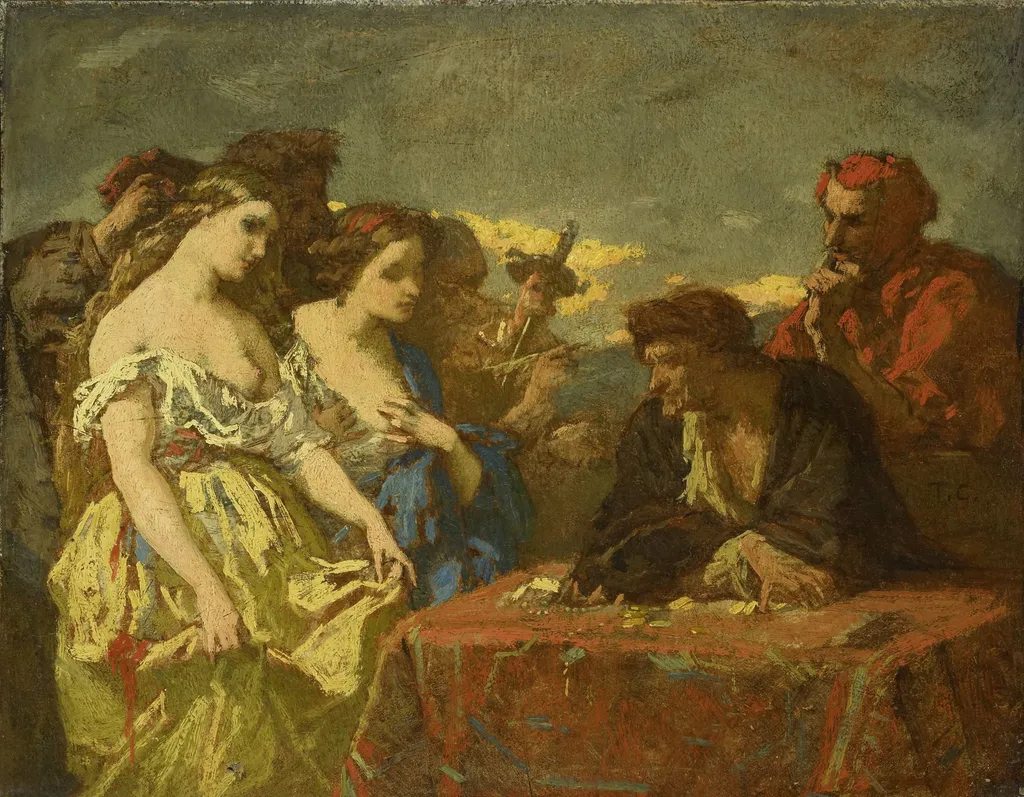
Lust for Gold is an unspecified painting by the Academic Art artist Thomas Couture. It dates from 1860 and is held in the collection of the Rijksmuseum.
About this work
Subject & Meaning
The subject embodies the tension between spiritual aspiration and worldly temptation, a recurring concern in his oeuvre.
Thomas Couture's Lust for Gold depicts a symbolic allegory of avarice, portraying a figure reaching greedily toward a pile of gold coins and treasure, a motif tied to moral warnings about material desire. The painting draws on historical and mythological traditions where gold symbolizes both divine reward and corrupting vice, reflecting 19th-century academic art's engagement with ethical themes. Its iconography aligns with Couture's broader focus on literary and philosophical narratives within grand compositions, as seen in works like Les Romains de la décadence. The subject embodies the tension between spiritual aspiration and worldly temptation, a recurring concern in his oeuvre.
The work was painted circa 1844, during Couture's early period of Salon success, and is part of his exploration of allegorical themes through vivid color and dynamic draftsmanship. It was later held in the Museum of Toulouse before entering private and institutional collections, including those documented in French regional museum inventories. The painting's symbolism has been interpreted as a critique of the materialism of the Second Empire, resonating with contemporary debates about art's moral purpose.
Technique & Style
Lust for Gold (L'Amour de l'or), executed in 1844, is an oil painting on canvas by Thomas Couture. The work exemplifies the artist's academic style, characterized by elegant drawing combined with a vibrant use of color and dynamic movement, earning Couture comparisons to the Venetian master Paolo Veronese. His technique involved the application of broad brushstrokes and full, unmixed colors to achieve a rich chromatic effect.
Couture's method, later detailed in his 1867 publication Méthode et entretiens d'atelier, emphasized a specific underpainting process using bitumen, ivory black, and cobalt to create a gray tone before applying a palette of vivid pigments like vermilion and yellow ochre. This approach allowed for a luminous quality and dramatic contrast that defined his historical and genre scenes during the 1840s.
History & Provenance
Thomas Couture's painting Lust for Gold (French: L'Amour de l'or), executed in 1844, is held in the collection of the Musée d'Orsay in Paris. The work is also documented as a study located at the Château de Compiègne, also in France. While the specific inventory or accession numbers for these holdings are not provided in the available sources, the painting is consistently attributed to Couture and dated to 1844.
The work was exhibited at the Paris Salon in 1847, where it was displayed alongside Couture's major masterpiece, Romans During the Decadence, contributing to the artist's reputation during that period.
Context
Thomas Couture's Lust for Gold (also known as Die Liebe zum Gold or L'Amour de l'or), painted in 1844, is recognized as a significant precursor to his later masterpiece, Romans During the Decadence. Art historical analysis places the work within the academic tradition, noting how Couture combined the elegance of classical French drawing with a vibrant, Venetian-inspired color palette that led contemporaries to dub him the "French Veronese." Although the painting demonstrated the same thematic ideas and technical virtues as his celebrated 1847 Salon success, it has historically been overshadowed by that later triumph.
Scholarship suggests that after Romans During the Decadence, Couture failed to produce works of comparable impact, causing earlier pieces like Lust for Gold to be viewed primarily as studies in his evolving eclectic vision rather than standalone masterpieces. The work remains part of public collections in France, including an study held at the Château de Compiègne.
Legacy
Thomas Couture's painting Lust for Gold (1844) established his reputation as a leading history painter through its masterful composition and symbolic use of gold to explore moral themes. His innovative teaching methods and independent atelier, which trained artists like Édouard Manet and Pierre Puvis de Chavannes, significantly influenced 19th-century art education and practice. Couture's technical experimentation and theoretical writings, such as Méthode et entretiens d'atelier (1868), further cemented his legacy as a pivotal figure bridging academic tradition and modern artistic development.
Overview
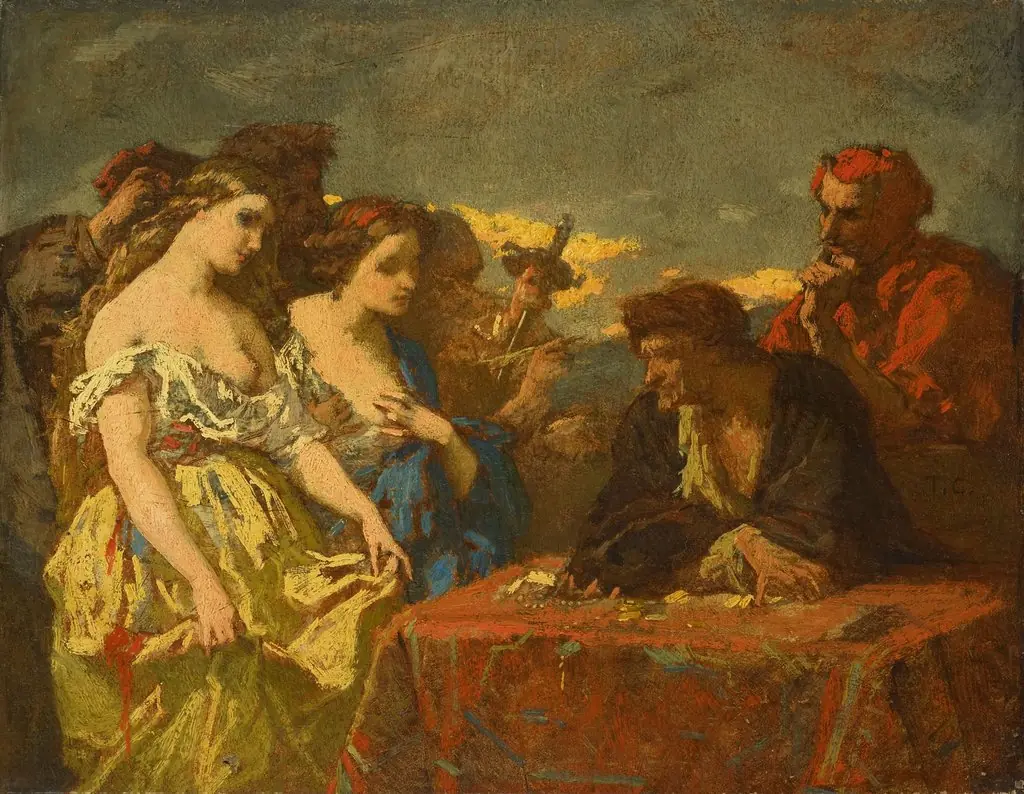
Lust for Gold portrays a dimly lit interior where two partially nude young women stand beside a table. An elderly man occupies the far side, engrossed in counting coins and arranging jewels, while a mischievously smiling demonic figure looms behind him. The composition centers on the tension between avarice and temptation, rendered in a stark contrast of light and shadow.
Own this work as a print
Artist & collection

Artist
Thomas Couture (French pronunciation:; 21 December 1815 – 30 March 1879) was a French history painter and teacher.