Artwork
Fishing by a Waterfall
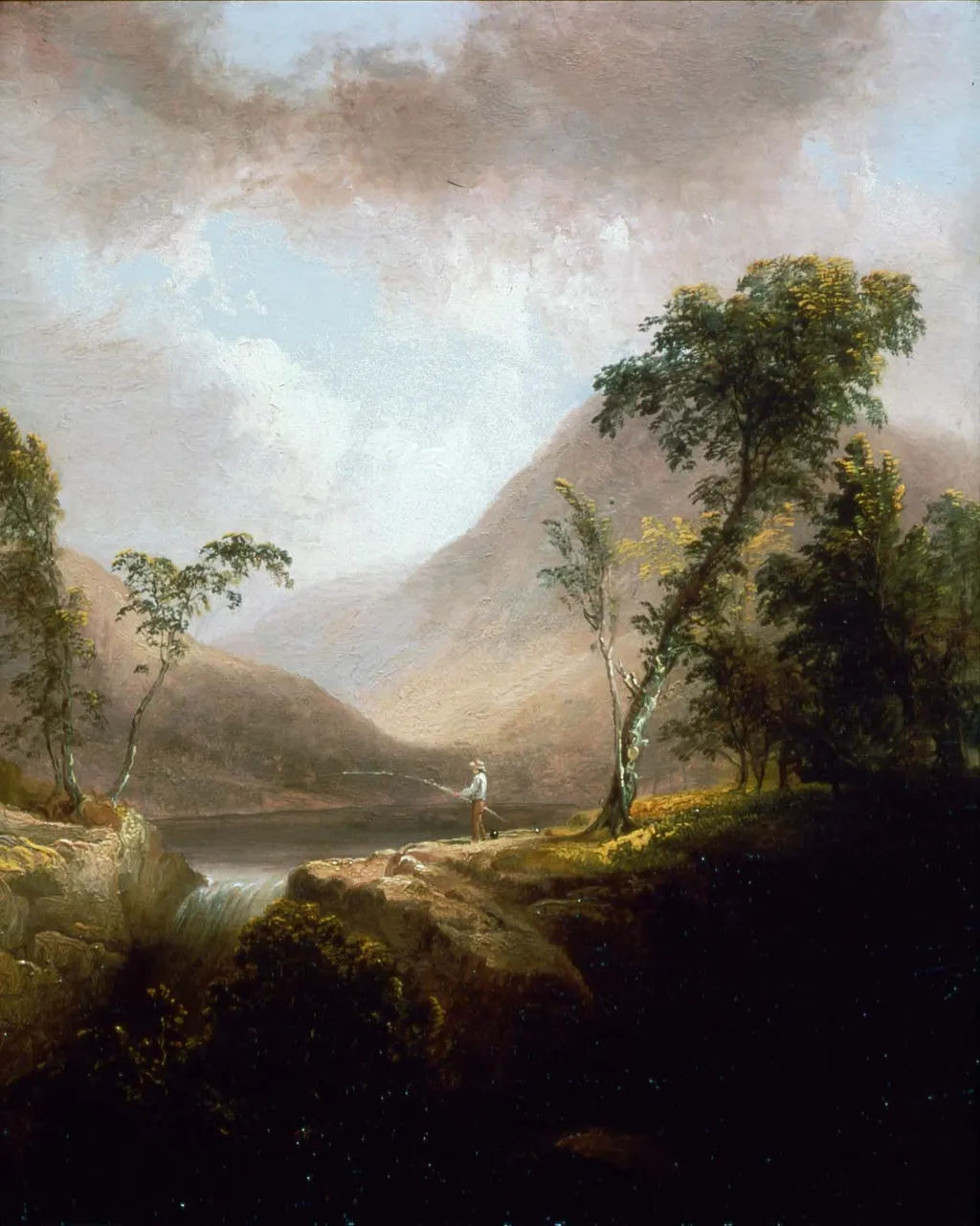
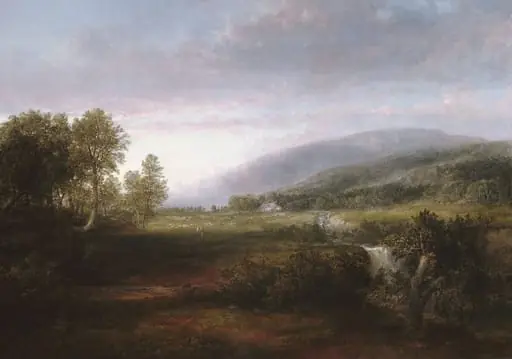
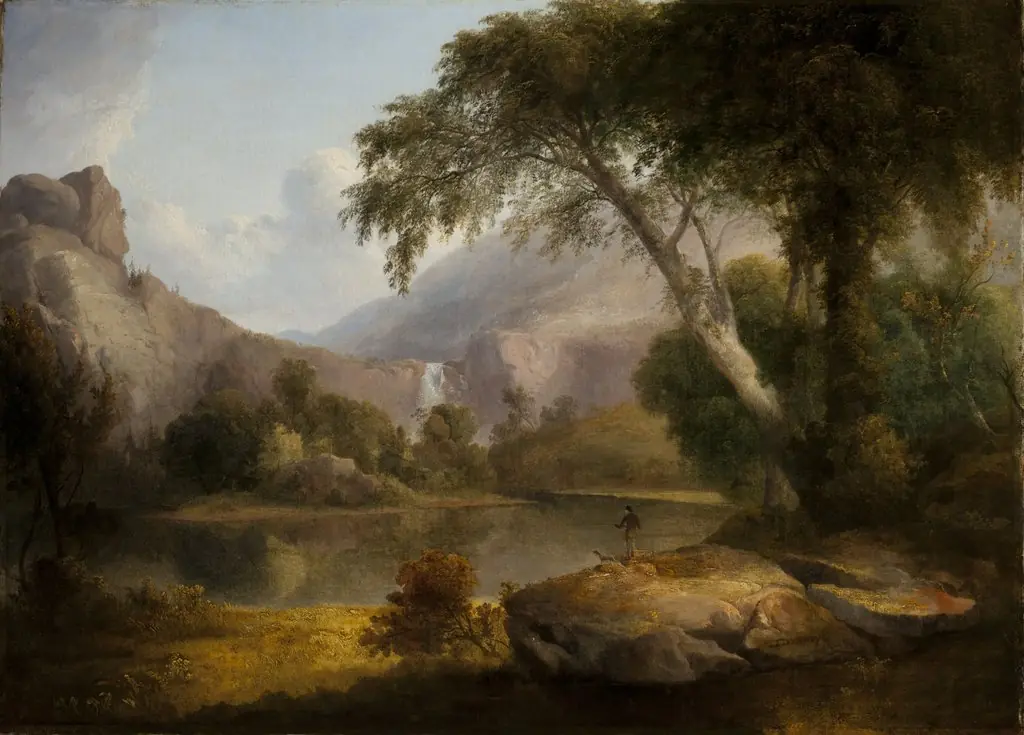
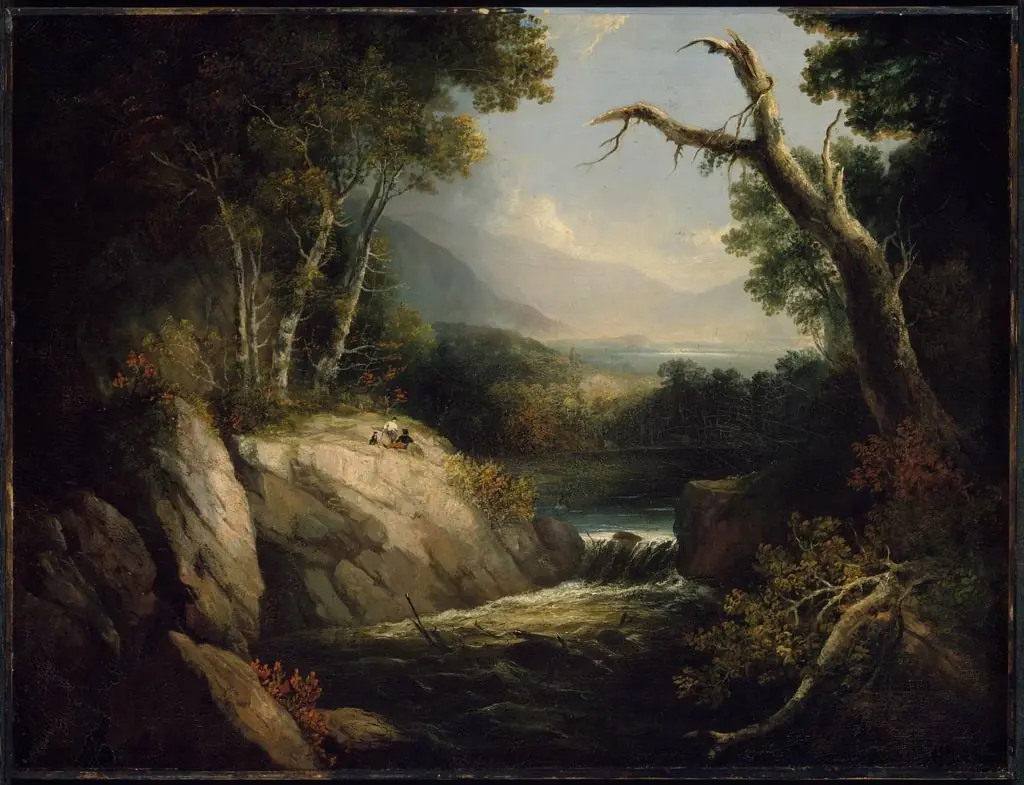
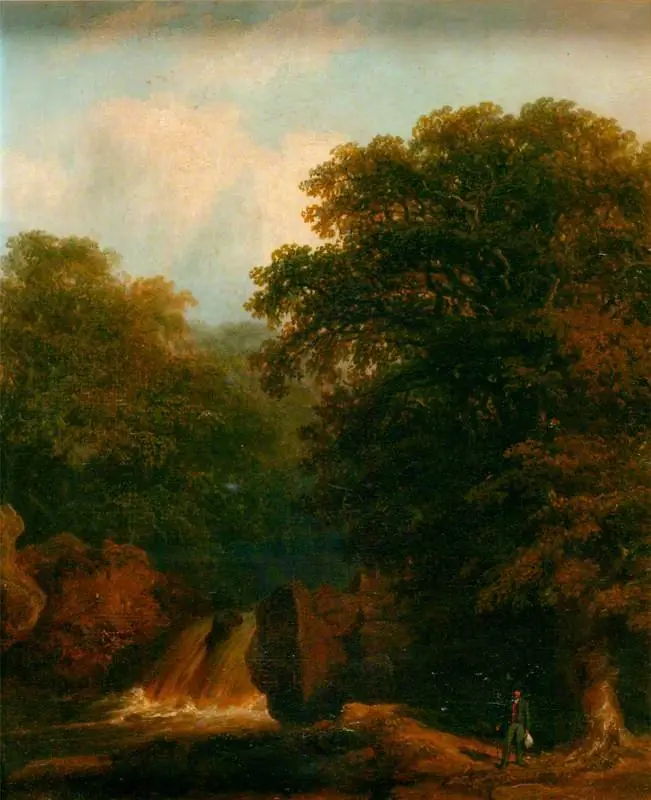
Fishing by a Waterfall is an oil painting by the Hudson River School artist Thomas Doughty. It dates from 1837 and is held in the collection of the Museum of Fine Arts Boston.
About this work
Overview
The inclusion of the fisherman serves not as a narrative focal point but as a scale reference and a symbol of peaceful coexistence within the wilderness.
Painted in 1837, Thomas Doughty's 'Fishing by a Waterfall' is a characteristic example of the American Hudson River School's early landscape tradition. The composition centers on a solitary figure standing on a rocky riverbank, angling near the base of a cascading waterfall. Doughty arranges the scene with a balanced, classical structure, using the vertical thrust of the falls and surrounding trees to frame the horizontal expanse of the water and sky.
The artist employs a muted, earthy palette and soft, diffused light to render the atmosphere, creating a sense of quietude and harmony between humanity and nature. This work reflects Doughty's role as a pioneer in establishing landscape painting as a distinct genre in the United States, prioritizing serene, idealized views over the dramatic sublime or topographical precision that would later define his contemporaries. The inclusion of the fisherman serves not as a narrative focal point but as a scale reference and a symbol of peaceful coexistence within the wilderness.
Executed in oil on canvas, the painting demonstrates Doughty's meticulous attention to texture and his ability to evoke a contemplative mood through careful modulation of tone and light.
Subject & Meaning
The painting captures a moment of leisure in the American wilderness, focusing on a lone fisherman positioned before a waterfall. The figure’s stillness amid the flowing water suggests contemplation and the harmonious relationship between humanity and nature, a theme frequently explored in early nineteenth‑century landscape art.
Technique & Style
Doughty employs a muted palette of earth tones, allowing the light to filter through foliage and illuminate the water’s surface. Soft brushwork renders the mist and foliage, while more precise strokes define the falling water and the fisherman’s form. The overall effect is a subtle gradation of depth that enhances the scene’s atmospheric quality.
History & Provenance
Created in 1837, the canvas entered the Museum of Fine Arts, Boston’s holdings during the early twentieth century, reflecting the institution’s interest in early American landscape painting. Its acquisition helped to document Doughty’s contribution to the development of a distinctly American artistic vision of the natural world.
Own this work as a print
Artist & collection
Artist
Thomas Doughty was an American artist associated with the Hudson River School.