Artwork
Spring Landscape
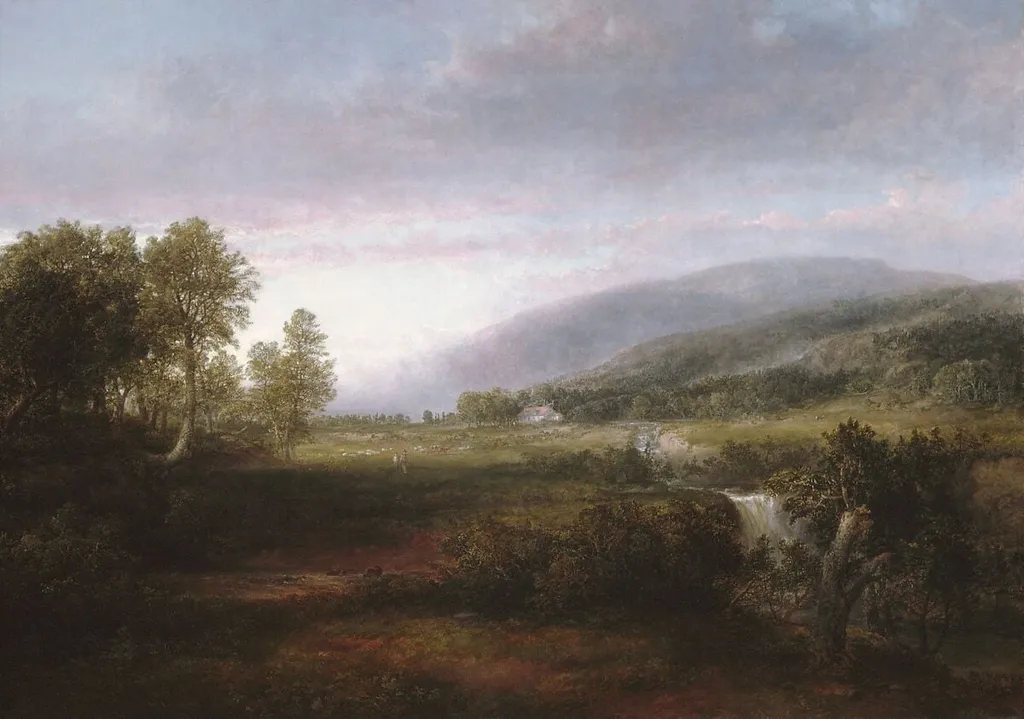
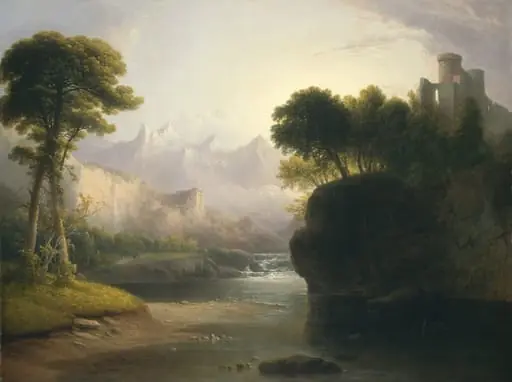
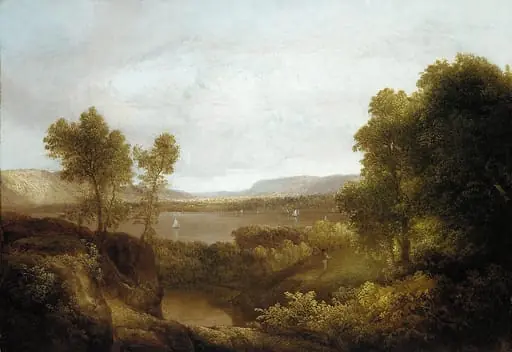
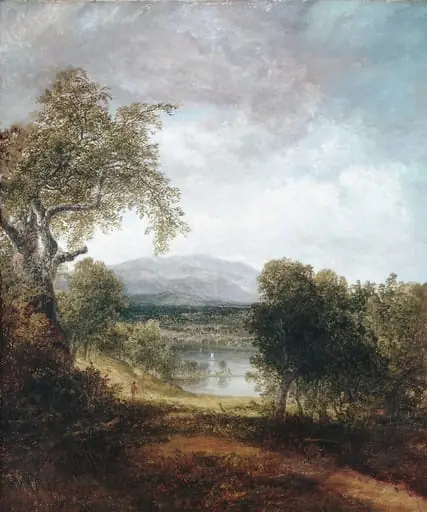
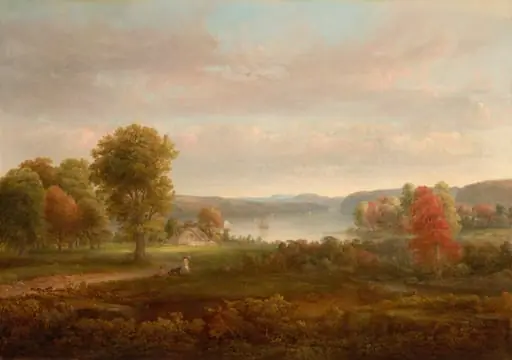
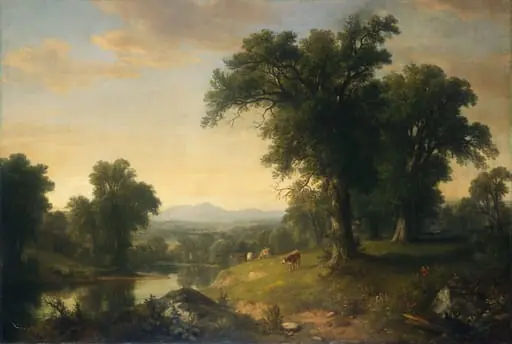
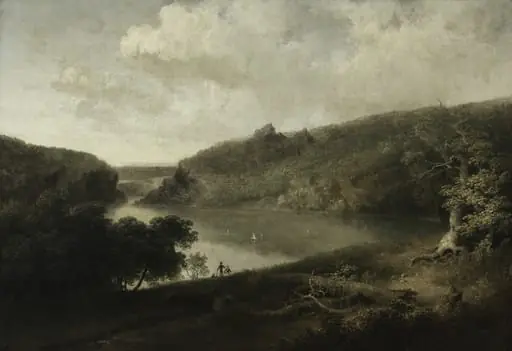
Spring Landscape is an oil painting by the Hudson River School artist Thomas Doughty. It dates from 1854 and is held in the collection of the Metropolitan Museum of Art.
About this work
Subject & Meaning
The composition emphasizes natural abundance and orderly growth, motifs traditionally linked to renewal and the pastoral promise of spring.
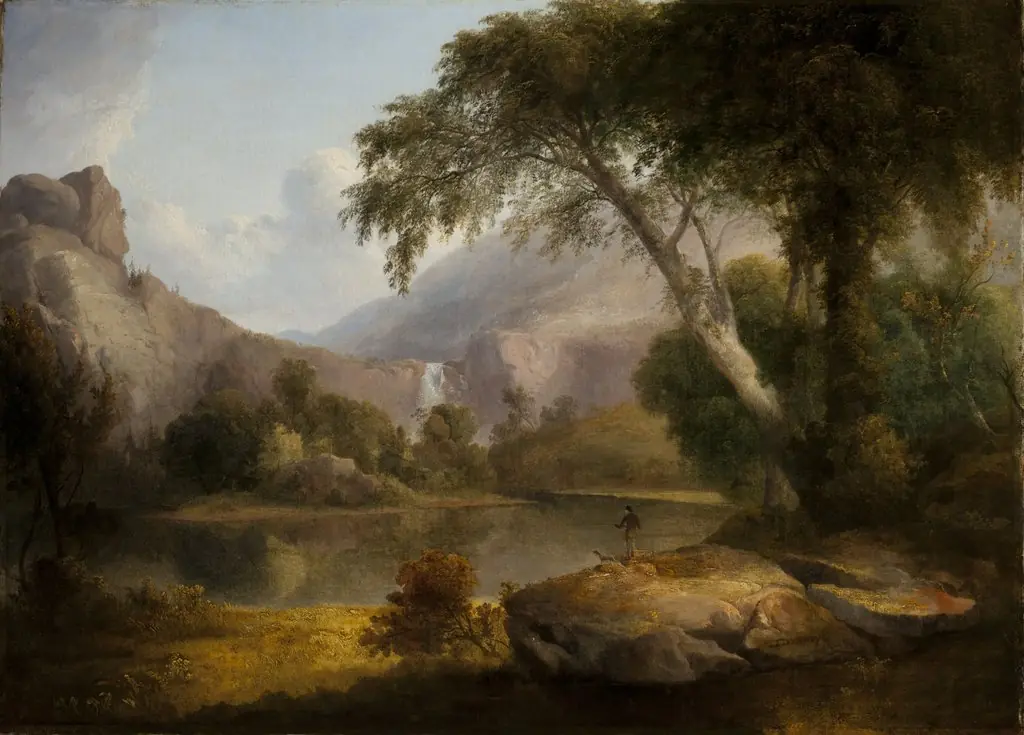
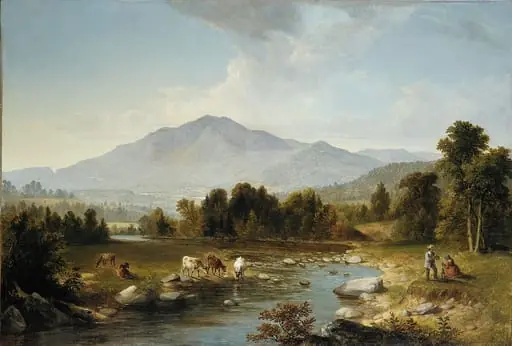
The painting Spring Landscape (1853) by Thomas Doughty presents an idealized American vista dominated by a rolling hill and a cascading waterfall, set within a verdant, sunlit environment. The composition emphasizes natural abundance and orderly growth, motifs traditionally linked to renewal and the pastoral promise of spring. As a work in The American Wing of the Metropolitan Museum of Art, it exemplifies the 19th‑century Hudson River School’s celebration of the nation’s untouched scenery, using the waterfall and hill as symbols of vitality and the restorative power of nature. Thus the piece conveys a symbolic meditation on the rejuvenating qualities of the American landscape.
Technique & Style
Thomas Doughty’s Spring Landscape (1853) is executed in oil on canvas, a medium characteristic of mid-19th-century American landscape painting. The handling reflects the tonalist approach, with softly blended passages that render atmospheric effects and subtle gradations of light across the rolling hills and cascading waterfall. The composition’s formal qualities emphasize gentle recession through atmospheric perspective, employing muted greens and earth tones to evoke the freshness of spring.
The canvas’s dimensions (111.8 × 157.5 cm) and horizontal format support a panoramic, contemplative view of nature, aligning with Doughty’s tendency to idealize the American landscape rather than depict it with topographical precision.
History & Provenance
Spring Landscape is an oil on canvas painting created by the American artist Thomas Doughty in 1853. The work, which depicts a landscape featuring hills and a waterfall, was completed during the mid-19th century. It currently resides in the collection of the Metropolitan Museum of Art, specifically within the institution's American Wing.
While the specific details regarding the original commission or the full chain of ownership prior to its museum acquisition are not detailed in the available records, the painting's inception date and its status as a held piece by the Metropolitan Museum of Art are established facts.
Overview
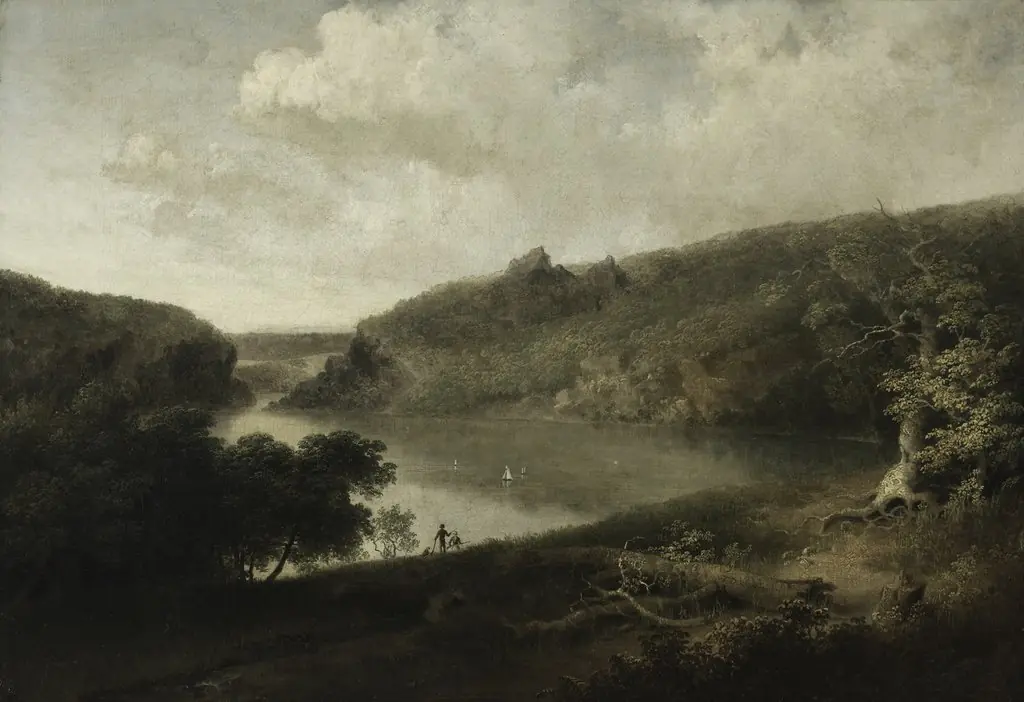
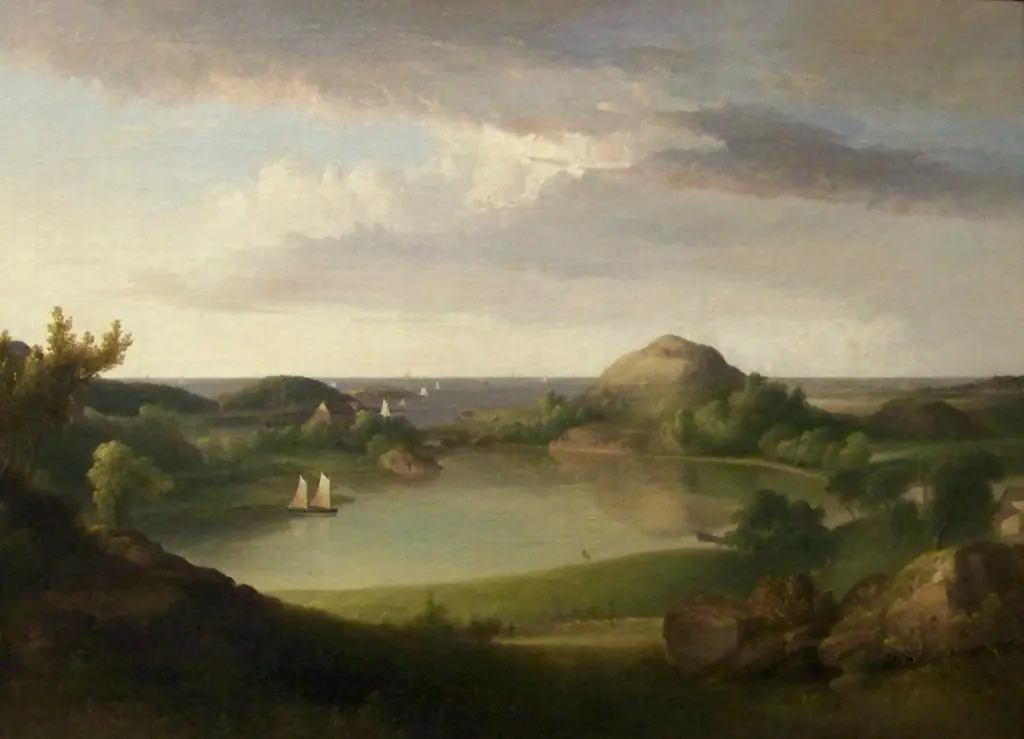
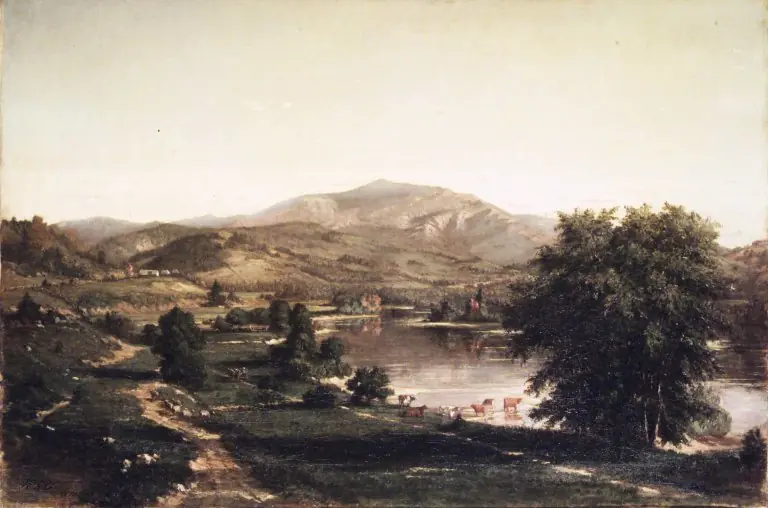
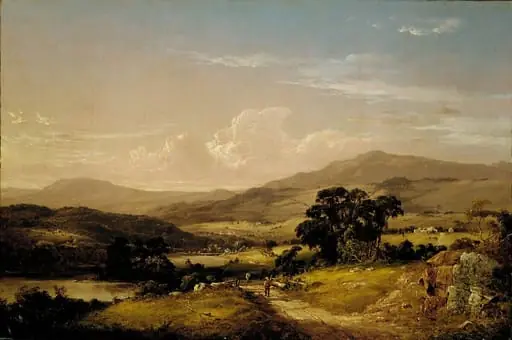
Doughty's "Spring Landscape," an oil on canvas from the 1850s, captures a serene American vista. The composition features a quiet river winding through green hills, a small waterfall cascading over rocks, all beneath a sky filled with soft, gray clouds. This painting is significant for its early focus on the unadorned beauty of the American natural environment, marking a departure from prevailing artistic trends of its time.
Context
Created in the 1850s, "Spring Landscape" emerged during a period when many American artists continued to emulate European artistic traditions. Doughty was among the pioneering painters who began to prioritize the native American landscape as a subject. His decision to depict local scenery without allegorical or historical embellishments represented an early step in forging a distinct American artistic identity, moving away from imported aesthetic models.
Legacy
"Spring Landscape" exemplifies an early movement in American art that celebrated the nation's natural environment. Doughty's direct and unembellished portrayal of the landscape contributed to a growing appreciation for indigenous scenery among artists. This approach helped lay groundwork for subsequent generations of American landscape painters who would further explore and define a national artistic vision centered on the country's unique geographical features.
Artist & collection
Artist
Thomas Doughty was an American artist associated with the Hudson River School.