Artwork
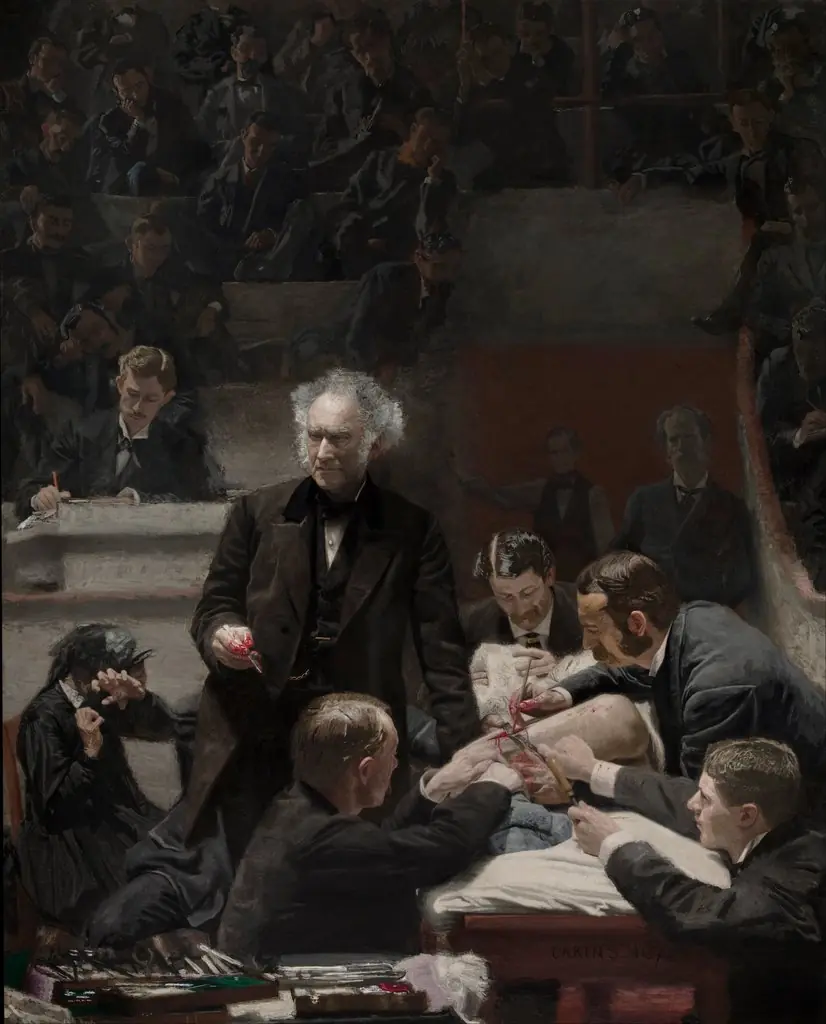
The Gross Clinic
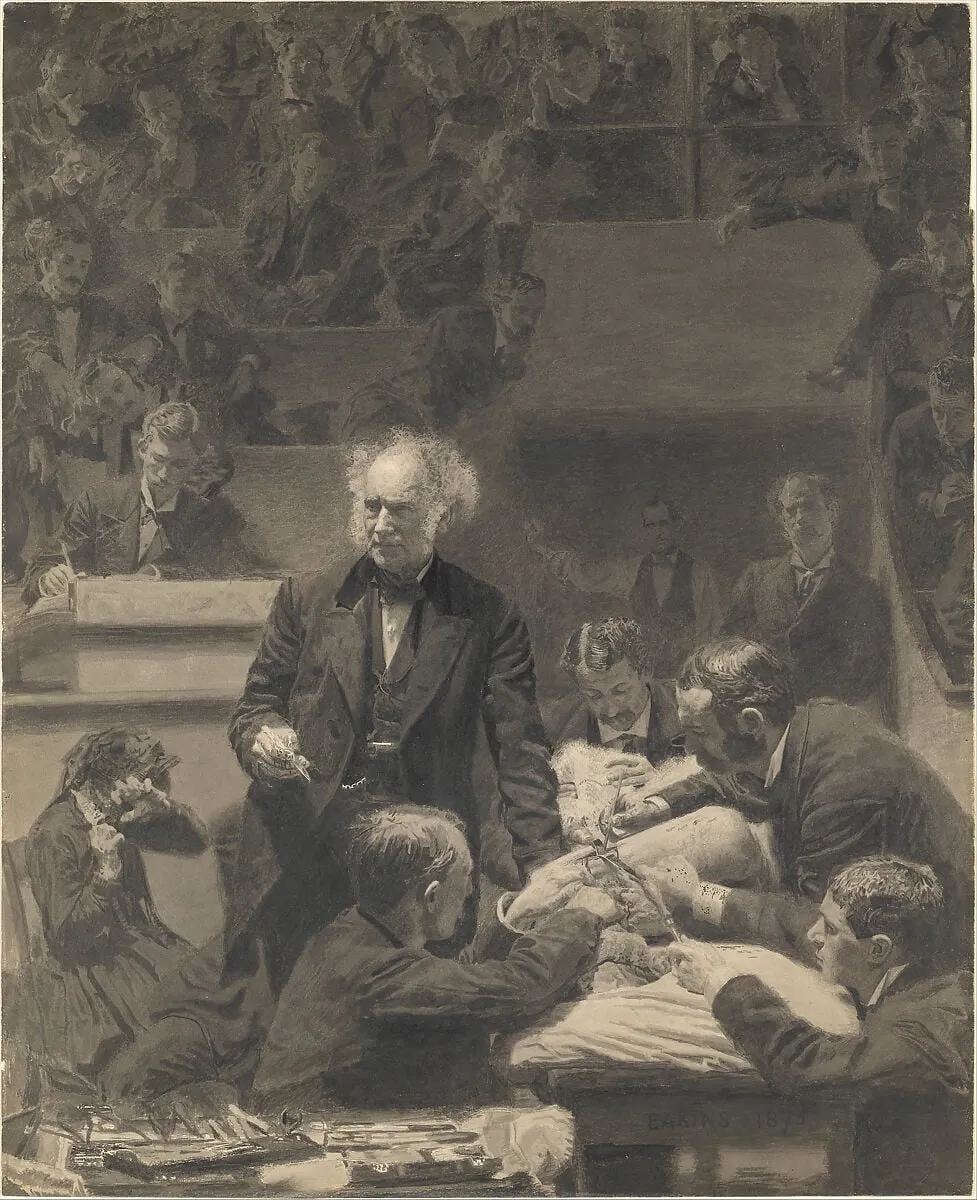
The Gross Clinic is a watercolor work on paper by the Impressionist artist Thomas Eakins. It dates from 1876 and is held in the collection of the Metropolitan Museum of Art.
About this work
Subject & Meaning
The imagery focuses on the figures of the doctor and the students, emphasizing the educational and professional aspects of medicine in the late 19th century.
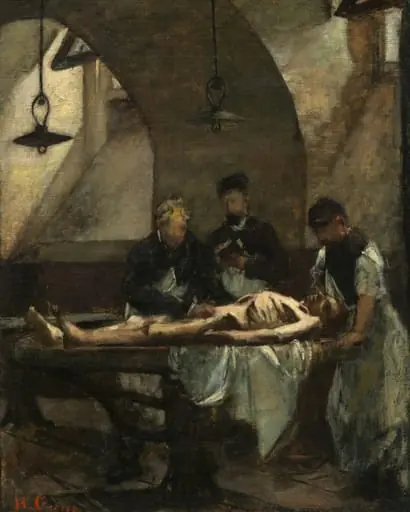
The work depicts a medical scene centered on a physician performing surgery, surrounded by students observing the procedure. As a genre scene, it captures a moment of clinical instruction and practice within a hospital setting. The imagery focuses on the figures of the doctor and the students, emphasizing the educational and professional aspects of medicine in the late 19th century.
The composition presents the physician as the dominant figure, illustrating the authority and focus required in surgical practice.
Technique & Style
The Gross Clinic is executed in India ink and watercolor on a cardboard support, a combination that defines its material makeup. The work belongs to the genre_scene category and is housed in the Metropolitan Museum of Art’s American Wing, reflecting its classification within the museum’s collection. Created in 1875, the piece portrays a medical tableau with a physician surrounded by students, emphasizing narrative clarity typical of genre scenes. Its formal approach is defined by the genre_scene classification, employing ink and wash on cardboard.
History & Provenance
The Gross Clinic was executed in 1875 using India ink and watercolor on cardboard, a technique that situates the work within the genre of a medical scene. The composition portrays a physician surrounded by students, emphasizing contemporary ideas about medical education. The painting was created for public display and later entered the collection of the Metropolitan Museum of Art, where it has been part of The American Wing since its acquisition.
Its provenance traces a direct path from the artist’s studio to the museum’s holdings, with no documented change of ownership after acquisition.
Overview
Thomas Eakins' The Gross Clinic, executed in 1876 using india ink and watercolor on cardboard, captures a surgical demonstration in progress. This work exemplifies Eakins' commitment to realism, depicting a physician instructing students during an operation. It reflects his interest in the people and institutions of Philadelphia, particularly within the fields of medicine and science, aligning with his broader artistic practice.
Context
As a proponent of the realism movement, Eakins frequently focused on contemporary life in Philadelphia, particularly its intellectual and professional communities. The Gross Clinic aligns with his broader interest in portraying figures from medicine, science, and the arts, reflecting a commitment to depicting the realities of his era rather than romanticized or allegorical subjects.
Legacy
Upon its creation, The Gross Clinic sparked considerable controversy due to its graphic and unvarnished portrayal of surgery. While other artists often presented doctors heroically, Eakins chose to depict the procedure with an unprecedented degree of realism, including its inherent messiness and gravity. This departure from idealized representations contributed to the work's initial scandalous reception and its enduring significance.
Artist & collection
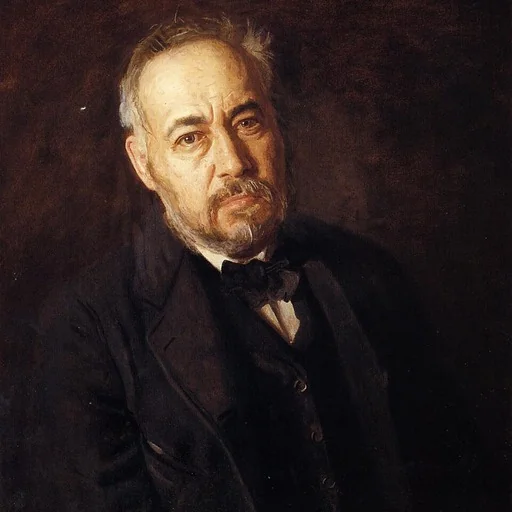
Artist
Thomas Cowperthwait Eakins (; July 25, 1844 – June 25, 1916) was an American realist painter, photographer, sculptor, and fine arts educator.