Artwork
Watson Van Benthuysen II and Thomas Van Benthuysen
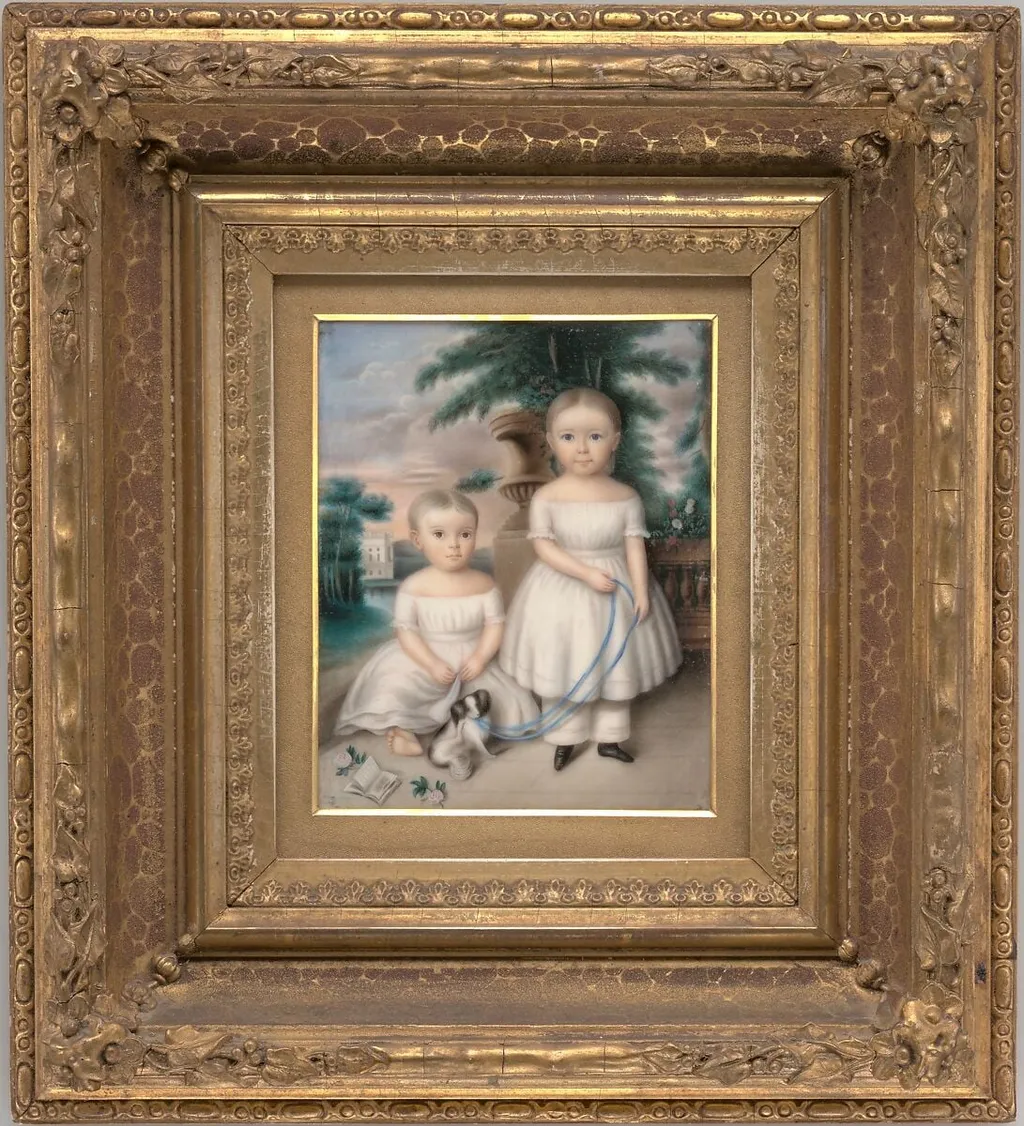
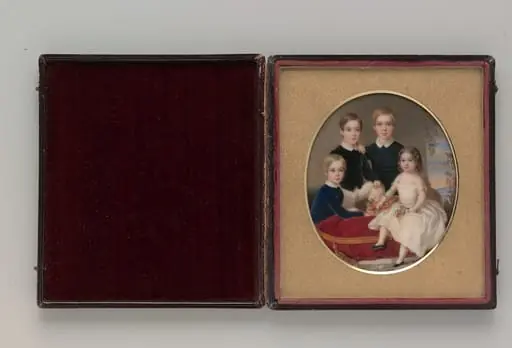
Watson Van Benthuysen II and Thomas Van Benthuysen is a watercolor painting by the American Folk Art artist Aramenta Dianthe Vail. It dates from 1837 and is held in the collection of the Metropolitan Museum of Art.
About this work
Johnson Fund, placing it among the rare surviving examples of Vail’s early Newark-period work.
In 1837, Aramenta Dianthe Vail painted two Brooklyn brothers, Watson Van Benthuysen II and his younger sibling Thomas, onto a wafer-thin ivory disk barely four and a half inches wide. Working in watercolor with a matte finish that distinguished her from glossier rivals, Vail rendered the pair as children of a local family tied to New York’s Dutch colonial past. The Metropolitan Museum of Art acquired the miniature in 2005 through the Dale T. Johnson Fund, placing it among the rare surviving examples of Vail’s early Newark-period work.
Subject & Meaning
The portrait depicts the two brothers, Watson and Thomas Van Benthuysen, as a sibling group placed in a landscape. They are shown barefoot, accompanied by a dog, and surrounded by flowers; one holds a book. This iconography combines symbols of childhood innocence (bare feet, flowers, dog) with nods to education (the book) and the natural world (landscape).
The informal, outdoor setting and direct gazes suggest a tender, familial bond. As a watercolor on ivory, the small format further emphasizes the private, cherished nature of the likeness. Overall, the work represents an idealized view of 19th-century American boyhood, blending learning, companionship, and pastoral simplicity into a portrait of family affection.
Technique & Style
The work is executed in watercolor on ivory, a traditional medium for portrait miniatures, allowing fine detail and a luminous surface. The small scale (11.7 x 9.4 cm) is characteristic of the format. Stylistically, the portrait presents an informal, naturalistic group scene of two children with a dog, book, and flowers, set against a landscape background.
The barefoot subjects and inclusion of a leash suggest a domestic, candid quality typical of early 19th-century American portraiture. The handling of watercolor on ivory requires precise, delicate brushwork, evident in the rendering of facial features and textures of the children's clothing and surroundings. The composition balances the figures with landscape elements, reflecting a blend of formal portraiture and genre-like spontaneity.
History & Provenance
The watercolor portrait Watson Van Benthuysen II and Thomas Van Benthuysen was executed by Aramenta Dianthe Vail in 1837. The work is part of the collection of the Metropolitan Museum of Art. No further details regarding commission or a chain of previous ownership are provided in the available records.
Overview
Aramenta Dianthe Vail painted this miniature portrait of brothers Watson Van Benthuysen II and Thomas in 1837, early in her career. Executed in watercolor on ivory, the small-scale work captures the two young subjects with a distinctive soft luminescence. This piece represents one of the few documented examples from Vail's initial period as an artist in Newark, New Jersey, before her move to New York City.
Context
Born in Newark in 1820, Aramenta Dianthe Vail began her career as a miniature painter there around 1837, the year this portrait was completed. She exhibited her work at the National Academy of Design in 1838, 1841, and 1847. Vail later relocated to New York City, where she continued to work as an artist until 1863, also selling fancy goods after 1858. She remained unmarried and passed away in 1888.
Artist & collection


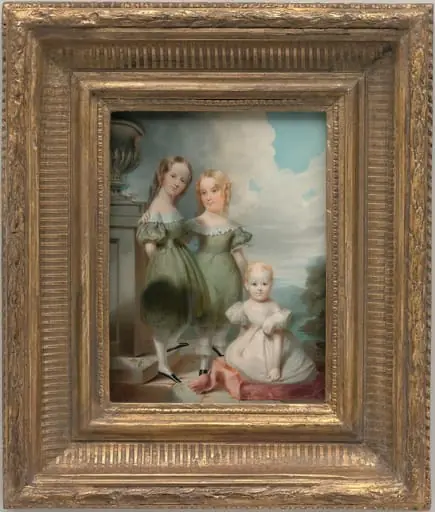
- The Children of Homer Ramsdell, Esq.
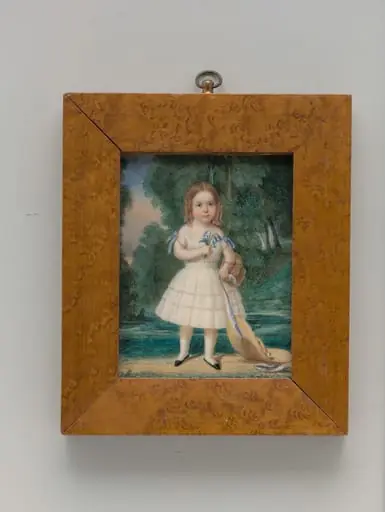 Florine Turner
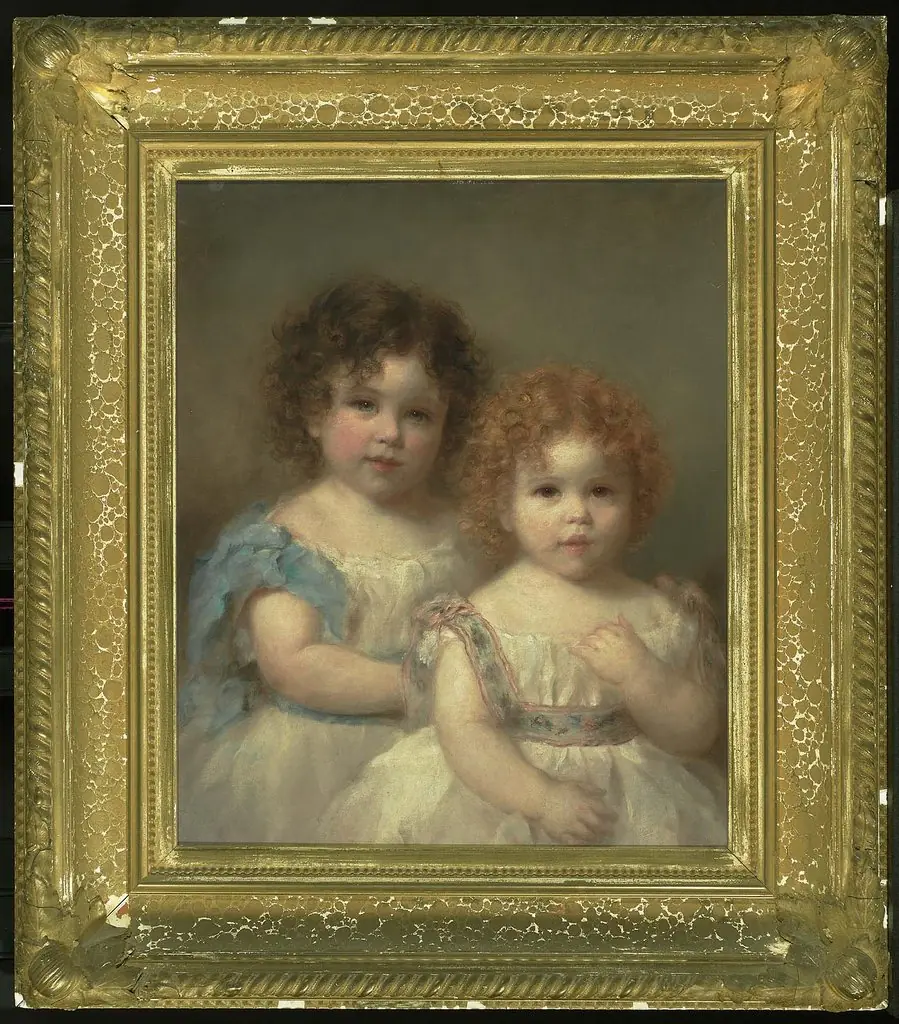 The Misses Case
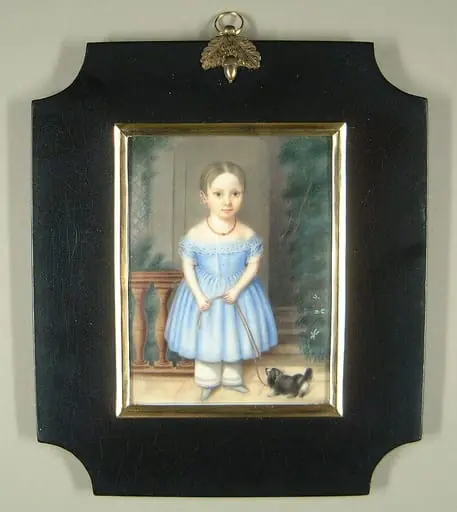 Mary R. Whitlock
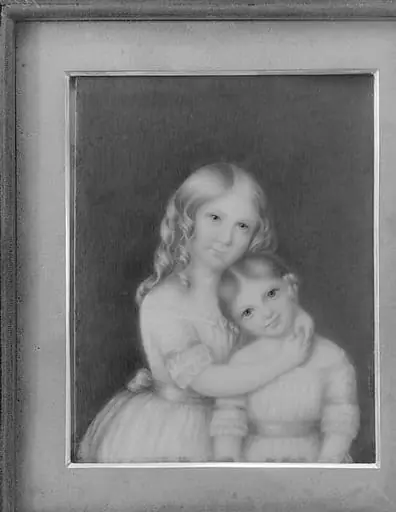 Portrait of Two Girls
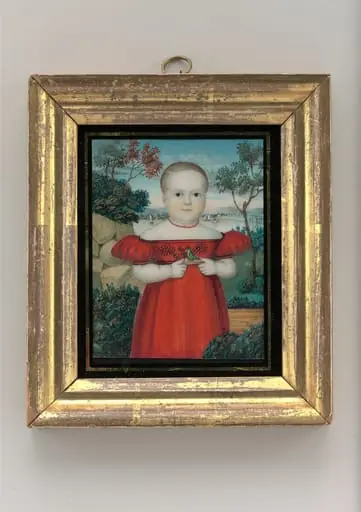 Portrait of a Boy
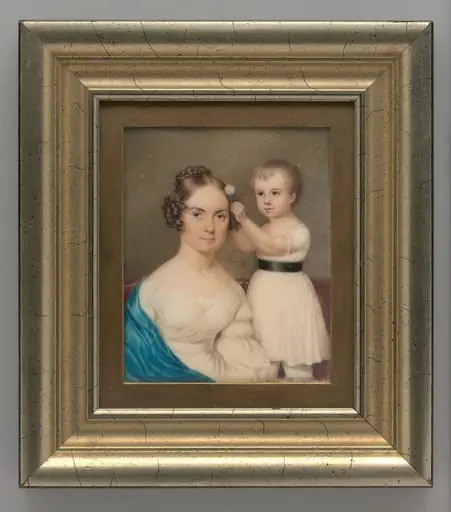 Mrs. William Gordon Ver Planck and Her Son Samuel Hopkins Ver Planck
 Twin Babies
 Portrait of a Child
 Ottilia and Christy Marstrand, the Artist’s daughters
 The Raymond Children
 The Thompson Children