Artwork
Shop near Corfe Castle
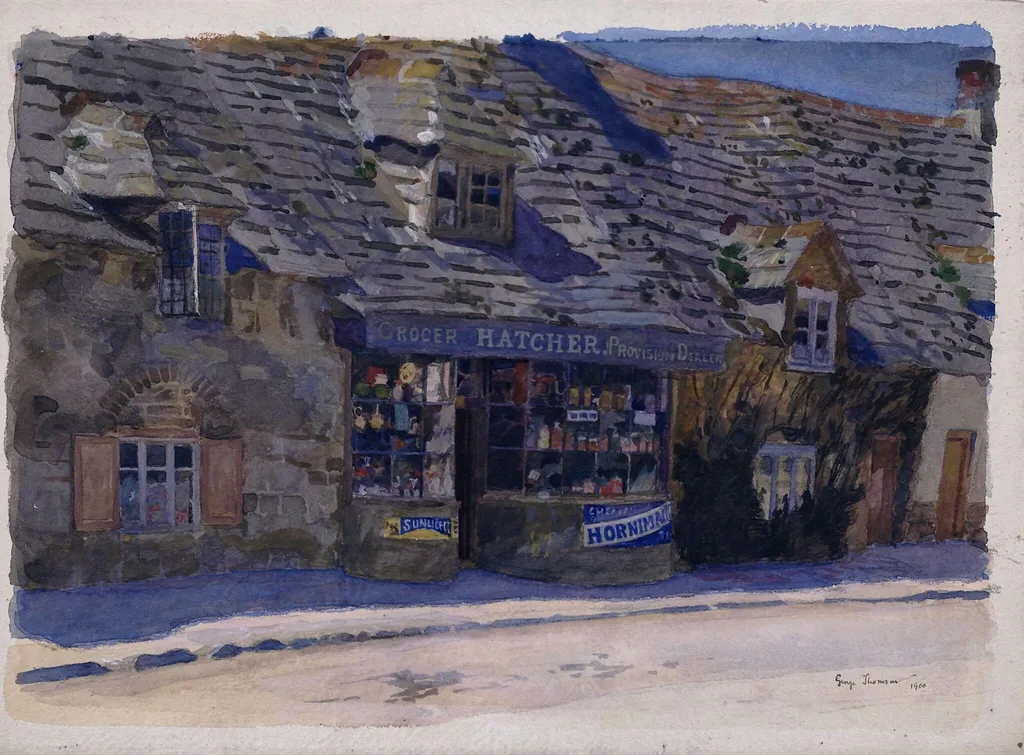
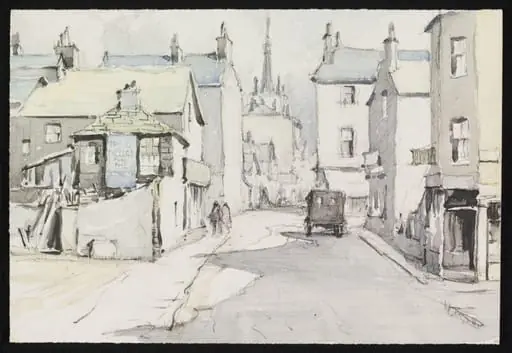
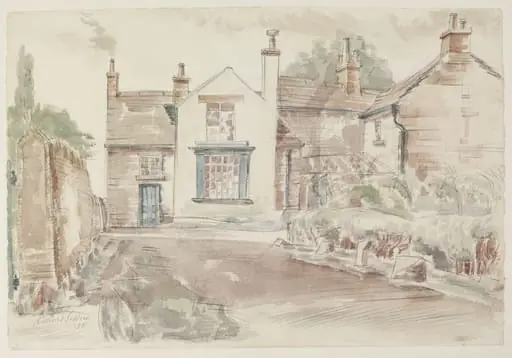
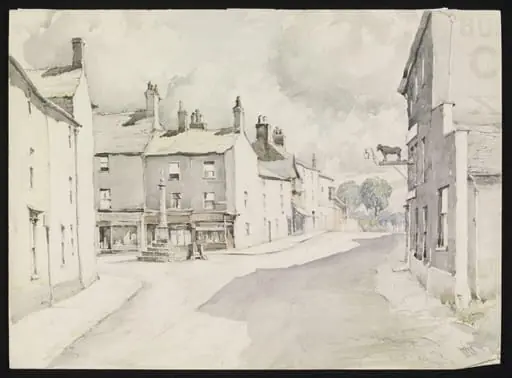
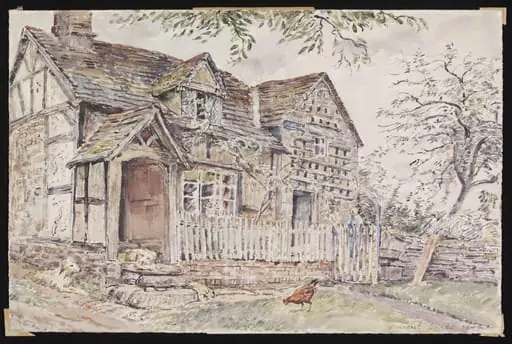
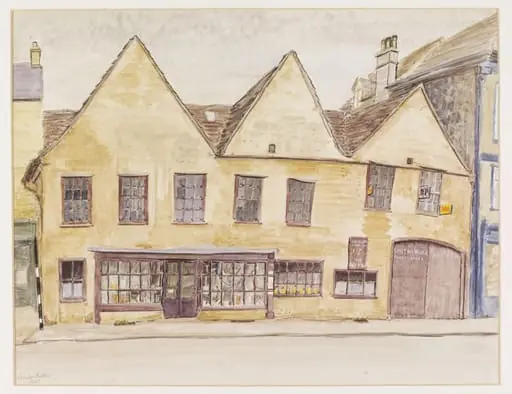
Shop near Corfe Castle is a watercolor work on paper by the Impressionist artist George Thomson. It dates from 1900 and is held in the collection of the Victoria and Albert Museum.
About this work
Overview
The composition centers on a single structure, framed by surrounding buildings and open space, suggesting a moment of everyday life rather than a grand vista.
George Thomson's 1900 watercolour, Shop near Corfe Castle, captures a modest commercial building in the rural landscape of Dorset. Executed in delicate washes, the work reflects the quiet character of the village setting. The artist’s signature and date are present, affirming its origin and timing.
The composition centers on a single structure, framed by surrounding buildings and open space, suggesting a moment of everyday life rather than a grand vista.
Subject & Meaning
The painting portrays a grocer’s shop bearing the sign 'Hatcher,' indicating a local business serving the community. Its placement near Corfe Castle situates it within a historically layered environment, yet the focus remains on ordinary commerce rather than the castle’s ruins. The inclusion of visible goods in the window and the modest architecture implies a self-sufficient village economy, offering a subtle commentary on rural life at the turn of the century.
Technique & Style
Thomson employed transparent watercolour washes to build soft, layered tones, allowing the paper’s white to suggest highlights and ambient light. Brushwork is restrained, with gentle strokes defining the stone walls, sloping roof, and window details. Subtle shifts in value create a quiet sense of depth, while the muted palette, dominated by earth tones and a single blue sign, enhances the painting’s calm, unassuming mood.
History & Provenance
The work is documented as signed and dated by Thomson in 1900, placing it within his active period as a watercolourist. No public record of early ownership or exhibition history is widely available. It likely remained in private hands, consistent with the modest scale and subject matter typical of regional artists of the time. Its survival suggests continued personal or local significance beyond its initial creation.
Context
In early 20th-century England, watercolour was widely used by amateur and professional artists to record local scenes. Thomson’s work aligns with a tradition of topographical painting that valued accuracy and atmosphere over dramatic effect. Corfe Castle, already a ruin by this time, attracted artists drawn to its picturesque decay, yet Thomson chose instead to focus on the living village that persisted in its shadow.
Legacy
Thomson’s painting contributes to a body of regional watercolours that document everyday English life at the turn of the century. While not widely exhibited or collected, such works offer valuable insight into vernacular architecture and community life. His restrained approach reflects a quiet observational tradition, preserving the ordinary without embellishment, and remains a quiet testament to the overlooked corners of the English countryside.
Own this work as a print
Artist & collection
Artist
George Thomson painted soft, sunlit watercolors of old English villages in the early 1900s.