Artwork
Polin
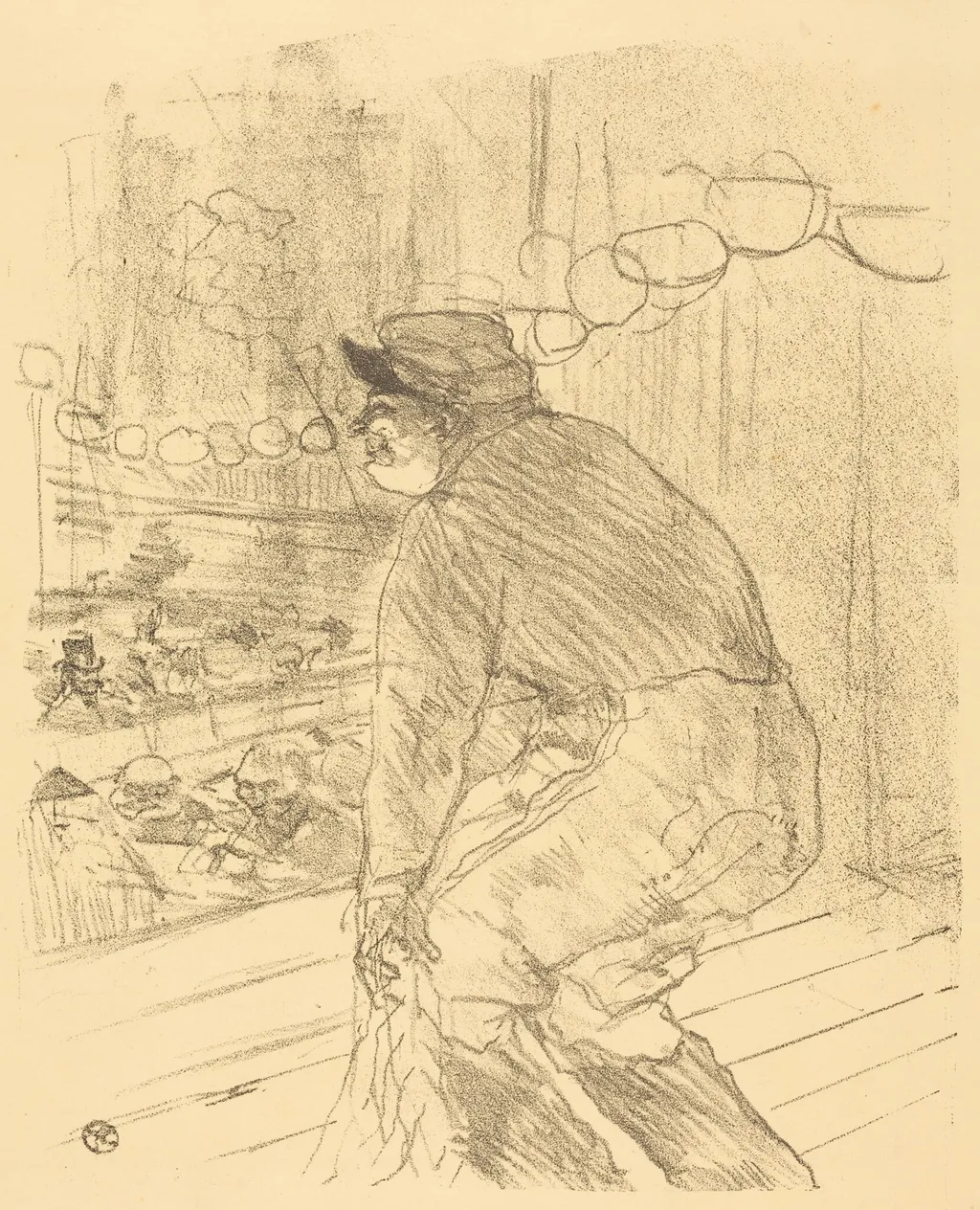
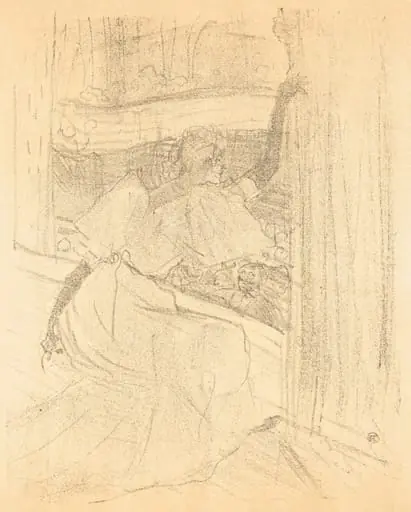
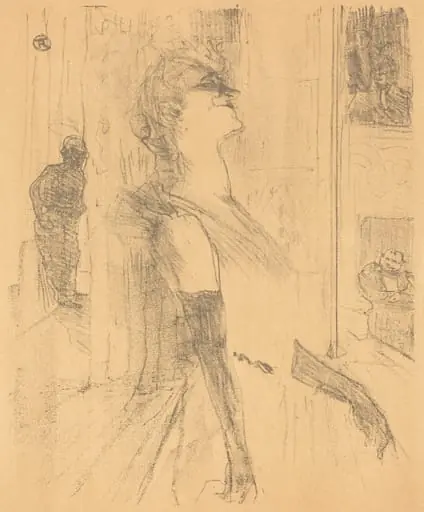
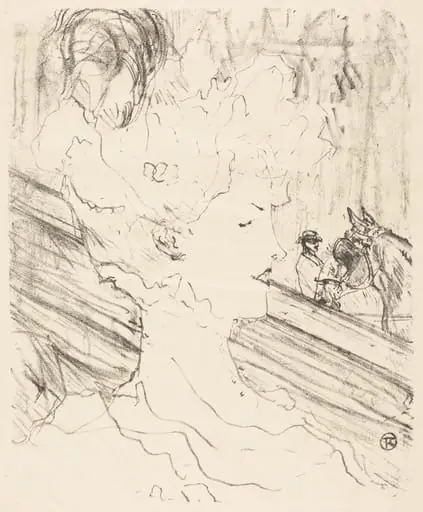
Polin is an ink print by the Impressionist artist Henri de Toulouse-Lautrec. It dates from 1896 and is held in the collection of the National Gallery of Art.
About this work
Overview
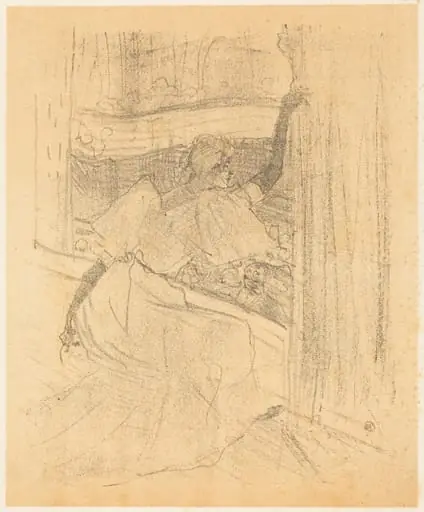
Henri de Toulouse‑Lautrec produced the lithograph Polin in 1896. Executed in black ink on cream‑colored paper, the work presents a seated woman in a loosely drawn interior. The composition is rendered with swift, gestural lines that suggest a sketch rather than a finished illustration, emphasizing immediacy over detail.
Subject & Meaning
The figure occupies a simple chair, legs crossed, hands resting on her lap, while a faintly indicated room, table, chairs, and walls, languishes in the background. The sparse setting and relaxed posture hint at a private, perhaps domestic moment, inviting contemplation of the sitter’s inner state amid the bustle of late‑19th‑century Parisian life.
Technique & Style
Created by traditional lithography, the image derives from a stone surface that retains ink before paper is pressed onto it. This process yields the characteristic soft edges and slightly blurred contours visible in the print. Toulouse‑Lautrec’s hand‑drawn, rapid line work conveys movement and vitality, aligning with his broader interest in capturing fleeting gestures.
History & Provenance
Polin reflects his shift toward reproducible media, allowing wider dissemination of his observations of Parisian society.
The lithograph emerged during a prolific period when Toulouse‑Lautrec, born into an aristocratic French family in 1864, turned to printmaking after a childhood injury limited his mobility. Polin reflects his shift toward reproducible media, allowing wider dissemination of his observations of Parisian society. Its early ownership records remain limited, but the piece is documented in the artist’s 1890s oeuvre.
Context
Polin belongs to a body of work that documents the theatrical and marginal circles of Belle Époque Paris. While Toulouse‑Lautrec is best known for vibrant posters of cabarets and dancers, this quieter interior study demonstrates his ability to render intimate scenes with the same observational acuity, linking personal portraiture to the broader social currents of his time.
Own this work as a print
Artist & collection
Artist
Comte Henri Marie Raymond de Toulouse-Lautrec-Montfa (24 November 1864 – 9 September 1901), known as Toulouse-Lautrec (French: ), was a French painter, printmaker, draughtsman, caricaturist, and illustrator.