Artwork
Copy of Zhai Dakun's Landscapes in the Styles of Old Masters
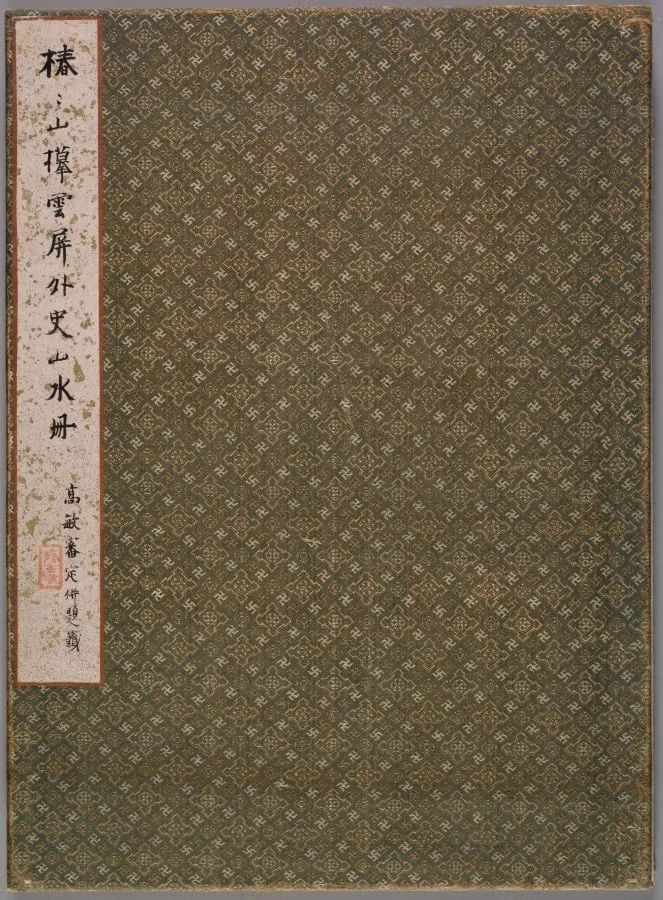
Copy of Zhai Dakun's Landscapes in the Styles of Old Masters is a work on paper by the Romanticist artist Tsubaki Chinzan. It dates from 1847 and is held in the collection of the Cleveland Museum of Art.
- Accession no.
- 1985.251
- Credit line
- The Kelvin Smith Collection, given by Mrs. Kelvin Smith
About this work
Overview
Chinzan reproduced not only the visual elements but also the accompanying inscriptions, preserving the calligraphy and seals as integral parts of each piece.
This album contains twelve landscape paintings created by Tsubaki Chinzan in the Edo period, each modeled after compositions originally produced by the Qing-dynasty Chinese artist Zhai Dakun. Chinzan reproduced not only the visual elements but also the accompanying inscriptions, preserving the calligraphy and seals as integral parts of each piece. The portfolio functions as a study in stylistic emulation, reflecting Japanese artists’ engagement with Chinese artistic traditions during a period of sustained cultural exchange.
Subject & Meaning
Each of the twelve scenes presents a traditional Chinese landscape, mountains, rivers, and solitary figures, rendered in the manner of historical masters as interpreted by Zhai Dakun. The works do not depict specific places but rather evoke idealized natural realms rooted in literati aesthetics. By replicating both image and text, Chinzan honored the scholarly tradition of learning through faithful reproduction, treating the album as a meditation on lineage and artistic authority rather than original invention.
Technique & Style
Chinzan employed fine ink brushwork to mimic the varied techniques of earlier Chinese painters, adapting brushstroke density, ink wash, and compositional rhythm to match Zhai Dakun’s interpretations. The calligraphic inscriptions, including poems and signatures, were meticulously copied in identical script, demonstrating precision in both painting and writing. This dual fidelity to image and text reveals a disciplined approach to transmission, where technique served as a conduit for cultural memory.
History & Provenance
The album was produced in early 19th-century Japan by Tsubaki Chinzan, a painter active in the Kansai region who specialized in Chinese-style ink painting. It derives from a known body of work in which Japanese artists studied Chinese models through direct copying. While Zhai Dakun’s originals are now rare, Chinzan’s album survives as a documented example of how Qing-era Chinese art was absorbed and preserved in Edo-period Japan through scholarly reproduction.
Context
During the Edo period, Japanese artists frequently engaged with Chinese painting traditions through imported albums and texts. Zhai Dakun’s works, though not widely known in China today, were accessible in Japan and valued for their synthesis of earlier styles. Chinzan’s album reflects a broader trend among literati painters who saw emulation not as imitation but as a path to mastery, aligning with Confucian ideals of reverence for ancestral knowledge and disciplined study.
Legacy
This portfolio stands as a quiet testament to cross-cultural artistic transmission in pre-modern East Asia. Rather than asserting individual innovation, Chinzan’s work underscores the value placed on continuity and textual fidelity. Today, it serves as a material record of how Japanese painters navigated Chinese artistic heritage, preserving stylistic nuances that might otherwise have been lost, and offering insight into the pedagogical practices of ink painting beyond China’s borders.
Artist & collection

Artist
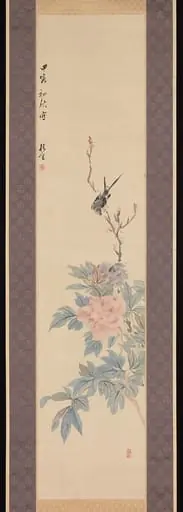
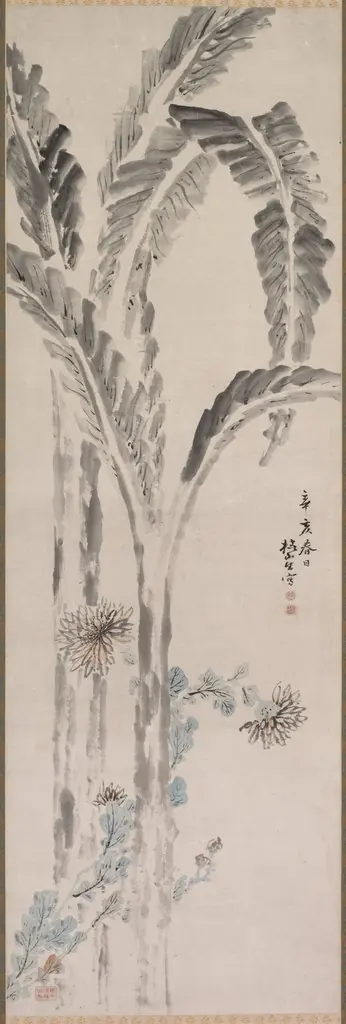
Tsubaki Chinzan, originally Tasuku was a Japanese painter in the nanga style. His other art names include Hekiin Sambō, Kyūan (休庵), Shikyūan (四休庵) and Takukadō (琢華堂).

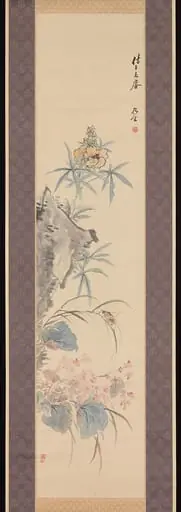
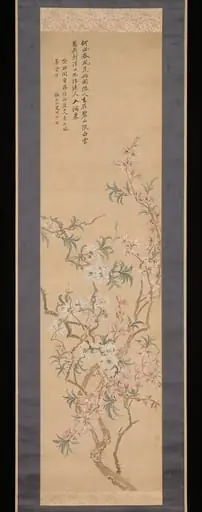
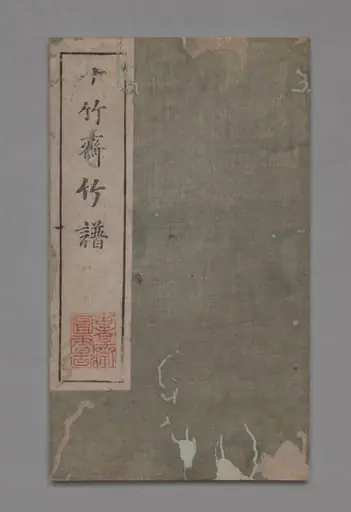 Ten Bamboo Studio Painting and Calligraphy Handbook (Shizhuzhai shuhua pu): Bamboo
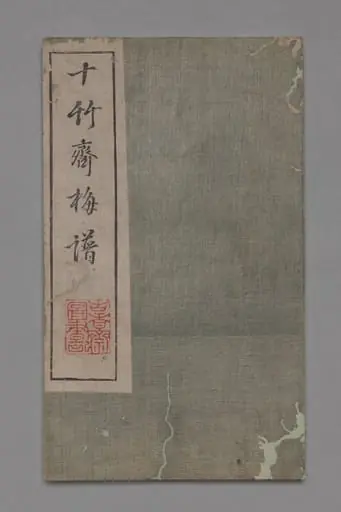 Ten Bamboo Studio Painting and Calligraphy Handbook (Shizhuzhai shuhua pu): Plum Blossoms
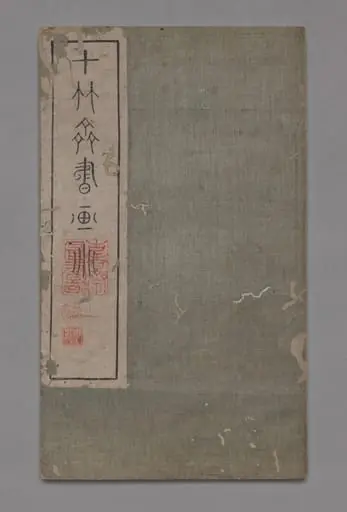 Ten Bamboo Studio Collection of Calligraphy and Painting: Miscellaneous
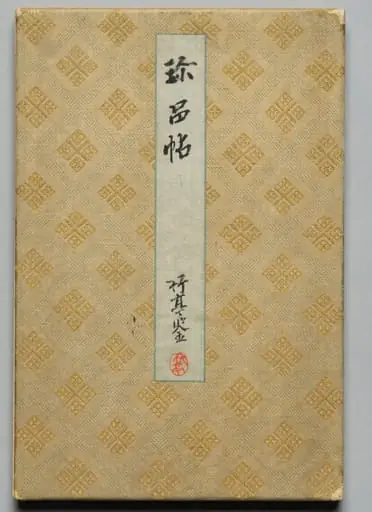 Album of Precious Works from Famous Early Modern Calligraphers and Painters (Volume 1)
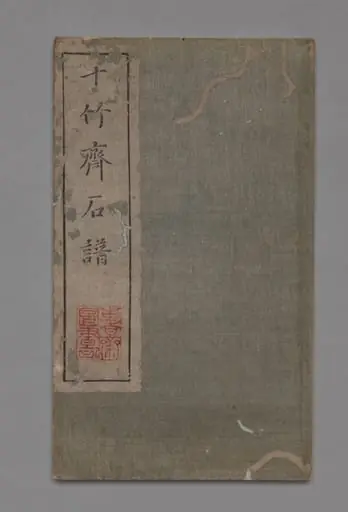 Ten Bamboo Studio Painting and Calligraphy Handbook (Shizhuzhai shuhua pu): Rocks
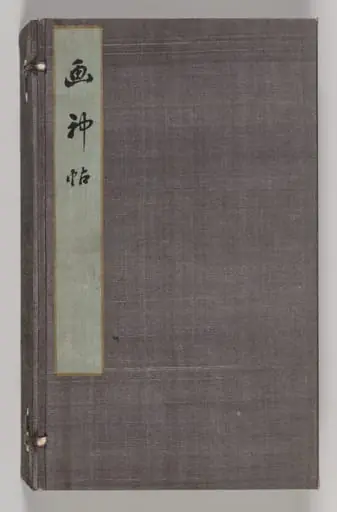 Reverberations of Taiga (Volume 1)
 Album of Precious Works from Famous Early Modern Calligraphers and Painters (Volume 2)
 Reverberations of Taiga (Volume 2)
 Ten Bamboo Studio Collection of Calligraphy and Painting: Round Fans