Artwork
Madonna and Child in a Garden
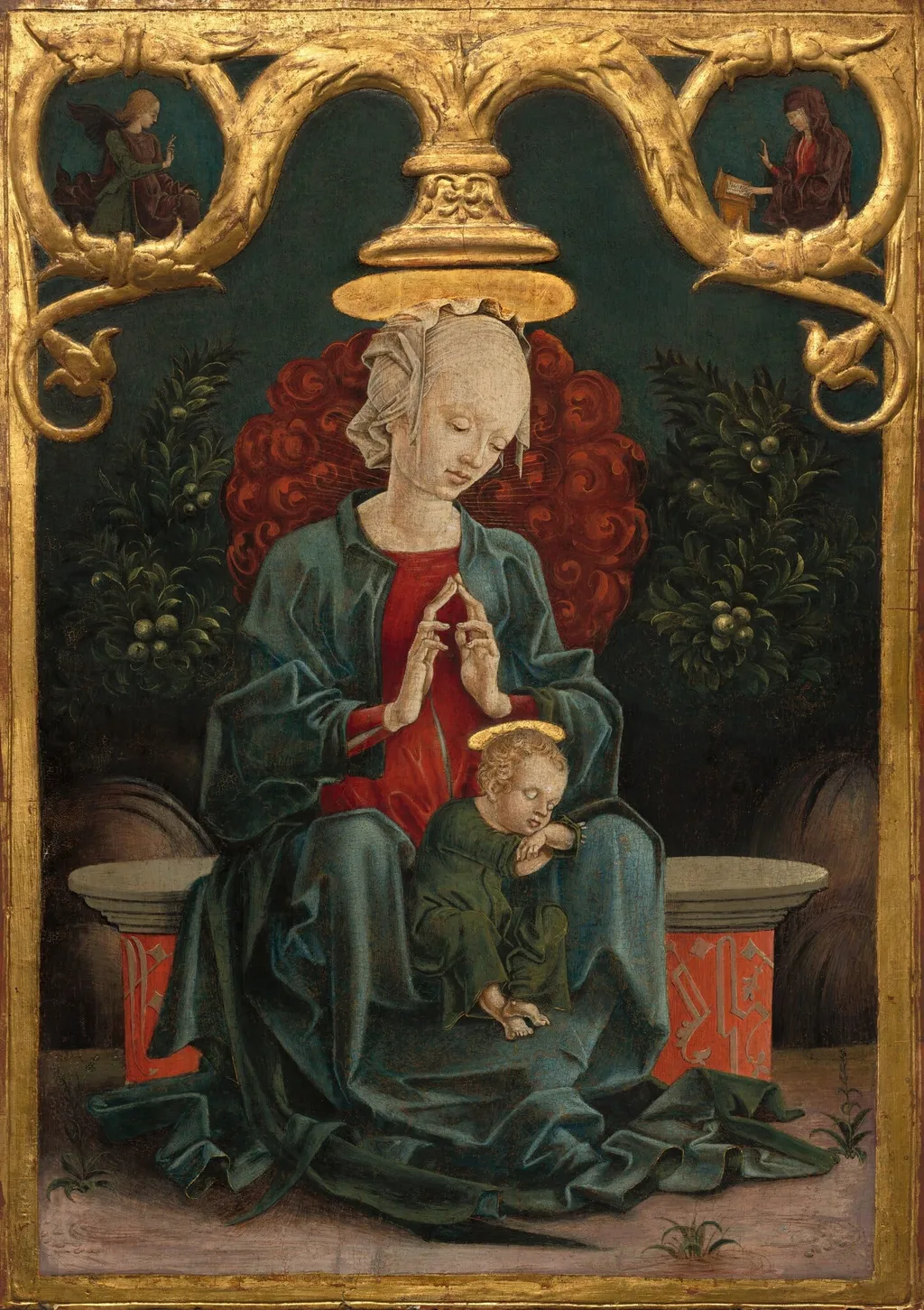
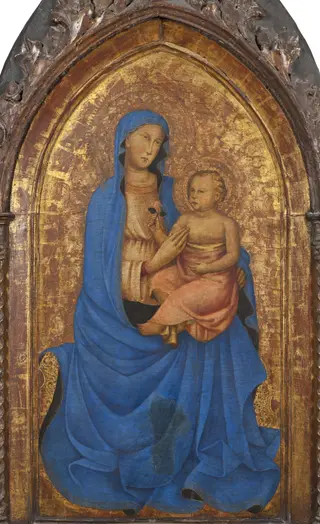
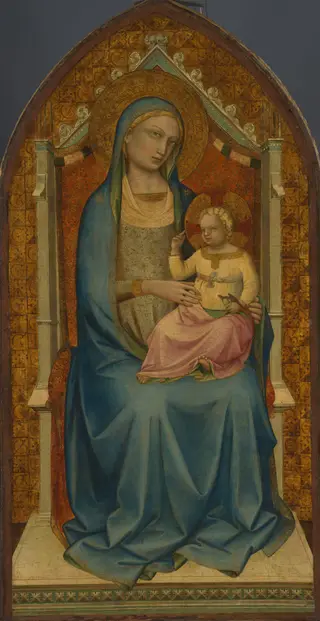
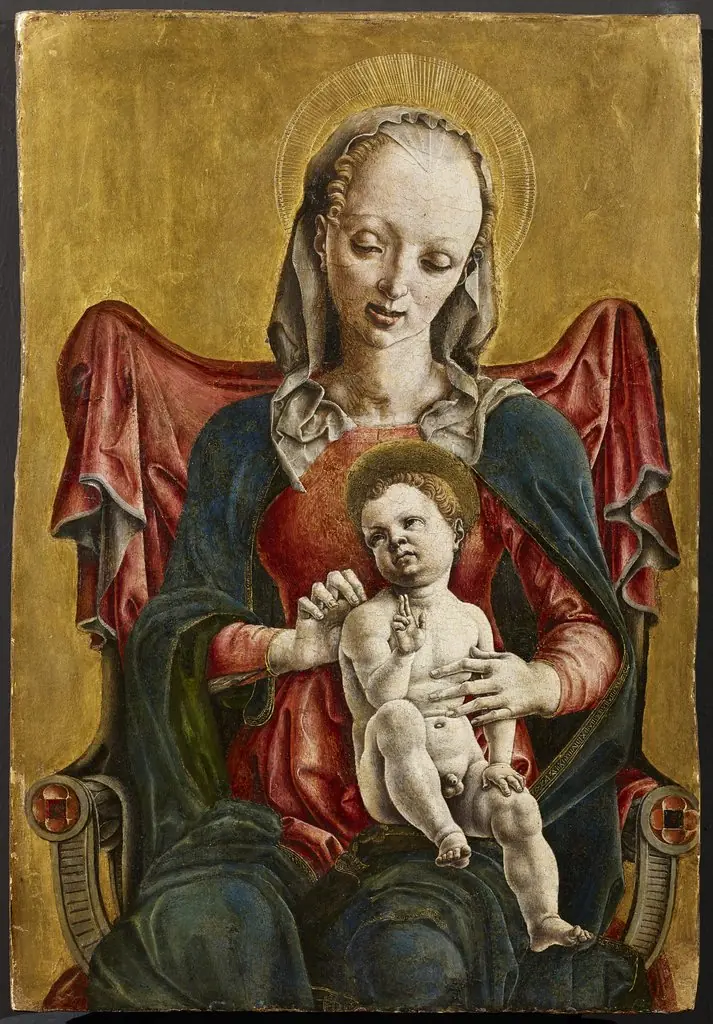
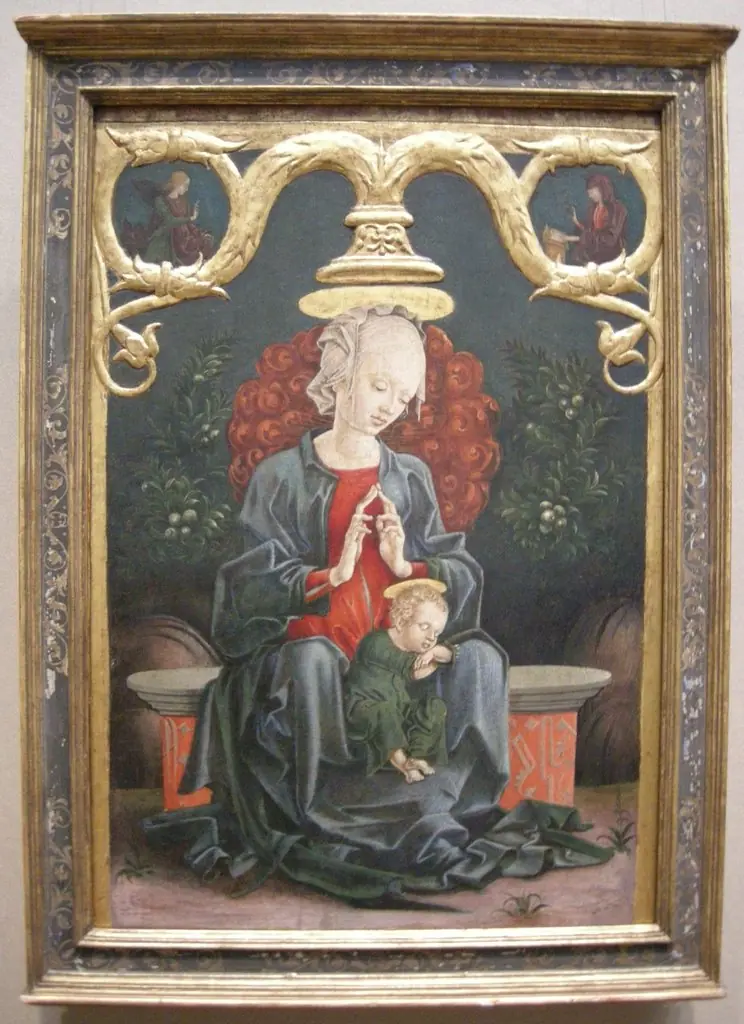
Madonna and Child in a Garden is an oil painting by the Early Renaissance artist Cosimo Tura. It dates from 1465 and is held in the collection of the National Gallery of Art.
About this work
Technique & Style
Executed in 1452, this religious work by Cosmè Tura utilizes tempera, with the possible inclusion of oil, applied onto a poplar panel support.
Executed in 1452, this religious work by Cosmè Tura utilizes tempera, with the possible inclusion of oil, applied onto a poplar panel support. The painting measures approximately 53.4 by 37.2 centimeters. As a panel painting from the mid-fifteenth century, the medium reflects the transitional experimentation with oil binders occurring during this period in Italian art.
The composition features the Madonna and Christ Child, rendered through the specific handling characteristic of Tura's style, though detailed condition reports or specific stylistic analyses regarding brushwork and surface texture are not provided in the available records. The work is currently held in the Samuel H. Kress Collection at the National Gallery of Art.
History & Provenance
The work titled Madonna and Child in a Garden was painted by Cosme Tura in 1452 using tempera, with possible oil, on a poplar panel. Its early ownership is documented through Joseph Duveen, Inc., London and New York, and later held by Harold Irving Pratt and Harriet Barnes Pratt in New York from at least 1917 until 1939. The painting was exhibited at Francis Kleinberger’s New York gallery in 1917, though the exact acquisition path from Kleinberger’s remains unverified.
In December 1943 it was sold by Wildenstein & Co. to the Samuel H. Kress Foundation, which later gifted it to the National Gallery of Art in 1952. No contemporary records detail the original commissioning patron.
Madonna and Child in a Garden by Cosmè Tura is held by the National Gallery of Art in Washington, D.C., as part of the Samuel H. Kress Collection, to which it was given in 1952. The painting entered the Kress Foundation in December 1943, purchased through Wildenstein & Co., Inc., in New York, along with another work formerly in the Pratt collection. Prior to that, it was owned by Harold Irving Pratt and Harriet Barnes Pratt of New York, who held it from at least 1917 through 1939.
The work first drew public attention when Pratt exhibited it in 1917 at Francis Kleinberger's gallery in New York. Earlier provenance notes in the 1939 World's Fair catalogue suggest possible earlier involvement of the Duveen Brothers and Joseph Duveen of Millbank, though no other source substantiates this attribution.
Legacy
The work entered the Samuel H. Kress Collection in 1943 and has been part of the National Gallery of Art's holdings since 1952, a trajectory documented in its provenance from the Pratt family through Duveen Brothers and Francis Kleinberger.[1][2] Its status as a representative early Renaissance piece is reflected in its inclusion in the Kress Collection Digital Archive, underscoring its recognized importance within the history of religious painting.[2] The painting's attribution to Cosmè Tura and its depiction of the Madonna and Child have made it a reference point for studies of 15th‑century devotional art, contributing to the understanding of Italian panel painting traditions.
Overview
Cosmè Tura's painting, Madonna and Child in a Garden, dates to approximately 1465. This religious work portrays the Virgin Mary holding the Christ Child within a serene outdoor setting. Executed on a poplar panel, the composition reflects the devotional themes prevalent in Italian Renaissance art, offering a quiet contemplation of the sacred figures amidst natural elements.
Subject & Meaning
The painting presents the Virgin Mary cradling the infant Christ in a tranquil garden. This setting, characterized by a sparse arrangement of flowers and trees, was a recurring motif in religious art of the period. Such a garden often served as a symbolic representation of paradise, purity, or an enclosed, sacred space, providing a peaceful backdrop for the divine figures and inviting spiritual reflection.
Own this work as a print
Artist & collection
Artist
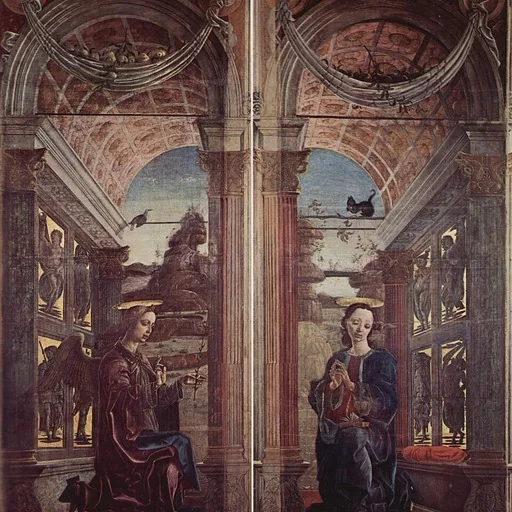
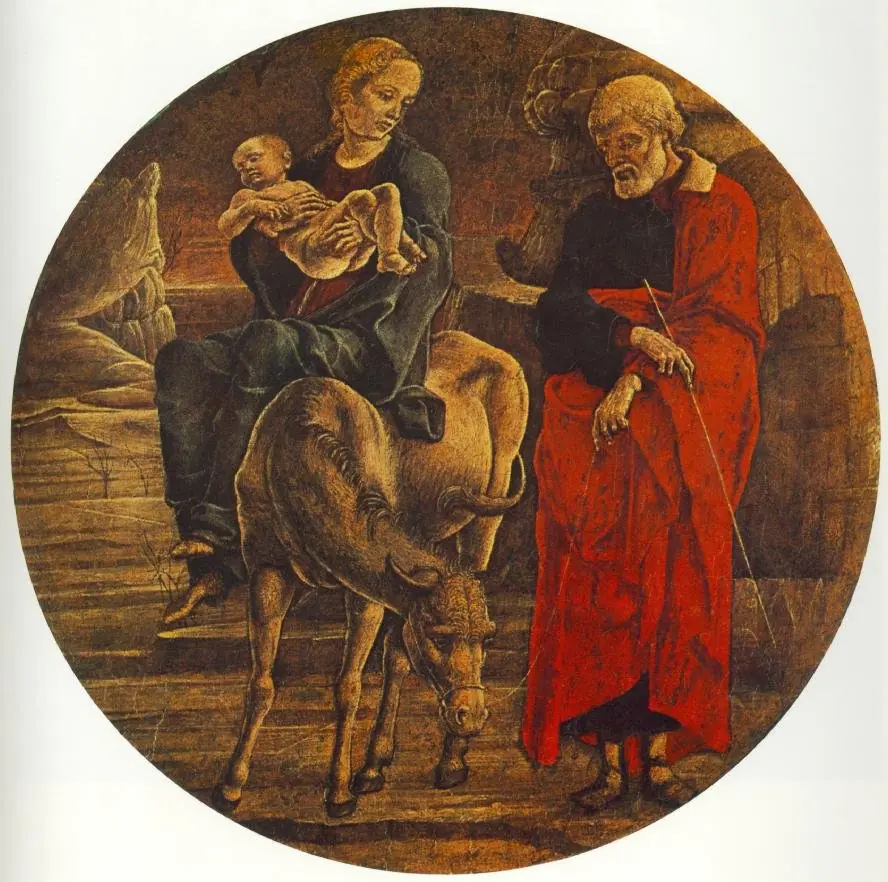
Cosmè Tura (Italian pronunciation:; c. 1430 – 1495), also known as Il Cosmè or Cosimo Tura, was an Italian early-Renaissance (or Quattrocento) painter and considered one of the founders of the School of Ferrara. He…

![Saint Francis [far left panel], by Cosimo Tura](https://artifactworldgallery.com/img/cosimo-tura--saint-francis-far-left-panel--3b890eb4471ebc8a-w320.webp)
![The Virgin Annunciate [middle right panel], by Cosimo Tura](https://artifactworldgallery.com/img/cosimo-tura--the-virgin-annunciate-middle-right-panel--9eeab22c5567995d-w320.webp)
![The Annunciation with Saint Francis and Saint Louis of Toulouse [four panels], by Cosimo Tura](https://artifactworldgallery.com/img/cosimo-tura--the-annunciation-with-saint-francis-and-saint-louis-of-toulo--b6fe2fe99644e8d8-w320.webp)
![The Archangel Gabriel [middle left panel], by Cosimo Tura](https://artifactworldgallery.com/img/cosimo-tura--the-archangel-gabriel-middle-left-panel--c900f72d54477be2-w320.webp)