Artwork
Aesacus and Hesperie
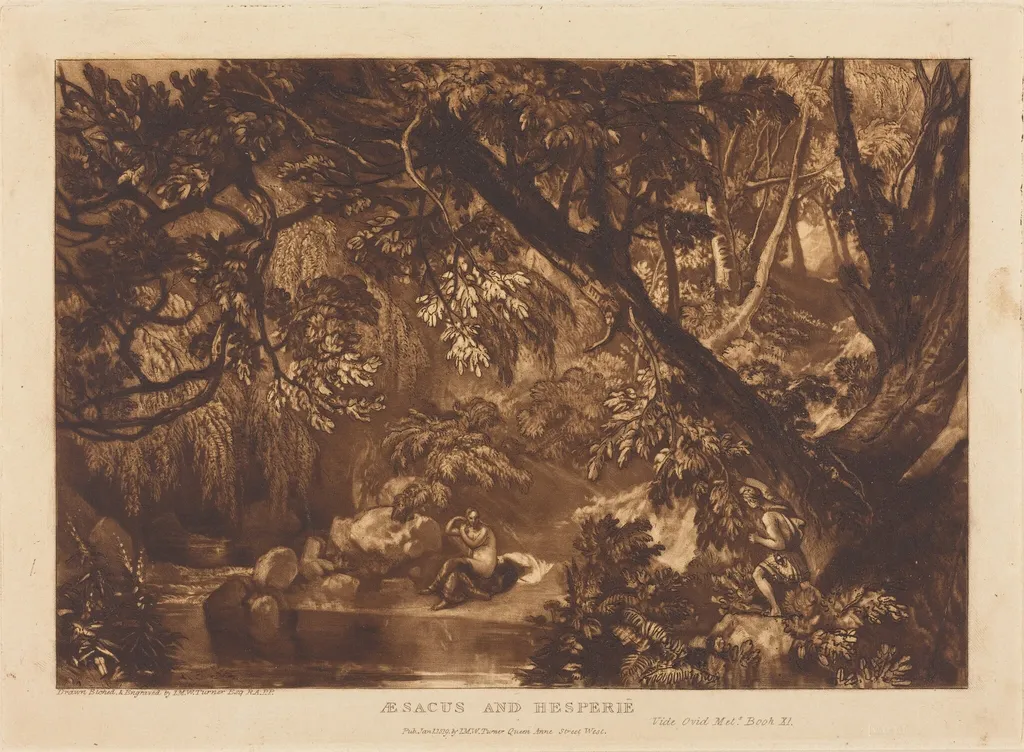
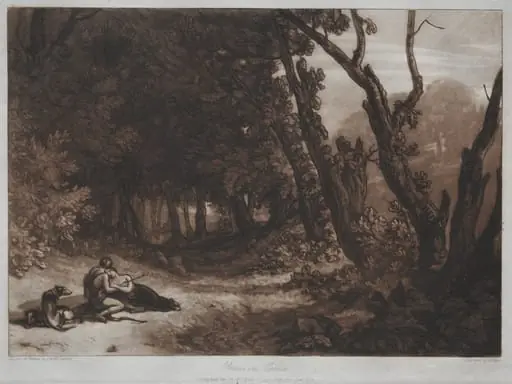
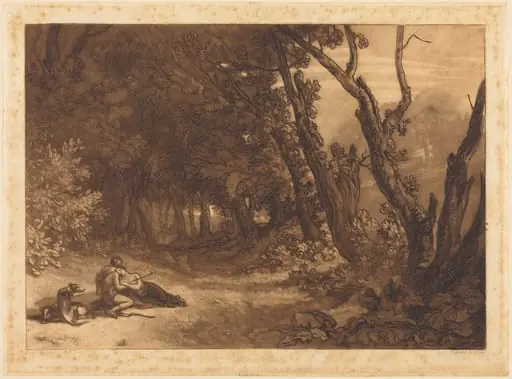
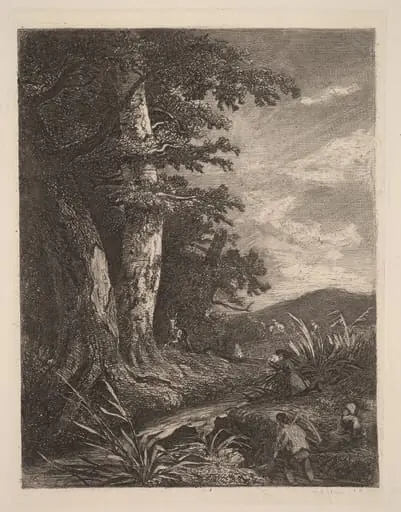
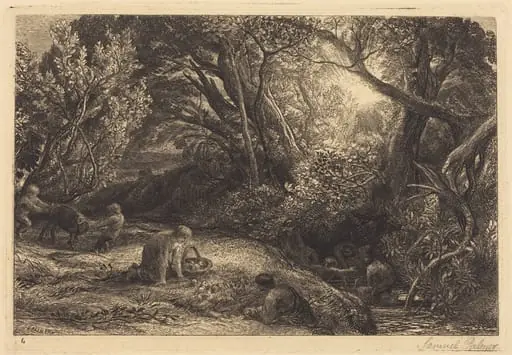
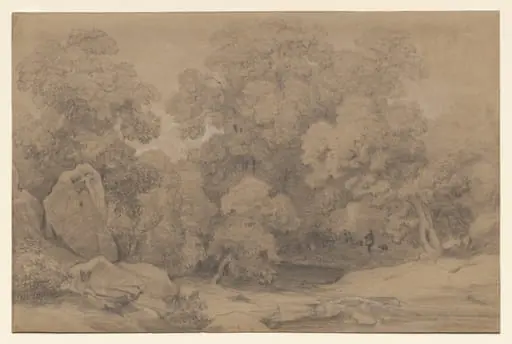
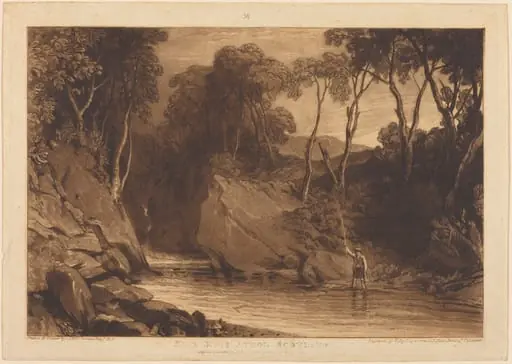
Aesacus and Hesperie is an ink print by the Romanticist artist Joseph Mallord William Turner. It dates from 1816 and is held in the collection of the National Gallery of Art.
About this work
Overview
Joseph Mallord William Turner’s 1816 etching titled Aesacus and Hesperie presents a quiet woodland tableau. Central to the composition is a towering tree whose expansive canopy spreads across the scene, while a solitary figure sits on a rock, looking upward. The work balances light and shade to create a sense of stillness and reflective mood.
Subject & Meaning
The image draws on the mythic figures Aesacus and Hesperia, invoking themes of longing and contemplation. The lone observer, positioned before the dominant tree, suggests a moment of introspection, perhaps reflecting the characters’ emotional states within the narrative. The natural setting underscores the Romantic preoccupation with the interplay between humanity and the natural world.
Technique & Style
Executed as an etching, Turner manipulates line and tonal variation to render the texture of bark, foliage, and the dappled ground. The contrast between illuminated branches and deeper shadows creates depth, while the delicate handling of the figure’s form integrates it subtly into the surrounding environment. The piece exemplifies Turner’s early exploration of atmospheric effects in printmaking.
History & Provenance
Created in 1816, Aesacus and Hesperie belongs to Turner’s prolific period of print production during the height of the Romantic era. The work has been held in several public collections, reflecting its continued relevance to studies of Turner’s print oeuvre and the broader 19th‑century fascination with mythological subjects rendered in natural settings.
Own this work as a print
Artist & collection
Artist
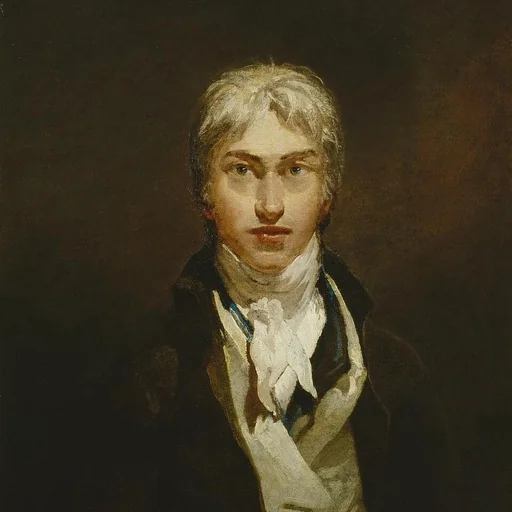
Joseph Mallord William Turner was born in 1775 at Maiden Lane, Covent Garden, where his father kept a barber and wig-making shop.