Artwork
Plymouth, Devonshire
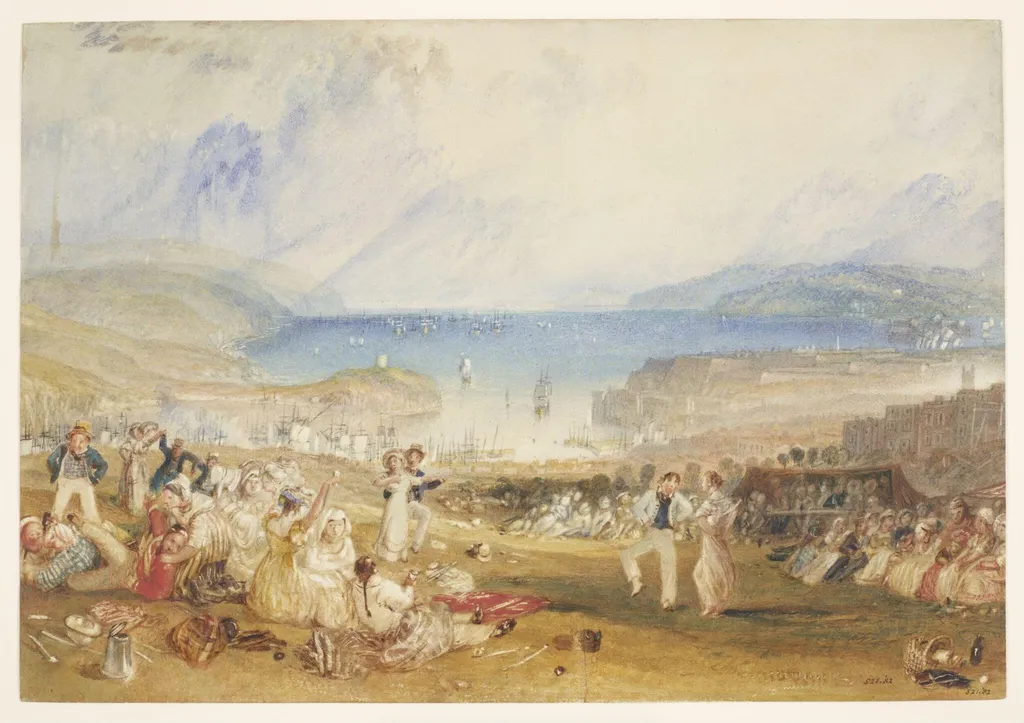
Plymouth, Devonshire is a watercolor work on paper by the Romanticist artist Joseph Mallord William Turner. It dates from 1830 and is held in the collection of the Victoria and Albert Museum. Painted in 1830, this watercolour by J.
About this work
Overview
Painted in 1830, this watercolour by J.M.W. Turner captures Plymouth Harbour from a high vantage point, blending coastal topography with human activity. The scene unfolds across a sandy shore where figures move casually, their postures suggesting quiet recreation. Turner’s handling of the medium emphasizes atmosphere over detail, with soft transitions between land, sea, and sky.
Subject & Meaning
The composition presents everyday seaside life, figures sit, stroll, and linger near the water’s edge, accompanied by a dog near a picnic. No single narrative dominates; instead, the work conveys a sense of ordinary leisure, framed by the stillness of the harbor and the distant horizon. The absence of dramatic action invites contemplation of time and place.
Technique & Style
Turner employed loose, fluid brushwork to suggest movement and light rather than define form. Colors are restrained: muted ochres, grays, and cool blues blend seamlessly, creating a hazy, atmospheric effect. The sky and sea merge in diffused tones, while the foreground figures are rendered with minimal detail, emphasizing their integration into the landscape.
History & Provenance
Created during Turner’s mature period, the work reflects his ongoing exploration of watercolour as a vehicle for atmospheric expression. It was likely made during one of his sketching trips along the Devon coast, part of a broader practice of observing and recording coastal scenes. The piece remains within documented collections since its creation.
Context
In the 1830s, Turner was refining his watercolour technique, moving away from topographical precision toward emotional resonance. Plymouth, a key naval port, offered rich visual material, ships, cliffs, and changing light. This work aligns with his interest in how natural elements shape human experience, rather than documenting specific events.
Legacy
The painting exemplifies Turner’s influence on later landscape traditions, particularly in the use of light and tone to evoke mood. Its understated composition and emphasis on transient effects prefigure aspects of Impressionism, though it remains rooted in the observational rigor of early 19th-century British watercolour practice.
Own this work as a print
Artist & collection
Artist
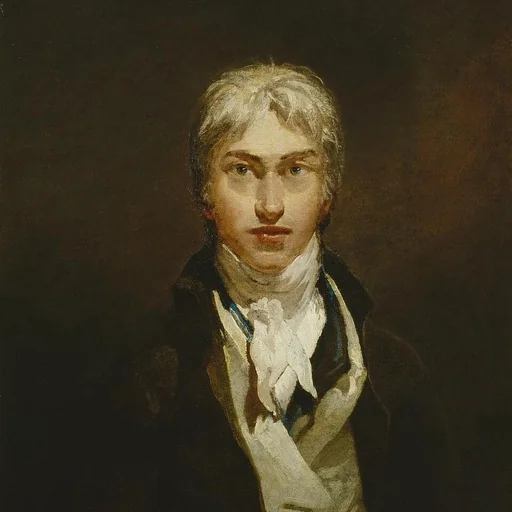
Joseph Mallord William Turner was born in 1775 at Maiden Lane, Covent Garden, where his father kept a barber and wig-making shop.

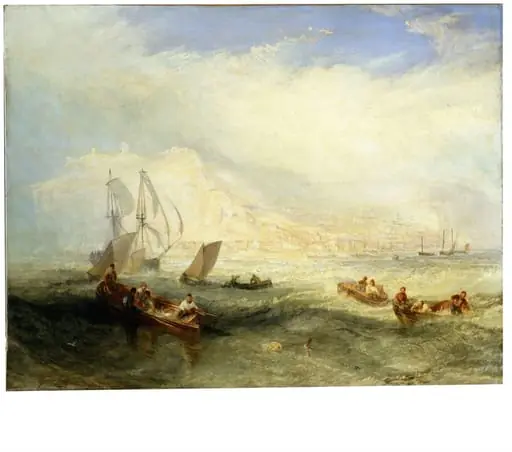 Line Fishing, Off Hastings
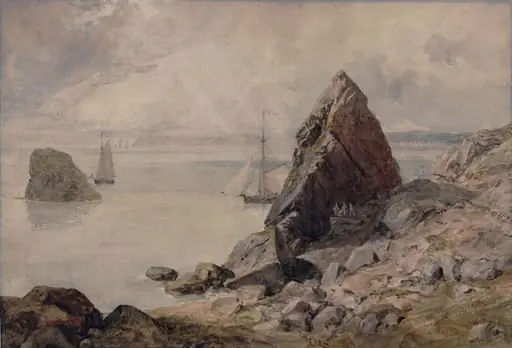 The Shag Rock, Tor Bay
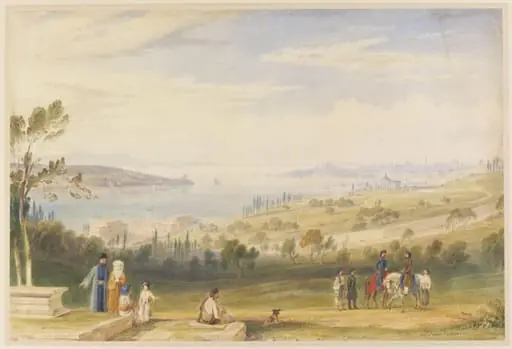 View of the Bosphorus from above Dolmabahçe, looking towards the Sea of Marmara
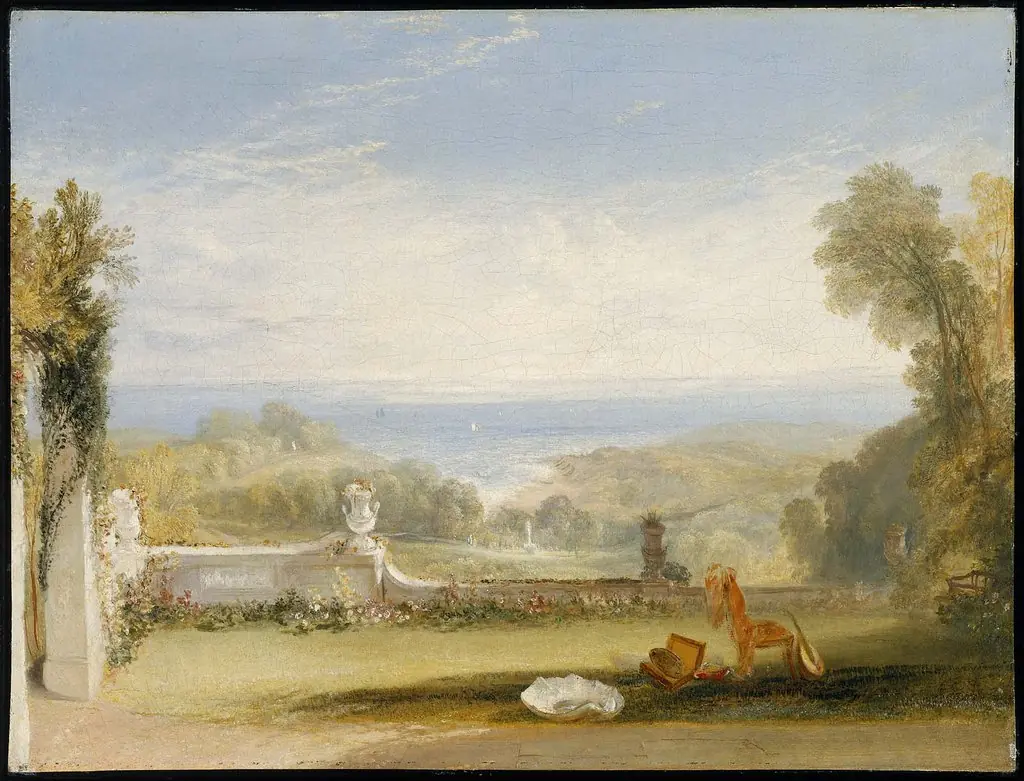 View from the Terrace of a Villa at Niton, Isle of Wight, from Sketches by a Lady
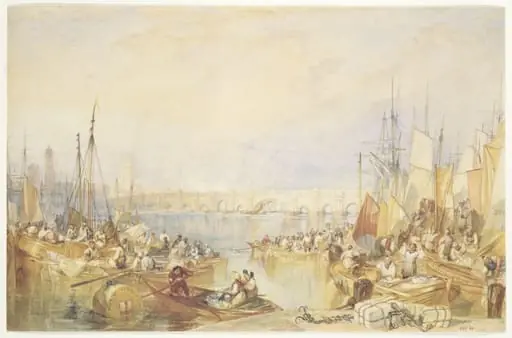 The Port of London
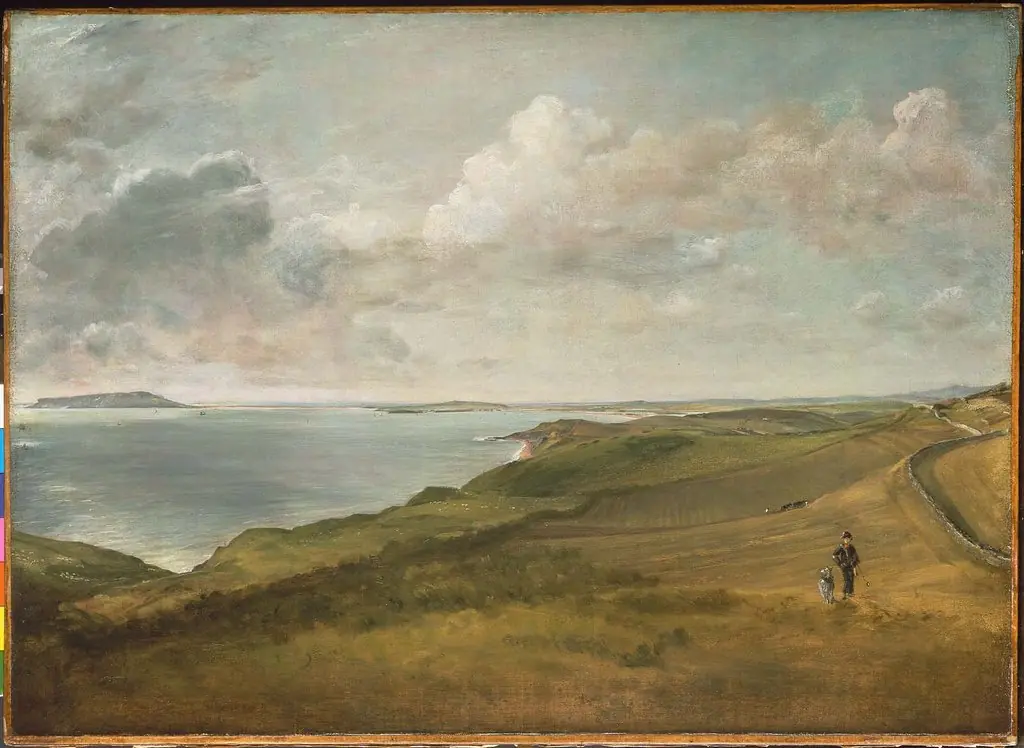 Weymouth Bay from the Downs above Osmington Mills
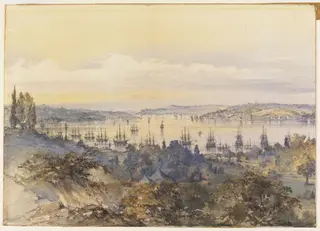 The Bosphorus with the Allied Fleets at Anchor
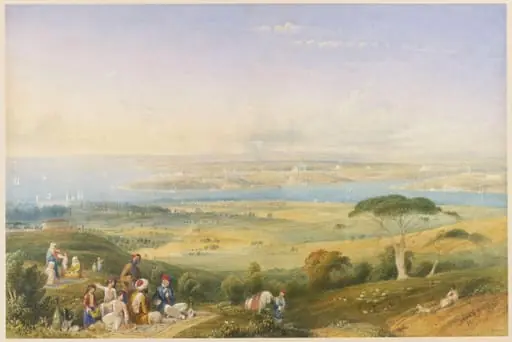 Turks picnicing in fields outside Scutari with a view of Constantinople in the distance
 Lago Maggiore from Stresa