Artwork
The Woman of Samaria
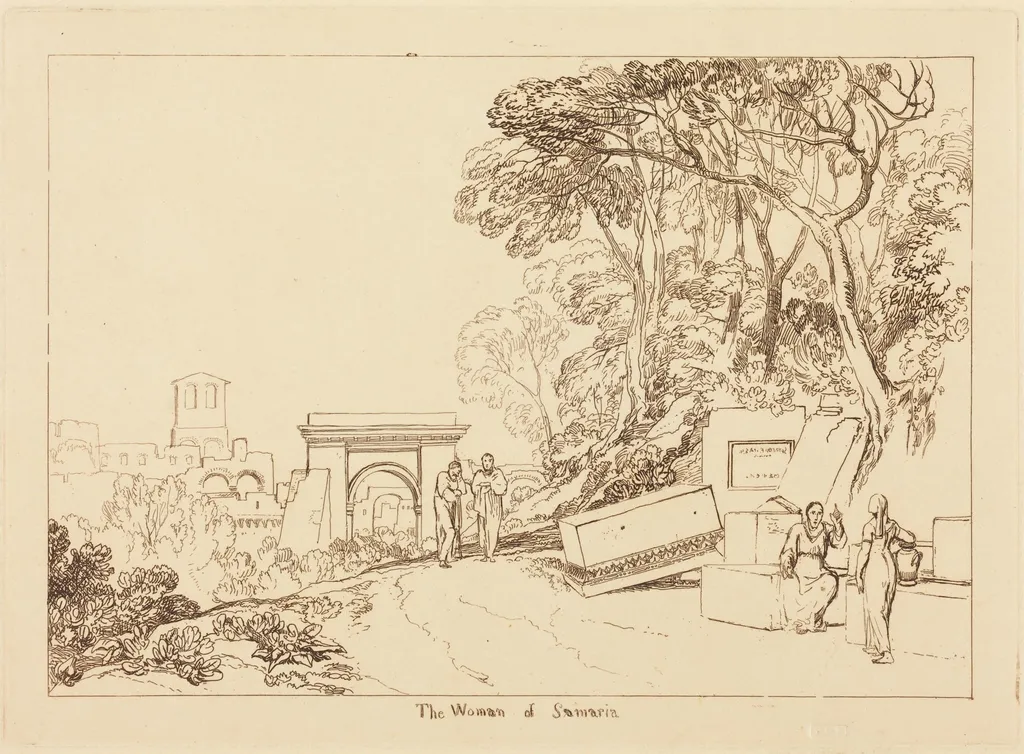
The Woman of Samaria is an ink print by the Romanticist artist Joseph Mallord William Turner. It dates from 1819 and is held in the collection of the National Gallery of Art.
About this work
Overview
Created in 1819, this etching by Joseph Mallord William Turner depicts a quiet moment by a well, drawn in subtle monochrome tones.
Created in 1819, this etching by Joseph Mallord William Turner depicts a quiet moment by a well, drawn in subtle monochrome tones. The composition centers on a woman leaning over the water’s edge, flanked by two male figures in conversation. Architectural elements, a stone arch and distant tower, frame the scene, while foliage softens the background. The work belongs to Turner’s series of biblical-inspired prints, rendered with delicate line work and atmospheric gradations.
Subject & Meaning
The title references the Gospel of John, in which Jesus speaks with a Samaritan woman at a well, a moment symbolizing spiritual revelation and breaking social barriers. Turner’s depiction avoids dramatic narrative, instead focusing on stillness and quiet exchange. The woman’s posture and the men’s distant presence suggest contemplation rather than confrontation, inviting reflection on themes of encounter and grace without overt religious symbolism.
Technique & Style
Turner employed etching to achieve fine, controlled lines that modulate light and texture. The image is rendered in muted browns and grays, with soft washes and delicate hatching to suggest depth and atmosphere. The absence of bold contrasts creates a hazy, introspective mood.
His technique emphasizes tonal variation over sharp definition, aligning with his broader interest in light as an emotional and structural force in landscape and figure composition.
History & Provenance
The etching was produced as part of Turner’s illustrated edition of the Bible, commissioned for private circulation among patrons. It was not widely published during his lifetime but circulated in limited impressions. Early collectors valued it for its poetic interpretation of scripture and technical restraint.
Its provenance traces through British private collections, with later acquisitions by institutional print rooms seeking Turner’s graphic works.
Context
In the early 1820s, Turner was deeply engaged with biblical and literary themes, exploring them through printmaking as an alternative to his large-scale paintings. Etching allowed him to experiment with mood and composition on a smaller scale. This work reflects a broader trend among Romantic artists to infuse sacred narratives with personal, contemplative emotion rather than doctrinal grandeur, aligning with evolving tastes in devotional imagery.
Legacy
Though less known than his oil paintings, this etching exemplifies Turner’s ability to convey narrative depth through minimal means. It influenced later printmakers interested in atmospheric tone and psychological subtlety. The work remains a quiet testament to his skill in translating spiritual themes into understated visual poetry, appreciated today for its restraint and emotional resonance within the history of British printmaking.
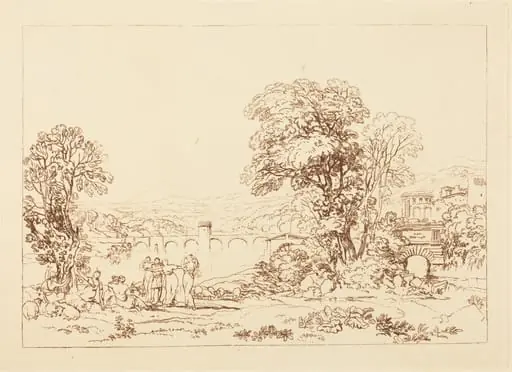
Own this work as a print
Artist & collection
Artist
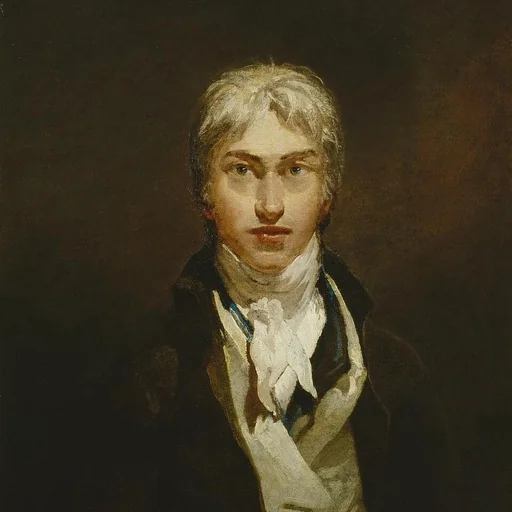
Joseph Mallord William Turner was born in 1775 at Maiden Lane, Covent Garden, where his father kept a barber and wig-making shop.

- Apuleia in Search of Apuleius
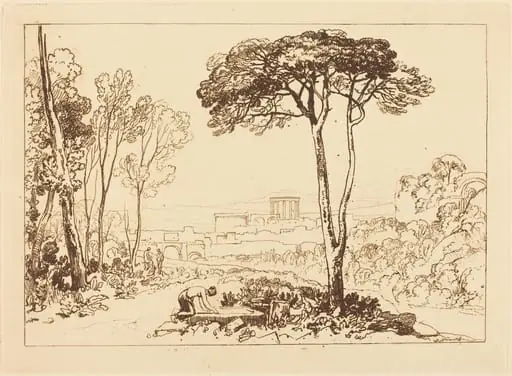 Scene in the Campagna
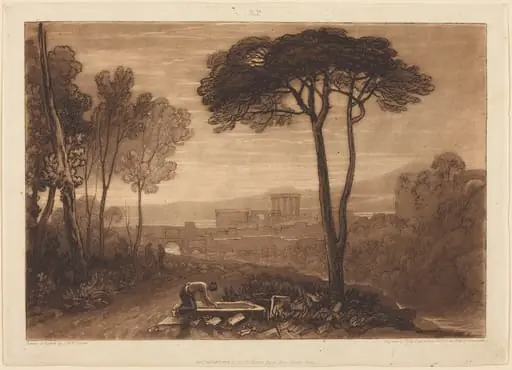 Scene in the Campagna
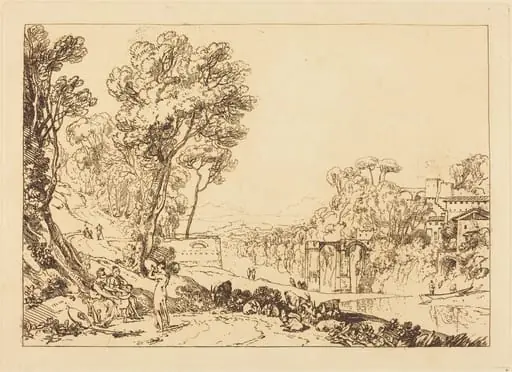 The Woman and Tambourine
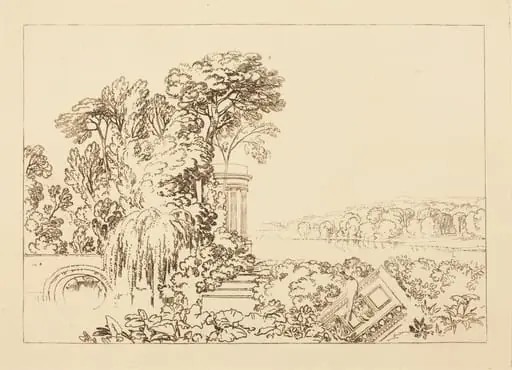 Isis
Isis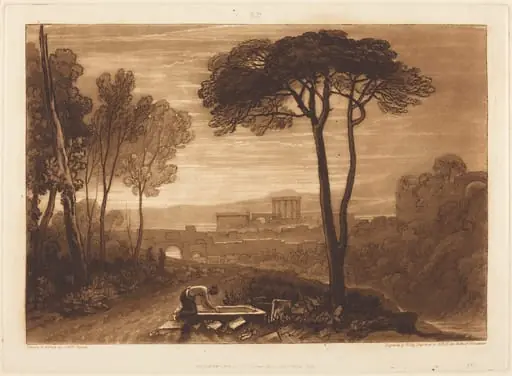 Scene in the Campagna
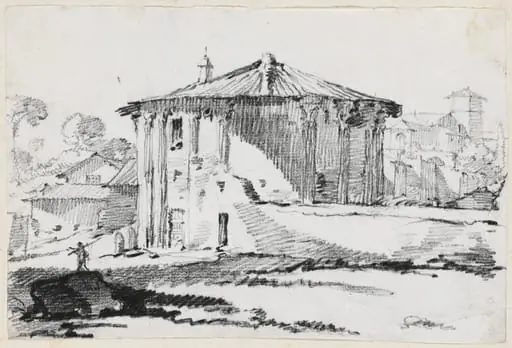 The Round Temple on the Piazza Bocca della Verità, Rome
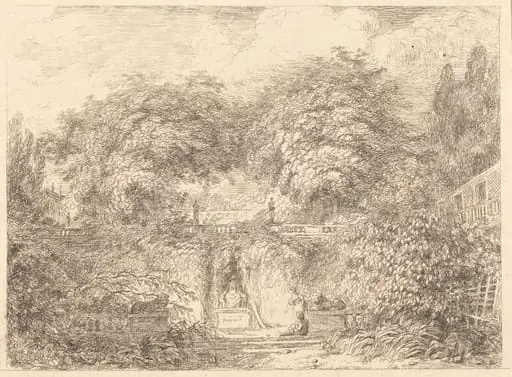 The Little Park (Le petit parc)
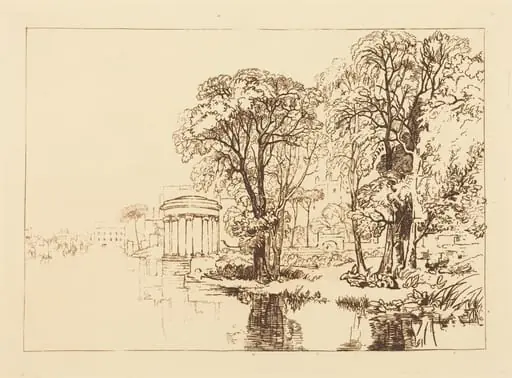 Isleworth
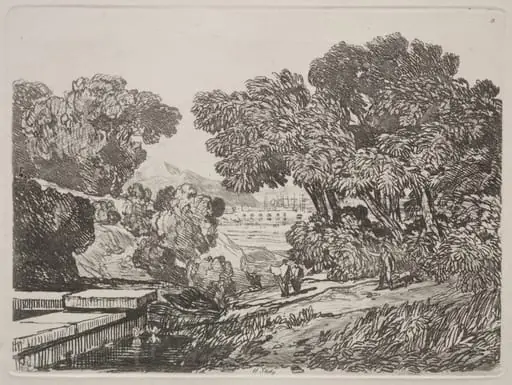 Liber Studiorum: A Study
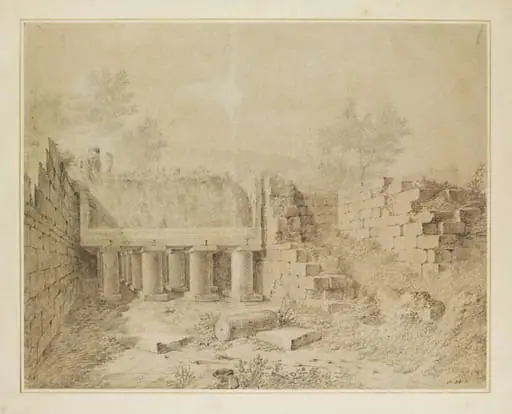 Figures among Classical Ruins, probably in Sicily
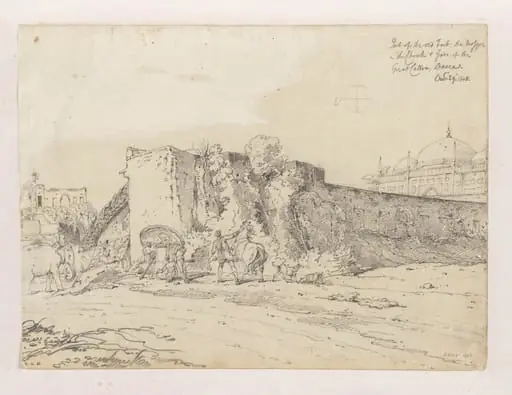 Part of the old fort: the mosque in the chowk and gate of the Great Katra, Dhaka (Dacca)