Artwork
Scene in the Campagna
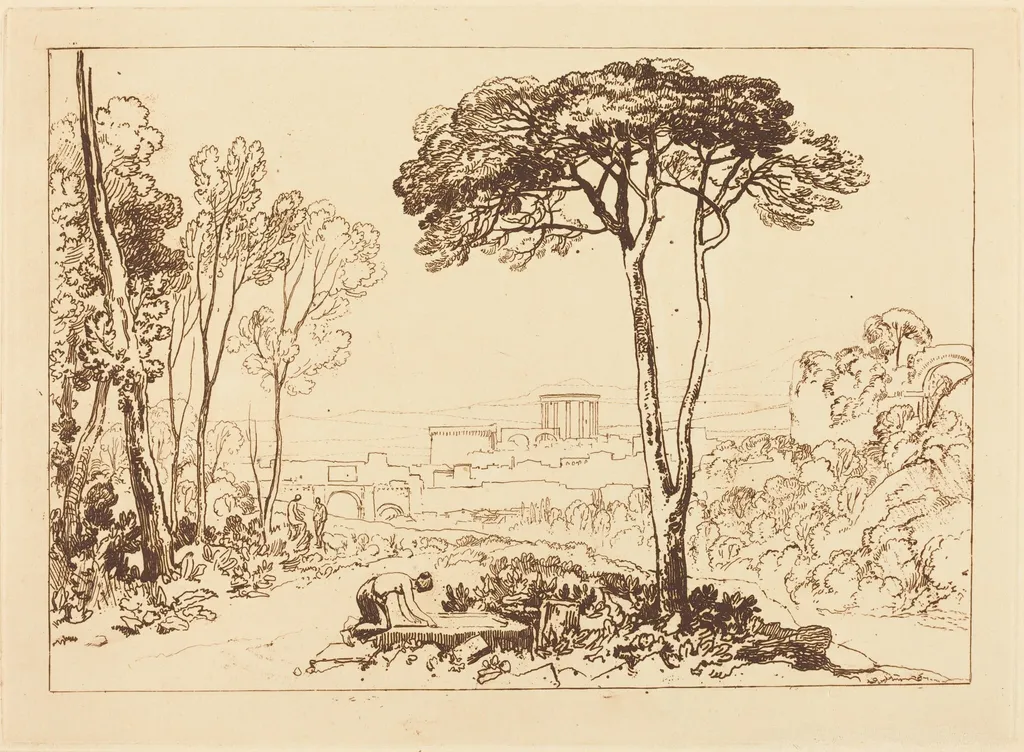
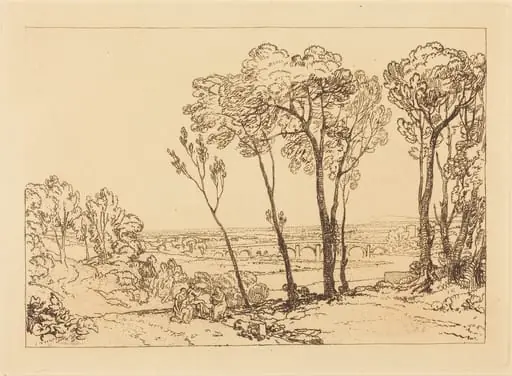
Scene in the Campagna is an ink print by the Romanticist artist Joseph Mallord William Turner. It dates from 1812 and is held in the collection of the National Gallery of Art.
About this work
Overview
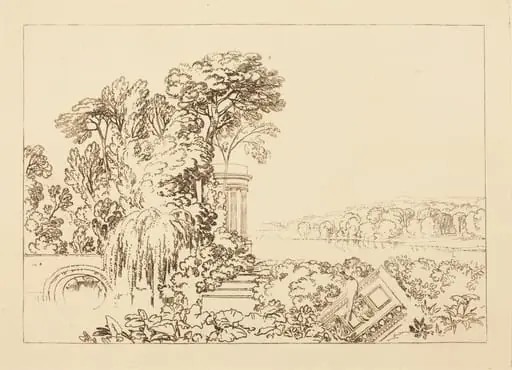
The work depicts a pastoral landscape within the Roman countryside, characterized by a composition of tall, slender trees that frame a distant classical temple.
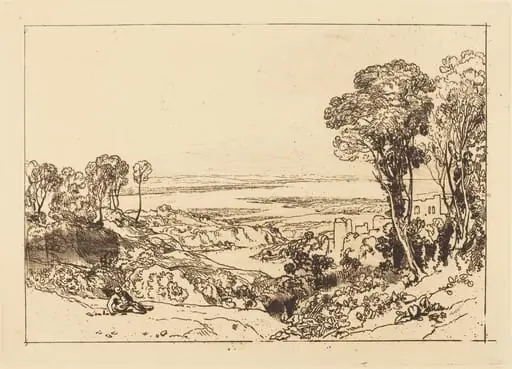
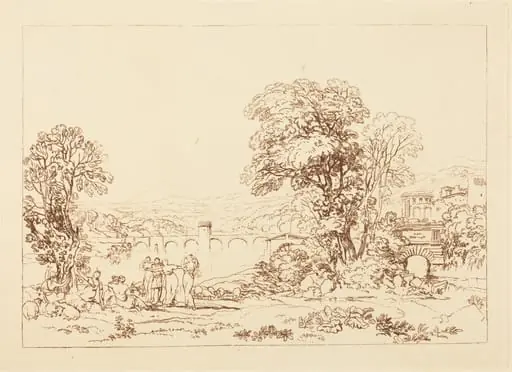
Scene in the Campagna is an etching by the British Romantic artist J.M.W. Turner, created in 1812. The work depicts a pastoral landscape within the Roman countryside, characterized by a composition of tall, slender trees that frame a distant classical temple. Turner employs a loose, scratchy linear style reminiscent of a rapid pencil sketch, utilizing the etching medium to capture the atmospheric quality of the scene rather than precise architectural detail.
In the foreground, a fallen log and scattered bushes provide textural contrast to the verticality of the trees. This piece reflects Turner's sustained interest in Italian landscapes and his exploration of light and atmosphere during the early 19th century. Produced during a period when the artist was actively developing his printmaking practice alongside his oil paintings, the etching demonstrates his ability to translate the immediacy of a sketch into a reproductive medium.
The work stands as a testament to Turner's enduring fascination with the ruins and natural beauty of the Campagna, serving as a study in the interplay between the man-made structures of antiquity and the encroaching natural world.
Subject & Meaning
The composition presents a forested clearing where tall trees frame a small, isolated temple on the horizon. A fallen log and scattered bushes occupy the foreground, suggesting a natural, unmanicured environment that invites contemplation of the passage of time and the quiet dignity of rural ruins.
Technique & Style
Turner employed traditional etching methods, incising the design into a metal plate and allowing ink to settle in the scratched lines. The resulting prints display bold, dark strokes against a pale ground, creating a slightly blurred, dreamlike effect that mirrors the immediacy of a rapid pencil sketch.
History & Provenance
Created in 1812, the print forms part of Turner’s early explorations of landscape etching. While specific ownership records are limited, the work has been catalogued among his printed oeuvre and appears in several museum collections dedicated to British Romantic art.
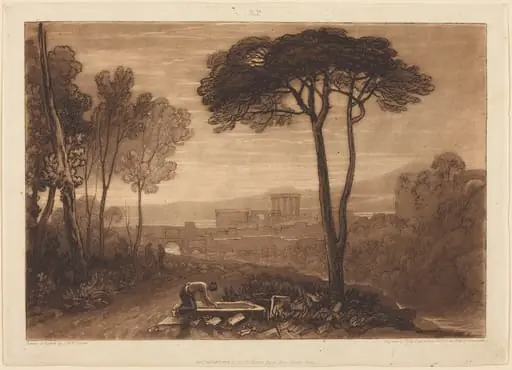
Own this work as a print
Artist & collection
Artist
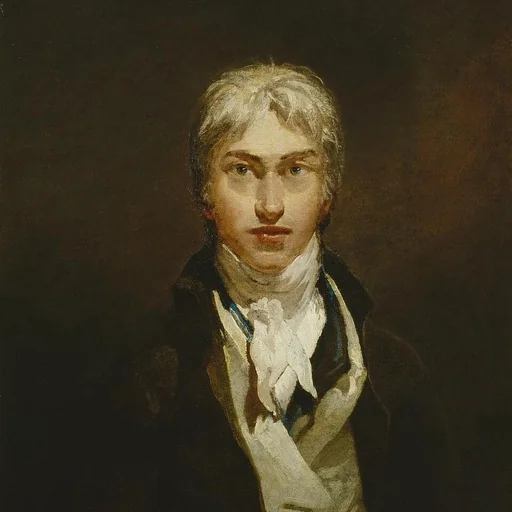
Joseph Mallord William Turner was born in 1775 at Maiden Lane, Covent Garden, where his father kept a barber and wig-making shop.