Artwork
明 佚名 胡笳十八拍圖 卷|Eighteen Songs of a Nomad Flute: The Story of Lady Wenji
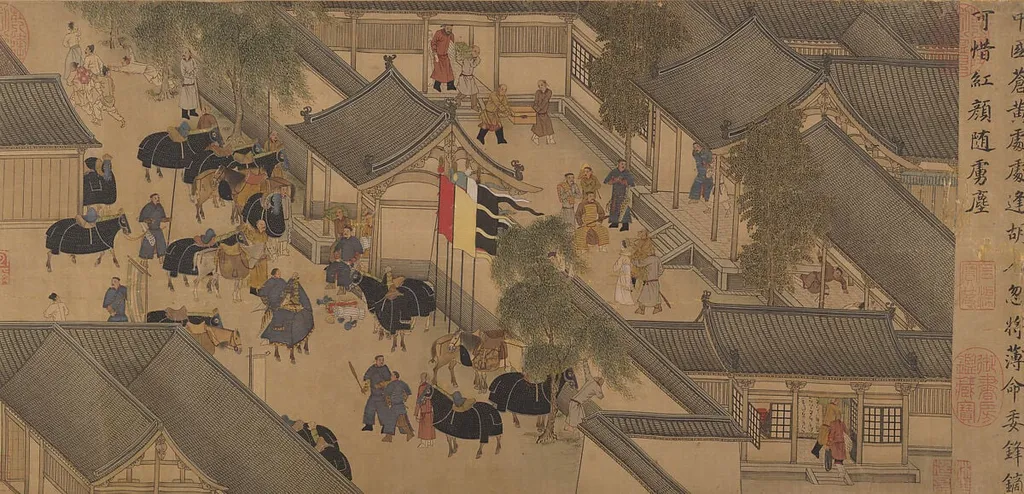
明 佚名 胡笳十八拍圖 卷|Eighteen Songs of a Nomad Flute: The Story of Lady Wenji is an ink painting. It dates from 1416 and is held in the collection of the Metropolitan Museum of Art. This handscroll, titled Eighteen Songs of a Nomad Flute: The Story of Lady Wenji, is an anonymous Ming Dynasty painting.
About this work
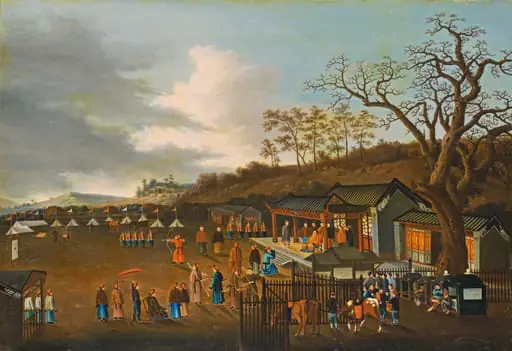
People, horses, and tents move across a landscape in this handscroll telling the story of Lady Wenji, scene by scene with text and pictures together. Everyday moments fill it, riders and figures resting in tents, painted in ink, color, and gold on silk around 1416.
Technique & Style
As a handscroll, the piece is meant to be unrolled gradually, suggesting a controlled handling and viewing context that enhances its formal storytelling rhythm.
The work is a handscroll executed in ink, color, and gold on silk, dating to 1416 and attributed to an anonymous Chinese painter. Its support is silk, typical of Ming‑dynasty handscrolls, and the composition unfolds as a narrative sequence of horse, man, tent, and woman, reflecting a history‑painting genre. The use of gold leaf highlights narrative emphasis, while the ink washes provide delicate tonal modeling.
As a handscroll, the piece is meant to be unrolled gradually, suggesting a controlled handling and viewing context that enhances its formal storytelling rhythm.
History & Provenance
Created in 1416, this handscroll titled Eighteen Songs of a Nomad Flute: The Story of Lady Wenji is attributed to an anonymous Chinese painter. Executed in ink, color, and gold on silk, the work depicts historical scenes including women, men, horses, and tents. The painting currently resides in the collection of the Metropolitan Museum of Art.
While the specific commission details and the identity of the original patron remain unrecorded in the available data, the work is firmly dated to the early fifteenth century within China. Its survival as a Ming dynasty artifact highlights the continued production of narrative history painting during this period, though the precise chain of ownership prior to its acquisition by the museum is not detailed in the provided records.
The handscroll titled Eighteen Songs of a Nomad Flute: The Story of Lady Wenji is held in the collection of the Metropolitan Museum of Art in New York. The work is listed as part of the museum’s holdings, but no specific accession or catalogue number is provided in the available sources. Exhibition records are also absent from the documentation; the painting has not been featured in any published exhibition catalogue according to the sources consulted.
Overview
This handscroll, titled Eighteen Songs of a Nomad Flute: The Story of Lady Wenji, is an anonymous Ming Dynasty painting. It visually narrates the epic tale of Lady Wenji through a sequence of interconnected scenes. Rendered with ink, color, and gold on silk, the artwork unfolds as viewers unroll the scroll, revealing a blend of imagery and accompanying text. The narrative captures various moments of daily life within its expansive landscape.
Subject & Meaning
The central theme of this painting is the poignant narrative of Lady Wenji, a historical figure whose life involved capture by nomadic tribes and eventual return. The handscroll illustrates her experiences through a series of vignettes, depicting scenes of human activity such as horseback riding and encampment within tents. These visual elements, interspersed with textual passages, collectively convey the emotional depth and historical context of her journey and resilience.
Artist & collection

- Untitled
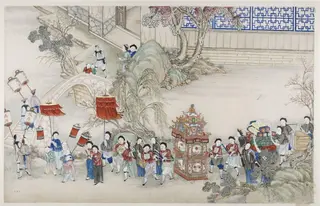 One scene of a wedding: the bride and her dowry on her way to her new home
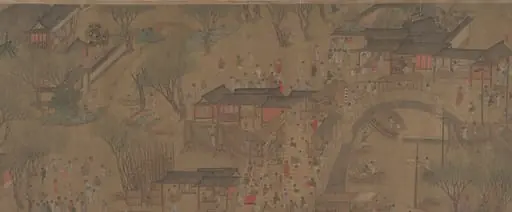 清 佚名 清明上河圖|Going Upriver on the Qingming Festival
 북새선은도
북새선은도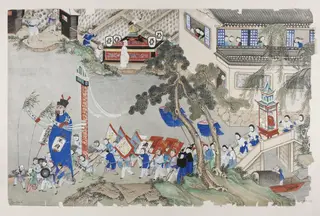 Funeral procession of a woman
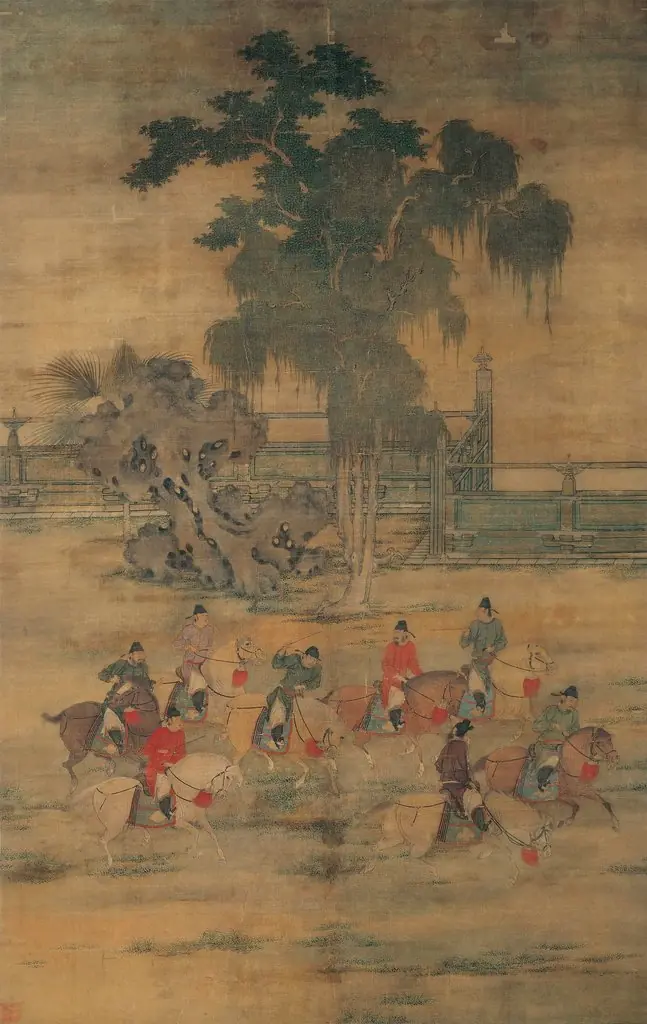 Eight Princes on a Spring Excursion
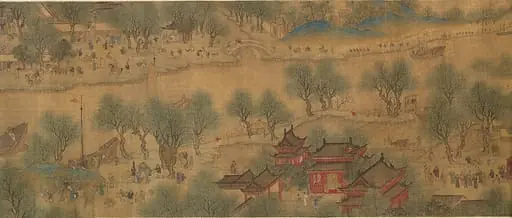 清 佚名 清明上河圖 卷|Spring Festival on the River
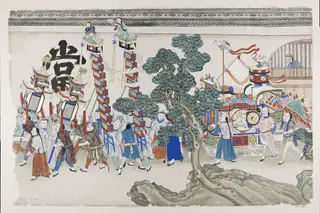 A procession
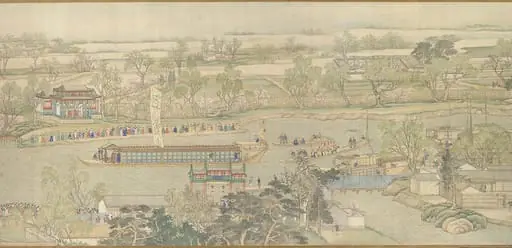 清 徐揚 等 乾隆南巡圖 (第六卷﹕大運河至蘇州) 卷|The Qianlong Emperor's Southern Inspection Tour, Scroll Six: Entering Suzhou along the Grand Canal
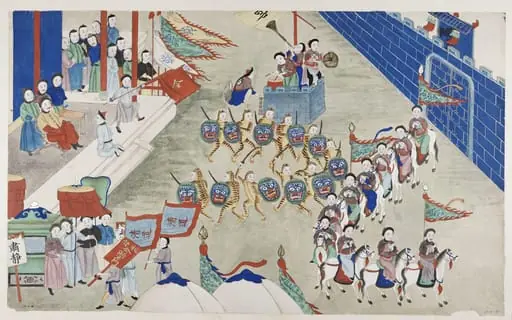 A military review
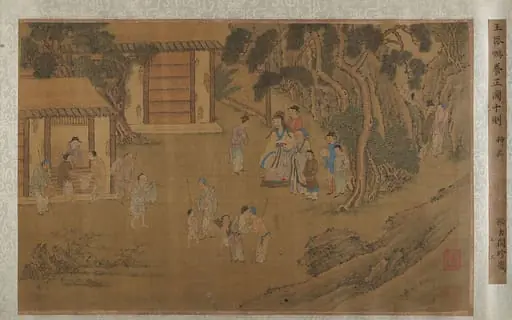 明/清 佚名 舊傳王振鵬 養正圖 卷|Family Training
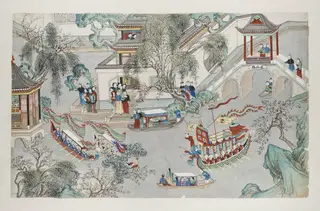 Dragon Boat Festival