Artwork
清 佚名 大勢至菩薩像 軸|Mahasthamaprapta Bodhisattva
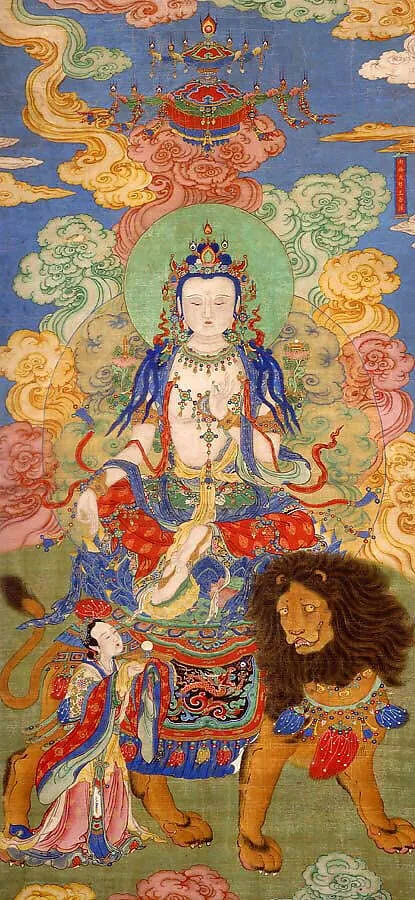
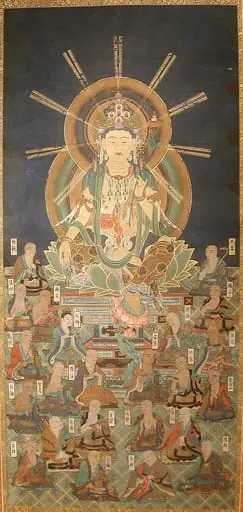
清 佚名 大勢至菩薩像 軸|Mahasthamaprapta Bodhisattva is an ink painting. It dates from 1700 and is held in the collection of the Metropolitan Museum of Art. This anonymous Qing dynasty painting depicts Mahasthamaprapta Bodhisattva, a significant figure in Buddhist tradition.
About this work
Subject & Meaning
Its presence in the Metropolitan Museum of Art underscores its significance as a representative example of 18th‑century Chinese religious painting.
The hanging scroll portrays the bodhisattva Mahasthamaprapta, identified by the accompanying lion motif and Buddhist context. In Mahayana iconography the lion signifies strength and fearless compassion, attributes traditionally linked to this savior figure who assists devotees in reaching the Pure Land of Amitabha. The work, dated to 1700 and executed in ink and color on silk, functions as a devotional image within Chinese Buddhist practice, embodying the promise of spiritual rescue and the compassionate intercession of the bodhisattva.
Its presence in the Metropolitan Museum of Art underscores its significance as a representative example of 18th‑century Chinese religious painting.
Technique & Style
Executed in 1700, this religious artwork is a hanging scroll created with ink and color on a silk support. The piece originates from China and features the Bodhisattva Mahasthamaprapta accompanied by a lion, adhering to Buddhist iconographic traditions. While the specific painter remains anonymous, the work demonstrates the formal qualities typical of Qing dynasty religious painting through its use of vibrant pigments and linear definition on the textile ground.
The substantial dimensions of the scroll, measuring approximately 207.6 cm in height and 97.8 cm in width, indicate it was designed for prominent display within a devotional context. The combination of ink outlines and applied color on silk reflects standard technical practices for large-scale figural representations of this period.
History & Provenance
The Mahasthamaprapta Bodhisattva scroll, catalogued as 清 佚名 大勢至菩薩像 軸, is dated to 1700 and attributed to an anonymous Chinese painter. Executed in ink and color on silk as a hanging scroll, it functions as a Buddhist devotional image featuring a lion and Bodhisattva motifs. The work was produced in China and subsequently entered the collection of the Metropolitan Museum of Art, where it is presently housed. No further documentation of its ownership chain or commissioning patron is recorded in the available sources.
Context
The hanging scroll dated 1700, attributed to an anonymous Qing painter, exemplifies Buddhist devotional art in early eighteenth‑century China. Executed in ink and polychrome on silk, it portrays Mahasthamaprapta Bodhisattva accompanied by a lion, a motif linked to Pure Land worship. The work belongs to the Metropolitan Museum of Art collection and has been referenced in scholarship on Qing religious painting as a representative example of the period’s iconographic synthesis.
Its stylistic analysis contributes to broader studies of anonymous Buddhist artists and the transregional transmission of Mahayana iconography.
Overview
This anonymous Qing dynasty painting depicts Mahasthamaprapta Bodhisattva, a significant figure in Buddhist tradition. Rendered with ink and color on silk as a hanging scroll, the artwork presents the bodhisattva in a characteristic state of tranquility. The composition features the central figure encircled by lions, a common motif in religious iconography, contributing to the overall delicate and intricate visual design.
Artist & collection

 Untitled
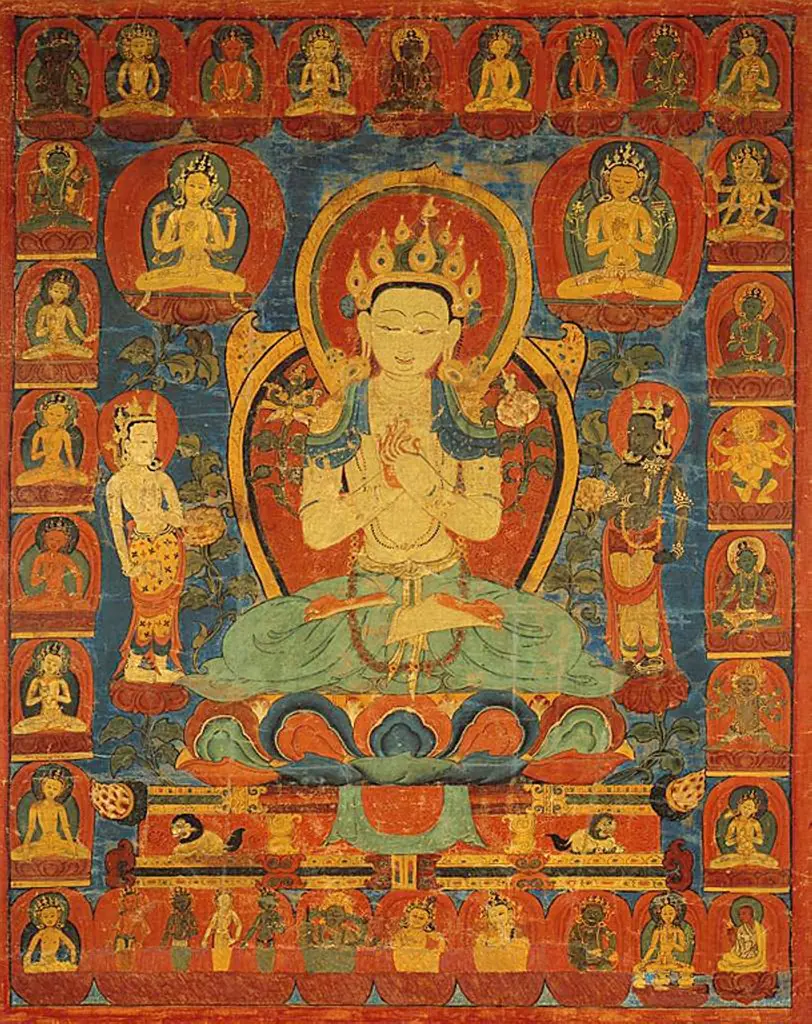 Painted Banner (Thangka) of Bodhisattva Maitreya Surrounded by his Retinue
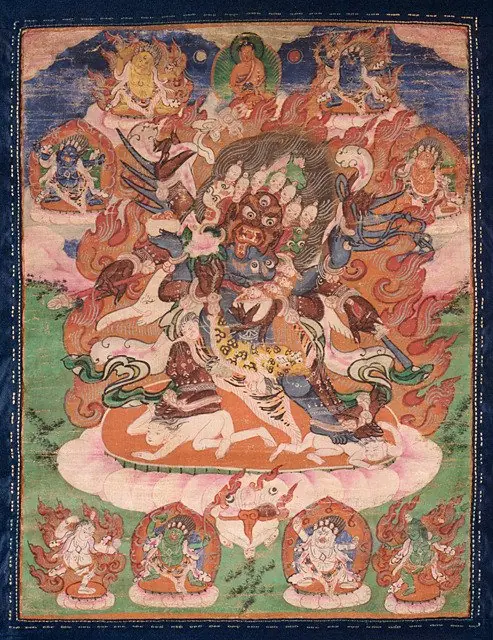 Garuda-Feathered Hayagriva and Consort
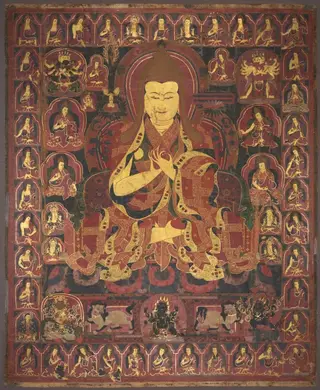 Tsong Khapa, Founder of the Geluk Order
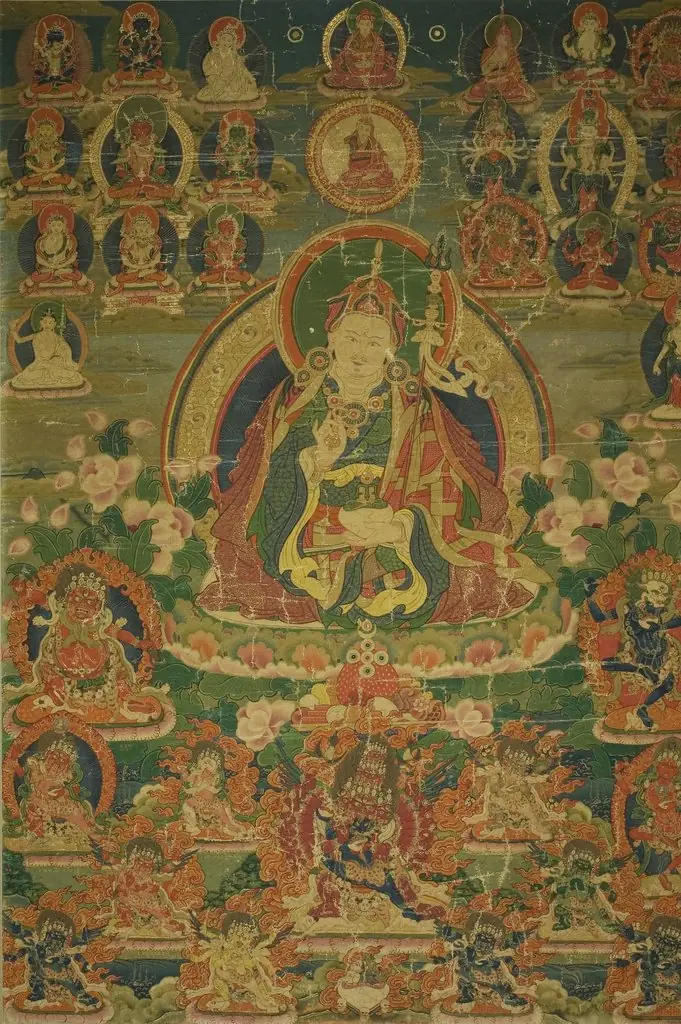 Painted Banner (Thangka) of Sage Guru Padmasambhava Seated Holding a Thunderbolt (Vajra) and Skull Cup (Kapala)
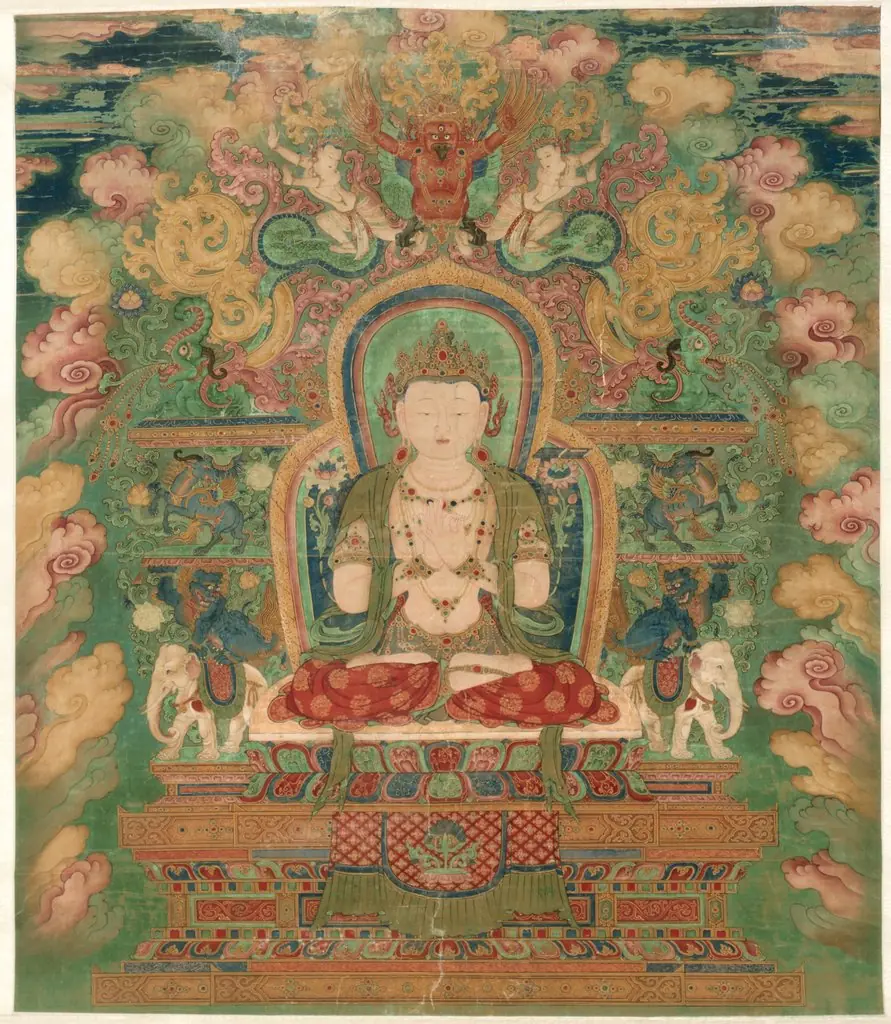 Manjushri
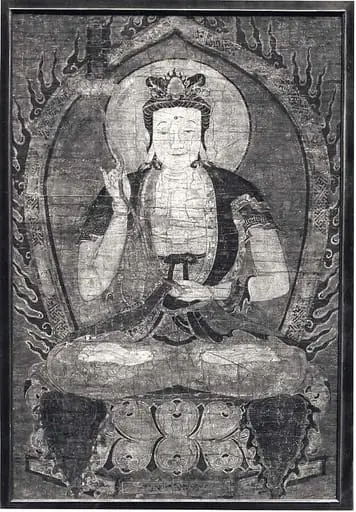 Untitled
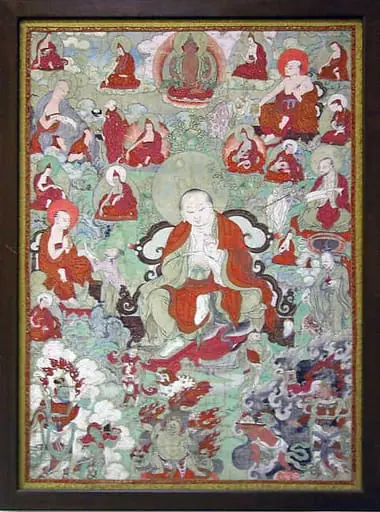 Untitled
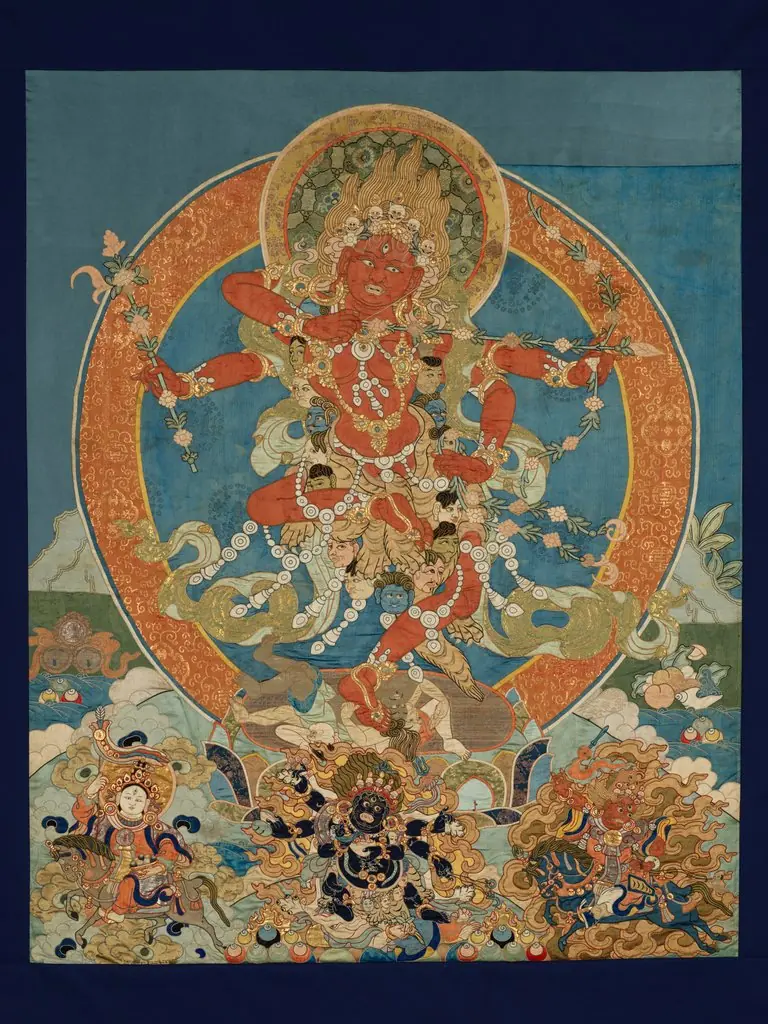 The Goddess Kurukulla