Artwork
紙人形|Paper Doll Clothing
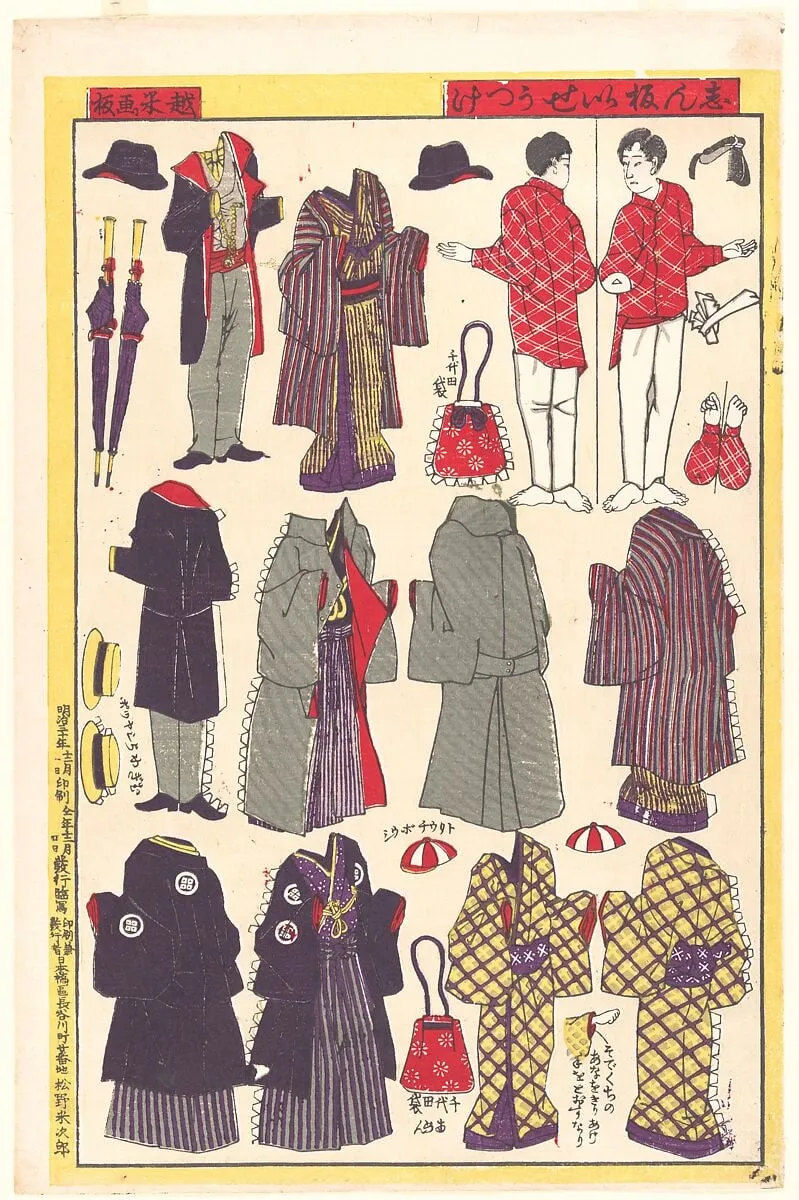
紙人形|Paper Doll Clothing is an ink print by the Impressionist artist Unknown. It dates from 1898 and is held in the collection of the Metropolitan Museum of Art. The work is a three‑panel woodblock print, known as nishiki‑e, depicting a series of paper dolls dressed in a variety of garments.
About this work
Overview
The work is a three‑panel woodblock print, known as nishiki‑e, depicting a series of paper dolls dressed in a variety of garments. Rendered in ink and vivid pigments on paper, the composition presents eight figures arranged in pairs, each showcasing a distinct outfit that ranges from traditional Japanese robes to Western‑influenced jackets and hats.
Subject & Meaning
The dolls function as a visual catalogue of contemporary fashion, illustrating how traditional and imported styles could be combined. By presenting the figures in matching pairs, the print invites viewers to consider mix‑and‑match possibilities, suggesting a playful engagement with clothing and identity.
Technique & Style
Executed as a triptych of nishiki‑e, the print employs multiple woodblocks to achieve a rich palette of reds, yellows, purples and other bright hues. Fine ink lines define the figures and accessories, while flat areas of color create contrast against the light background, a hallmark of late‑19th‑century Japanese commercial prints.
History & Provenance
The piece belongs to a genre of ukiyo‑e prints that catered to a growing market for fashion illustration and children's amusements. Produced during a period when Western dress was increasingly visible in Japan, the work reflects the cultural exchange of the Meiji era.
Context
Printed at a time when paper dolls were both toys and tools for teaching dress etiquette, the image aligns with other contemporary publications that blended entertainment with instructional content. The inclusion of umbrellas, gloves and bags underscores the expanding range of everyday accessories in urban Japan.
Artist & collection









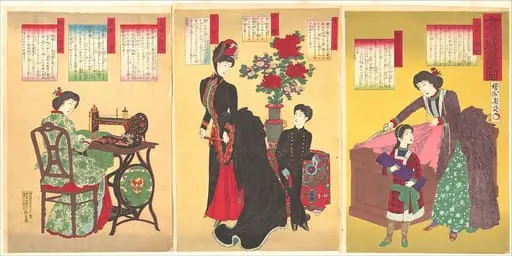
- 楊洲周延画 『女官洋服裁縫之図』|Court Ladies Sewing Western Clothing (Jokan yōfuku saihō no zu)
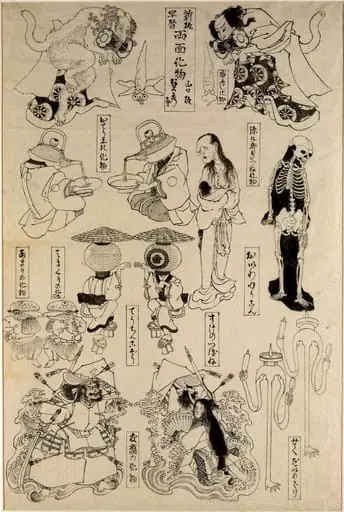 Fox-Genkurô and Others
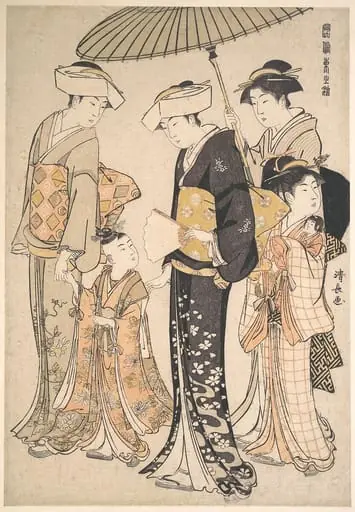 「風俗東之錦」 姫君と侍女四人|High-Ranking Samurai Girl with Four Attendants, from the series A Brocade of Eastern Manners (Fūzoku Azuma no nishiki)
 Untitled
 Untitled
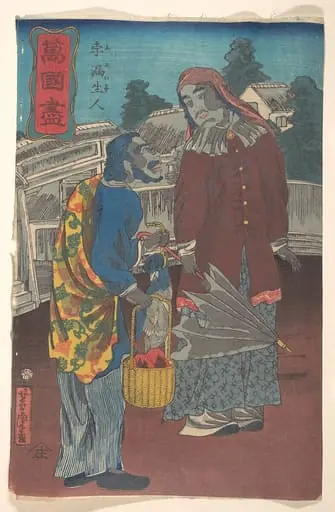 Porosiajin|A Prussian Couple
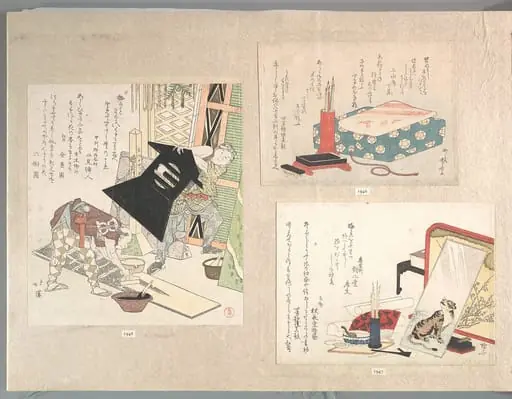 文具一式|Writing Set and Poem Card Box (Shikishi-bako), from Spring Rain Surimono Album (Harusame surimono-jō), vol. 1
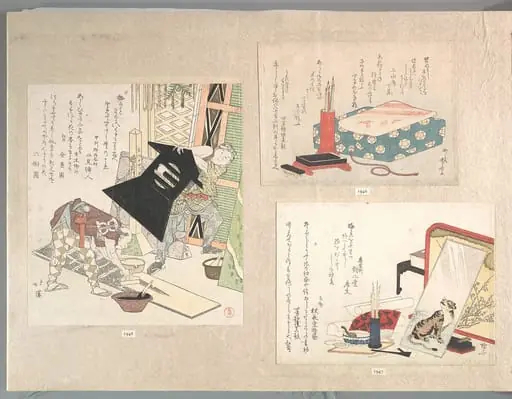 衝立、虎図、文具一式|Desk Screen, Writing Set, Painting of Tiger, and Mounting Paraphernalia, from Spring Rain Surimono Album (Harusame surimono-jō, vol. 1)
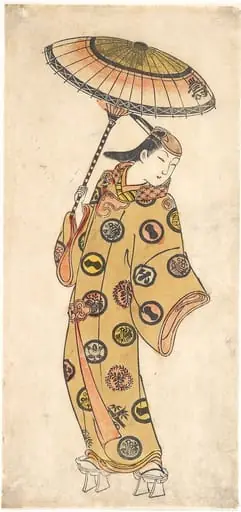 Untitled
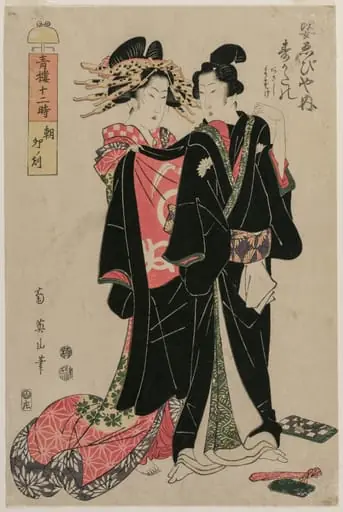 Sugatano of Sugata Ebisuya in the Morning, Hour of the Rabbit, from the series The Twelve Hours in the Pleasure Quarters
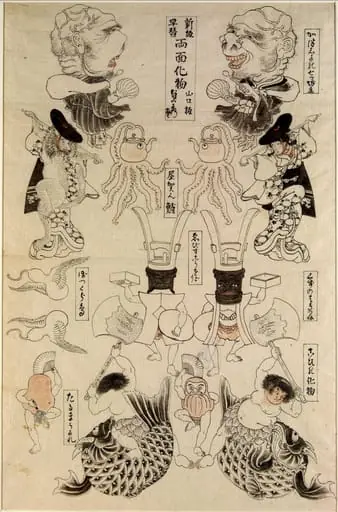 Mendicant Monk in Katsushika and Others
 三代歌川広重画 『東京名所 従上野公園 不忍池中嶋弁天之景』|View of Benten Shrine on Nakanoshima Island in Shinobazu Pond, Ueno Park, from the series Famous Views of Tokyo (Tōkyō Tokyo meisho yori Ueno kōen Shinobazu no ike Nakanoshima Benten no kei)