Artwork
Untitled
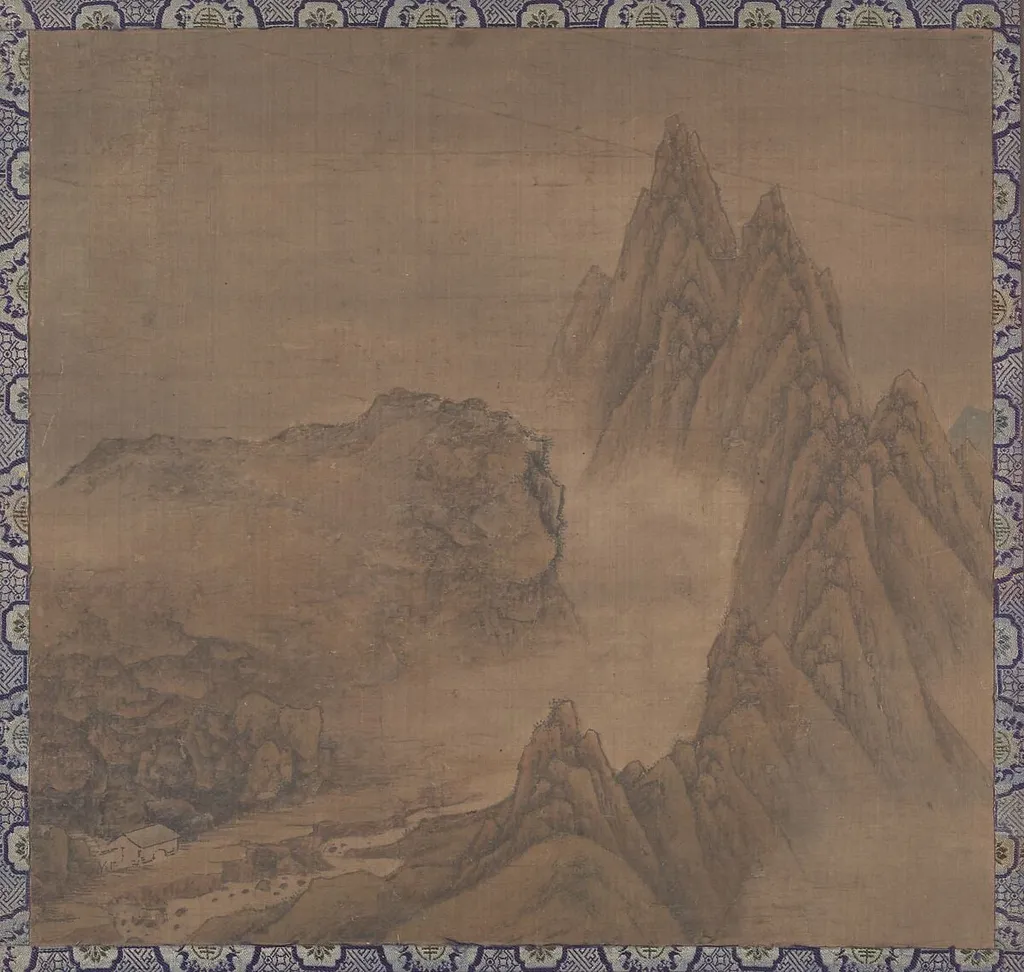
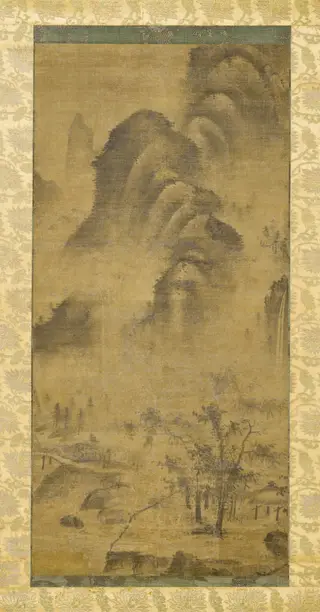
Untitled is an ink painting by the Chinese Orthodox School artist After Pei Kuan. It dates from 1639 and is held in the collection of the Metropolitan Museum of Art.
About this work
Subject & Meaning
The anonymous attribution aligns with literati practices in which the maker's identity is often secondary to the evocation of natural order.
The work depicts a mountainous landscape, a motif recurrent in Chinese painting traditions that conveys endurance, contemplation, and the harmony between human and nature. The anonymous attribution aligns with literati practices in which the maker's identity is often secondary to the evocation of natural order. The album-leaf format suggests the composition was intended for intimate, meditative viewing rather than public display, reinforcing the image's capacity to evoke stillness and timelessness.
Technique & Style
The work is rendered as an album leaf on silk using ink and color, consistent with Chinese painting conventions of the early seventeenth century. The handling emphasizes delicate brushwork and subtle tonal gradations to articulate the layered recession of mountain forms, favoring attenuated, textured brushstrokes for rocky outcrops and softer washes for atmospheric recession. The refined palette and intimate format suggest a studio-made object intended for scholarly appreciation rather than monumental display.
History & Provenance
Created in 1639 in China, this album leaf depicts a mountainous landscape rendered in ink and color on silk. The work is attributed to an anonymous artist working after Pei Kuan and measures 38.1 cm in height and 40 cm in width. It resides in the collection of the Metropolitan Museum of Art, where it is catalogued under accession number 23.33.2, having entered the museum's paintings collection as a landscape work depicting mountains.
No further details regarding its commission or ownership history prior to acquisition are provided in the available records.
Overview
This untitled album leaf, executed in ink and color on silk around 1639, is attributed to an artist working in the style of Pei Kuan. It presents a dramatic mountain landscape, characteristic of traditional Chinese painting. Designed for intimate contemplation, its small scale invites close viewing, revealing intricate details and subtle atmospheric effects.
Context
As an album leaf, this painting was intended for private appreciation rather than public display. Its intimate format encouraged personal reflection, a common practice in Chinese scholarly and artistic circles. The artist chose not to sign the work, a convention that sometimes indicated a focus on the tradition or the subject matter over individual authorship.
Artist & collection

- Untitled
 Gathering of Government Officials
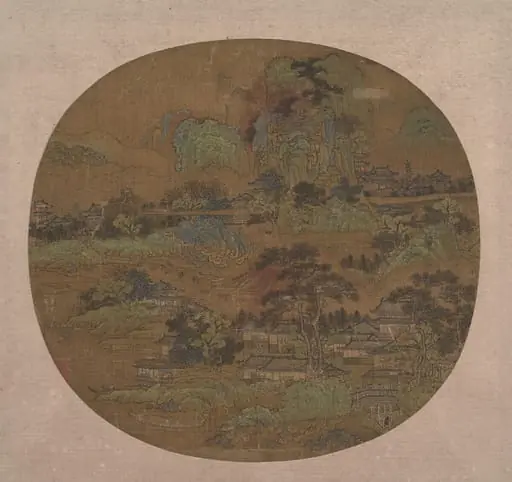 明 佚名 樓閣江帆圖 團扇|Village and Temples in Jiangnan
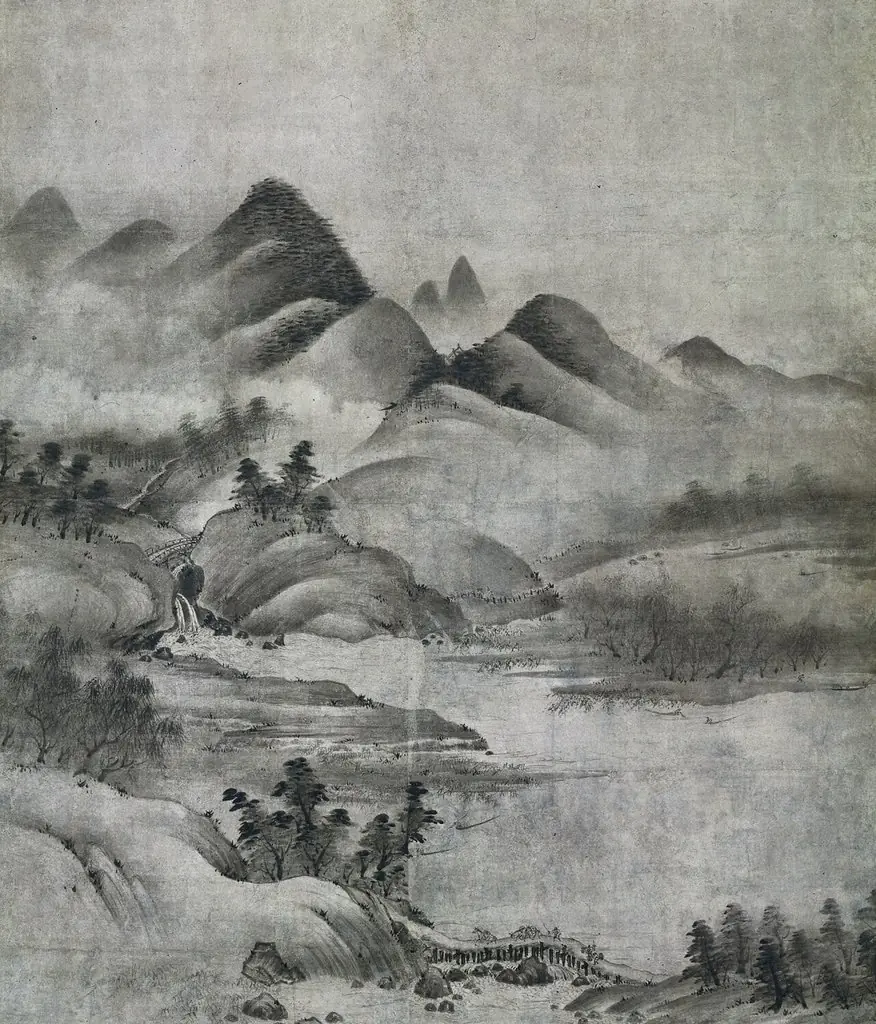 Landscape
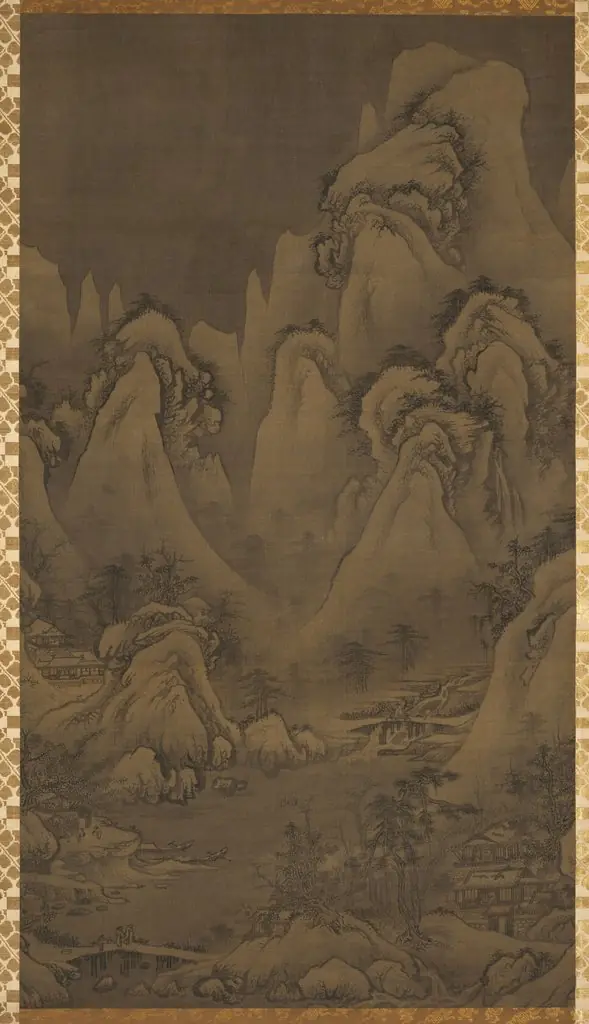 Winter Landscape
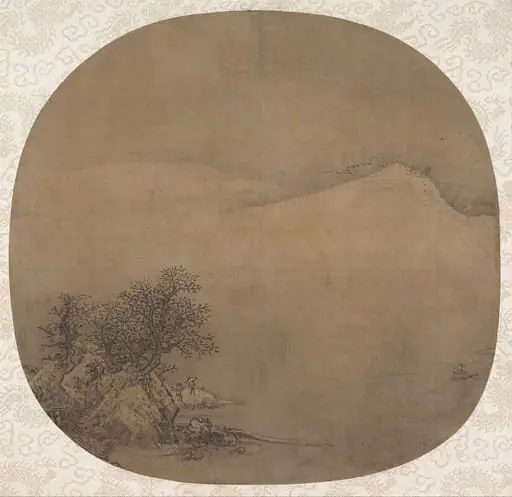 南宋 佚名 雪景待渡圖 團扇|Waiting for the Ferry
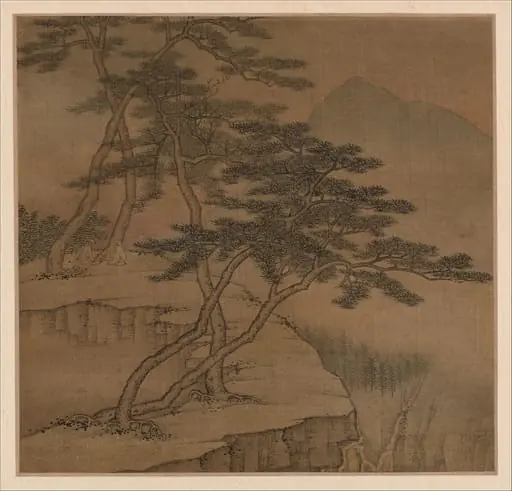 清 高岑 擬古山水圖 冊 絹本|Landscapes in the styles of old masters
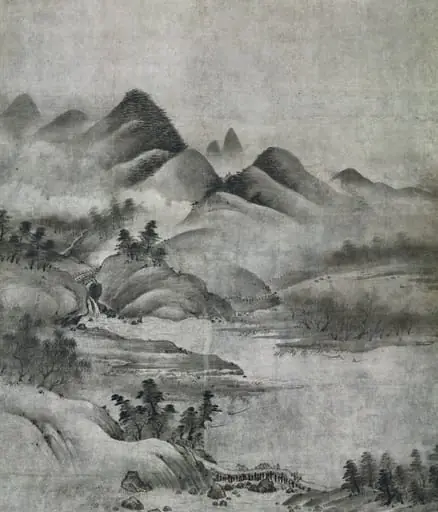 Landscape
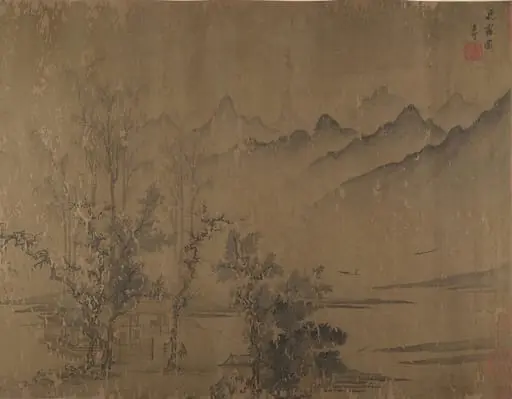 Untitled
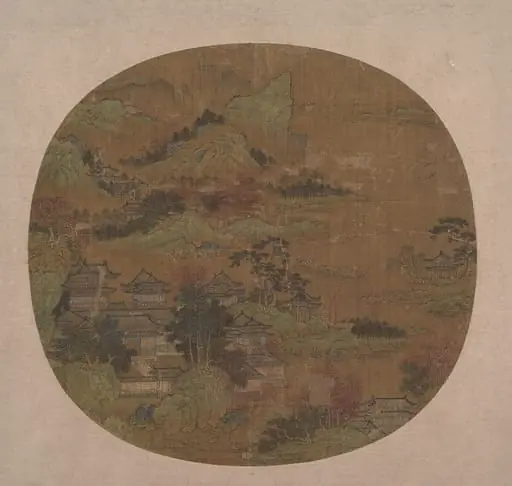 明 佚名 樓觀松風圖 團扇|Palaces among Autumn Mountains
 Landscape
 Landscape in the Style of Juran