Artwork
Untitled
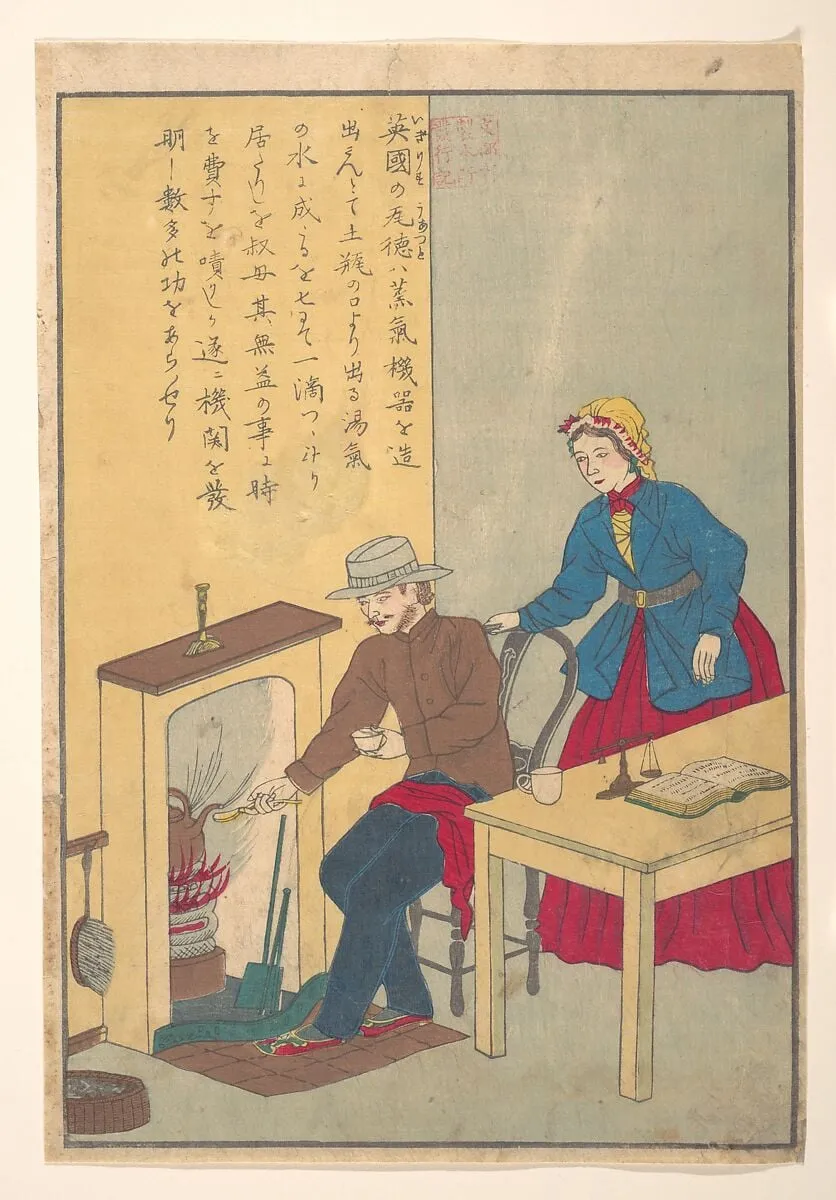
Untitled is an ink print by the Impressionist artist Unknown. It dates from 1870 and is held in the collection of the Metropolitan Museum of Art. This woodblock print depicts an intimate domestic moment, rendered in ink and color on paper.
About this work
Overview
Two figures occupy a modest interior: a man seated near a small stove, stirring a pot, and a woman standing beside him, holding a teapot.
This woodblock print depicts an intimate domestic moment, rendered in ink and color on paper. Two figures occupy a modest interior: a man seated near a small stove, stirring a pot, and a woman standing beside him, holding a teapot. The room is sparsely furnished, with a table bearing a book, a scale, and scattered objects.
Bare walls and worn flooring emphasize simplicity. Japanese script on the paper suggests a connection to everyday life in early 20th-century Japan.
Subject & Meaning
The scene captures a quiet, unremarkable moment of domestic routine, preparing food or tea. The man’s focused gesture and the woman’s attentive gaze imply shared labor and quiet companionship. The presence of a scale hints at careful measurement, perhaps of rations or ingredients, reflecting economic restraint. The absence of decoration or luxury underscores a life defined by necessity rather than ornament.
Technique & Style
The print employs traditional woodblock techniques, with clean lines and muted, deliberate coloration. The figures are rendered with subtle detail, while the background remains minimal, directing focus to their interaction. Ink washes suggest texture in clothing and flooring without overt realism. The composition is tightly framed, enhancing the sense of enclosure and intimacy within the small space.
History & Provenance
Though unsigned and undated, the print aligns with early 20th-century Japanese printmaking traditions, possibly from the Shōwa period. Its subject matter and script suggest it was produced for a domestic or educational audience, not as fine art for collectors. No documented provenance exists, but similar works were commonly distributed as illustrations in periodicals or as affordable prints for middle-class homes.
Context
In early 20th-century Japan, urban and rural households often relied on small stoves for heating and cooking, with tea preparation as a daily ritual. The scale may reflect wartime or postwar rationing practices. Prints like this emerged as part of a broader movement documenting ordinary life, distinct from the grander themes of ukiyo-e, offering instead a quiet record of working-class existence.
Legacy
This print contributes to a lesser-known strand of Japanese printmaking that prioritized realism over idealization. It reflects a shift in artistic focus toward the mundane, influencing later documentary and social realist works. While not widely exhibited, such images remain valuable for their unembellished portrayal of daily resilience and domestic rhythm in modernizing Japan.
Artist & collection









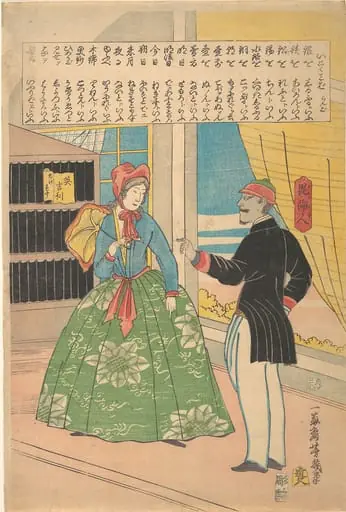
- Igirisu to korombojin|English Woman with Black Man
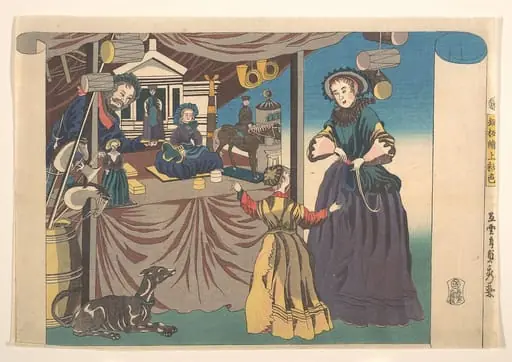 Doban-e Jōgyō shiki|Color Print of a Copperplate Picture of a Toy Shop
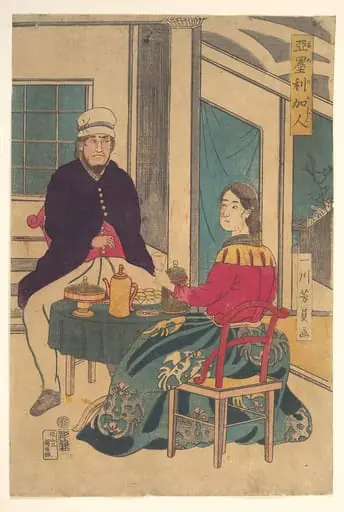 亜墨利加人|Amerikajin
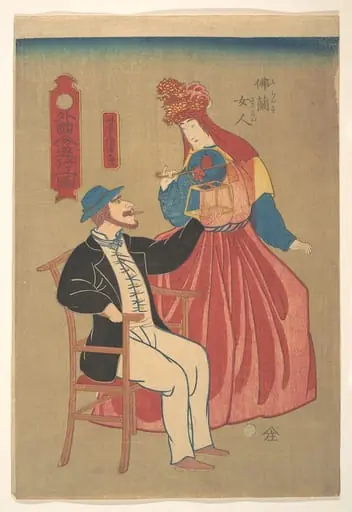 Furansu nyōjin|French Housewife and Her Husband
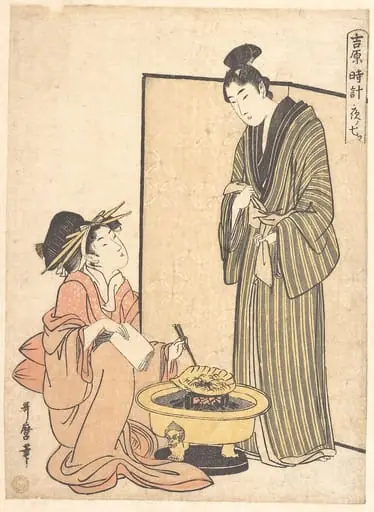 吉原時計 夜の七つ|The Seventh Hour of the Night
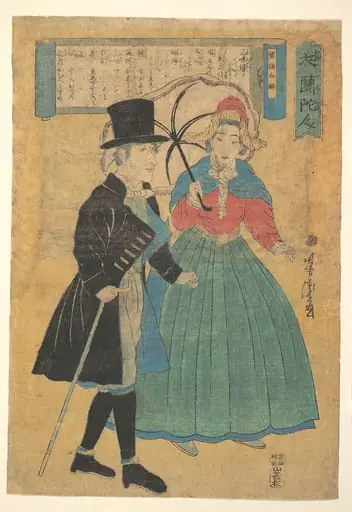 Orandajin|A Dutch Couple
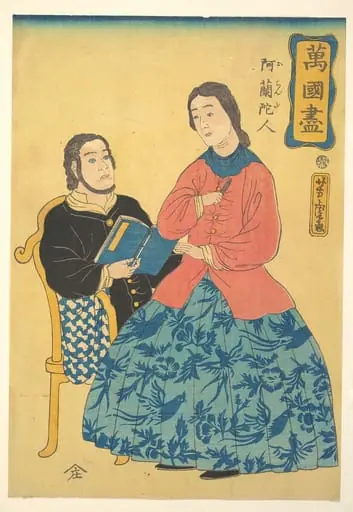 Orandajin|Dutchmen
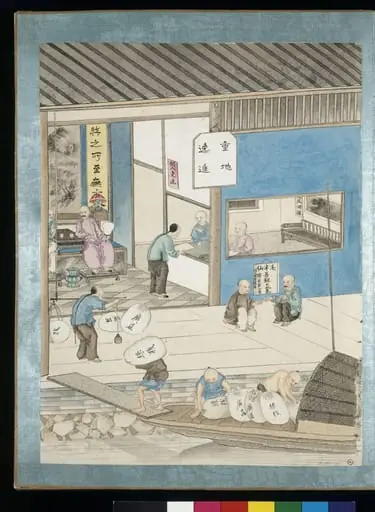 Unloading at Silk Merchant's Shop
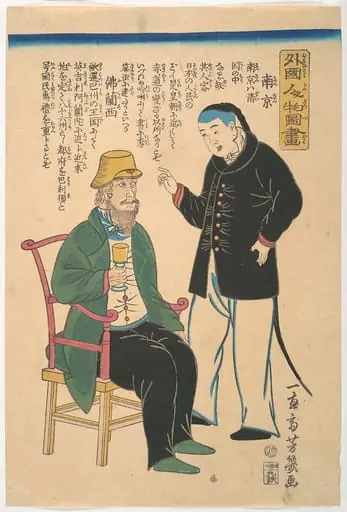 Oroshia|Chinese Servant and Frenchman
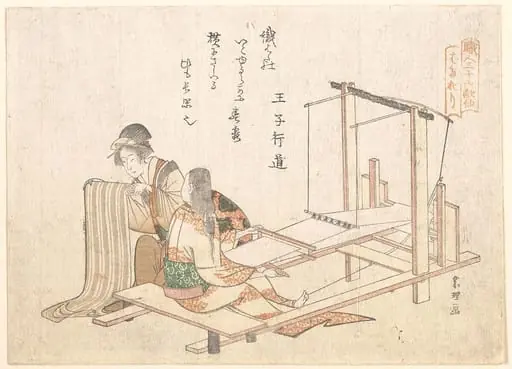 Hata-ori|職人三十六歌仙|The Weaving Factory
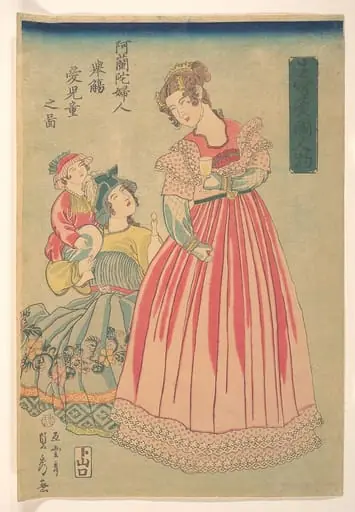 歌川五雲亭貞秀画 『生写異国人物 阿蘭陀婦人舉觴 愛児童之図』|Dutch Woman and Child (Seisha ikoku jinbutsu Oranda fujin aijidō no zu)
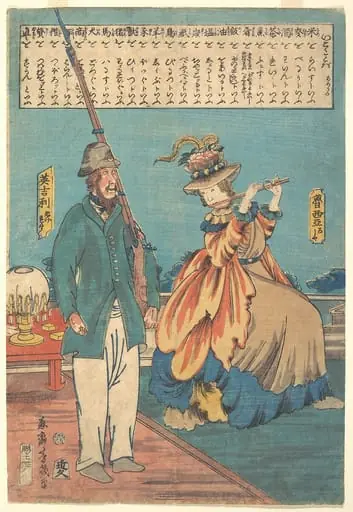 魯西亞 ・英吉利|An English Man and a Russian Woman