Artwork
明/清 佚名 趙伯駒(僞款) 漢宮春曉圖 卷|Spring Morning at the Palace of the Han Emperors
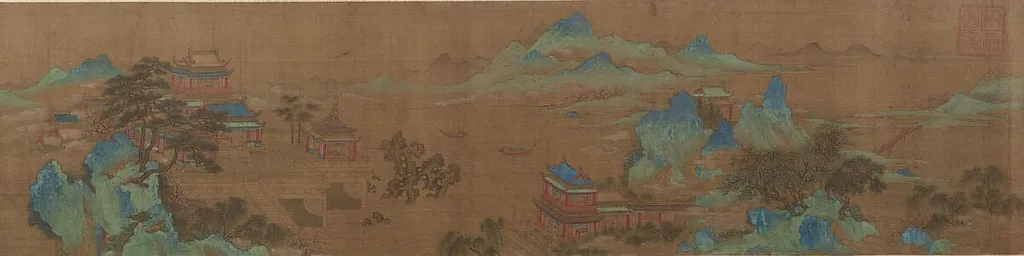
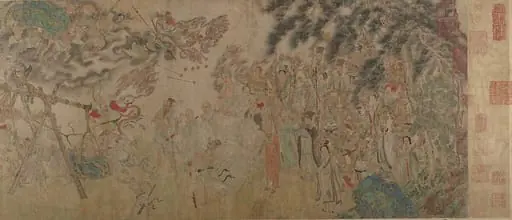
明/清 佚名 趙伯駒(僞款) 漢宮春曉圖 卷|Spring Morning at the Palace of the Han Emperors is an ink painting by the Baroque artist After Zhao Boju. It dates from 1649 and is held in the collection of the Metropolitan Museum of Art.
About this work
Technique & Style
Although the scroll bears a spurious signature attributing it to the Song dynasty artist Zhao Boju, the actual creator remains anonymous.
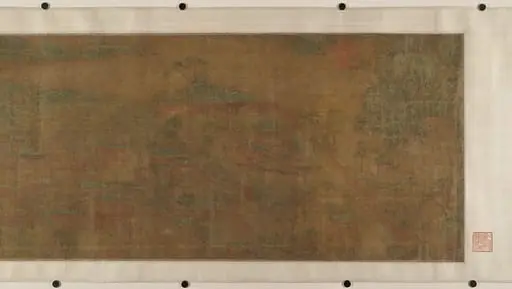
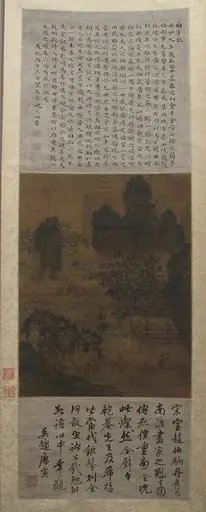
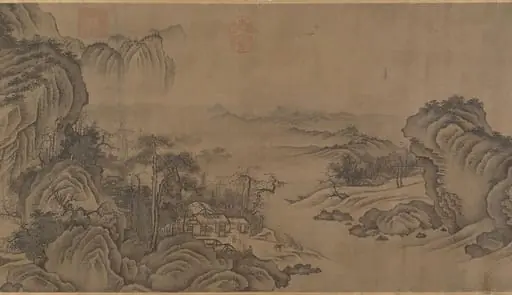
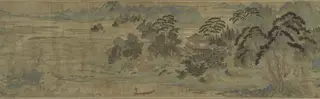
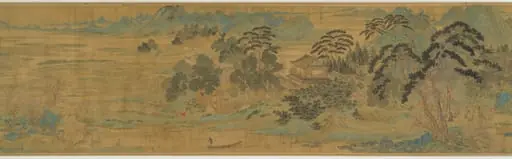
Executed in 1649, this work is a handscroll painted with ink and color on a silk support. The piece functions as a landscape painting, depicting mountains and boats within its composition. Although the scroll bears a spurious signature attributing it to the Song dynasty artist Zhao Boju, the actual creator remains anonymous.
The medium and format align with traditional Chinese painting practices, utilizing the continuous narrative potential of the handscroll to present the scenic elements.
History & Provenance
The handscroll known as Spring Morning at the Palace of the Han Emperors, bearing a false signature of the Song dynasty artist Zhao Boju, was created in 1649. This work, executed in ink and color on silk, is attributed to an anonymous painter active during the Ming or Qing periods. The piece depicts a landscape featuring mountains and boats.
It is currently held in the collection of the Metropolitan Museum of Art. The attribution to Zhao Boju is explicitly identified as a pseudonymous addition, indicating the work is a later imitation rather than an original by the historical figure. No specific accession or inventory number and no exhibition history are documented in the available sources.
Context
The handscroll Spring Morning at the Palace of the Han Emperors, dated 1649 and attributed to an anonymous follower of Zhao Boju, exemplifies Qing-era landscape painting through its delicate ink-color technique on silk. Its composition, featuring a boat and mountainous terrain, reflects the continuation of court-painting aesthetics from the Ming into the early Qing period. The painting's inclusion in the Metropolitan Museum of Art's collection has facilitated technical studies that reinforce its role in tracing the evolution of Chinese landscape art.
Overview
This handscroll, dated 1649, depicts the theme of Spring Morning in the Han Palace, a subject famously associated with the Southern Song painter Zhao Boju. Executed in ink and color on silk, the work presents a continuous narrative of palace life set within a lush, misty landscape. The composition unfolds horizontally, guiding the viewer through winding rivers, arched bridges, and enclosed gardens populated by tiny, meticulously rendered figures engaged in leisurely activities such as strolling, boating, and crossing bridges under willow trees.
Although the scroll bears a signature attributing it to the 12th-century master Zhao Boju, art historical analysis identifies it as a later imitation, likely created during the mid-17th century. This attribution reflects a common practice in Chinese art history where later artists adopted the styles and signatures of revered predecessors to align with established aesthetic traditions. The work serves as a significant example of the enduring influence of the Southern Song court style on later dynastic painting, demonstrating how 17th-century artists reinterpreted classical themes of imperial elegance and seasonal beauty through the lens of their own time.
Subject & Meaning
The scroll presents a harmonious vision of courtly existence integrated with the natural world. Within the palace grounds, small human figures navigate gardens, cross elegant arched bridges, and travel by boat along a winding river shaded by willow trees. This detailed portrayal of daily life within an idealized imperial setting, surrounded by tranquil mountains and water, evokes a sense of peace and order, characteristic of classical Chinese landscape narratives.
Artist & collection