Artwork
明/清 佚名 揭缽圖 卷|Raising the Alms-Bowl
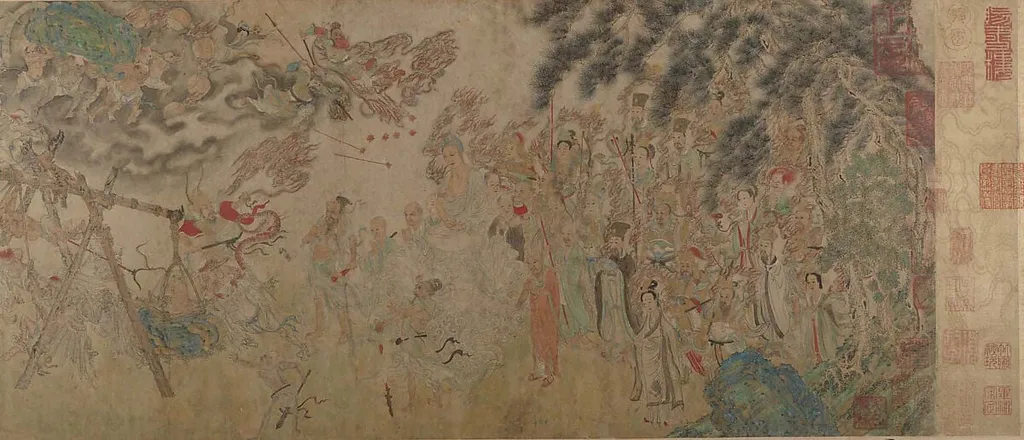
明/清 佚名 揭缽圖 卷|Raising the Alms-Bowl is an ink painting by the Baroque artist After Zhao Boju. It dates from 1699 and is held in the collection of the Metropolitan Museum of Art. This handscroll, titled Raising the Alms-Bowl, depicts a vibrant street scene from a Buddhist narrative.
About this work
Technique & Style
The physical support of paper allows for the detailed rendering of these religious subjects, characteristic of Chinese painting traditions from that era.
Created in 1699, this handscroll is executed in ink, color, and gold on paper. The work, attributed to an anonymous artist working after Zhao Boju, measures 27.3 centimeters in height and 106 centimeters in width. As a religious painting classified within the genre of Buddhist narrative, the medium supports a formal depiction of figures including the Buddha, demons, men, and women.
The use of gold alongside traditional ink and pigments suggests a ceremonial or devotional function typical of the period's handscroll format. The physical support of paper allows for the detailed rendering of these religious subjects, characteristic of Chinese painting traditions from that era.
History & Provenance
Created in 1699 in China, this handscroll titled Raising the Alms-Bowl is attributed to an anonymous artist working in the style of Zhao Boju. Executed with ink, color, and gold on paper, the work dates to the late Ming or early Qing period. While the specific original commissioner and early ownership history remain undocumented in available records, the scroll entered the collection of the Metropolitan Museum of Art, where it is currently housed.
The piece measures 27.3 cm in height and 106 cm in width. Its creation reflects religious themes central to Buddhism, depicting figures such as the Buddha, demons, and laypeople within a narrative format typical of the era.
The handscroll Raising the Alms-Bowl, attributed to an anonymous Ming or Qing artist working after Zhao Boju, is held in the collection of the Metropolitan Museum of Art. Made in China and dated to 1699, the work is catalogued as a painting on paper, executed in ink, color, and gold in handscroll format, with recorded dimensions of 27.3 cm in height and 106 cm in width. The Metropolitan Museum of Art serves as both its collection and its location of conservation. No specific accession number or prior exhibition history is documented in the available records.
Overview
This handscroll, titled Raising the Alms-Bowl, depicts a vibrant street scene from a Buddhist narrative. Executed with ink, color, and gold on paper, the anonymous work from the Ming or Qing dynasty captures a moment of dramatic tension. The composition is filled with numerous figures, including monks, demons, and onlookers, conveying a sense of dynamic activity across its length.
Subject & Meaning
The artwork illustrates a specific Buddhist legend where malevolent spirits attempt to hinder a monk's spiritual act of raising his alms-bowl. This central conflict unfolds amidst a bustling environment, drawing attention to the struggle between good and evil forces. The narrative highlights themes of spiritual power and the challenges faced on the path to enlightenment, as depicted through the monk's steadfastness against demonic interference.
Context
This handscroll belongs to a rich tradition of Buddhist art in China, which frequently depicted didactic narratives and sacred legends. Such works served not only as devotional objects but also as visual aids for understanding complex spiritual teachings. The detailed portrayal of a miraculous event, involving both human and supernatural beings, aligns with common themes found in Buddhist iconography and storytelling across East Asia.
Artist & collection


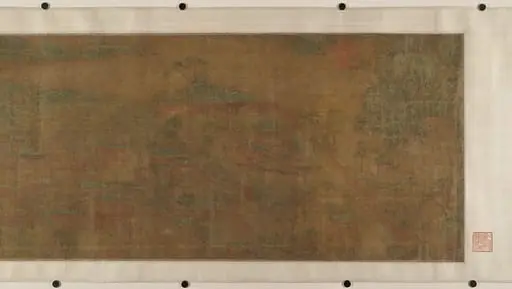
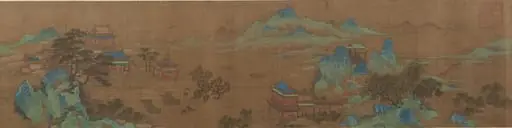
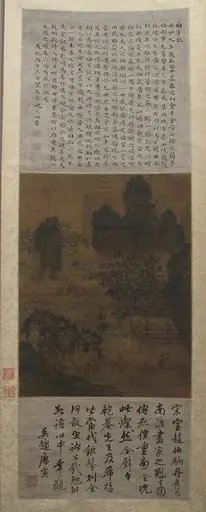
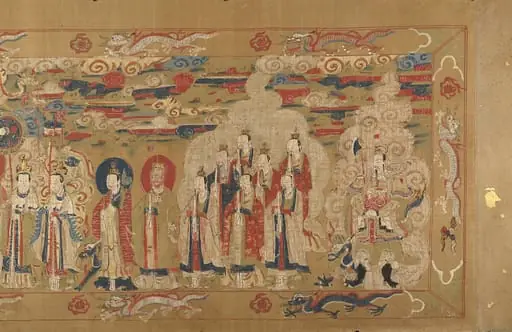
- 明 佚名 奉神圖 卷|Canonization scroll of Li Zhong
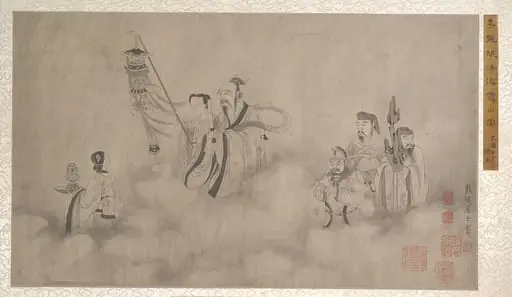 明/清 佚名 舊傳李公麟 法海靈山圖 冊|Procession of Arhats
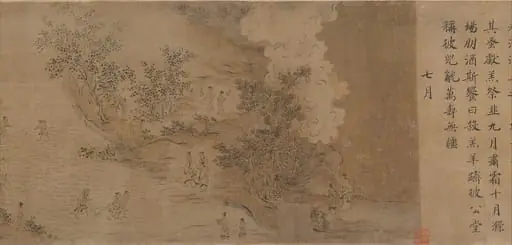 南宋 馬和之 詩經豳風圖 卷|Odes of the State of Bin
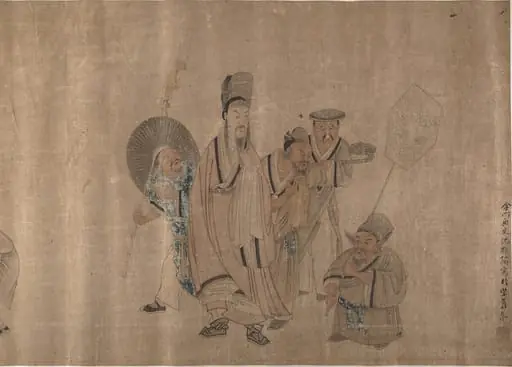 Untitled
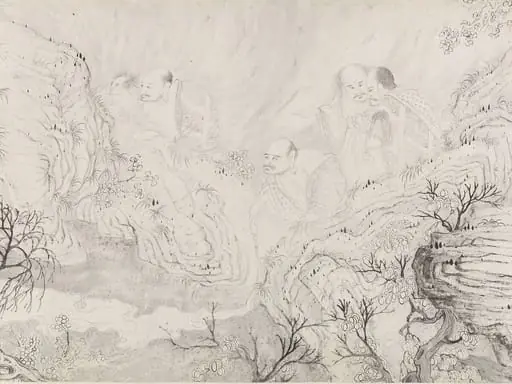 清 石濤 (朱若極) 十六羅漢圖 卷|The Sixteen Luohans
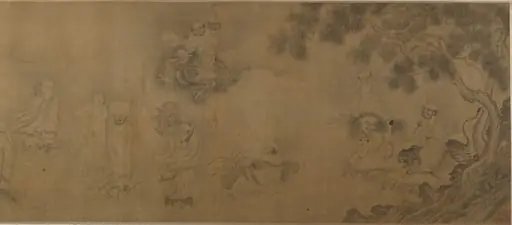 明 /清 佚名 李公麟 偽款 龍王請齋圖 卷|Buddhist luohans crossing the sea to the palace of the dragon king
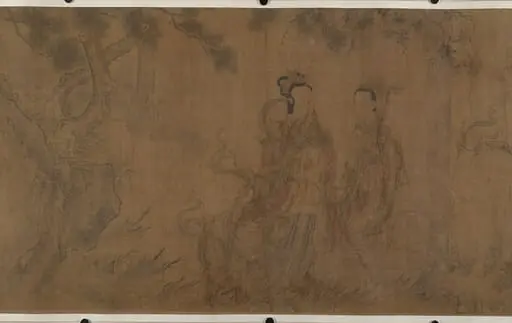 元? 佚名 仿李公麟 屈原九歌圖 卷|The Nine Songs: Illustrations to the poems of Qu Yuan (343–277 B.C.)
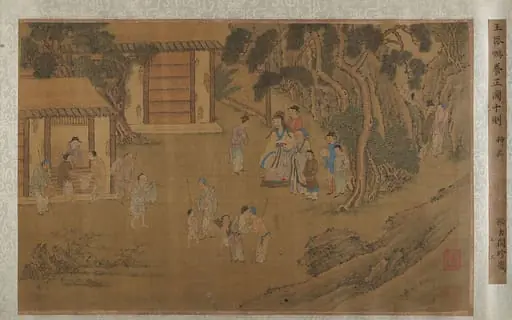 明/清 佚名 舊傳王振鵬 養正圖 卷|Family Training
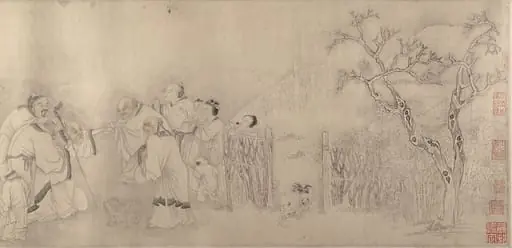 明/清 佚名 人物故事圖 卷|Family Visit
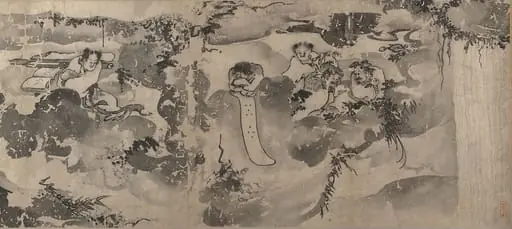 壺天聚樂圖|Merry Gatherings in the Magic Jar
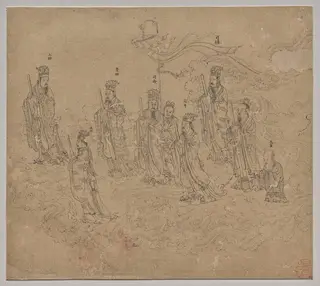 Album of Daoist and Buddhist Themes: Procession of Daoist Deities: Leaf 26
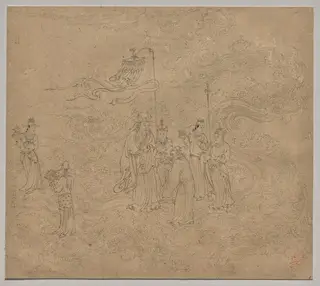 Album of Daoist and Buddhist Themes: Procession of Daoist Deities: Leaf 7