Artwork
宋人畫秋塘雙雁 軸
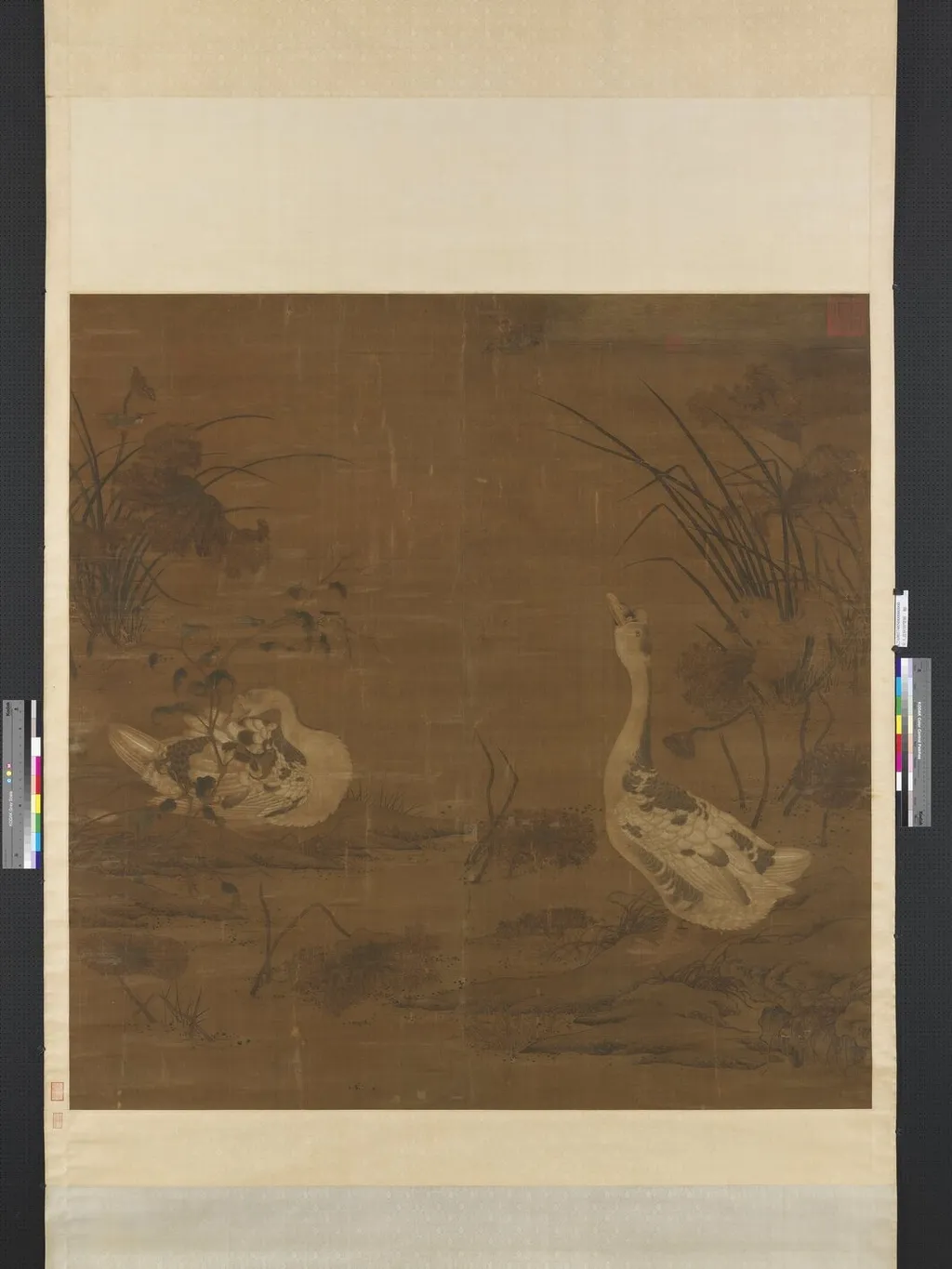
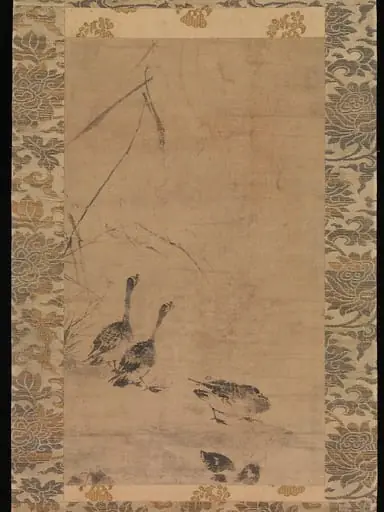
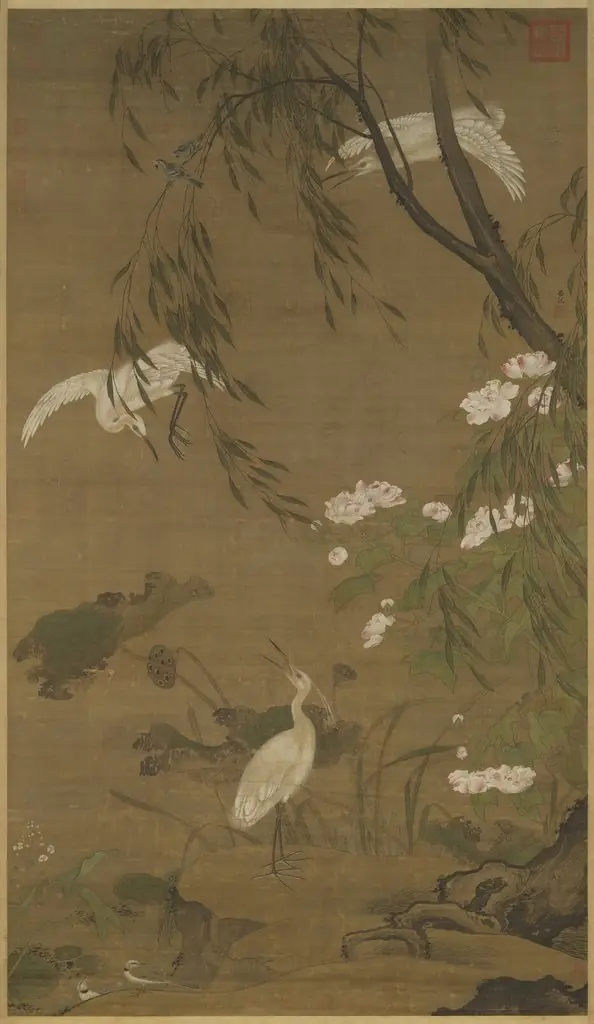
宋人畫秋塘雙雁 軸 is an unspecified painting by Unknown. It dates from 1850 and is held in the collection of the National Palace Museum. This silk painting, attributed to an anonymous Southern Song artist, depicts a pair of geese in a quiet wetland setting.
About this work
Overview
The composition centers on the birds, positioned symmetrically on either side, with surrounding vegetation rendered in muted earth tones.
This silk painting, attributed to an anonymous Southern Song artist, depicts a pair of geese in a quiet wetland setting. The composition centers on the birds, positioned symmetrically on either side, with surrounding vegetation rendered in muted earth tones. The solid brown background enhances their presence, while the silk support lends a refined, subtle texture. The work conveys stillness through restrained movement and harmonious balance.
Subject & Meaning
The two geese, likely representing paired companionship or seasonal migration, are observed in a moment of repose. Their placement and calm posture suggest themes of harmony and natural order, common in Song-era nature studies. The absence of human figures or dramatic elements emphasizes contemplation over narrative, aligning with Daoist and Confucian ideals of quietude and balance in the natural world.
Technique & Style
The artist employed fine, varied brushwork to define feather texture and plant forms, using ink washes and light color to model volume without heavy outlines. The silk surface allowed for delicate layering, enhancing the softness of the geese’s plumage and the fragility of reeds. Background tones remain uniform, directing focus to the central figures and creating a sense of spatial depth through tonal contrast rather than perspective.
History & Provenance
The painting has been part of the imperial collection since the Southern Song dynasty and was later preserved in the Qing court archives. It entered the National Palace Museum’s holdings following the relocation of imperial artifacts to Taiwan in the mid-20th century. Its attribution remains anonymous, as was typical for court painters of the period, whose names were often omitted from works.
Context
Created during the Southern Song period (1127–1279), this work reflects the era’s heightened interest in intimate natural scenes, influenced by Chan Buddhist aesthetics and scholarly appreciation for quiet observation. Unlike grand landscape scrolls, such small-scale silk paintings were intended for private contemplation, often displayed in study rooms or imperial collections as objects of meditative focus.
Legacy
The painting exemplifies the Southern Song tradition of bird-and-flower painting, influencing later dynastic artists who valued restraint and observational precision. Its preservation in the National Palace Museum underscores its role as a representative example of courtly naturalism. While not widely reproduced, it remains a key reference for understanding the period’s aesthetic priorities and technical mastery on silk.
Artist & collection