Artwork
Album of Daoist and Buddhist Themes: Procession of Daoist Deities: Leaf 16
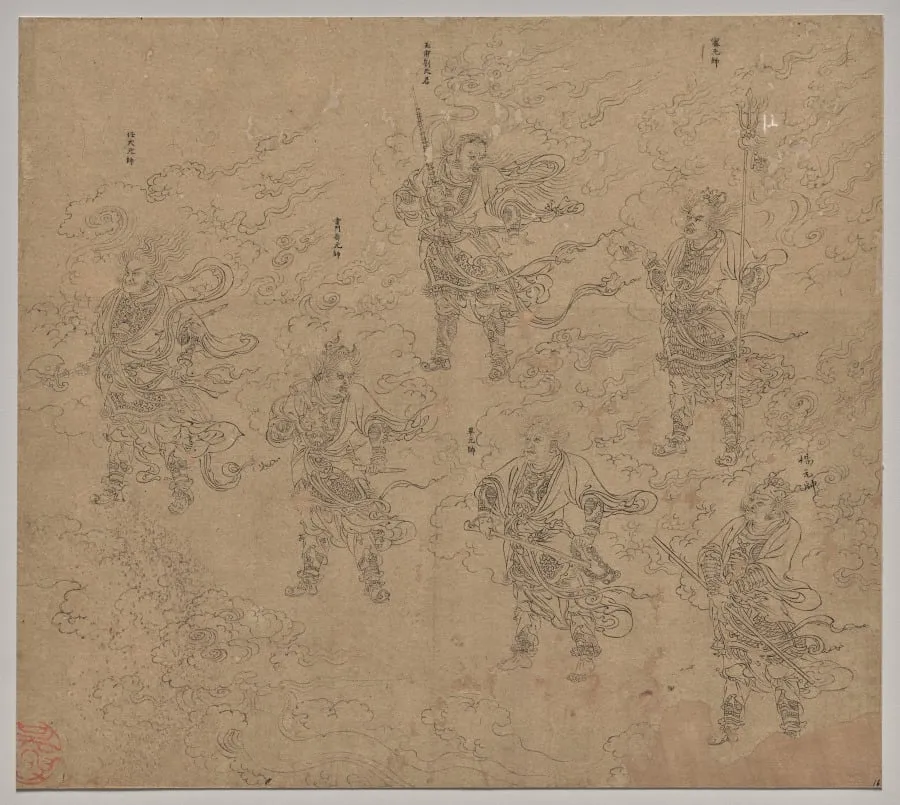
Album of Daoist and Buddhist Themes: Procession of Daoist Deities: Leaf 16 is an unspecified painting by the Song dynasty painting artist Unknown. It dates from 1204 and is held in the collection of the Cleveland Museum of Art. This leaf comes from a hand-painted album created in southern China during the Southern Song dynasty, likely for use in a Daoist temple.
- Accession no.
- 2004.1.16
- Credit line
- John L. Severance Fund in honor of Dr. Ju-hsi Chou and Gift of various donors to the department of Asian Art (by exchange)
About this work
This painting shows a line of six gods in bright robes and armor, marching under clouds and banners.
This painting shows a line of six gods in bright robes and armor, marching under clouds and banners. The leader rides a white deer; the others carry swords and flags.
It’s a page from a hand-painted book made for a Daoist temple in southern China. Each figure’s name is written in tiny script, like a cast list for the gods. The artist used thin, precise lines to show every fold of silk and scale of armor.
Look up more paintings from the subject: china, southern song dynasty (1127-1279).
Overview
This leaf comes from a hand-painted album created in southern China during the Southern Song dynasty, likely for use in a Daoist temple. It depicts a ceremonial procession of six divine figures, each identified by name in delicate calligraphy. The composition is arranged in a single horizontal line, with figures moving beneath stylized clouds and fluttering banners, suggesting a celestial journey.
The work is part of a larger series focused on Daoist and Buddhist iconography, reflecting devotional practices of the time.
Subject & Meaning
The central figure is the Heavenly Lord Liu Hou, a high-ranking Daoist deity, followed by five Field Marshals of the Daoist pantheon, each armed and armored. Their orderly march symbolizes divine authority and cosmic order, reinforcing Daoist cosmology where celestial beings maintain harmony. The white deer beneath Liu Hou signifies purity and spiritual transcendence, while the banners and armor denote their roles as protectors of the sacred realm. Each figure’s presence serves both ritual and didactic functions within temple worship.
Technique & Style
The artist employed fine, controlled brushwork to render intricate details of silk robes, metallic armor, and flowing clouds. Lines are precise and deliberate, capturing the texture of scales, folds, and embroidery with minimal strokes. Colors remain restrained yet vivid, emphasizing clarity over ornamentation.
The use of thin ink outlines and subtle washes reflects the Southern Song aesthetic of refined elegance, prioritizing spiritual resonance over dramatic expression. Calligraphic labels, barely legible at a glance, integrate text and image as equal elements of devotion.
History & Provenance
Created in the 13th century in southern China, this leaf was likely part of a devotional album commissioned by a Daoist temple or patron. Such albums were used in ritual contexts, possibly displayed during ceremonies or consulted by priests. The presence of named deities and standardized iconography suggests it followed established liturgical models. Its survival indicates careful preservation, though its original sequence and full contents remain partially lost to time.
Context
During the Southern Song dynasty, Daoist visual culture flourished alongside Buddhist traditions, especially in the south where temple networks were active. This album reflects a period when Daoist theology was systematized, and deities were increasingly depicted in hierarchical, militarized forms to mirror imperial court structure. Similar processional imagery appears in temple murals and ritual scrolls, indicating shared visual languages across religious communities in the region.
Legacy
This work exemplifies the enduring influence of Southern Song religious painting on later Daoist iconography. Its precise line work and structured composition became a model for temple art in subsequent centuries. Though the album’s full set is incomplete, surviving leaves like this one help scholars reconstruct liturgical practices and the visual theology of medieval Daoism, offering insight into how divine authority was rendered tangible for worshipers.
Artist & collection









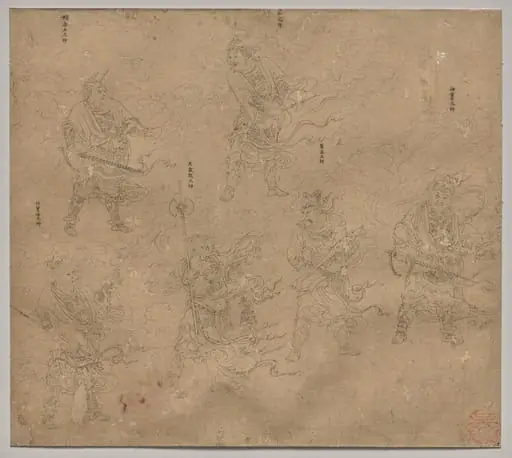 Album of Daoist and Buddhist Themes: Procession of Daoist Deities: Leaf 13
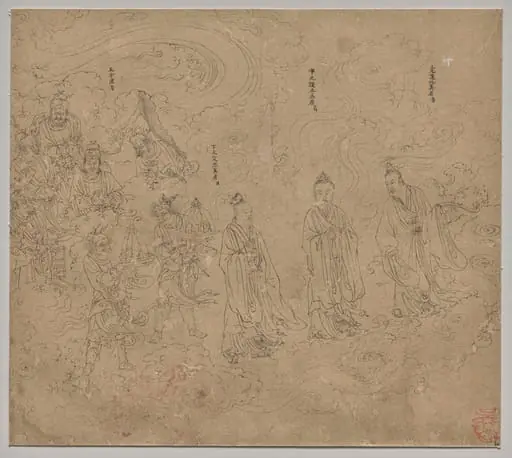 Album of Daoist and Buddhist Themes: Procession of Daoist Deities: Leaf 20
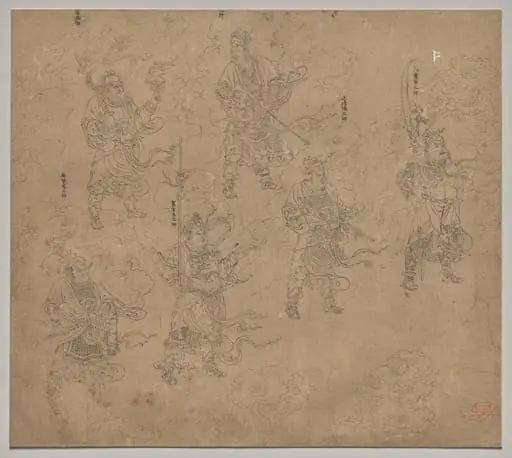 Album of Daoist and Buddhist Themes: Procession of Daoist Deities: Leaf 12
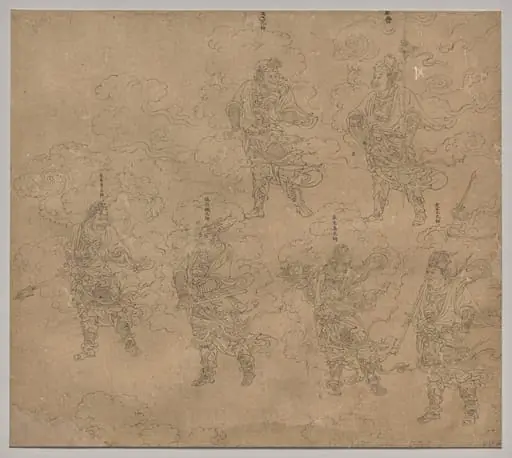 Album of Daoist and Buddhist Themes: Procession of Daoist Deities: Leaf 14
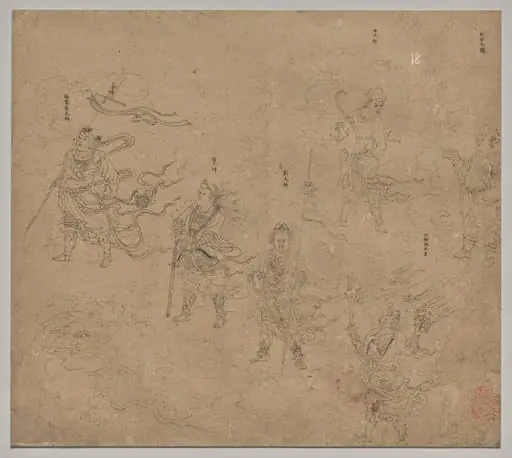 Album of Daoist and Buddhist Themes: Procession of Daoist Deities: Leaf 15
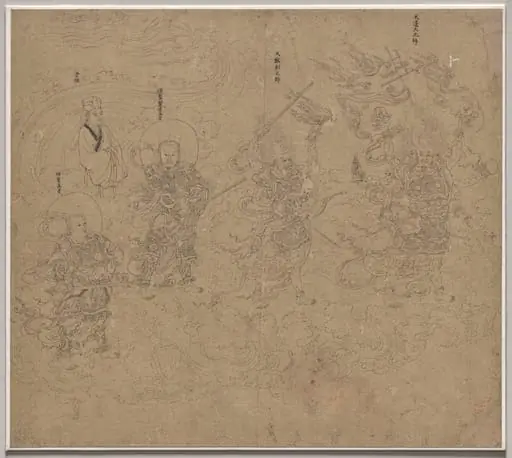 Album of Daoist and Buddhist Themes: Procession of Daoist Deities: Leaf 11
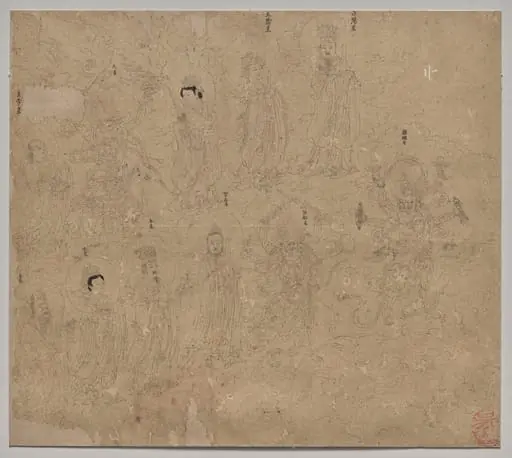 Album of Daoist and Buddhist Themes: Procession of Daoist Deities: Leaf 21
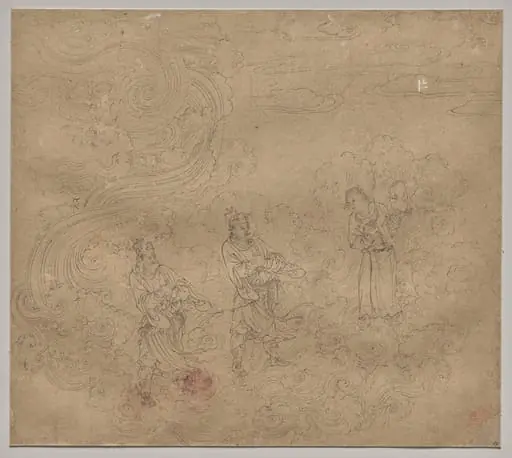 Album of Daoist and Buddhist Themes: Procession of Daoist Deities: Leaf 17
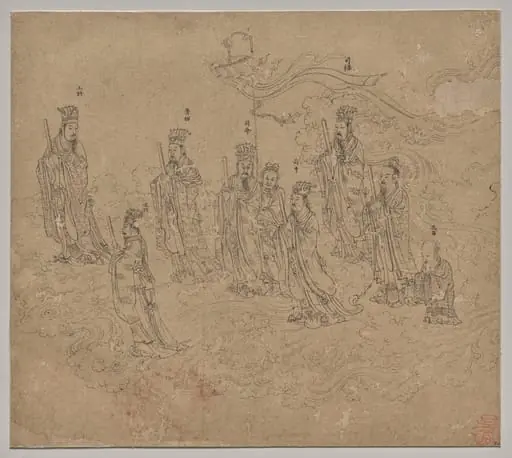 Album of Daoist and Buddhist Themes: Procession of Daoist Deities: Leaf 26