Artwork
Altar frontal from Alós d'Isil
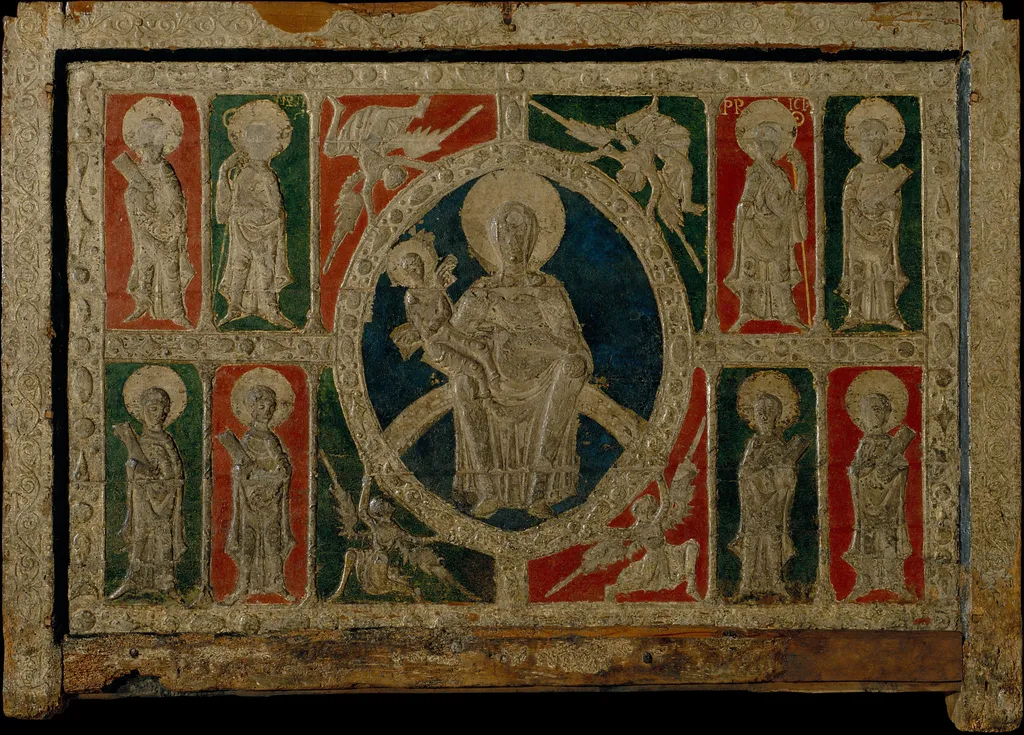
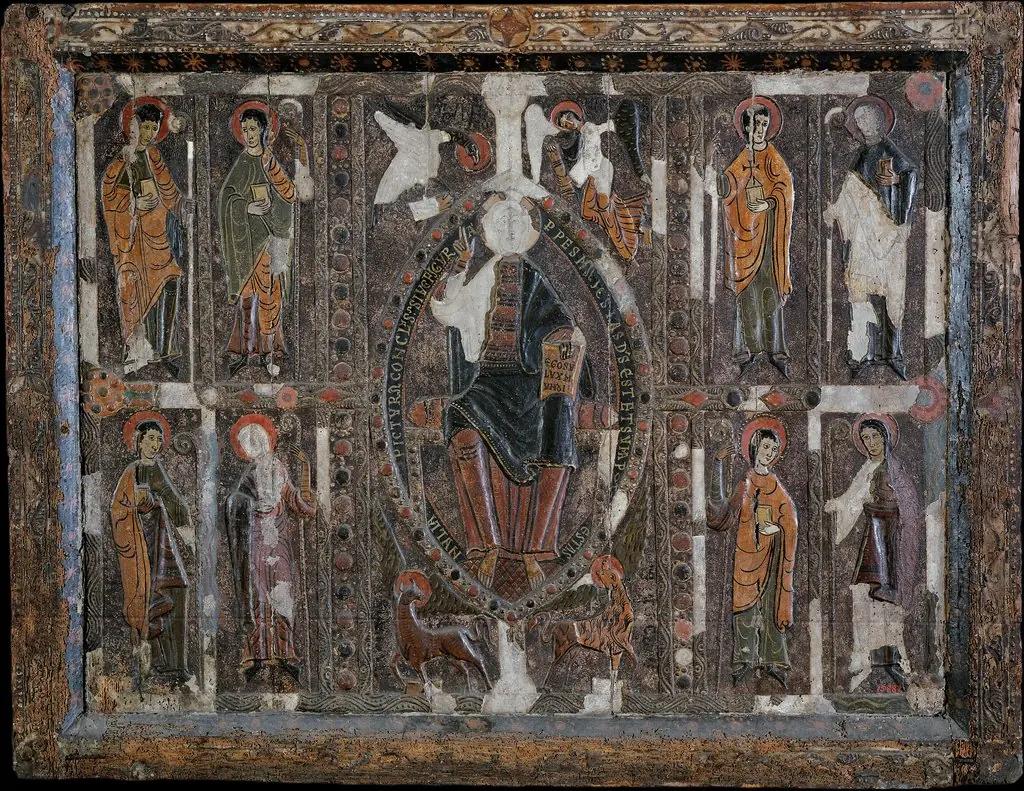
Altar frontal from Alós d'Isil is an unspecified painting by the Romanesque artist Unknown. It dates from 1220 and is held in the collection of the Museu Nacional d'Art de Catalunya.
About this work
Overview
This painted wooden panel served as the frontal of an altar in the church of Santa Maria in Alós d'Isil, a small village in the Catalan Pyrenees. Created in the late 12th or early 13th century, it functioned as a devotional focus during liturgical services, combining religious imagery with decorative craftsmanship typical of Romanesque ecclesiastical art in the region.
Subject & Meaning
Below, the Virgin Mary and apostles are arranged in symmetrical rows, emphasizing celestial order and divine authority.
The central image depicts Christ in Majesty, seated within a mandorla, flanked by the symbols of the Four Evangelists. Below, the Virgin Mary and apostles are arranged in symmetrical rows, emphasizing celestial order and divine authority. The composition reflects theological themes of judgment and salvation, intended to inspire reverence and reinforce doctrinal teachings for a largely illiterate congregation.
Technique & Style
Executed in tempera on wood, the panel employs bold outlines, flat planes of color, and minimal modeling to define forms. Gold leaf highlights the halos and background, enhancing luminosity without naturalistic depth. Figures are stylized and hieratic, with elongated proportions and rigid postures characteristic of Romanesque painting, prioritizing symbolic presence over individual expression.
History & Provenance
The altar frontal remained in situ in Alós d'Isil until the 20th century, when it was removed for preservation. It is now held in the Museu Nacional d'Art de Catalunya in Barcelona, where it is recognized as one of the best-preserved examples of Catalan Romanesque altar decoration. Its survival is attributed to the remote location of the church, which shielded it from major iconoclastic disruptions.
Context
Produced during a period of monastic expansion in the Pyrenees, the work reflects the influence of nearby Benedictine and Cluniac centers. Similar altar frontals were common in rural Catalan churches, where local artisans adapted broader Mediterranean and Byzantine visual traditions to regional tastes, blending spiritual symbolism with accessible, durable forms suited to mountainous communities.
Legacy
The altar frontal contributes to the understanding of medieval Catalan religious culture and the transmission of liturgical imagery across rural Europe. It remains a key reference for scholars studying the evolution of Romanesque painting, particularly in regions where few large-scale works survived. Its preservation has enabled comparative studies with other Iberian and southern French ecclesiastical panels.
Artist & collection









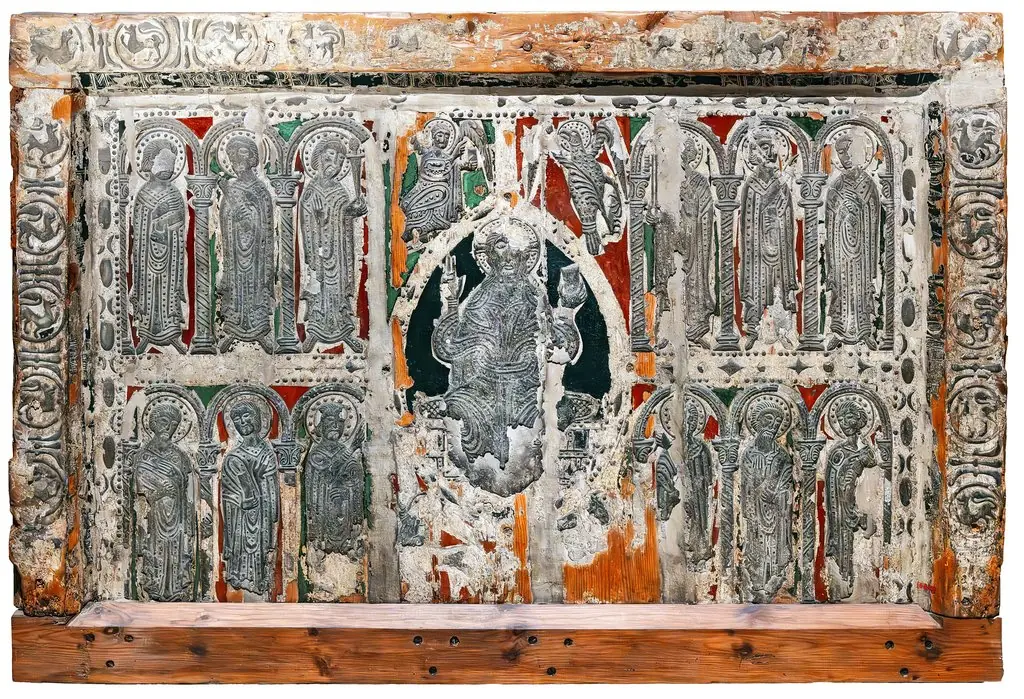
- Altar frontal from Esterri de Cardós
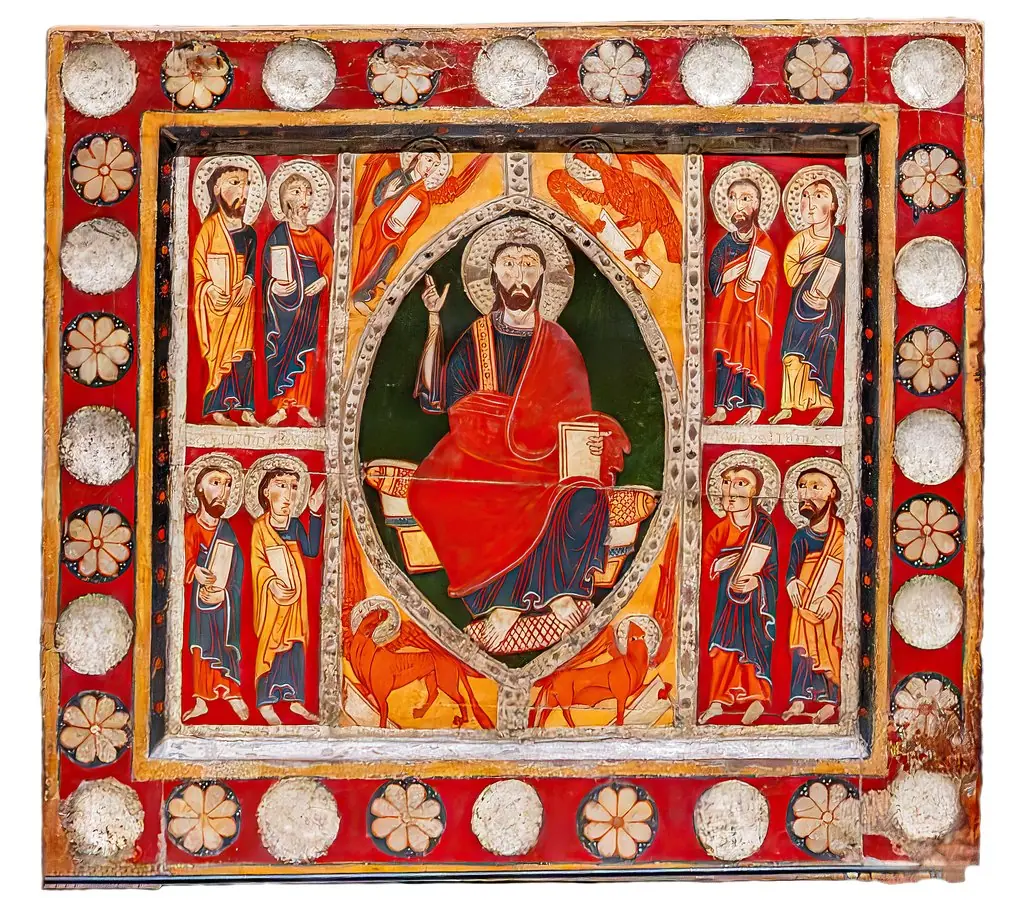 Altar frontal from Sant Romà de Vila
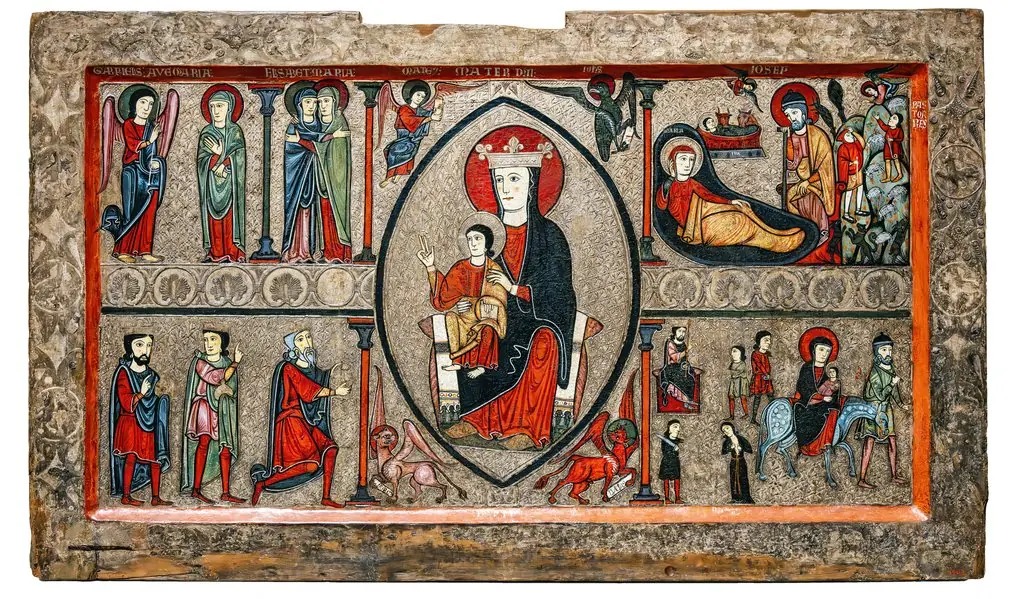 Altar frontal from Cardet
 Altar frontal from Planès
 Altar frontal from Avià
 Altar frontal from Ix
 Altar frontal of Jesus' childhood
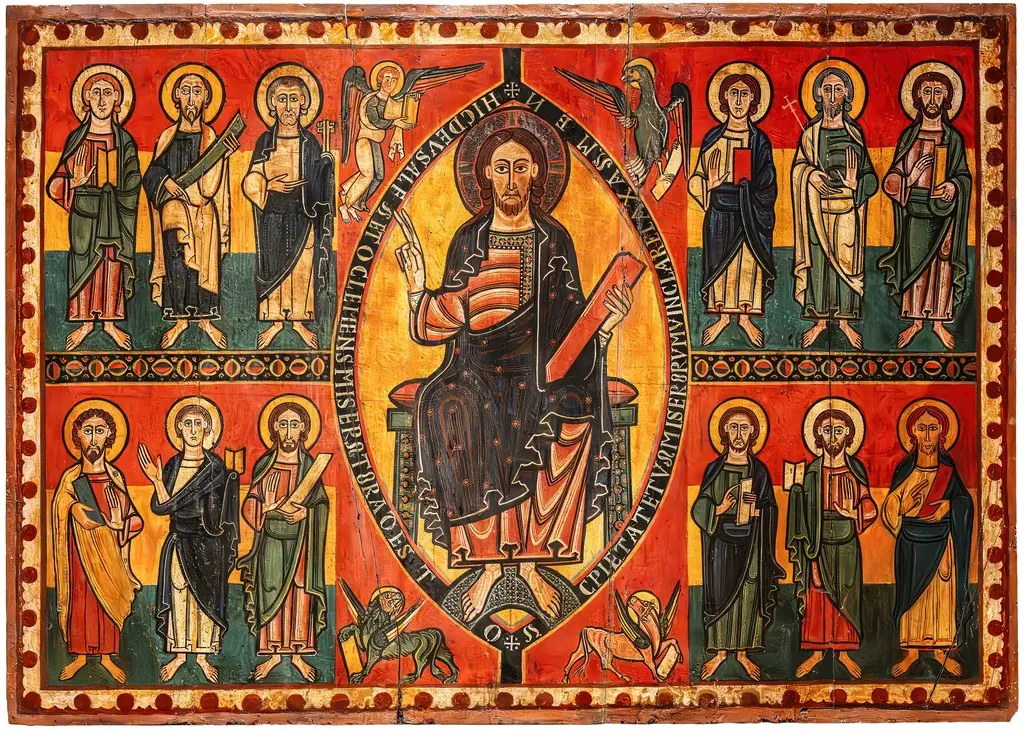 Altar frontal from Esquius
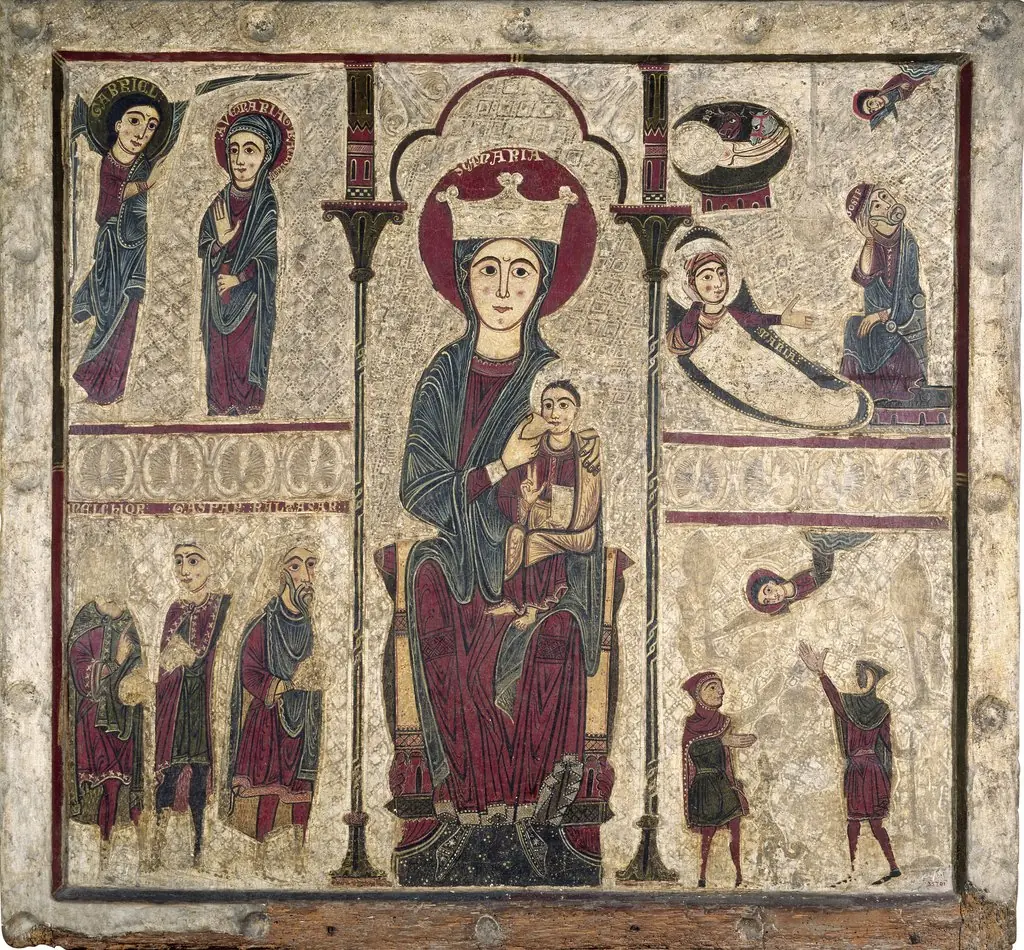 Altar frontal from Rigatell
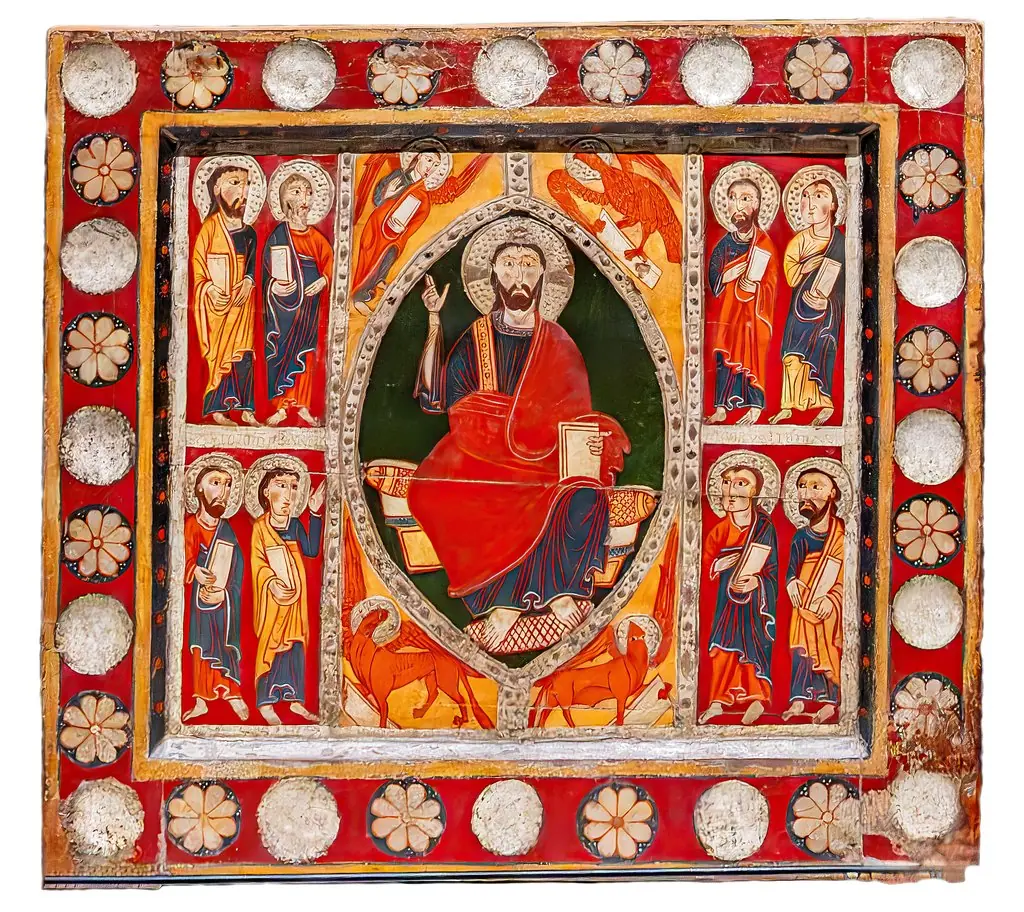 Altar from Sant Romà de Vila
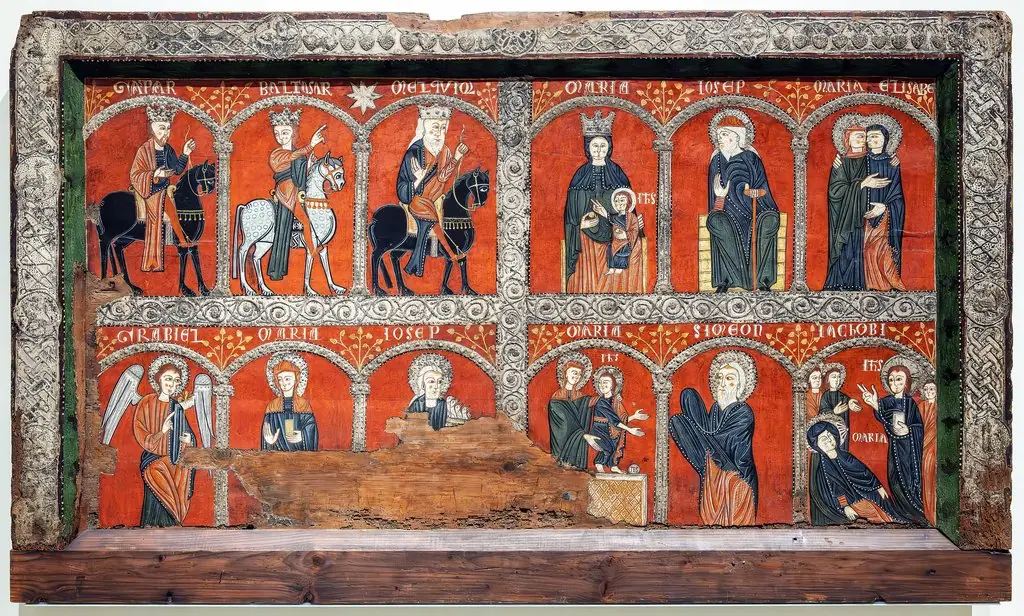 Altar frontal from Mosoll