Artwork
Altar frontal from Ix
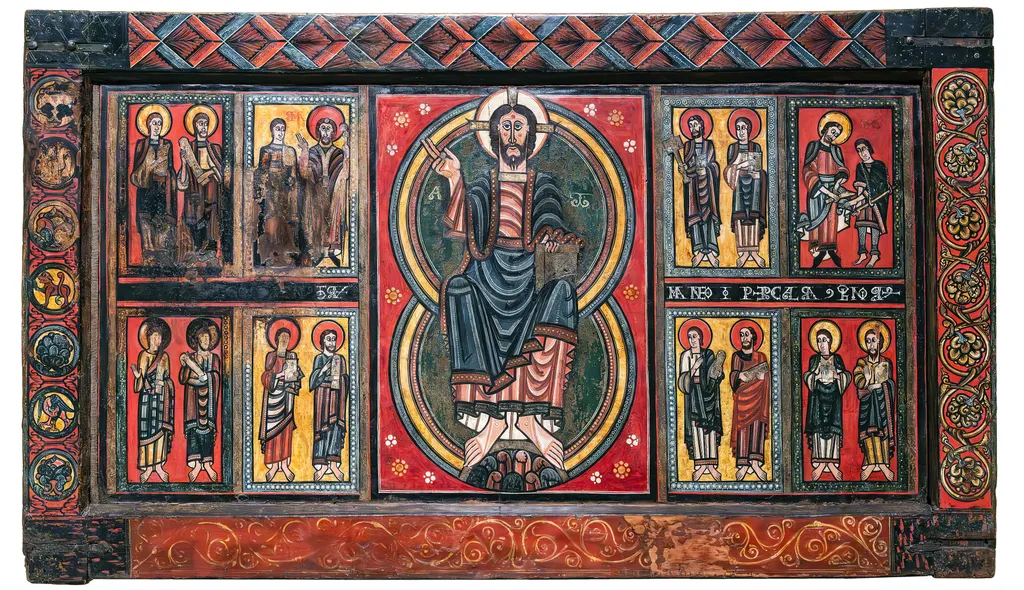
Altar frontal from Ix is a tempera painting by the Byzantine icon painting artist Unknown. It dates from 1130 and is held in the collection of the Museu Nacional d'Art de Catalunya.
About this work
Subject & Meaning
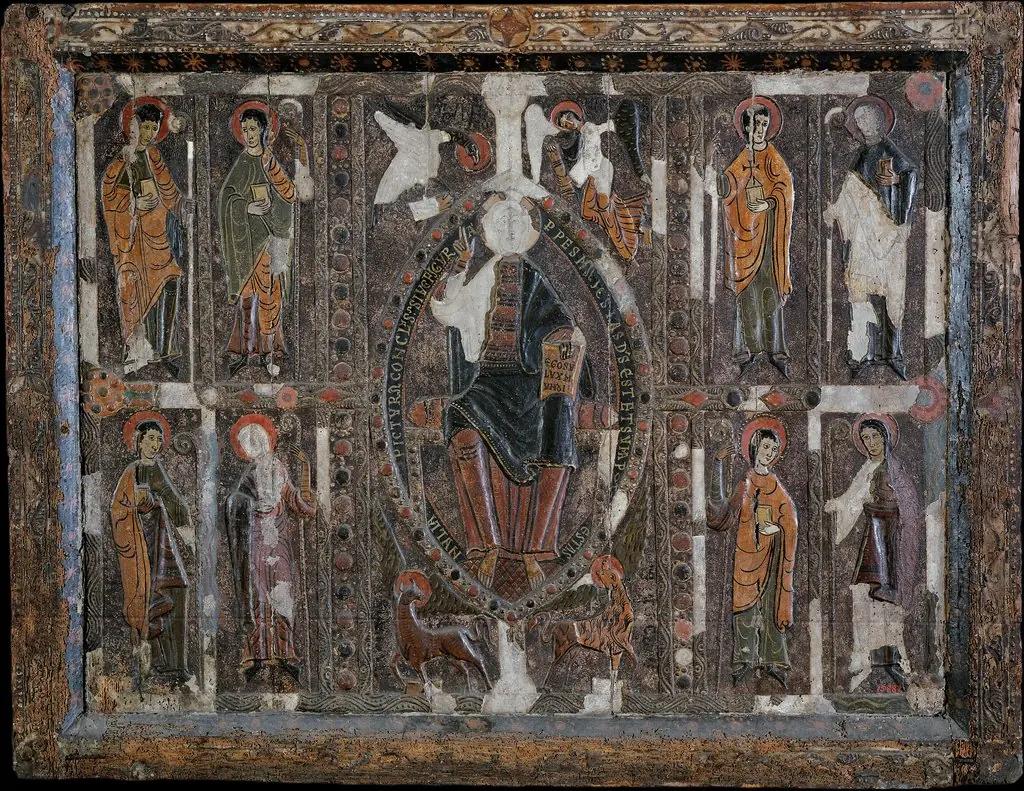
The composition includes apostles and Saint Martin of Tours among other figures arranged in four equal compartments on the lateral panels.
The altar frontal from Ix depicts Christ in Majesty seated within a mandorla formed by intersecting circles, surrounded by the Greek letters alpha and omega, symbols of beginning and end. He holds a closed book in his left hand and raises his right hand in blessing while supporting a small sphere believed to represent the world or the Eucharistic host. The composition includes apostles and Saint Martin of Tours among other figures arranged in four equal compartments on the lateral panels.
The work combines Romanesque stylistic elements with symbolic references to imperial authority and liturgical function, reflecting its origins in the Romanesque art of Catalonia and its use in the altar of the parish church of Sant Martí d'Hix.
Technique & Style
The Altar frontal from Ix is a Romanesque wooden panel painting created around 1130 using tempera on pine support, prepared with a plaster ground. It was originally installed as an altar frontal in the parish church of Sant Martí d'Hix in the Catalan region of Alta Cerdaña. The work is structured vertically with a central panel depicting Christ in Majesty within a mandorla, flanked by four equal compartments on each side, reflecting typical Romanesque compositional divisions.
The central figure is seated, crowned with a cruciform nimbus, holding a closed book in his left hand and blessing with his right, while a symbolic sphere representing the world rests on his lap, referencing Carolingian imperial motifs. The surrounding frame features decorative bands with rinceaux, geometric patterns, and vegetal motifs, some elements possibly inspired by Eastern textiles. The lateral sections contain symbolic animals such as lions and eagles within vegetal frames.
The piece was acquired by the Museu Nacional d'Art de Catalunya in 1889 from the collection of Eduard Bosch i Barrau and later authenticated through familial ties to Xavier de Salas Bosch in 1944.
History & Provenance
The frontal from Ix is dated to the second quarter of the twelfth century and was created for the parish church of Sant Martí d’Hix in La Guingueta d’Ix (Alta Cerdanya), where it served as an altar frontal. The work entered the Museu Nacional d’Art de Catalunya, Barcelona, in 1889 after its purchase from the collection of Eduard Bosch i Barrau. It had previously belonged to the church of Sant Martí d’Hix, a building documented since 1063 through a pact between Ermengol III of Urgell and Ramon Wifredo of Cerdanya recorded at its altar.
The Altar frontal from Ix is held at the Museu Nacional d'Art de Catalunya in Barcelona, where it has been part of the collection since 1889. It entered the museum through the collection of Eduard Bosch i Barrau and was formally documented in 1944 via Xavier de Salas Bosch's provenance research. The work originated in the parish church of Sant Martí d'Hix, documented from 1063, and was relocated to the museum in the late 19th century.
It was first publicly recorded in the Museu Municipal de Bellas Artes de Barcelona in 1889, later moving to its current institution. Exhibition history is not detailed in the provided sources beyond its institutional display following acquisition.
The piece is a Romanesque tempera painting on pine, created circa 1130, and reflects regional Catalan artistic practices of the 12th century.
Context
The Altar frontal from Ix is a Romanesque panel painting produced around 1130, exemplifying the Catalan school of easel art that specialized in wooden altar fronts for rural churches. Contemporary scholarship situates it within the broader context of Romanesque religious art in Catalonia, noting its use of tempera on pine panel, a gesso ground, and a composition divided into a central Christ in Majesty flanked by four smaller narrative bays. The work’s iconography, Christ enthroned in a mandorla with alpha and omega, a cruciform nimbus, and a globe symbolizing temporal dominion, reflects Carolingian imperial models adapted to Iberian liturgical practice, while its formal parallels to the frontal of La Seu d’Urgell demonstrate shared decorative motifs across Catalan sites.
Its provenance traces to the parish church of Sant Martí d’Ix, later entering the Museu Nacional d'Art de Catalunya in 1889 via the Bosch collection, and it has been studied as a key example of early Romanesque panel painting in the region.
Overview
This tempera painting on a wooden panel, known as the Altar frontal from Ix, is characterized by vibrant, flat colors and gold accents. The composition is densely populated with figures arranged around a central, haloed figure seated on a throne.
Legacy
The Altar frontal from Ix contributes to the understanding and appreciation of Catalan Romanesque art, serving as a representative example of the style's characteristic themes and artistic choices.
Artist & collection









- Altar frontal from Esquius
 Altar frontal
 Altar frontal from Sant Romà de Vila
 Altar frontal from Tavèrnoles
 Altar frontal from Avià
 Altar frontal from Cardet
 Altar frontal from Planès
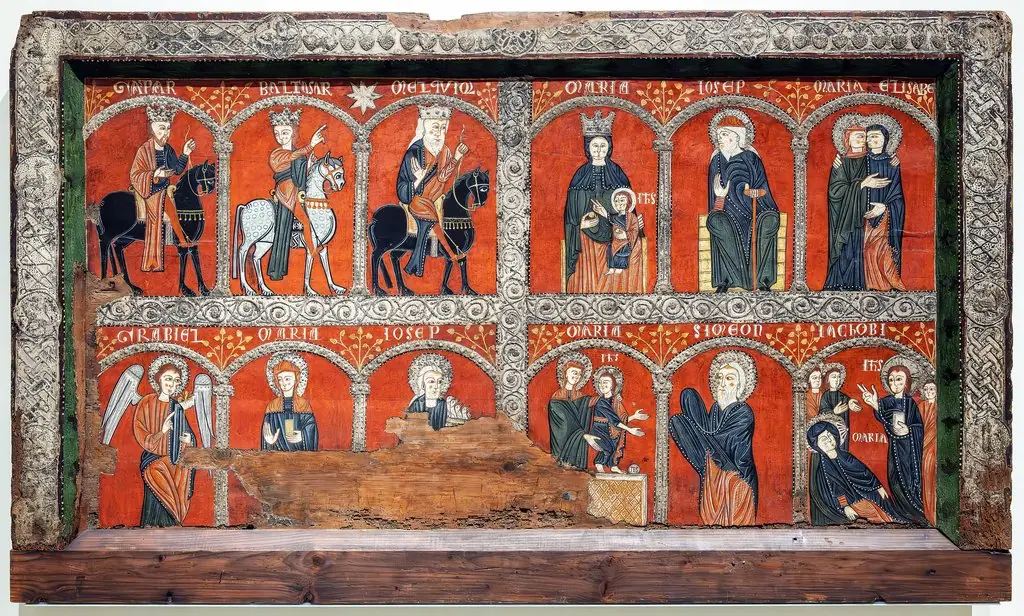 Altar frontal from Mosoll
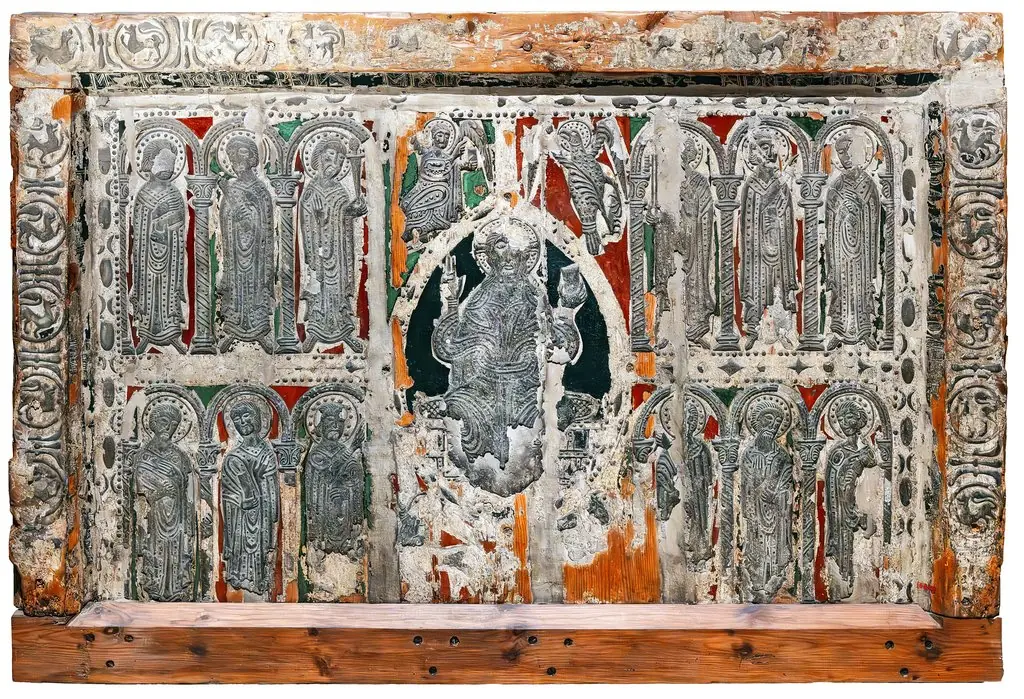 Altar frontal from Esterri de Cardós
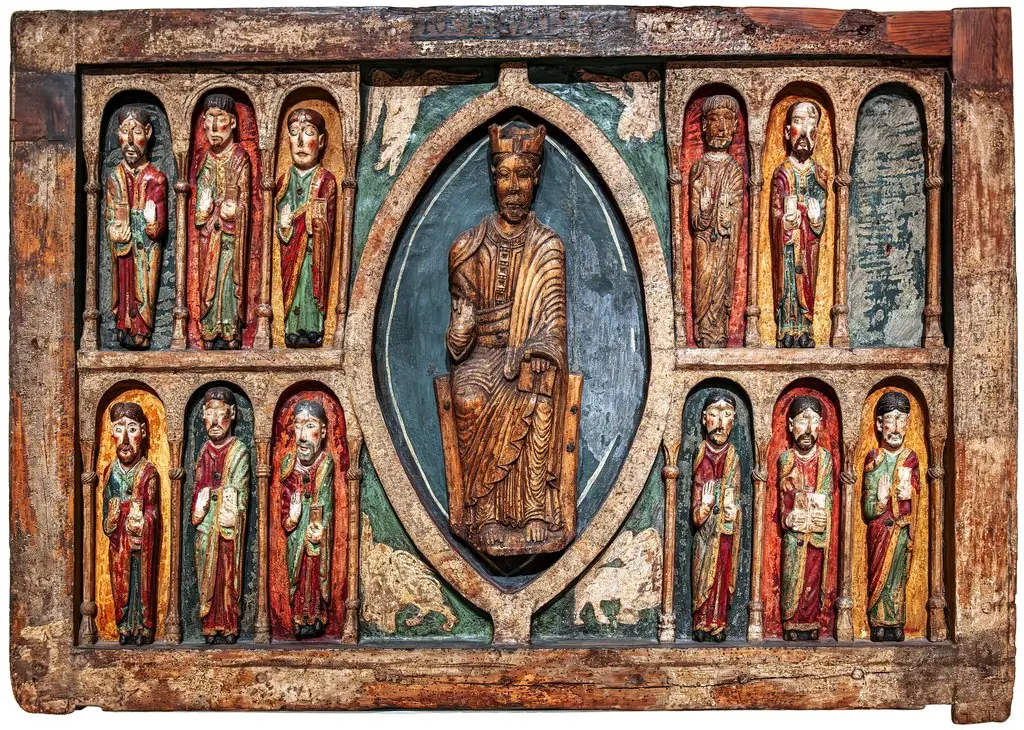 Altar frontal from Santa Maria in Taüll
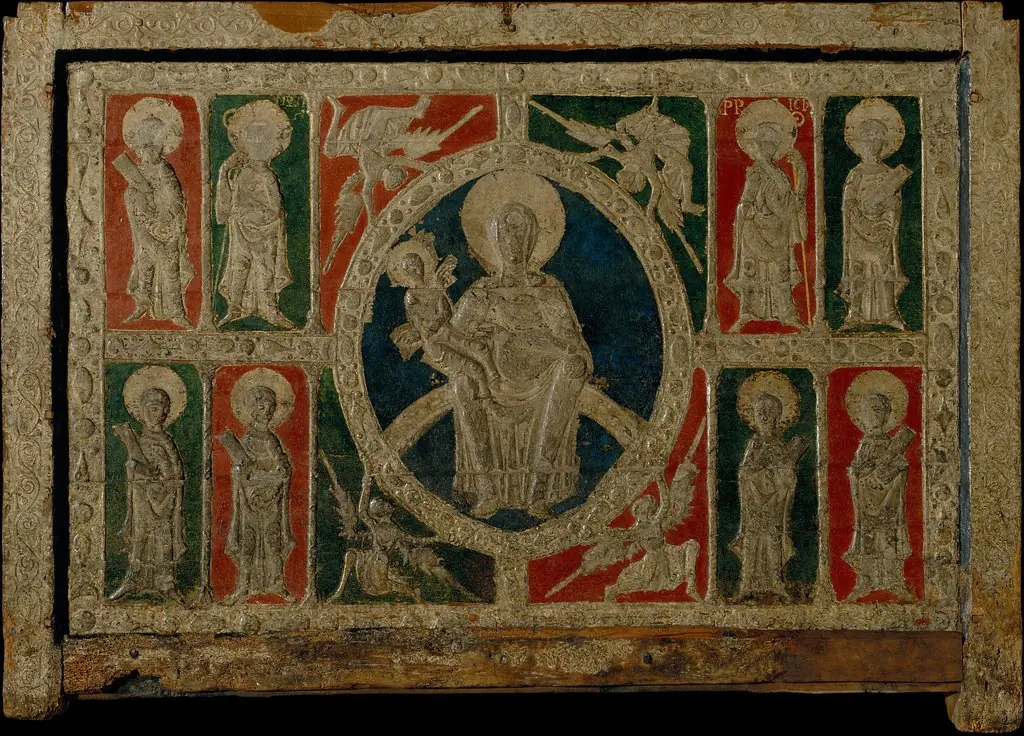 Altar frontal from Alós d'Isil