Artwork
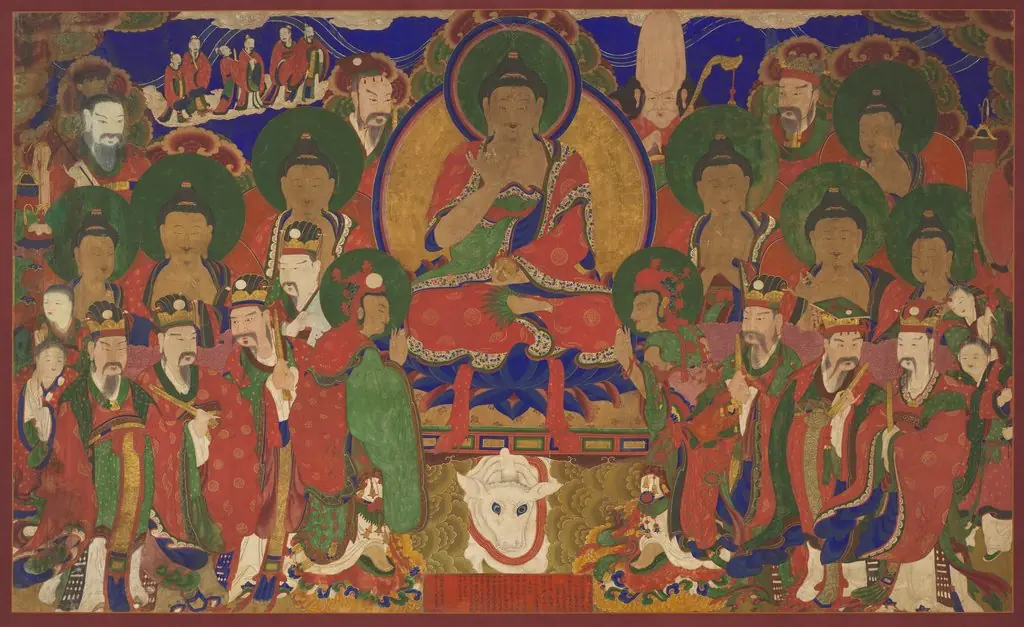
Assembly of Buddhist Deities
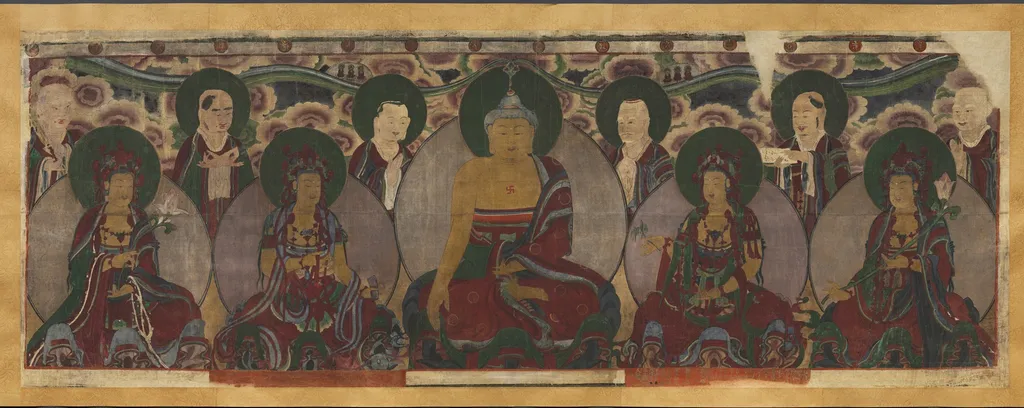
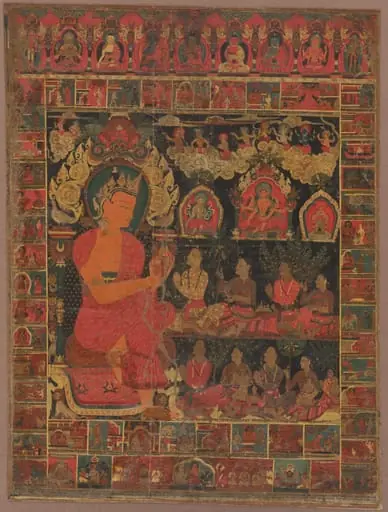
Assembly of Buddhist Deities is an unspecified painting. It dates from 1846 and is held in the collection of the Cleveland Museum of Art. The work presents a linear arrangement of seven seated figures, each oriented toward the viewer.
About this work
History & Provenance
The work entered the collection of the Cleveland Museum of Art, where it is currently housed and identified by the accession number 1918.
Created in 1846 in Korea, this painting titled Assembly of Buddhist Deities was produced by an artist whose identity remains unrecorded. The work entered the collection of the Cleveland Museum of Art, where it is currently housed and identified by the accession number 1918.541. While the specific circumstances of its commission and the details of its ownership prior to 1918 are not documented in the available records, its inception is firmly established as the mid-19th century.
The painting Assembly of Buddhist Deities is held in the collection of the Cleveland Museum of Art, located in Cleveland. The work carries the accession number 1918.541 within the museum's inventory. Created in 1846, this piece is classified as a painting originating from Korea.
No specific exhibition history for this artwork is provided in the available sources.
Overview
The work presents a linear arrangement of seven seated figures, each oriented toward the viewer. The central figure, larger in scale, is distinguished by a red sash and a lotus seat, while the surrounding figures hold varied attributes such as books and staffs. All figures are encircled by halos and dressed in richly patterned robes, set against a sky filled with clouds and swirling motifs rendered in muted reds, blues, and golds.
Subject & Meaning
The composition suggests a gathering of Buddhist deities or enlightened beings, with the central, enlarged figure likely representing a principal Buddha or bodhisattva. The lotus base, halos, and symbolic objects, texts, staffs, and other implements, convey spiritual authority and the transmission of teachings within a sacred assembly.
Technique & Style
Executed in a painted medium, the piece employs a restrained palette of reds, blues, and golds, creating a harmonious yet subdued visual tone. Detailed decorative patterns adorn the robes, and the use of halos and clouded backgrounds reflects conventional iconographic conventions in Buddhist art, emphasizing divinity and transcendence.
Context
The arrangement of multiple deities in a single tableau aligns with devotional panels used in East Asian Buddhist practice, where congregations of figures illustrate doctrinal hierarchies or narrative episodes. The emphasis on a central figure flanked by attendants mirrors similar compositions found in temple murals and portable screens.
Artist & collection

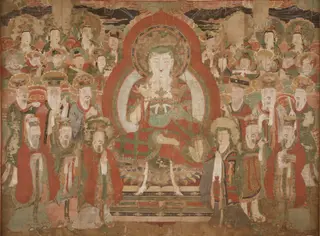 Ksitigarbha as Supreme Lord of the Underworld
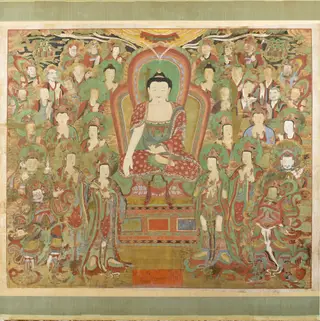 Preaching Sakyamuni Buddha
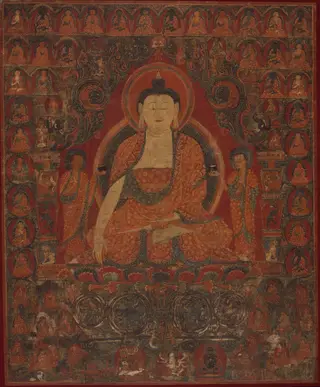 Shakyamuni with the Thirty-Five Buddhas of the Confession of Sins and the Eighteen Arhats
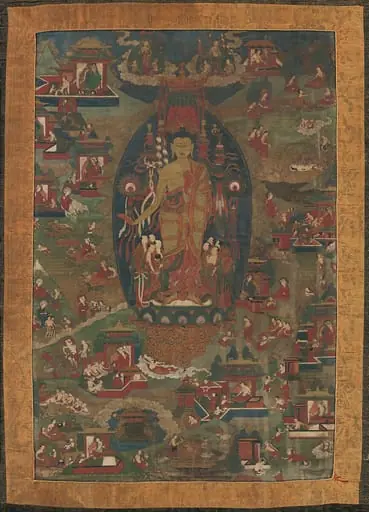 Untitled
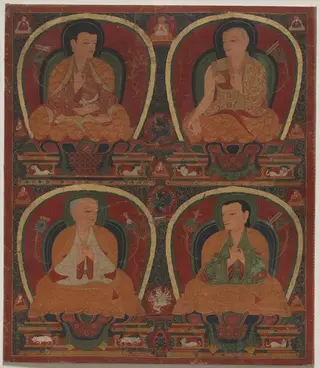 Four seated Masters
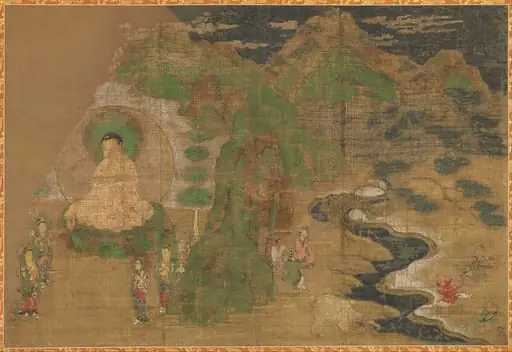 仏伝図|Scene from the Life of the Buddha
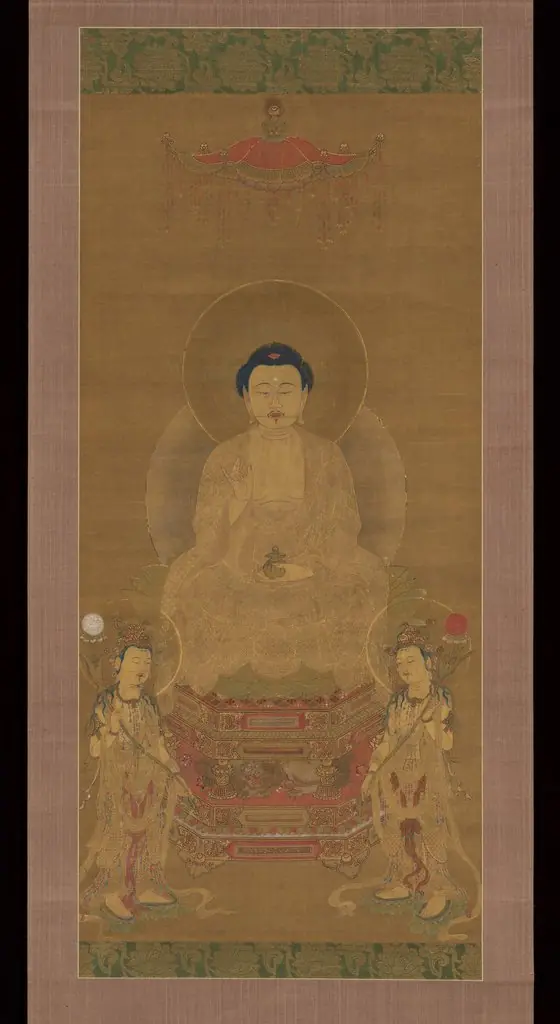 Triad of the Medicine Master Buddha Yakushi (Bhaisajya Buddha)
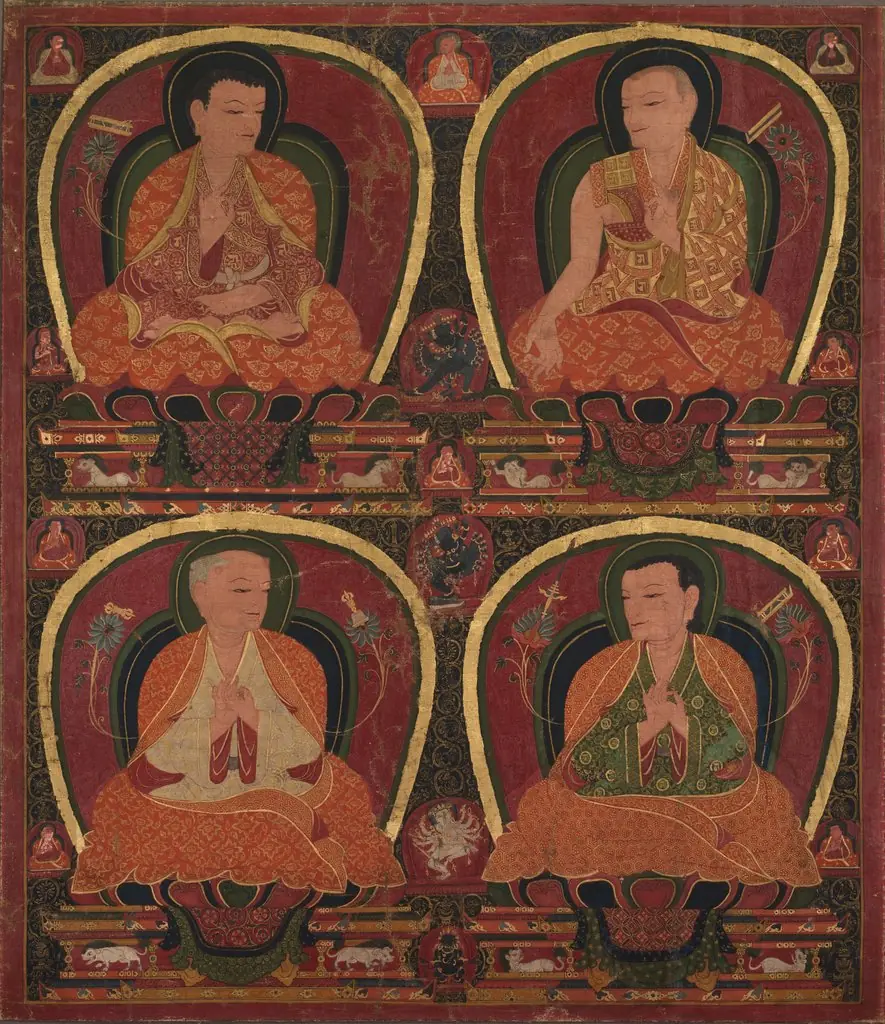 Four Seated Masters
 Bejeweled Buddha Preaching