Artwork
The Assembly of Tejaprabha Buddha
The Assembly of Tejaprabha Buddha is an unspecified painting by the Impressionist artist Unknown. It dates from 1878 and is held in the collection of the Cleveland Museum of Art.
- Accession no.
- 1998.120
- Credit line
- Gift of Mitsuru Tajima
About this work
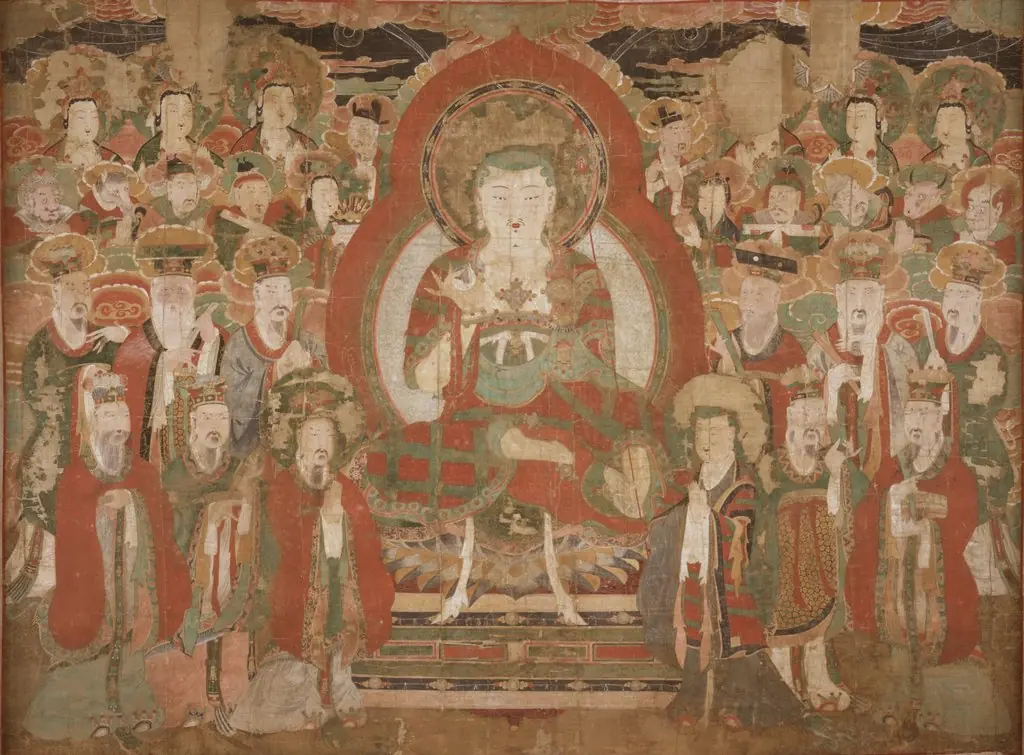
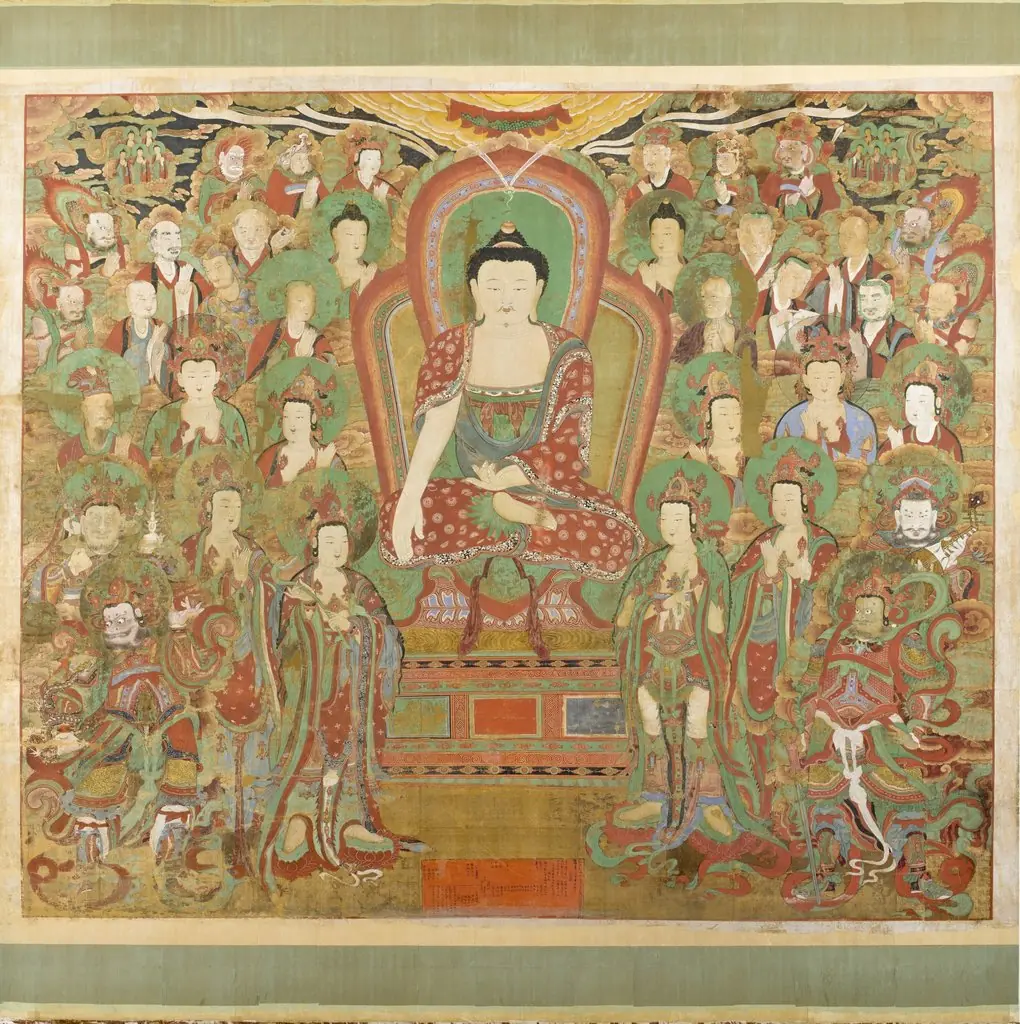
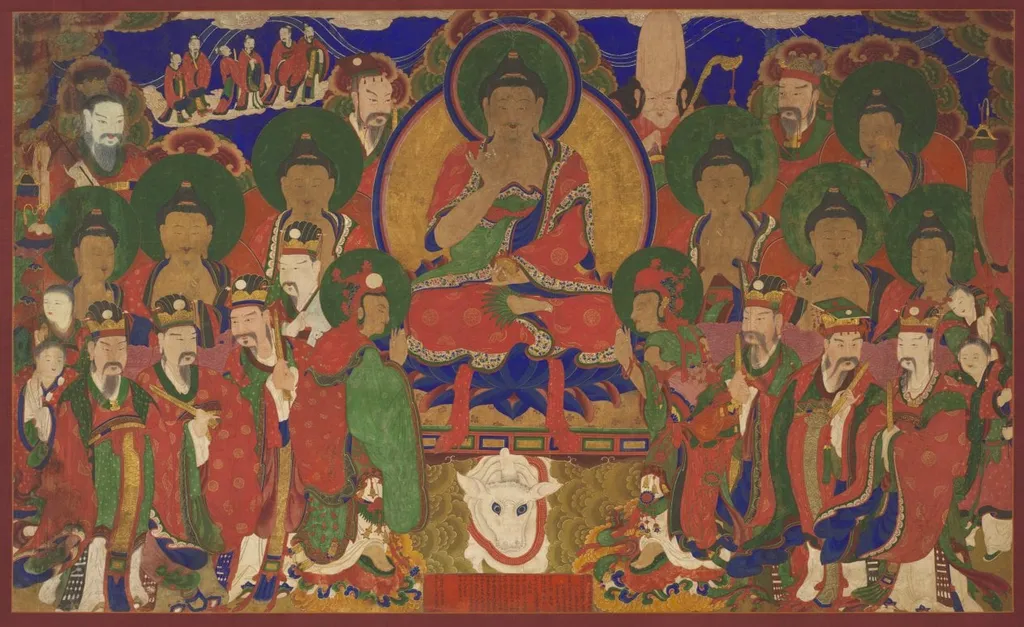
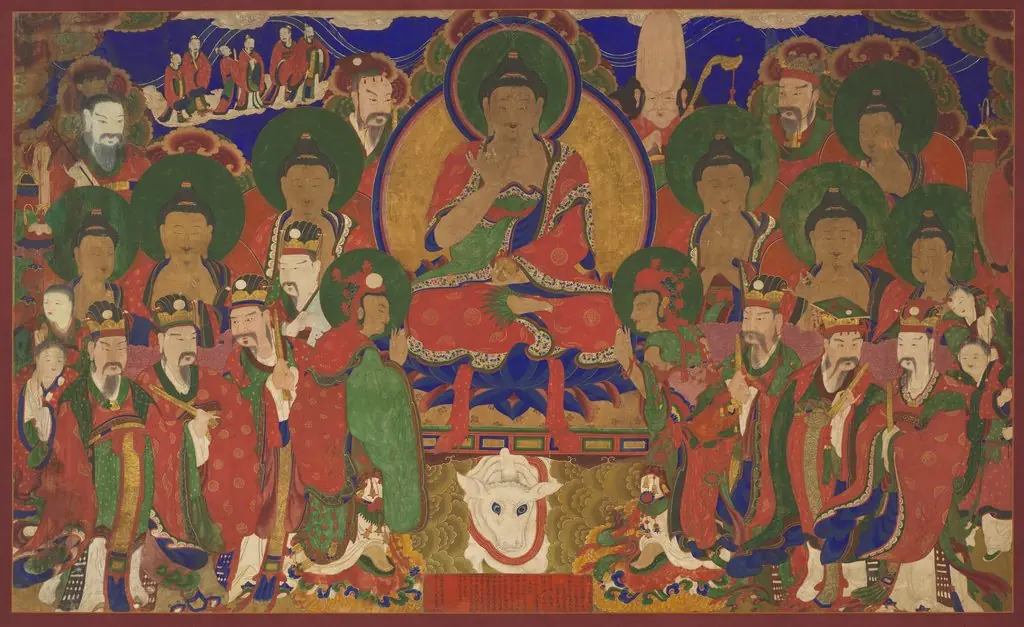
You see a golden Buddha seated in the center, surrounded by smaller figures and swirling clouds.
You see a golden Buddha seated in the center, surrounded by smaller figures and swirling clouds. Rays of light shoot out from his body like swords.
This painting was made in 1878, when Korea faced foreign invasions. The women of the royal court paid for it, hoping the Buddha’s light would push back danger. The bright beams aren’t just decoration, they’re meant to fight calamity.
If you like this, look up Korea, Joseon dynasty (1392–1910) to see more scrolls like it.
Overview
The scroll, titled The Assembly of Tejaprabha Buddha, is a painted hanging from 1878 that places a golden figure of the Buddha of Radiant Light at its centre. Radiating shafts of light extend outward, surrounding the central deity with smaller attendant figures and stylised clouds, creating a dynamic composition that emphasizes the Buddha’s luminous power.
Subject & Meaning
At the heart of the work is Tejaprabha, a manifestation of the Buddha associated with brilliant illumination. The emanating rays are depicted as weapons that dispel misfortune, reflecting a devotional appeal for protection against the turmoil of the period.
Technique & Style
Executed in traditional Korean silk painting techniques, the artist employs gold pigment to render the Buddha’s body, while ink and mineral colors define the surrounding figures and atmospheric clouds. The use of linear, sword‑like light beams demonstrates a blend of Buddhist iconography with a heightened sense of movement.
History & Provenance
The scroll was commissioned in 1878 by a group of women from the royal court of the late Joseon dynasty. Their inscription records the intention to secure the safety and prosperity of their families amid a series of foreign incursions, notably the French expedition of 1866 and the United States expedition of 1871.
Context
Although women’s public roles were increasingly restricted in late‑Joseon society, they continued to act as significant patrons of Buddhist art. This piece exemplifies how royal court women used religious imagery to articulate collective anxieties and hopes during a time of external pressure, contributing to the visual record of Korea’s late‑dynastic period.
Artist & collection