Artwork
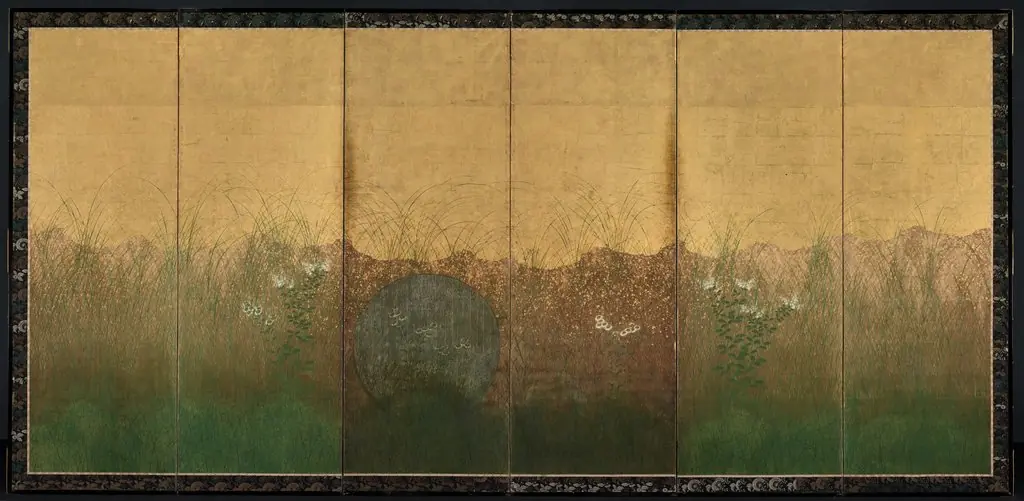
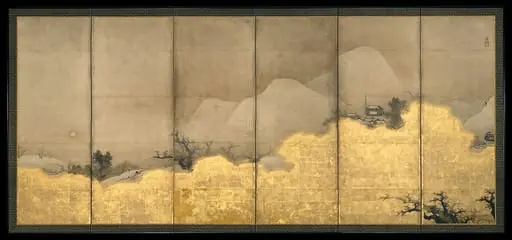
Autumn Evening with Full Moon on Musashino Plain
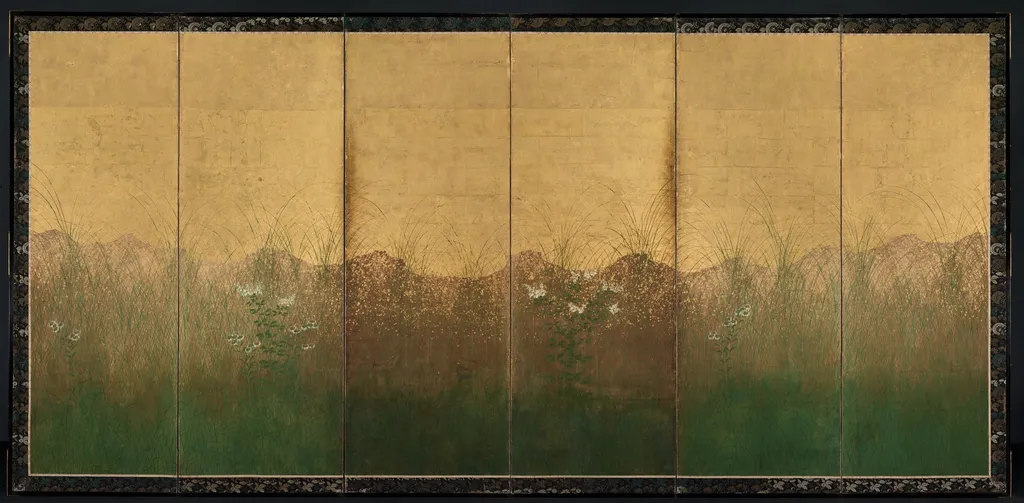
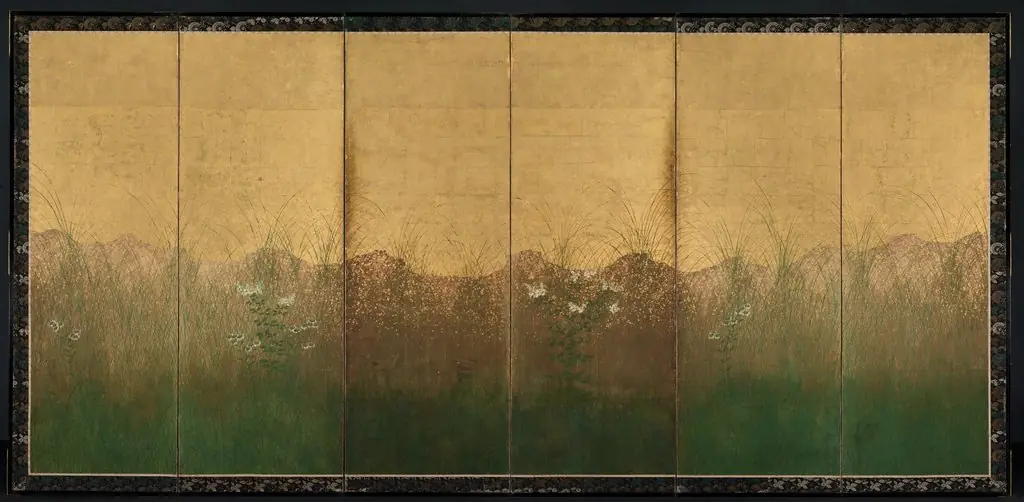
Autumn Evening with Full Moon on Musashino Plain is an unspecified painting. It dates from 1612 and is held in the collection of the Cleveland Museum of Art. The work presents an expansive, level terrain bathed in the warm glow of a setting sky.
About this work
History & Provenance
The painting is held by the Cleveland Museum of Art, where it is recorded as accession number 2000.4.1.
It has been exhibited once since its acquisition, appearing in the museum’s 2000 installation “Japanese Art: Paintings and Sculpture from the Collection.”
Legacy
It is cataloged in Cleveland Museum of Art records as a 1612 piece created in Japan, establishing its historical context and provenance.
The work's legacy is anchored in its attribution as an early Edo-period painting and its presence in a major museum collection. It is cataloged in Cleveland Museum of Art records as a 1612 piece created in Japan, establishing its historical context and provenance.
The painting's recognition grows through scholarly attention to its moonlit landscape motif, though specific influence on later artists remains undocumented in available sources.
Overview
The work presents an expansive, level terrain bathed in the warm glow of a setting sky. A full moon hangs low on the horizon, casting a gentle illumination over the swaying grasses that dominate the foreground. The composition is dominated by muted greens, earthy browns, and soft yellows, creating a tranquil, nocturnal atmosphere without any harsh outlines.
Subject & Meaning
The painting captures a quiet rural evening, emphasizing the harmonious relationship between land and celestial light. The low‑lying moon and the rustling grass suggest a moment of stillness and contemplation, inviting viewers to experience the subtle transition from day to night in a countryside setting.
Technique & Style
The artist employs smooth, blended washes of color, allowing tones to merge seamlessly and produce a soft, diffused illumination. This approach minimizes sharp edges, enhancing the sense of calm. The handling of light resembles chiaroscuro principles, with the moon’s glow defining forms through gentle contrasts rather than stark shadows.
Context
Created within the tradition of Japanese landscape painting, the piece reflects a reverence for natural cycles and seasonal change. Its palette and compositional restraint align with broader aesthetic values that prioritize subtlety and atmospheric depth over dramatic narrative.
Artist & collection

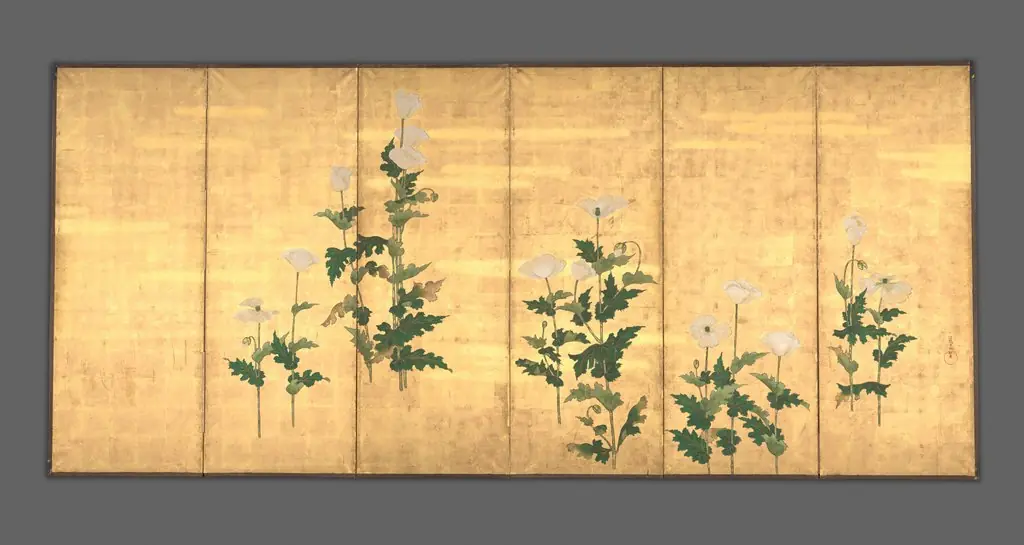 White Poppies on Gold Ground
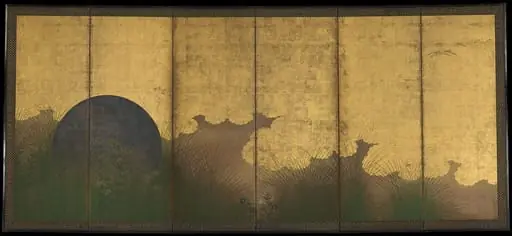 武蔵野図屏風|The Plains of Musashi
 Flowering Plants and Vegetables of the Four Seasons
 Anthology of Japanese and Chinese Poems (Wakan rōeishū) with Underpainting of Arrowroot Vines
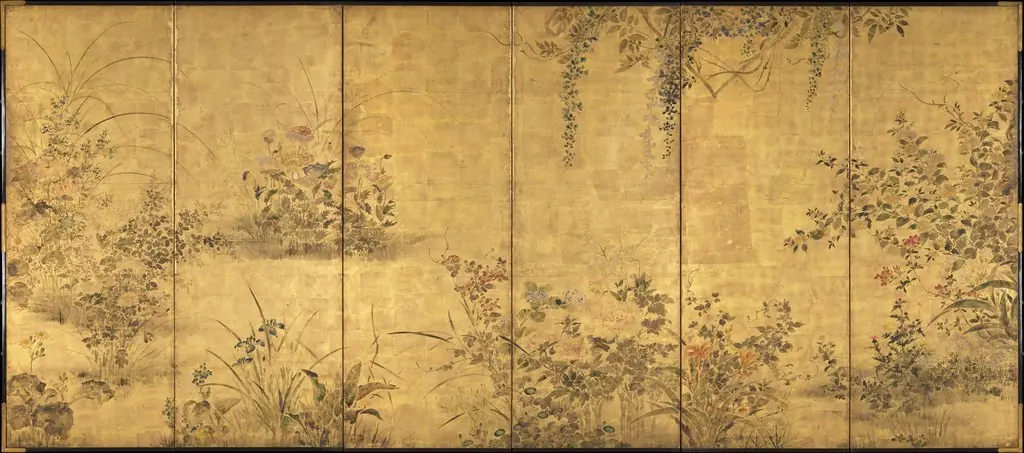
 Flowers of All Seasons
 Flowers and Trees of the Four Seasons (right screen)
 伝土佐光茂筆 芥子図屏風|Red and White Poppies
 Untitled